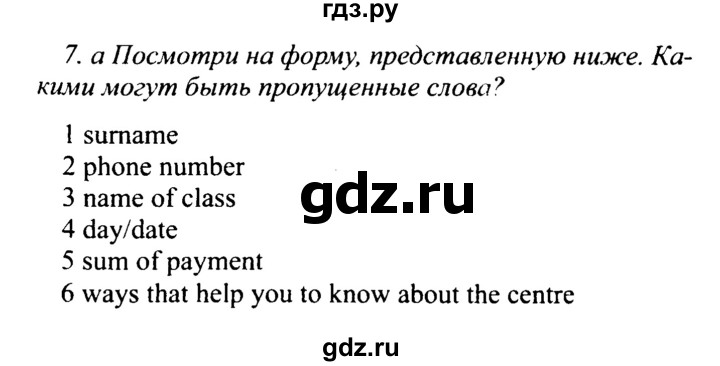

ГДЗ по английскому языку 10 класс Афанасьева Spotlight Базовый уровень страница - 31

Авторы: О. В. Афанасьева, Д. Дули, И. В. Михеева, Б. Оби, В. Эванс
Серия: Spotlight
Тип книги: Учебник
Год: 2015-2024


 Премиум


 ИИ-решебник / страница / 31
Ответ подготовлен нейросетью и может содержать ошибки
Объяснение и пошаговое решение
### Итоговый ответ
#### Ex. 7 (Listening)
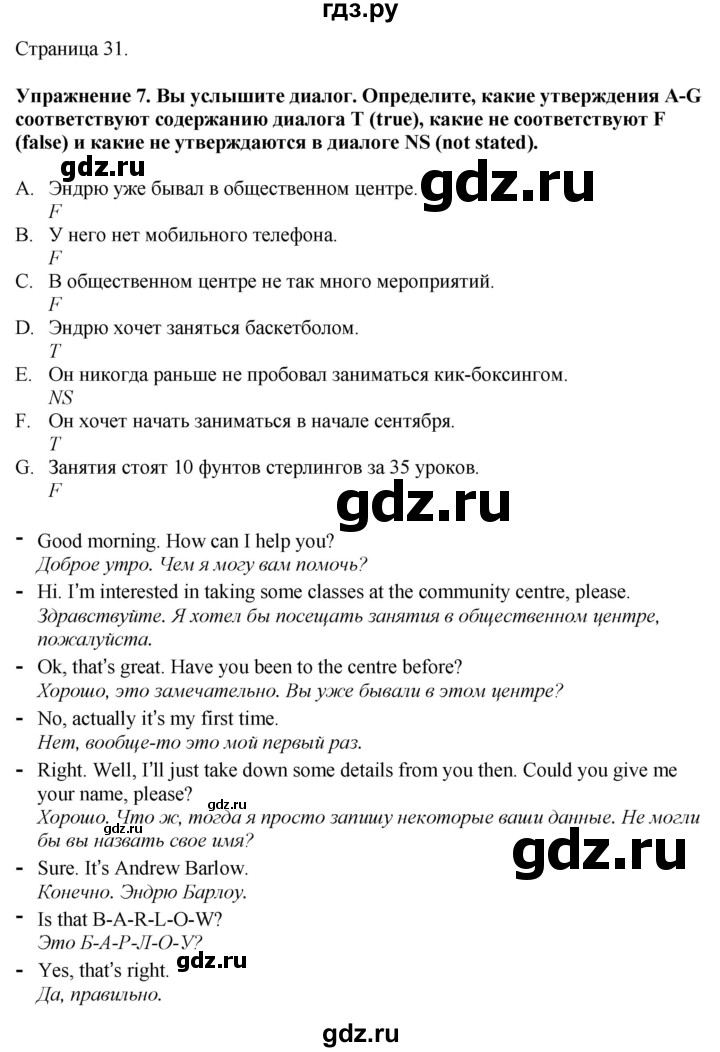
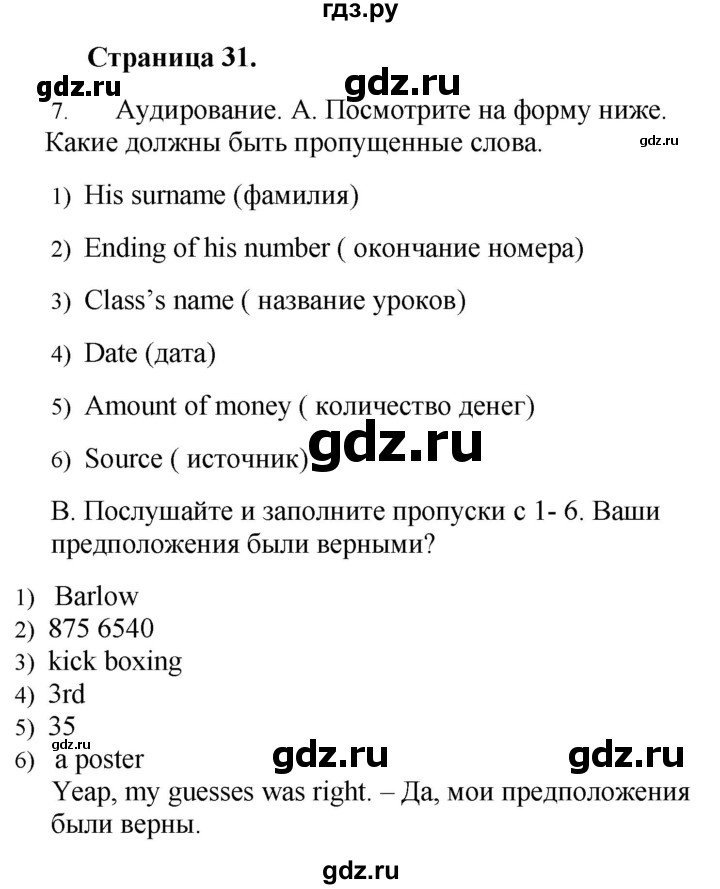
| STATEMENT | A | B | C | D | E | F | G |
| :---: | :---: | :---: | :---: | :---: | :---: | :---: | :---: |
| **ANSWER** | **F** | **F** | **F** | **F** | **T** | **T** | **F** |
---
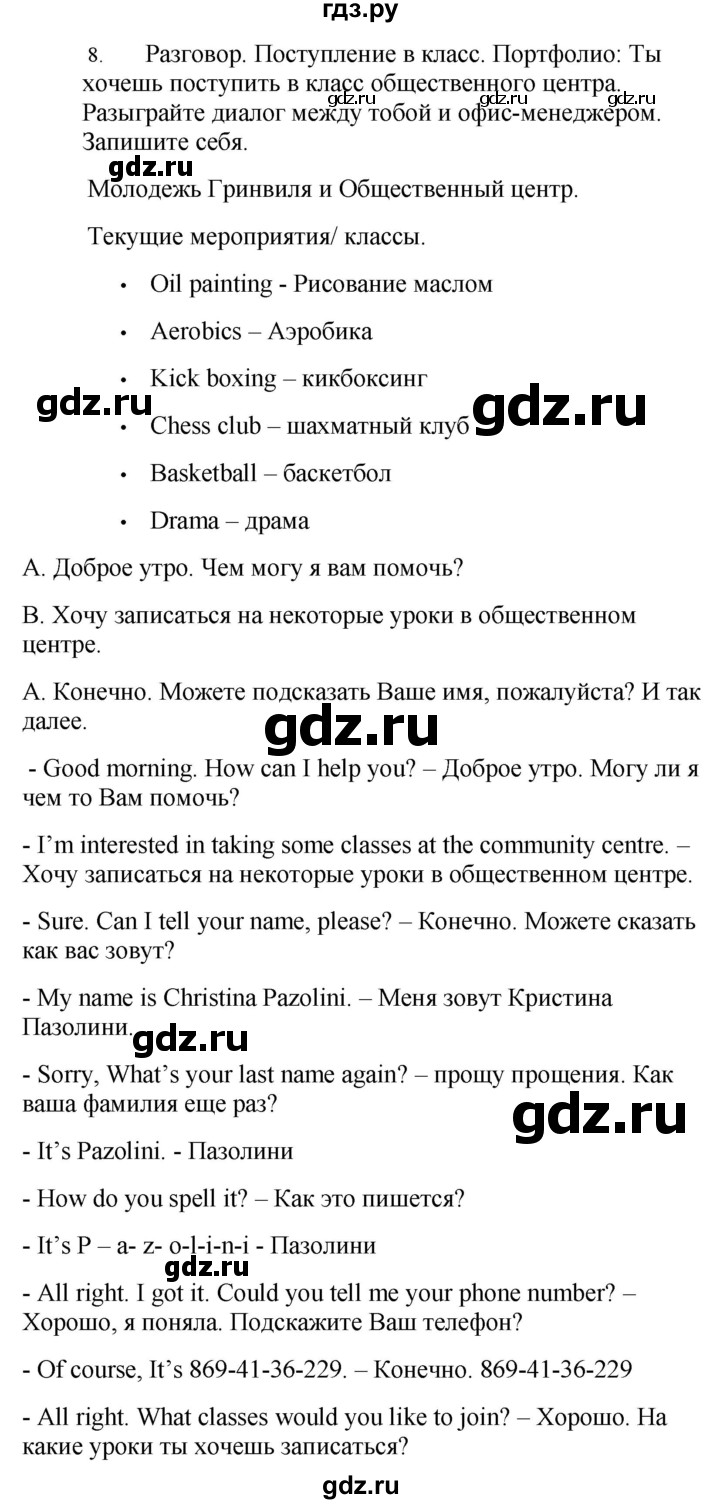
#### Ex. 8 (Speaking / Portfolio)
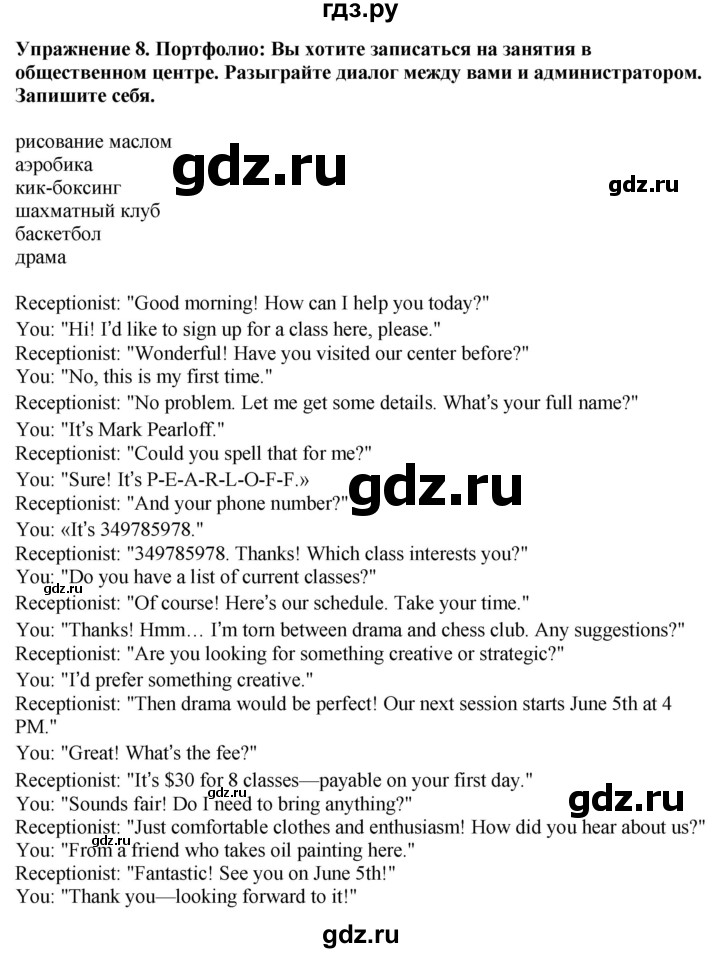
**Dialogue:**
* **Receptionist:** Good morning. How can I help you?
* **You:** Good morning. I'm interested in taking some classes at the community centre.
* **Receptionist:** Sure. Can I take your name, please?
* **You:** Yes, my name is Alex Ivanov.
* **Receptionist:** Nice to meet you, Alex. Have you been here before?
* **You:** No, this is my first time.
* **Receptionist:** What classes are you interested in?
* **You:** I’d like to join the chess club and try kick boxing.
* **Receptionist:** Great choices! Chess club meets on Tuesdays at 5 pm, and kick boxing is on Thursdays at 6 pm. Can I have your phone number?
* **You:** It’s 07911 123456. How much do the lessons cost?
* **Receptionist:** It's £35 for 10 lessons.
* **You:** That sounds great. Sign me up, please!
* **Receptionist:** All done! Classes start next week.
---
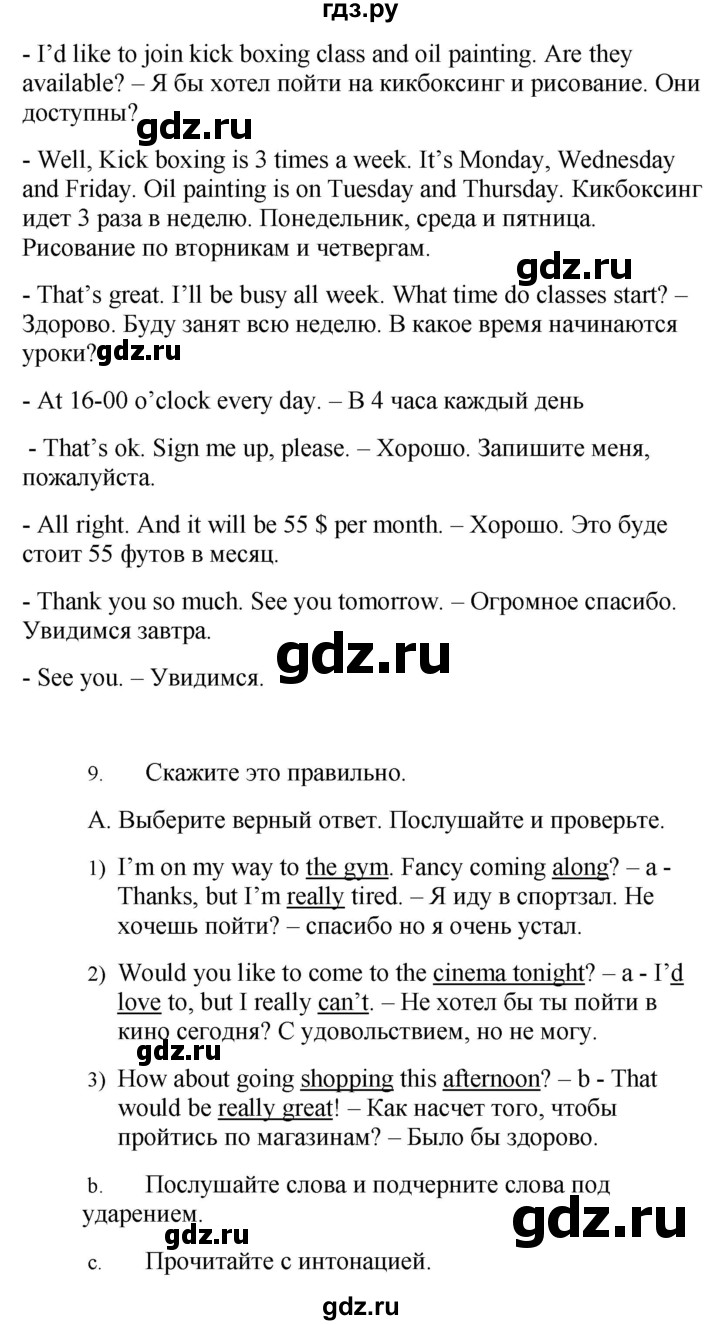
#### Ex. 9 (Say it right: Suggesting/Replying)
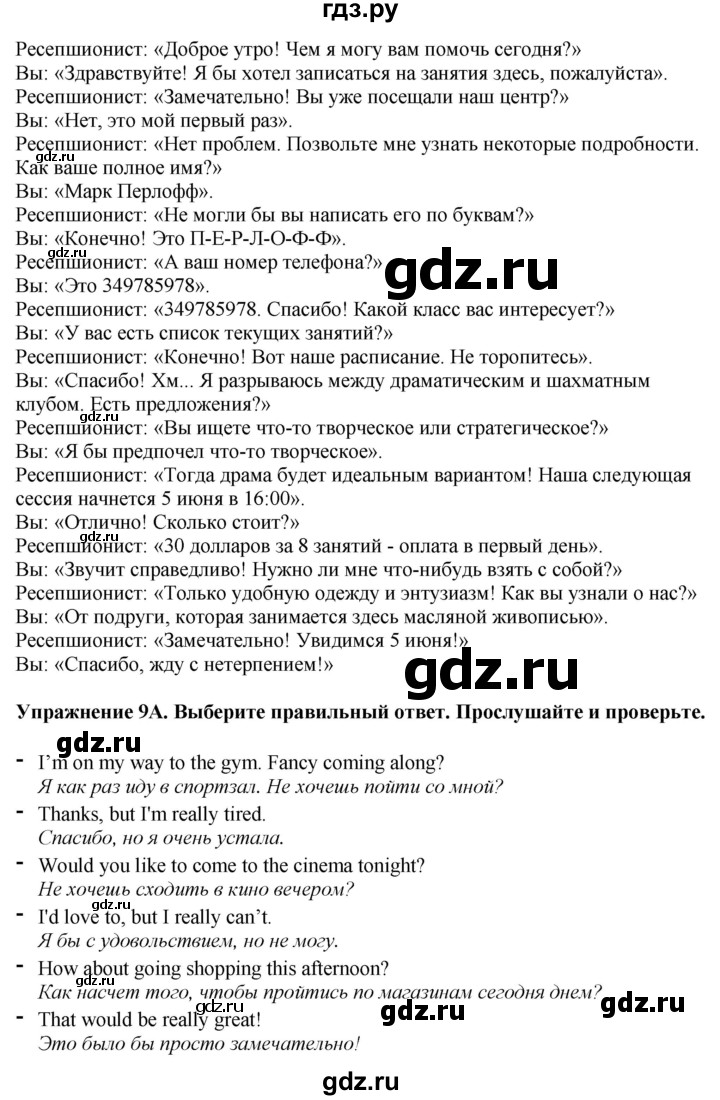
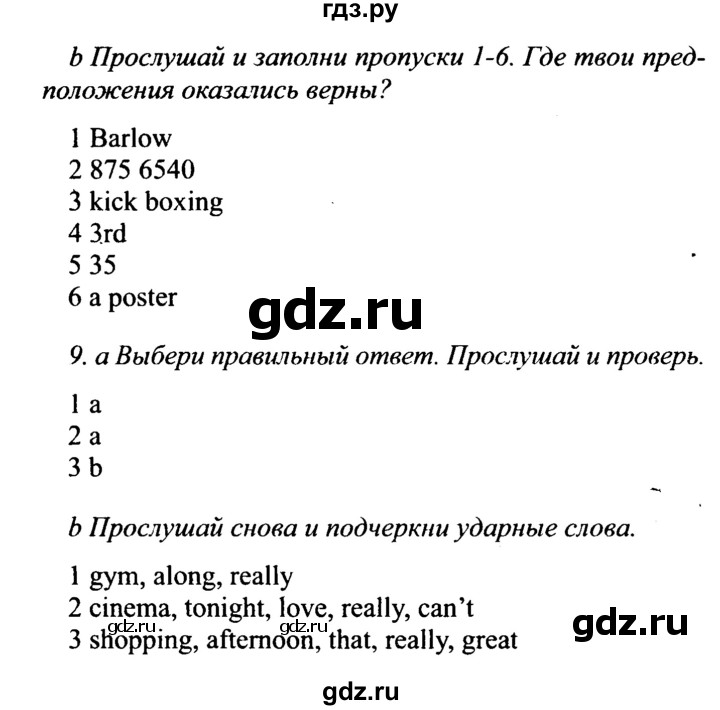
**a)**
1. **a** (Thanks, but I'm really tired.)
2. **a** (I'd love to, but I really can't.)
3. **b** (That would be really great!)
**b)** Ударные слова (Stressed words):
1. A: **way**, **gym**, **Fancy**, **coming**? / B: **Thanks**, **really**, **tired**.
2. A: **like**, **come**, **cinema**, **tonight**? / B: **love**, **really**, **can't**.
3. A: **shopping**, **afternoon**? / B: **really**, **great**!
---
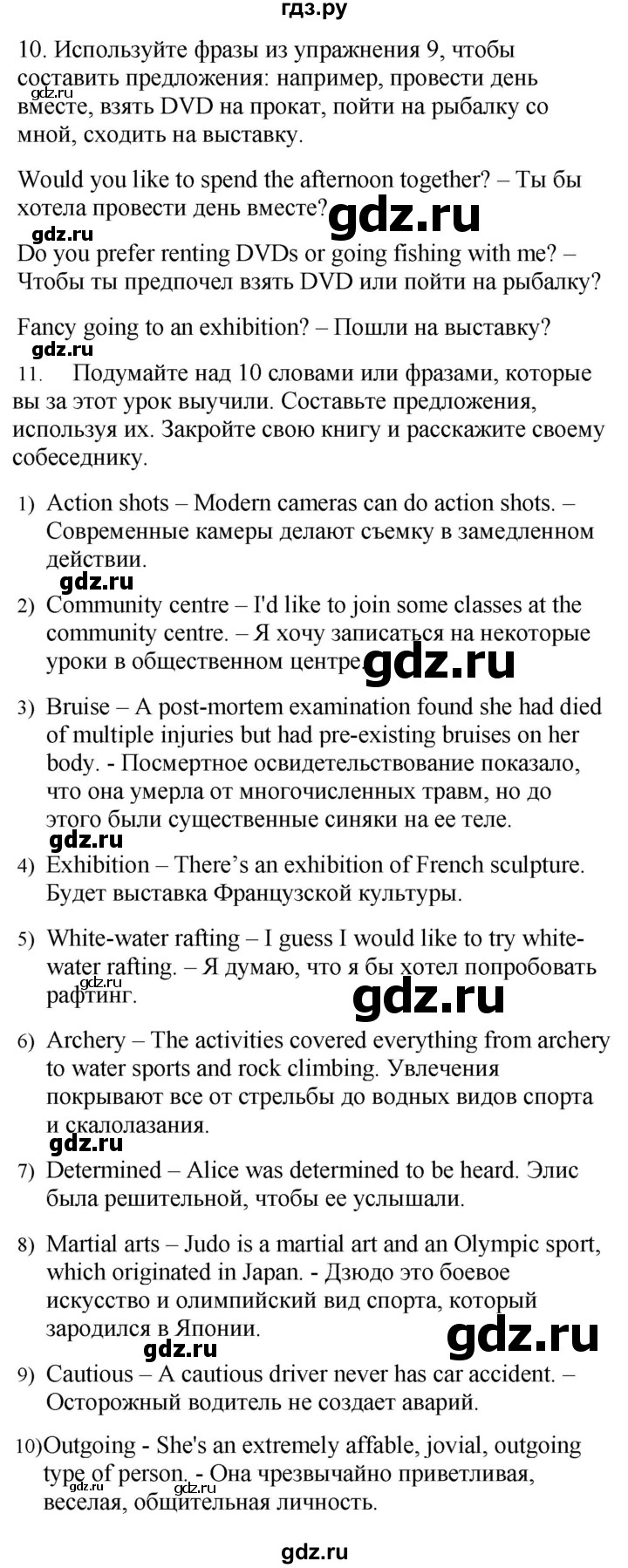
#### Ex. 10 (Making suggestions)
1. **A:** Would you like to spend the afternoon together?
**B:** That would be really great!
2. **A:** How about renting a DVD tonight?
**B:** I'd love to, but I really can't. I have to study.
3. **A:** Fancy coming fishing with me this weekend?
**B:** Thanks, but I'm really tired.
4. **A:** Would you like to go to an art exhibition on Sunday?
**B:** That sounds wonderful, I'd love to!
---
#### Ex. 11 (Ten words/phrases and sentences)
1. **enrol for a class** — I want to enrol for an oil painting class this autumn.
2. **community centre** — Our local community centre offers lots of interesting activities for teenagers.
3. **take up** — I decided to take up kick boxing to stay fit.
4. **fancy (doing something)** — Fancy coming along with us to the cinema?
5. **drama** — She joined the drama club because she wants to be an actress.
6. **available** — Are there any free places available for the aerobics course?
7. **aerobics** — Doing aerobics helps me stay energetic.
8. **fee** — The membership fee is quite reasonable.
9. **sign up** — You need to sign up before the end of the week.
10. **fill in a form** — Please fill in this registration form with your contact details.
---
### Объяснение и комментарии
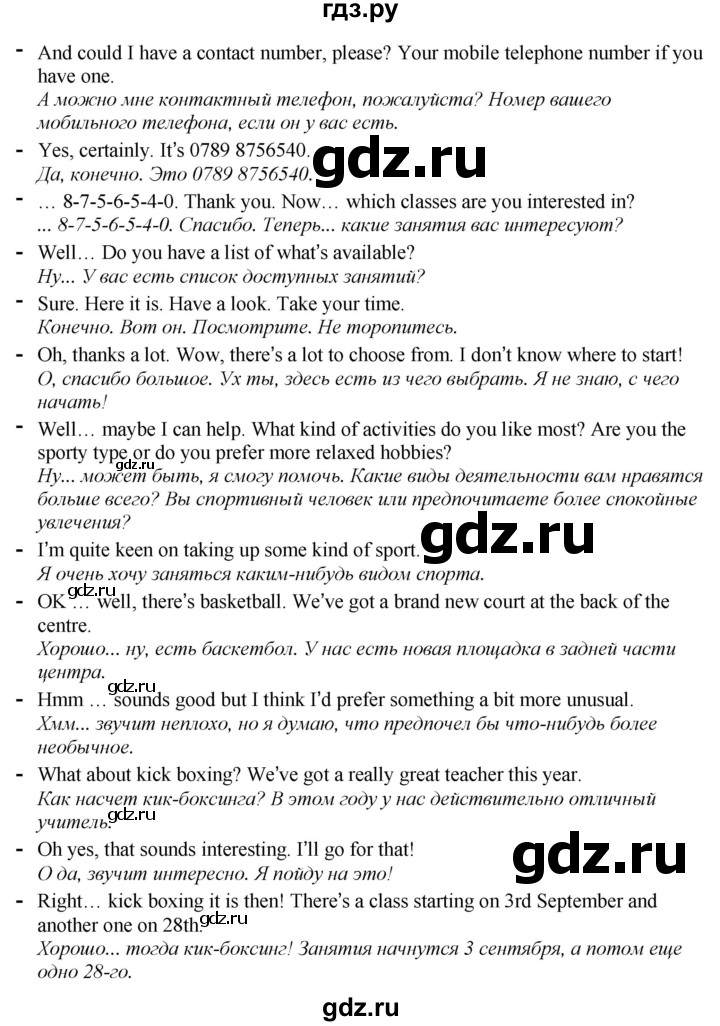
1. **Ex. 7:**
* **A (F):** Эндрю впервые в этом центре (*"No, this is my first time"*).
* **B (F):** У него есть мобильный телефон, и он диктует свой номер администратору.
* **C (F):** Центр предлагает широкий выбор кружков и секций.
* **D (F):** Эндрю выбирает кикбоксинг (*kick boxing*), а не баскетбол.
* **E (T):** Он говорит, что никогда раньше не занимался кикбоксингом (*"I've never done it before"*).
* **F (T):** Занятия начинаются в начале сентября, что его устраивает.
* **G (F):** Названа другая стоимость/количество уроков (£35 за 10 занятий).
2. **Ex. 9a:**
* На предложение *«Fancy coming along?»* (Не хочешь пойти со мной?) логичный вежливый отказ — вариант **a** (*Thanks, but I'm really tired*). Вариант *b* неверен, так как отвечает на вопрос о самочувствии (*How are you?*).
* На приглашение *«Would you like to come...»* правильный вежливый отказ — **a** (*I'd love to, but I really can't*). Фраза *b* звучит грубо и грамматически неестественно в данном контексте.
* На предложение *«How about going shopping...?»* согласием служит реплика **b** (*That would be really great!*). Реплика *a* используется для согласия с мнением/точкой зрения, а не с предложением о совместном действии.
3. **Ex. 9b:**
В английском предложении фразовое ударение падает на знаменательные части речи (существительные, смысловые глаголы, прилагательные, наречия, отрицания), тогда как служебные слова (предлоги, местоимения, вспомогательные глаголы) обычно редуцируются.
Оцени решение:
Спасибо за оценку!