
ГДЗ по английскому языку 10 класс Баранова Рабочая тетрадь Starlight Углубленный уровень страница - 81

Авторы: Баранова К.М., Дули Д., Копылова В.В., Мильруд Р.П., Эванс В.
Серия: Starlight
Тип книги: Рабочая тетрадь
Год: 2017
Рекомендуем посмотреть



Подробное решение страница № 81 по английскому языку Рабочая тетрадь Starlight для учащихся 10 класса Starlight Углубленный уровень, авторов Баранова, Дули, Копылова, Мильруд, Эванс 2017

 ИИ-решебник / страница / 81
Ответ подготовлен нейросетью и может содержать ошибки
Объяснение и пошаговое решение
### Итоговые ответы
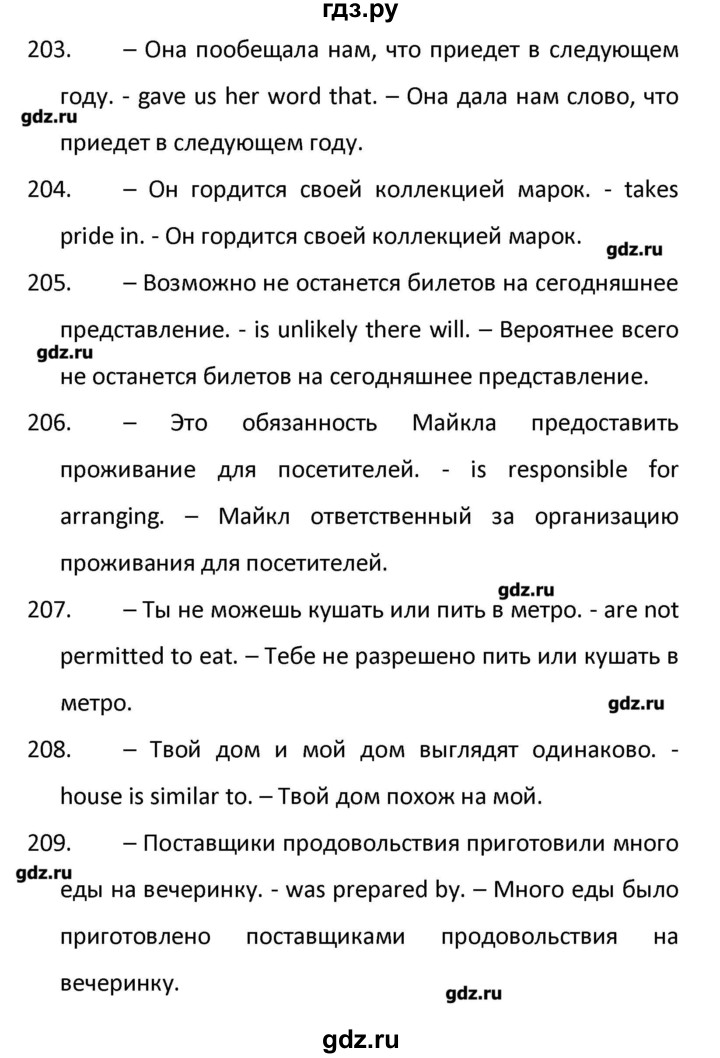
**203.** She **gave us her word (that)** she would come back next year.
**204.** He **takes pride in** his stamp collection.
**205.** It **is unlikely that there will** be any tickets left for tonight's performance.
**206.** Michelle **is responsible for arranging** accommodation for the visitors.
**207.** You **are not permitted to eat** or drink on the Metro.
**208.** Your **house is very similar to** mine.
**209.** Plenty of food **was prepared by** the caterers for the party.
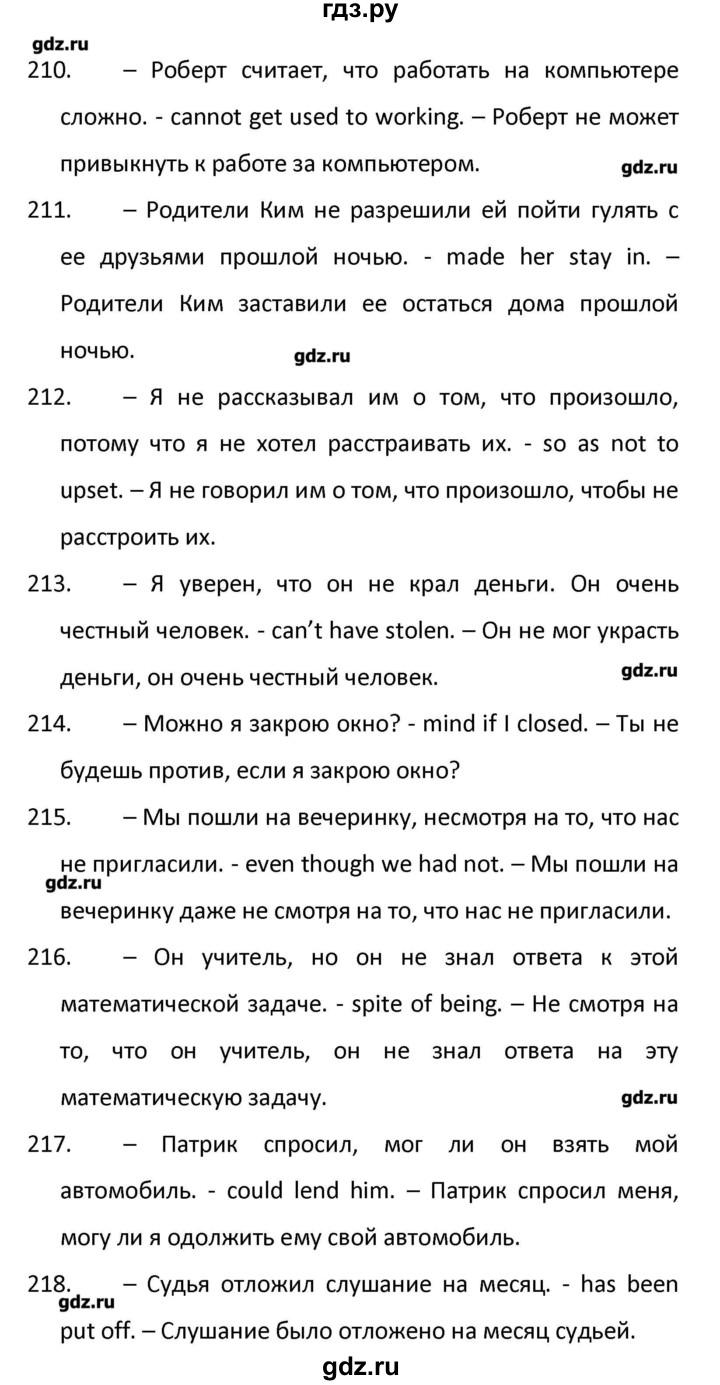
**210.** Robert **is not used to working** on a computer.
**211.** Kim's parents **made her stay at home** last night. *(или: **made her stay in**)*
**212.** I didn't tell them what had happened **so as not to upset** them.
**213.** He **can't / couldn't have stolen** the money; he's a very honest man.
**214.** Would you **mind if I closed / mind my closing** the window?
**215.** We went to the party **even though we had not / hadn't** been invited.
**216.** In **spite of being** a teacher, he didn't know the answer to the maths problem.
**217.** Patrick asked if I **could lend him** my car.
**218.** The trial **has been put off** for a month by the judge.
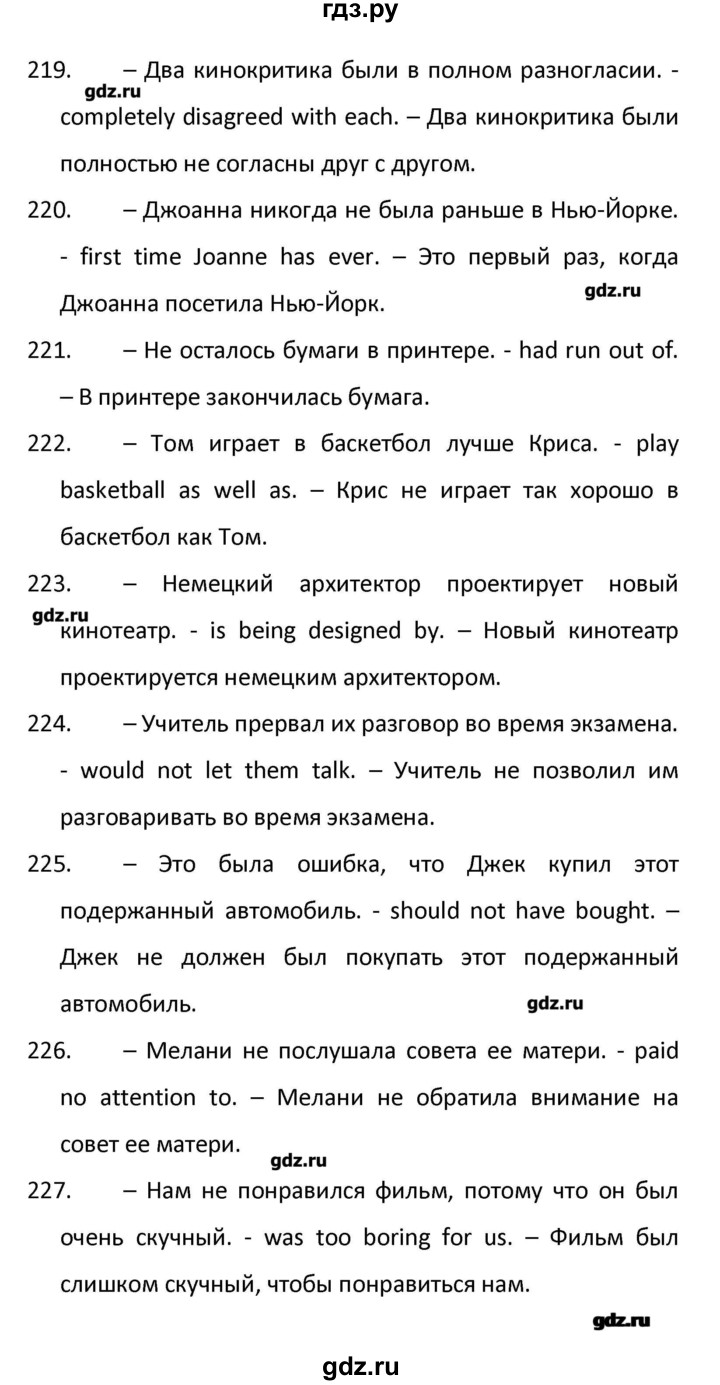
**219.** The two film critics **disagreed completely with each** other. *(или: **completely disagreed with each**)*
**220.** It's the **first time (that) Joanna has** been to New York.
**221.** The printer **had run out of** paper.
**222.** Chris doesn't **play basketball as / so well as** Tom.
**223.** The new cinema complex **is being designed by** a German architect.
**224.** The teacher **didn't / did not let them talk** during the exam.
**225.** Jack **should not / shouldn't have bought** that used car.
**226.** Melanie **paid no attention to / didn't pay attention to** her mother's advice.
**227.** The film **was too boring for us** to enjoy.
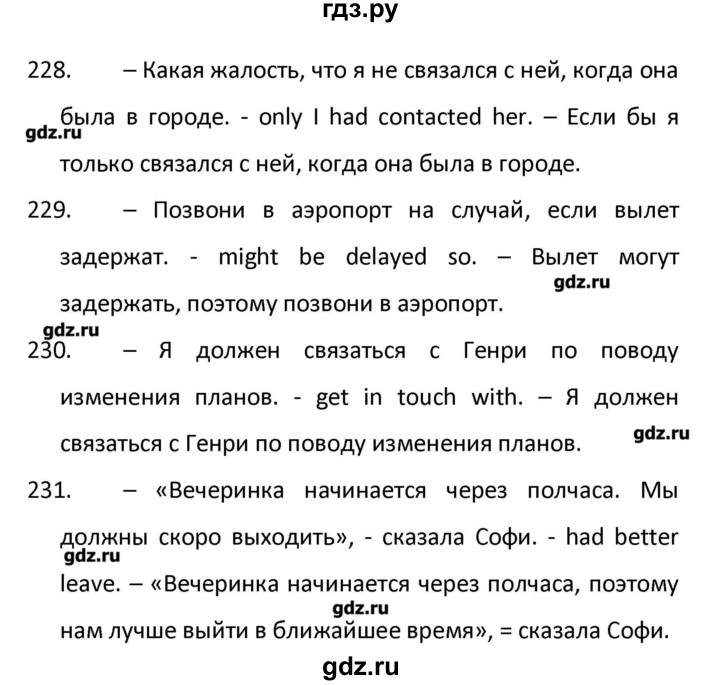
**228.** If **only I had contacted her** when she was in town.
**229.** The flight **might be delayed, so** call the airport.
**230.** I must **get in touch with** Henry about the change of plans.
**231.** "The party starts in half an hour, so we **had better leave / 'd better leave** soon," Sophie said.
---
### Объяснение грамматических правил и конструкций
* **203 (gave word):** Идиома *give one's word* означает «дать обещание / дать слово».
* **204 (pride):** Устойчивое выражение *take pride in something* = *be proud of something* («гордиться чем-либо»).
* **205 (unlikely):** Конструкция *It is unlikely that...* используется для выражения маловероятности события в будущем.
* **206 (responsible):** Прилагательное *responsible* требует предлога *for* и герундия: *be responsible for doing sth* («отвечать за выполнение чего-либо»).
* **207 (permitted):** Пассивная конструкция *be not permitted to do sth* («не разрешено делать что-либо»).
* **208 (similar):** Прилагательное *similar* согласуется с предлогом *to* (*similar to* — похожий на).
* **209 (prepared):** Пассивный залог в Past Simple: *was prepared by* («была приготовлена кем-то»).
* **210 (used):** Конструкция *be not used to + V-ing* выражает отсутствие привычки к какому-либо действию.
* **211 (made):** Конструкция *make someone do something* (в значении «заставить / вынудить кого-то остаться дома»).
* **212 (so):** Оборот цели с отрицанием: *so as not to + Infinitive* («чтобы не...»).
* **213 (have):** Модальный глагол для выражения уверенности в том, что действие в прошлом не происходило: *can't / couldn't + have + V3*.
* **214 (mind):** Вежливые просьбы строятся через *Would you mind if I + Past Simple* или *Would you mind + V-ing / possessive + V-ing*.
* **215 (even):** Придаточное уступки вводится союзом *even though* («даже хотя»), далее используется Past Perfect Passive (*had not been invited*), так как приглашение предшествовало вечеринке.
* **216 (being):** Предлог уступки *in spite of* требует после себя существительного или герундия (*being*).
* **217 (could):** Косвенная речь с заменой глагола *borrow* (брать взаймы) на *lend* (давать взаймы): *ask if I could lend him*.
* **218 (off):** Фразовый глагол *put off* («откладывать») в Present Perfect Passive (*has been put off*).
* **219 (completely):** Переход от существительного к глаголу: *be in disagreement* $\rightarrow$ *disagree with each other*.
* **220 (first):** После конструкции *It's the first time...* используется время Present Perfect (*has been*).
* **221 (run):** Фразовый глагол *run out of* («заканчиваться / иссякать») в Past Perfect (*had run out of*).
* **222 (well):** Сравнительная конструкция *not ... as / so + наречие + as*.
* **223 (being):** Present Continuous в пассивном залоге: *is being designed by*.
* **224 (let):** Глагол *let* («разрешать») с отрицанием в прошедшем времени: *didn't let someone do sth*.
* **225 (should):** Сожаление или упрек о прошлом действии: *should not have + V3* («не следовало покупать»).
* **226 (attention):** Устойчивое словосочетание *pay attention to* («обращать внимание на»).
* **227 (too):** Конструкция *too + прилагательное + for someone + to-infinitive* («слишком скучный для нас, чтобы им насладиться»).
* **228 (only):** Конструкция *If only + Past Perfect* выражает сожаление о событии в прошлом.
* **229 (might):** Модальный глагол *might* выражает возможность события («рейс может задержаться, поэтому...»).
* **230 (touch):** Идиома *get in touch with somebody* означает «связаться с кем-либо».
* **231 (better):** Конструкция *had better + bare infinitive* используется для выражения настоятельного совета («нам лучше уйти»).
Оцени решение:
Спасибо за оценку!