ГДЗ по английскому языку 6 класс Баранова Starlight Углубленный уровень страница - 29

Авторы: Баранова К.М., Дули Д., Копылова В.В., Мильруд Р.П., Эванс В.
Серия: Starlight
Тип книги: Учебник
Год: 2017-2023
Рекомендуем посмотреть


Подробное решение страница № 29 по английскому языку Starlight для учащихся 6 класса Starlight Углубленный уровень, авторов Баранова, Дули, Копылова, Мильруд, Эванс 2017-2023

 ИИ-решебник / страница / 29
Ответ подготовлен нейросетью и может содержать ошибки
Объяснение и пошаговое решение
### Итоговые ответы
#### Exercise 3
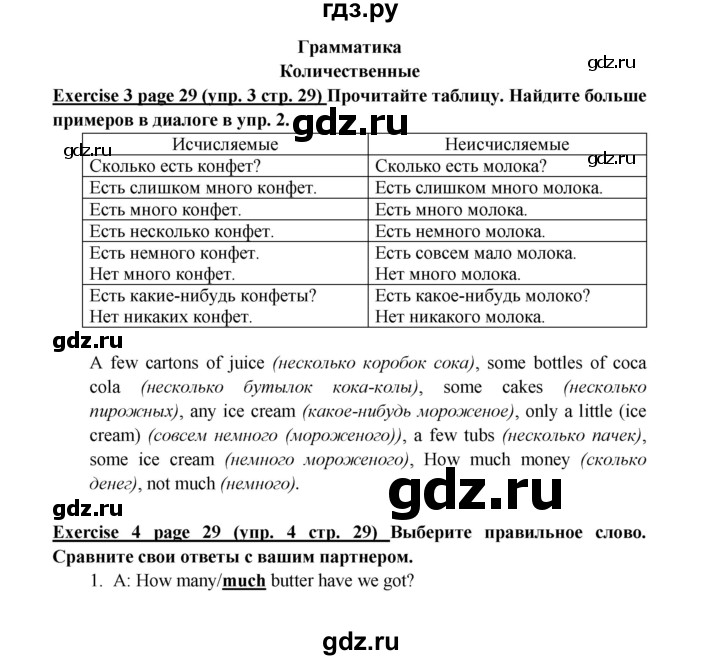
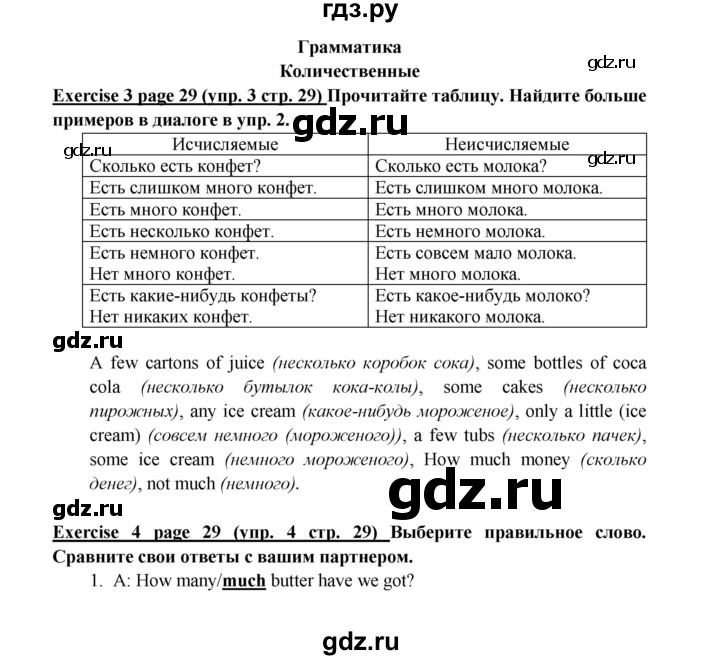
**Examples of quantifiers from the dialogue (Примеры указателей количества из диалога к упр. 2):**
* Countable (Исчисляемые): *a few, many, too many, any, no*
* Uncountable (Неисчисляемые): *a little, much, too much, some, any, no, a lot of*
---
#### Exercise 4
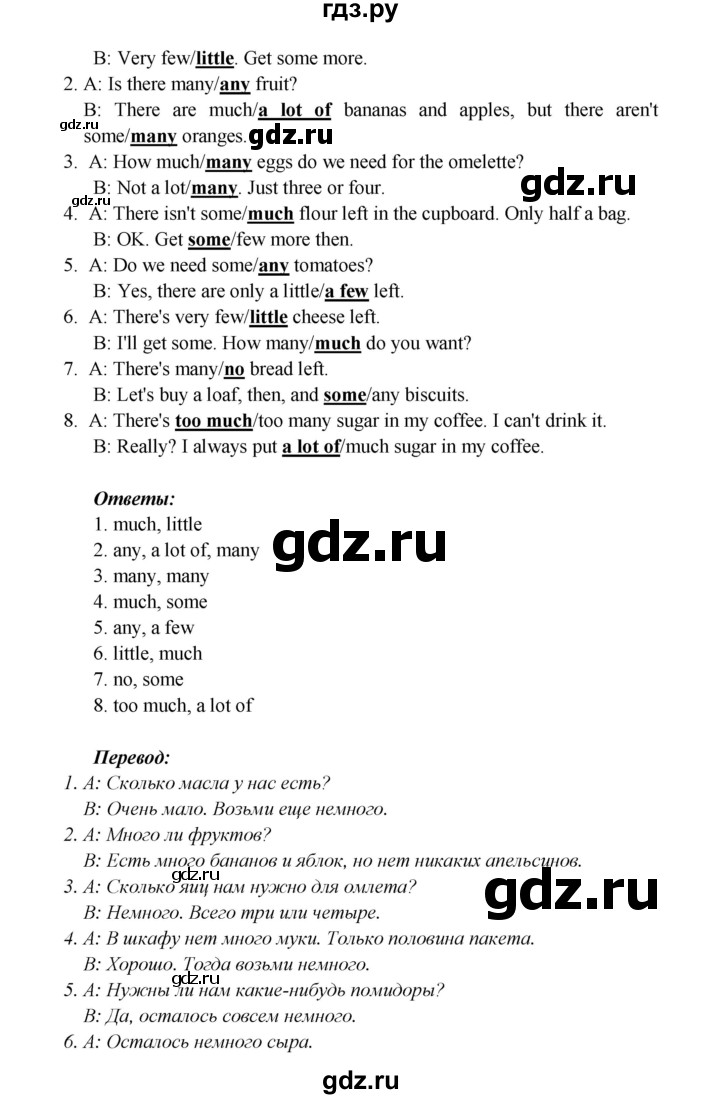
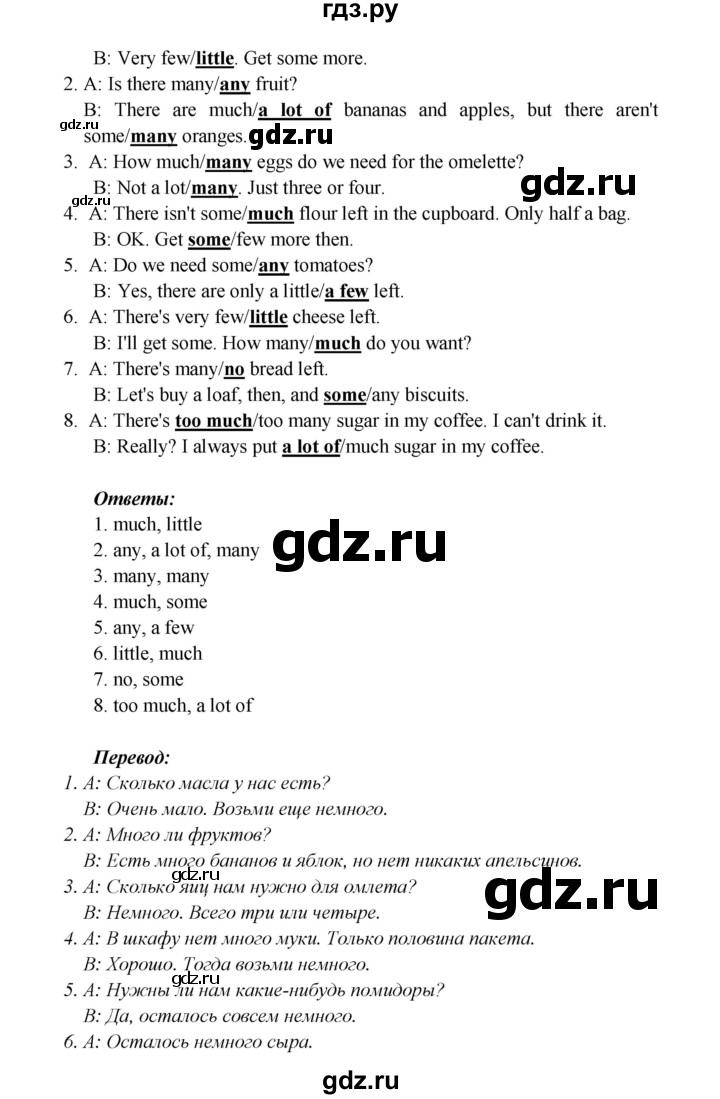
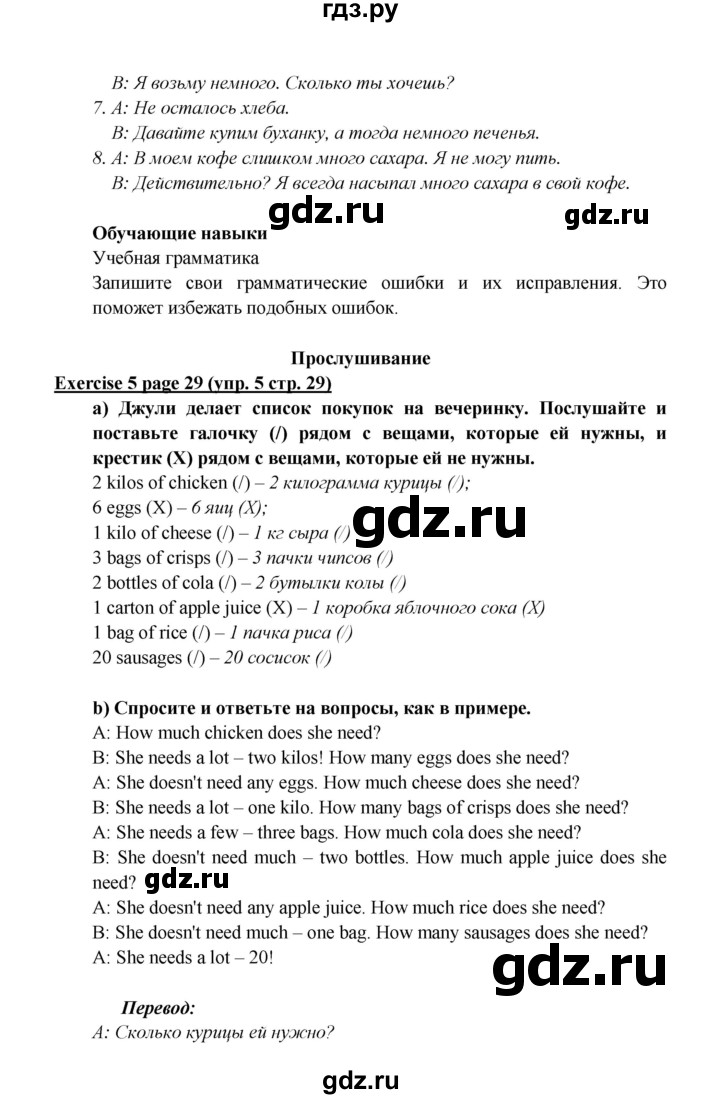
1. A: How **much** butter have we got?
B: Very **little**. Get some more.
2. A: Is there **any** fruit?
B: There are **a lot of** bananas and apples, but there aren't **many** oranges.
3. A: How **many** eggs do we need for the omelette?
B: Not **many**. Just three or four.
4. A: There isn't **much** flour left in the cupboard. Only half a bag.
B: OK. Get **some** more then.
5. A: Do we need **any** tomatoes?
B: Yes, there are only **a few** left.
6. A: There's very **little** cheese left.
B: I'll get some. How **much** do you want?
7. A: There's **no** bread left.
B: Let's buy a loaf, then, and **some** biscuits.
8. A: There's **too much** sugar in my coffee. I can't drink it.
B: Really? I always put **a lot of** sugar in my coffee.
---
#### Exercise 5
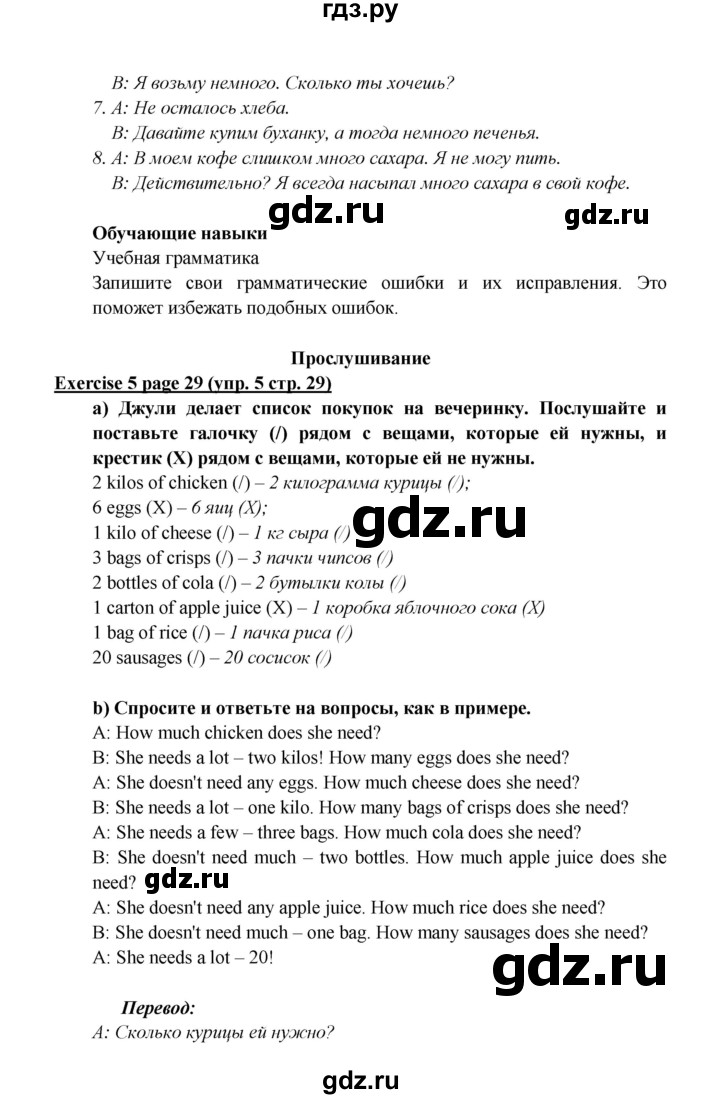
**a) Shopping List:**
* 2 kilos of chicken — **✓**
* 6 eggs — **✗**
* 1 kilo of cheese — **✓**
* 3 bags of crisps — **✗**
* 2 bottles of cola — **✓**
* 1 carton of apple juice — **✗**
* 1 bag of rice — **✗**
* 20 sausages — **✓**
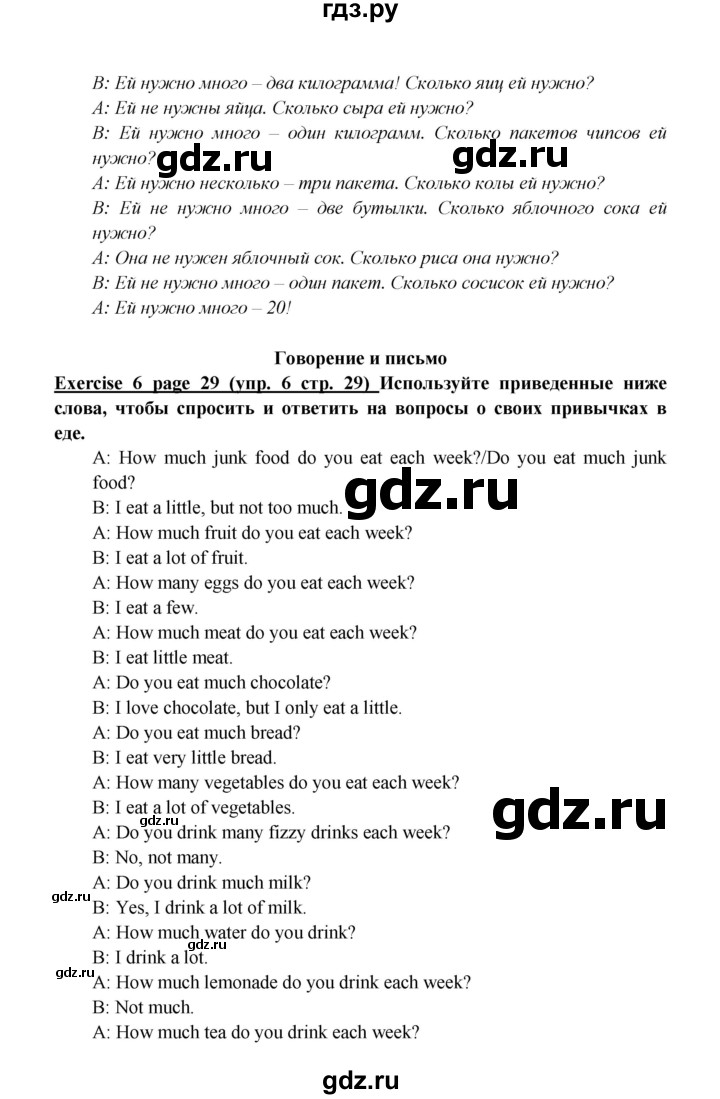
**b) Questions and answers (Вопросы и ответы по списку покупок):**
* **A:** How much cheese does she need?
**B:** She needs a kilo of cheese.
* **A:** How many bags of crisps does she need?
**B:** She doesn't need any crisps.
* **A:** How much cola does she need?
**B:** She needs two bottles of cola.
* **A:** How much apple juice does she need?
**B:** She doesn't need any apple juice.
* **A:** How much rice does she need?
**B:** She doesn't need any rice.
* **A:** How many sausages does she need?
**B:** She needs a lot — twenty sausages!
---
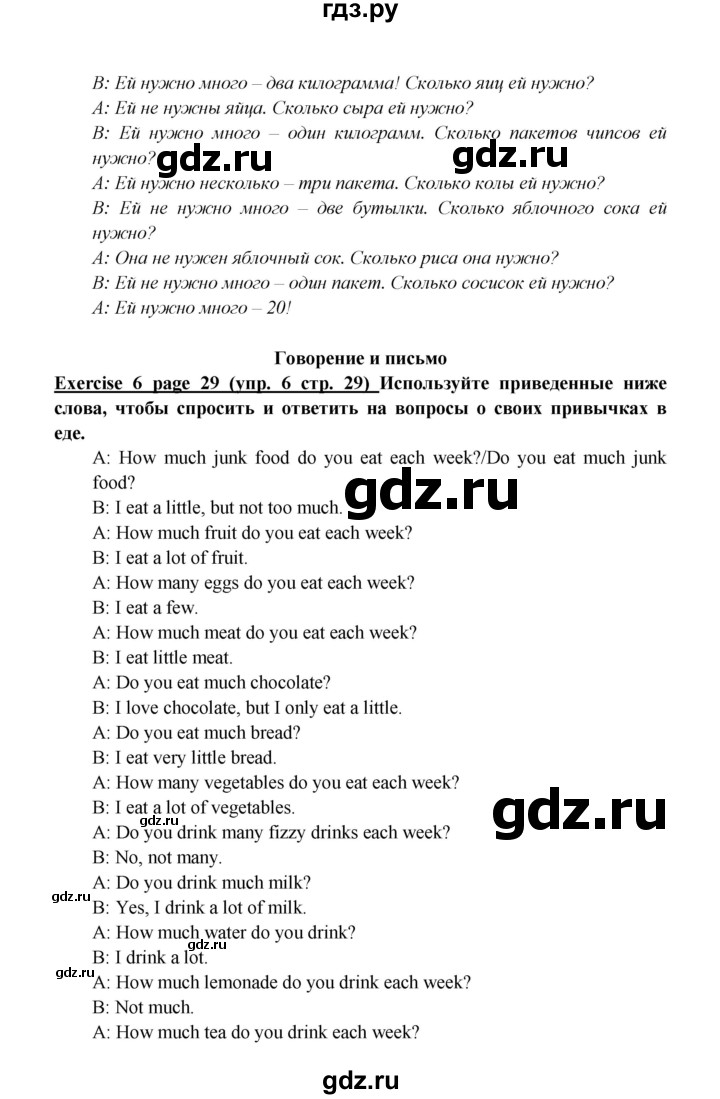
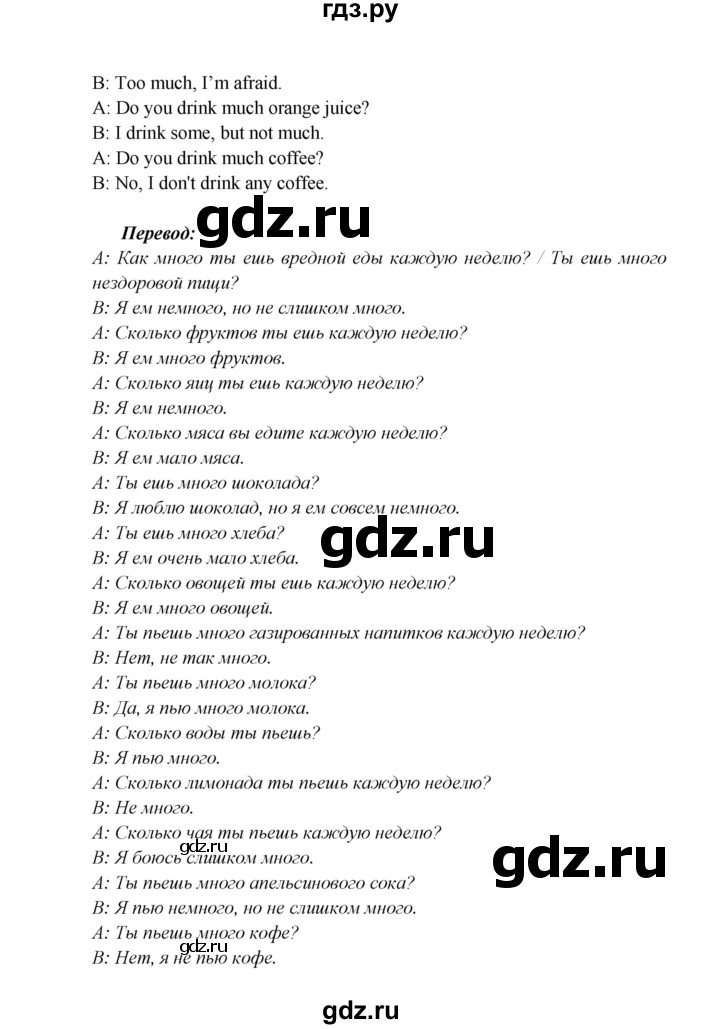
#### Exercise 6
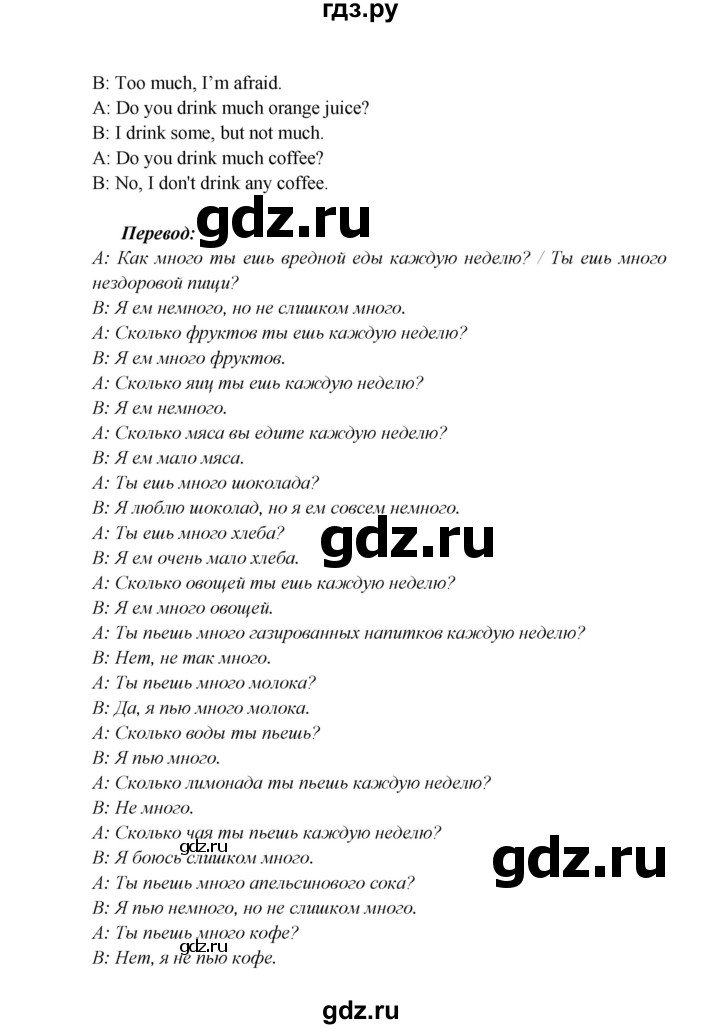
**Sample dialogue (Пример диалога о пищевых привычках):**
* **A:** How much fruit do you eat each week?
**B:** I eat a lot of fruit. I love apples and bananas.
* **A:** Do you drink much milk?
**B:** No, I drink very little milk, but I drink lots of water.
* **A:** How many eggs do you eat for breakfast?
**B:** I eat a few eggs, usually two or three a week.
* **A:** Do you drink fizzy drinks?
**B:** No, I don't drink any fizzy drinks. They have too much sugar.
---
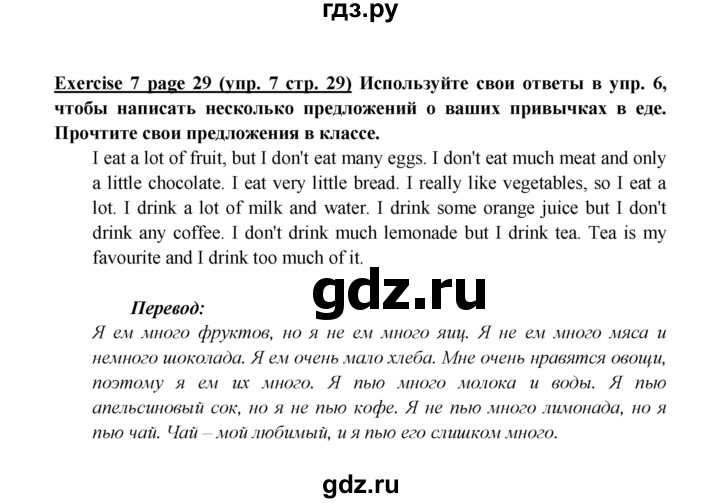
#### Exercise 7
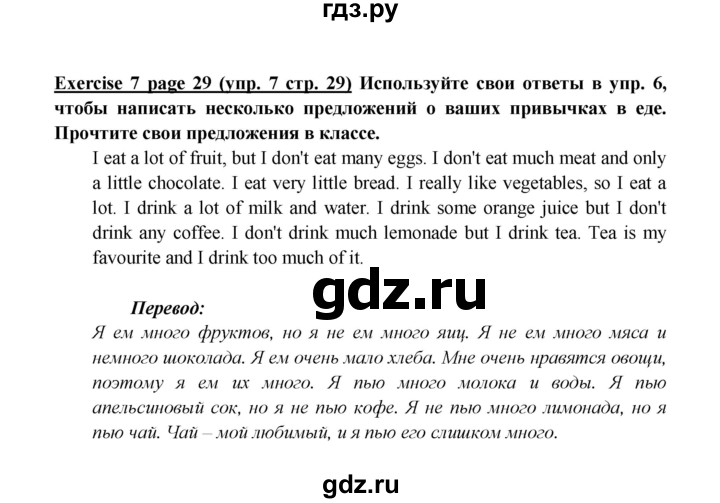
**Sample text (Пример текста о привычках в еде):**
> I try to have healthy eating habits. I eat a lot of fruit and vegetables every day, but I eat very little junk food. I don't drink any fizzy drinks because they have too much sugar. Instead, I drink lots of water and some orange juice in the morning. I also eat a few eggs and some meat every week.
---
### Объяснение правил и решений
1. **Исчисляемые (Countable)** существительные можно посчитать поштучно (*sweets, eggs, tomatoes, oranges, sausages*):
* В вопросах: **How many...?** (*Сколько...?*)
* «Много»: **many** (в вопросах и отрицаниях), **a lot of** (в утверждениях), **too many** (*слишком много*).
* «Мало / несколько»: **a few** (*несколько, достаточно*), **few / very few** (*мало, практически нет*).
2. **Неисчисляемые (Uncountable)** существительные нельзя посчитать (*butter, flour, cheese, sugar, milk, water, rice*):
* В вопросах: **How much...?** (*Сколько...?*)
* «Много»: **much** (в вопросах и отрицаниях), **a lot of** (в утверждениях), **too much** (*слишком много*).
* «Мало / немного»: **a little** (*немного, достаточно*), **little / very little** (*мало, почти нет*).
3. **Some, Any, No:**
* **Some** употребляется в утвердительных предложениях (*I need some biscuits*) и в вежливых просьбах/предложениях (*Get some more*).
* **Any** употребляется в отрицаниях (*there aren't any*) и вопросах (*Is there any...?*).
* **No** используется с утвердительным глаголом для выражения полного отсутствия (*There is no bread* = *There isn't any bread*).
Оцени решение:
Спасибо за оценку!