ГДЗ по английскому языку 6 класс Ваулина Рабочая тетрадь Spotlight страница - 58

Авторы: Ваулина Ю.Е., Дули Д., Подоляко О.Е., Эванс В.
Серия: Spotlight
Тип книги: Рабочая тетрадь
Год: 2015-2025


 Премиум


 ИИ-решебник / страница / 58
Ответ подготовлен нейросетью и может содержать ошибки
Объяснение и пошаговое решение
### Итоговый ответ
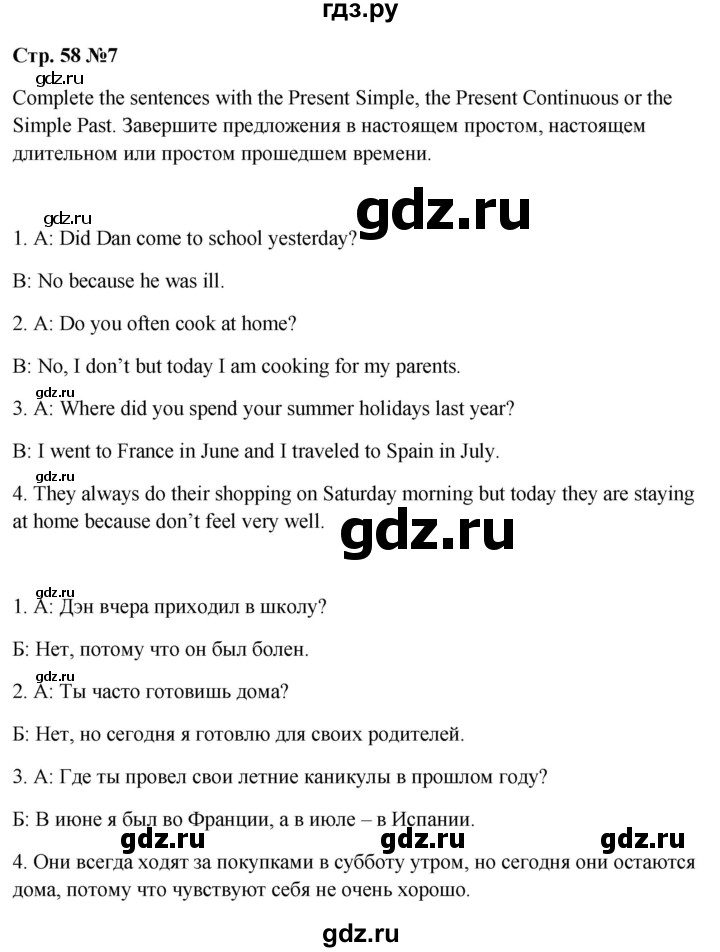
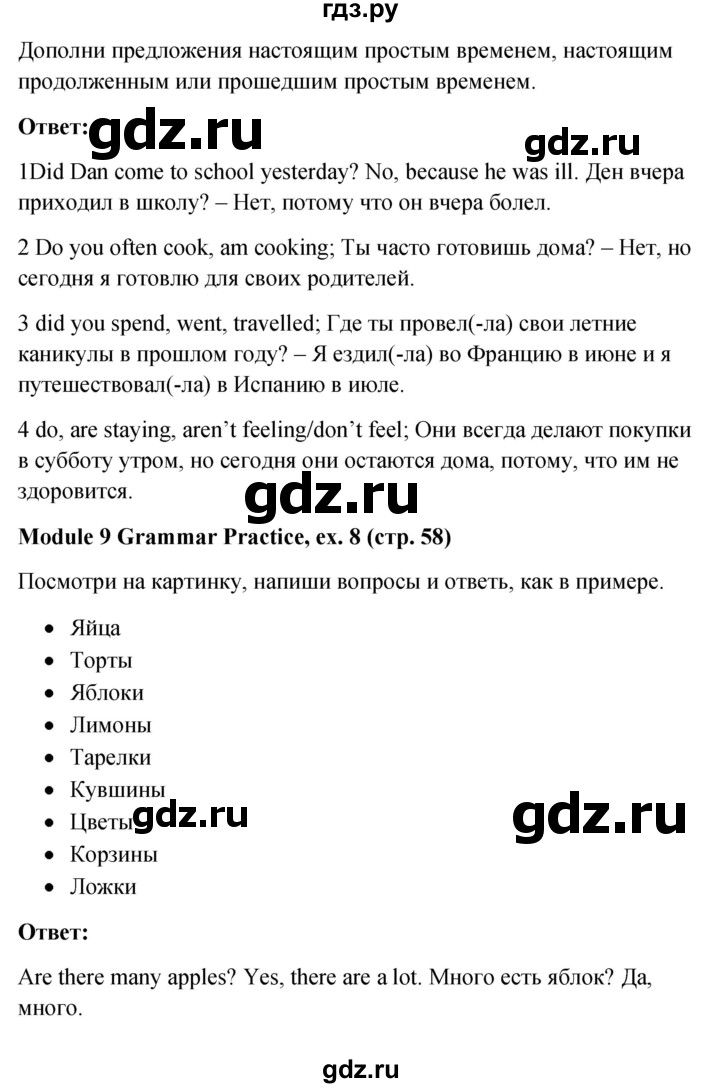
#### Exercise 7
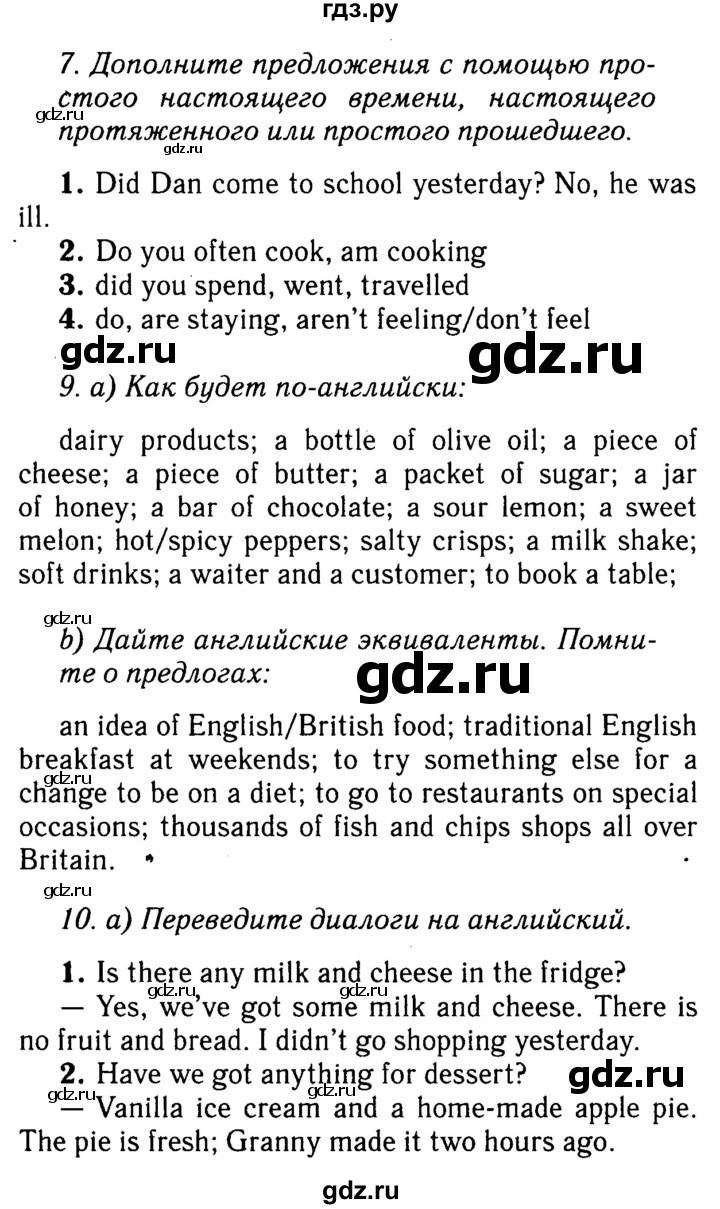
1. A: **Did Dan come** to school yesterday?
B: No, because he **was** ill.
2. A: **Has she ever cooked** at home?
B: No, she hasn't, but yesterday she **cooked** for her parents.
3. A: You look fantastic! **Did you spend** your summer holidays at the seaside?
B: We **went** to the Crimea in June and I **travelled** to the Caucasus in July.
4. They **have already cooked** a special dinner for the family party because they **bought** all the ingredients yesterday.
---
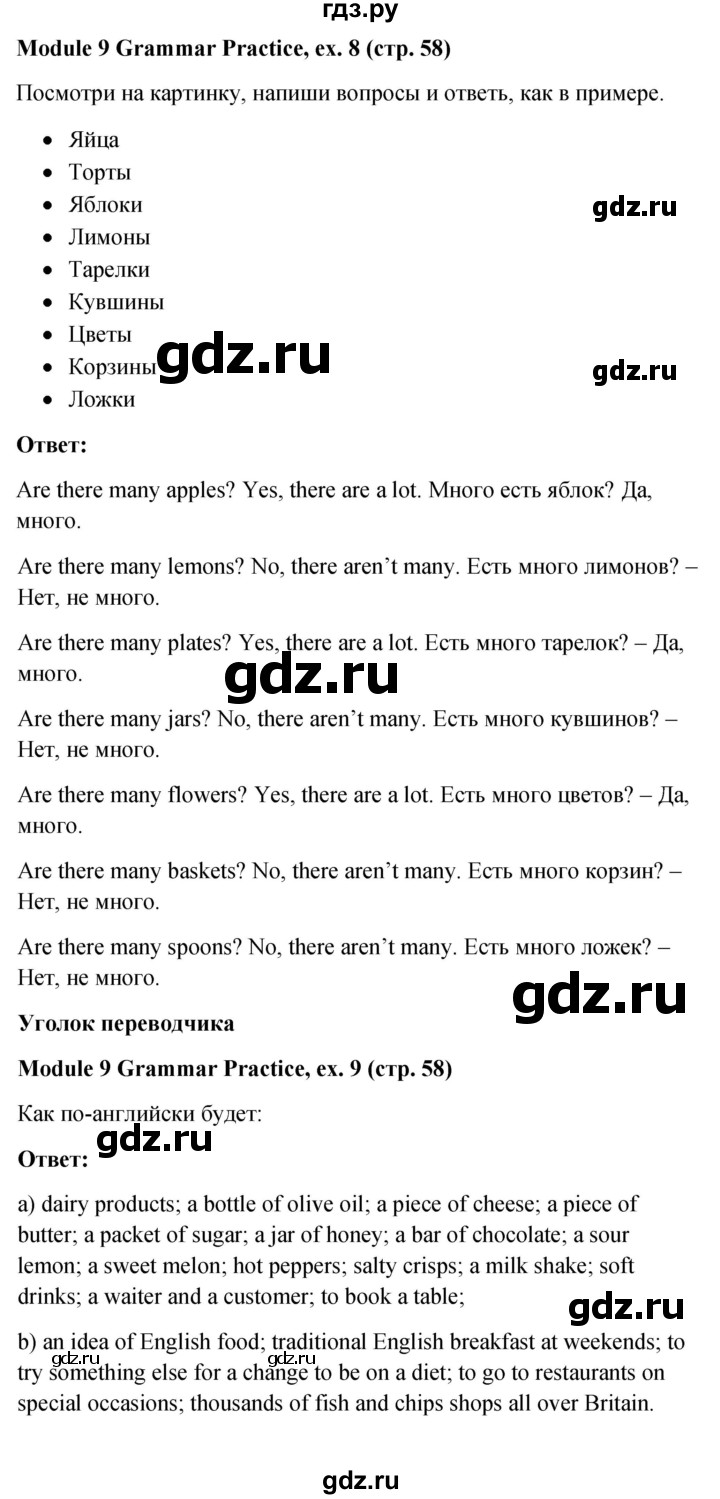
#### Exercise 8
* **Apples:** Are there many apples? — Yes, there are a lot.
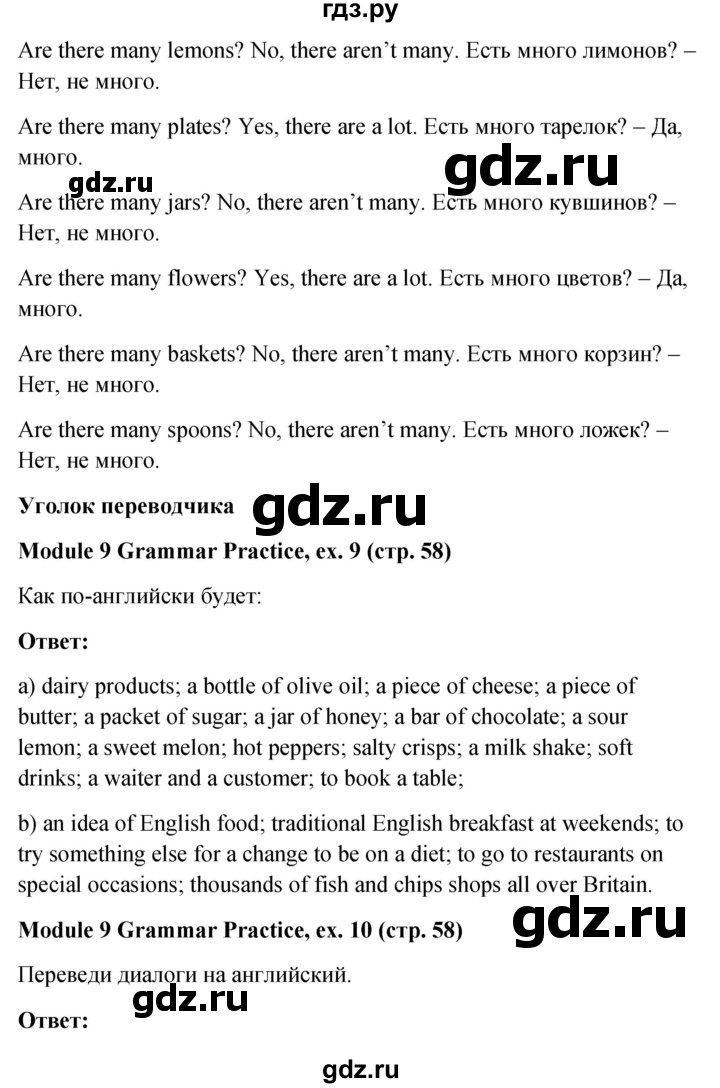
* **Lemons:** Are there many lemons? — No, there aren't many.
* **Plates:** Are there many plates? — Yes, there are a lot.
* **Jars:** Are there many jars? — No, there aren't many.
* **Flowers:** Are there many flowers? — No, there aren't many.
* **Baskets:** Are there many baskets? — No, there aren't many.
* **Spoons:** Are there many spoons? — No, there aren't many.
---
#### Exercise 9
**a)**
* молочные продукты — **dairy products**
* бутылка оливкового масла — **a bottle of olive oil**
* кусок сыра — **a piece of cheese**
* пачка масла — **a packet of butter** (или *a pack of butter*)
* пакет сахара — **a bag of sugar** (или *a packet of sugar*)
* банка мёда — **a jar of honey**
* плитка шоколада — **a bar of chocolate**
* кислый лимон — **a sour lemon**
* сладкая дыня — **a sweet melon**
* острый перец — **a hot pepper** (или *a spicy pepper*)
* соленые чипсы — **salty crisps**
* молочный коктейль — **a milkshake**
* безалкогольные напитки — **soft drinks**
* официант и клиент — **a waiter and a customer** (или *a client*)
* заказать столик — **to book a table**
**b)**
* представление об английской пище — **an idea of English food**
* традиционный английский завтрак по выходным — **a traditional English breakfast at weekends** (или *on weekends*)
* попробовать что-нибудь ещё для разнообразия — **to try something else for a change**
* быть на диете — **to be on a diet**
* ходить в ресторан по особым случаям — **to eat out / to go to a restaurant on special occasions**
* тысячи ресторанчиков «Фиш энд чипс» по всей Британии — **thousands of "Fish and Chips" restaurants all over Britain** (или *across Britain*)
---
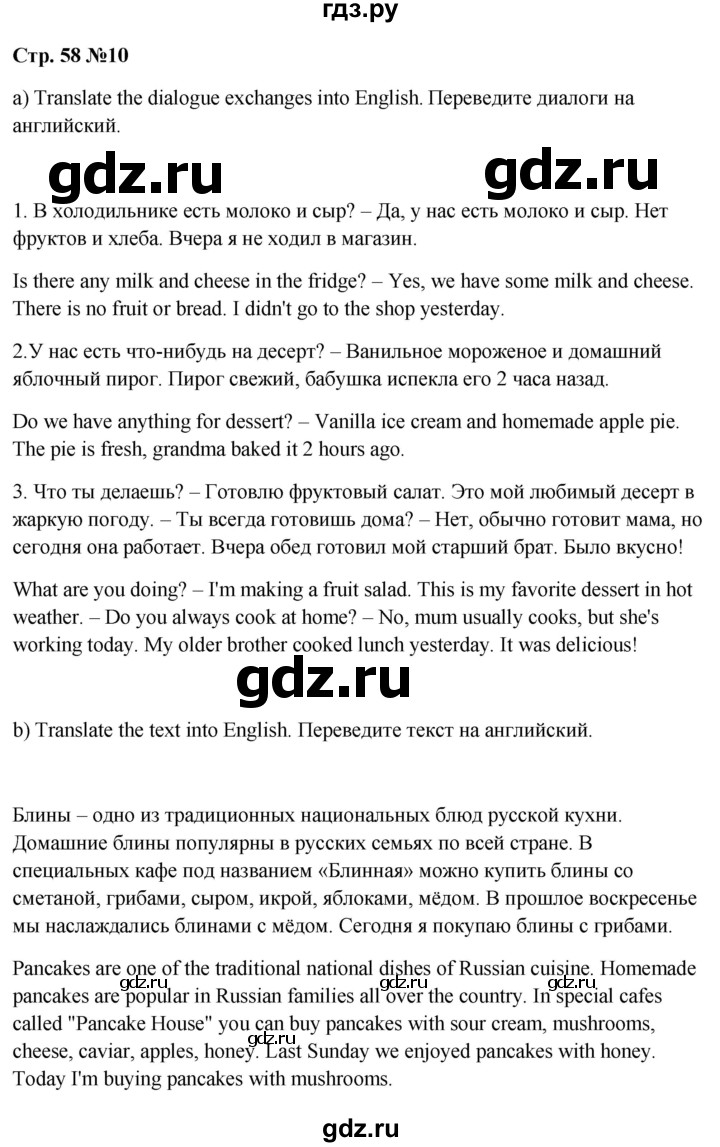
#### Exercise 10
**a)**
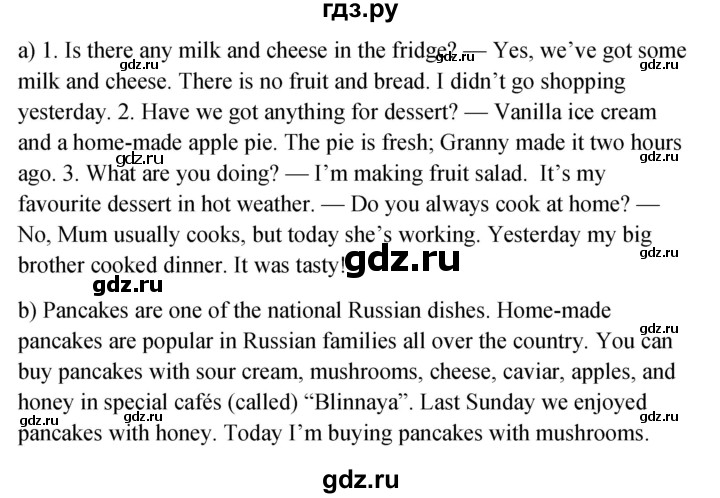
1.
— **Is there any milk and cheese in the fridge?**
— **Yes, I have already checked. We have (got) milk and cheese. There is no fruit or bread. I didn't go to the shop yesterday.**
2.
— **Do we have anything for dessert?** (или *Have we got anything for dessert?*)
— **Vanilla ice cream and homemade apple pie. The pie is fresh, grandma has just baked it.**
3.
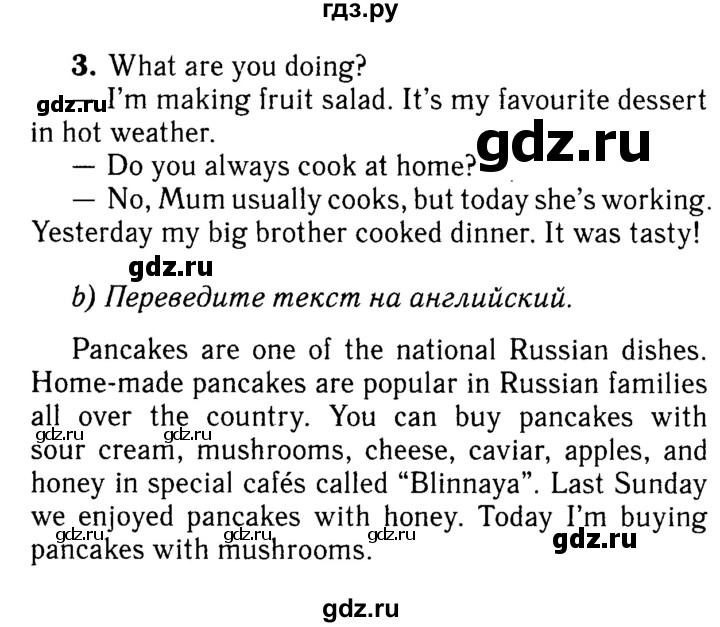
— **What are you doing?**
— **I'm making a fruit salad. It's my favourite dessert in hot weather.**
— **Do you always cook at home yourself?**
— **No, Mum usually cooks, but today she is working. Yesterday my older brother cooked dinner. It was delicious! And today I have already made homemade ice cream. I found this recipe in grandma's old cookbook recently.**
**b)**
**Blini (pancakes) are one of the traditional national dishes of Russian cuisine. Homemade blini are popular in Russian families all over the country. In special cafes called "Blinnaya" you can buy blini with sour cream, mushrooms, cheese, caviar, apples, and honey. Last Sunday we enjoyed blini with honey. Today I am buying them with mushrooms and cheese. I have never tasted them before.**
---
### Пояснение к выполнению заданий
1. **Past Simple vs Present Perfect (Упражнение 7 и 10):**
* **Past Simple** используется, когда указано точное время в прошлом или действие полностью завершено в прошлом. Маркеры времени: *yesterday* (вчера), *in June* (в июне), *last Sunday* (в прошлое воскресенье).
*Образование:* глагол во 2-й форме (правильные с окончанием `-ed`: *cooked*, *travelled*; неправильные: *be $\to$ was*, *go $\to$ went*, *buy $\to$ bought*), а в вопросах и отрицаниях — вспомогательный глагол **did** (*Did Dan come...?*, *I didn't go...*).
* **Present Perfect** связывает действие в прошлом с настоящим моментом (результат или жизненный опыт). Маркеры времени: *already* (уже), *just* (только что), *ever* (когда-либо), *never* (никогда).
*Образование:* **have / has + 3-я форма глагола** (*has cooked*, *have already checked*, *have never tasted*).
2. **Вопросы с исчисляемыми существительными (Упражнение 8):**
* Для исчисляемых существительных во множественном числе в вопросах о количестве используется **many** (*Are there many apples?*).
* Если предметов много, отвечаем: *Yes, there are a lot.* Если мало: *No, there aren't many.*
3. **Предлоги и устойчивые сочетания (Упражнение 9b):**
* *for a change* — для разнообразия (устойчивый предлог **for**);
* *on a diet* — на диете (предлог **on**);
* *on special occasions* — по особым случаям (предлог **on**);
* *at / on weekends* — по выходным (в британском варианте чаще **at**, в американском — **on**).
Оцени решение:
Спасибо за оценку!