

ГДЗ по английскому языку 7 класс Ваулина рабочая тетрадь Spotlight страница - 64

Авторы: Ю.Е. Ваулина, Д. Дули, О.Е. Подоляко, В. Эванс
Серия: Spotlight
Тип книги: Рабочая тетрадь
Год: 2015-2024
Рекомендуем посмотреть



 Премиум
Подробное решение страница № 64 по английскому языку рабочая тетрадь Spotlight для учащихся 7 класса Spotlight , авторов Ваулина, Дули, Подоляко, Эванс 2015-2024

 ИИ-решебник / страница / 64
Ответ подготовлен нейросетью и может содержать ошибки
Объяснение и пошаговое решение
Вот готовые ответы и понятные объяснения ко всем заданиям.
---
### **Итоговые ответы**
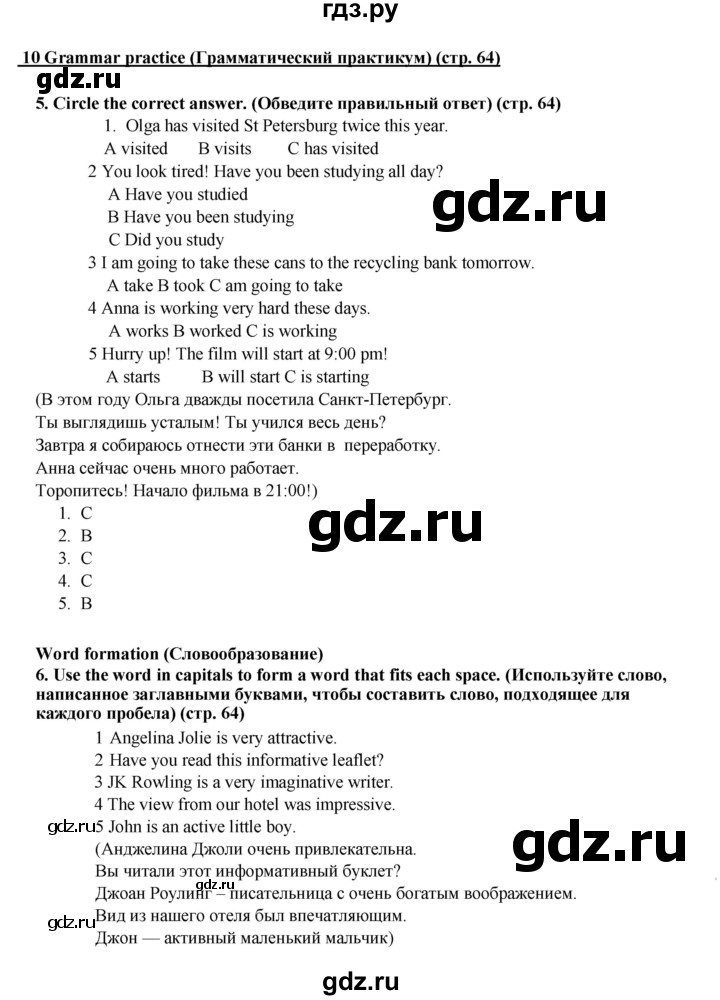
#### **Exercise 5**
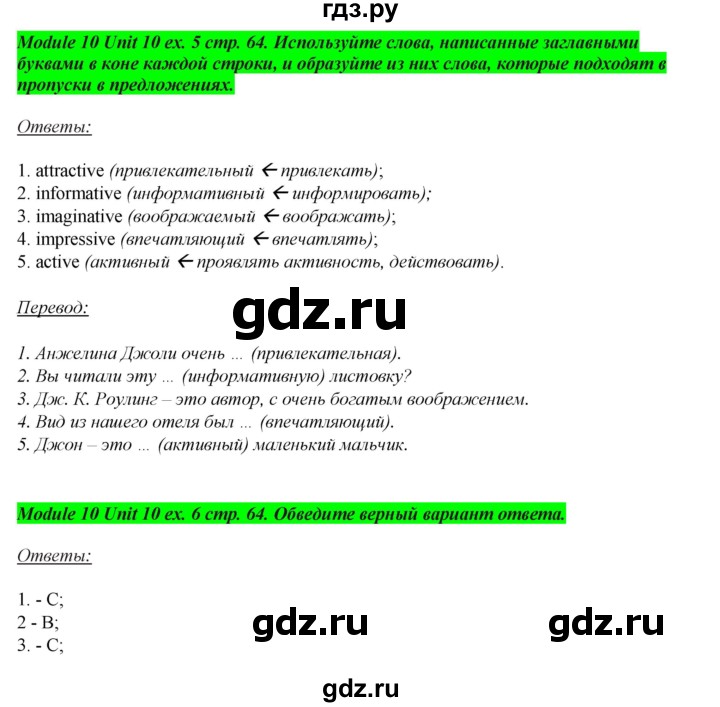
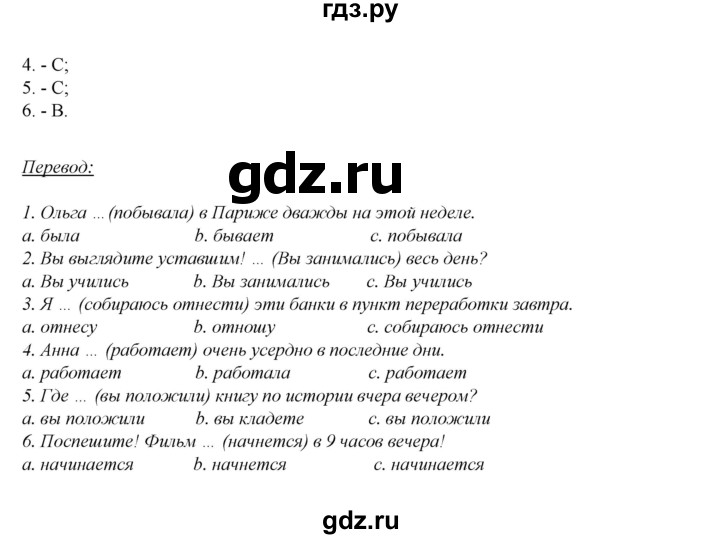
1. **C** (has visited)
2. **B** (Have you been studying)
3. **C** (am going to take)
4. **C** (is working)
5. **A** (starts)
---
#### **Exercise 6**
1. **attractive**
2. **informative**
3. **imaginative**
4. **impressive**
5. **active**
---
#### **Exercise 7**
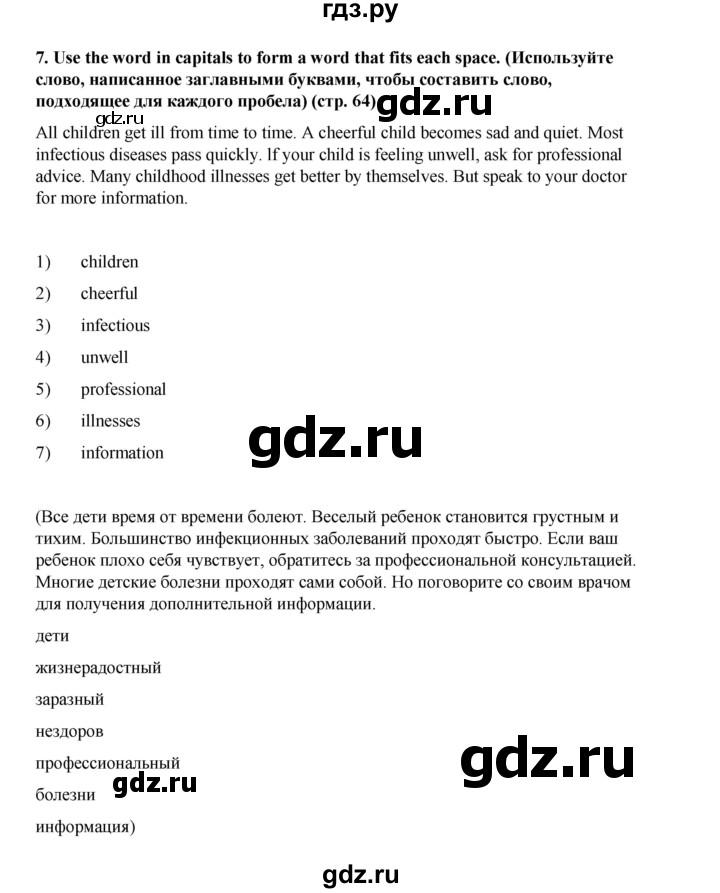
1. **children**
2. **cheerful**
3. **infectious**
4. **unwell**
5. **professional**
6. **illnesses**
7. **information**
---
#### **Exercise 8 (What's the English for)**
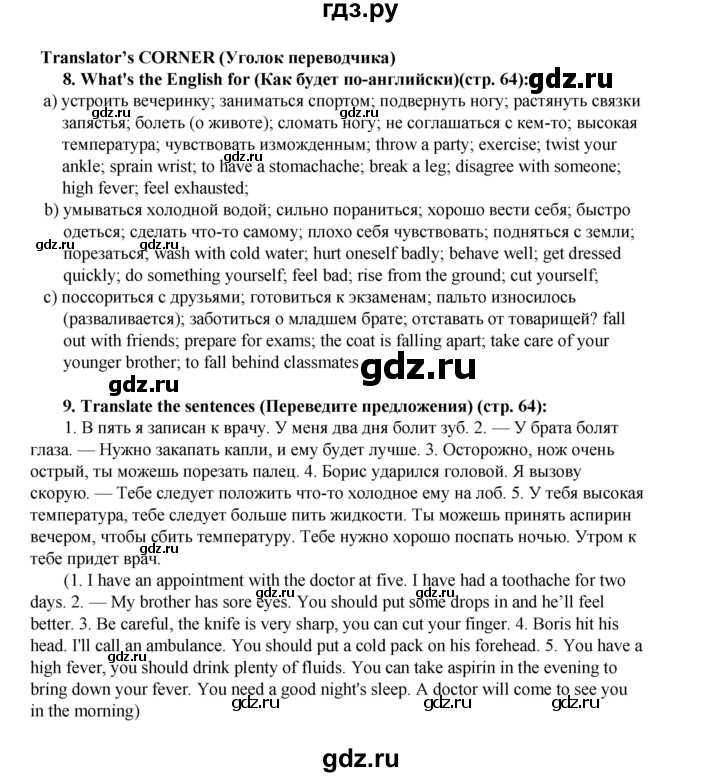
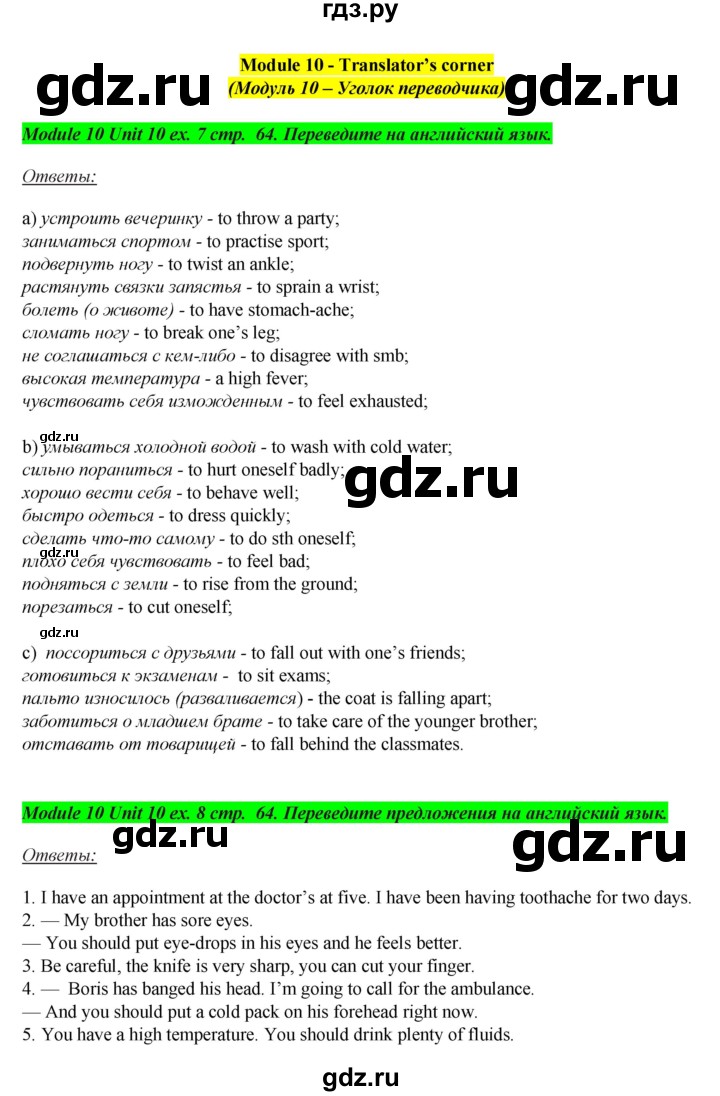
**a)**
* устроить вечеринку — **to have / to throw a party**
* заниматься спортом — **to do / to play sports**
* подвернуть ногу — **to twist / to sprain an ankle**
* растянуть связки запястья — **to sprain a wrist**
* болеть (о животе) — **to have a stomach ache**
* сломать ногу — **to break a leg / to break one's leg**
* не соглашаться с кем-то — **to disagree with somebody**
* высокая температура — **a high temperature / a fever**
* чувствовать изможденным — **to feel exhausted**
**b)**
* умываться холодной водой — **to wash with cold water**
* сильно пораниться — **to hurt oneself badly / to get badly hurt**
* хорошо вести себя — **to behave well / to behave oneself**
* быстро одеться — **to dress quickly / to get dressed quickly**
* сделать что-то самому — **to do something yourself / oneself**
* плохо себя чувствовать — **to feel unwell / to feel bad**
* подняться с земли — **to get up from the ground**
* порезаться — **to cut oneself**
**c)**
* поссориться с друзьями — **to fall out with friends**
* готовиться к экзаменам — **to prepare / revise for exams**
* пальто износилось (разваливается) — **the coat is worn out / the coat is falling apart**
* заботиться о младшем брате — **to look after / take care of a younger brother**
* отставать от товарищей — **to fall behind one's classmates (friends)**
---
#### **Exercise 9 (Translate the sentences)**
1. I have an appointment with the doctor at five. I have had a toothache for two days (*или* My tooth has been aching for two days).
2. — My brother has sore eyes (*или* My brother's eyes hurt). — He should use eye drops, and he will feel better.
3. Be careful, the knife is very sharp, you might cut your finger.
4. — Boris has hit his head. I will call an ambulance. — You should put something cold on his forehead.
5. You have a high temperature, you should drink more fluids. You can take an aspirin in the evening to bring down the temperature. You need to sleep well tonight. A doctor will come to see you in the morning.
---
#### **Exercise 10 (Translate the text)**
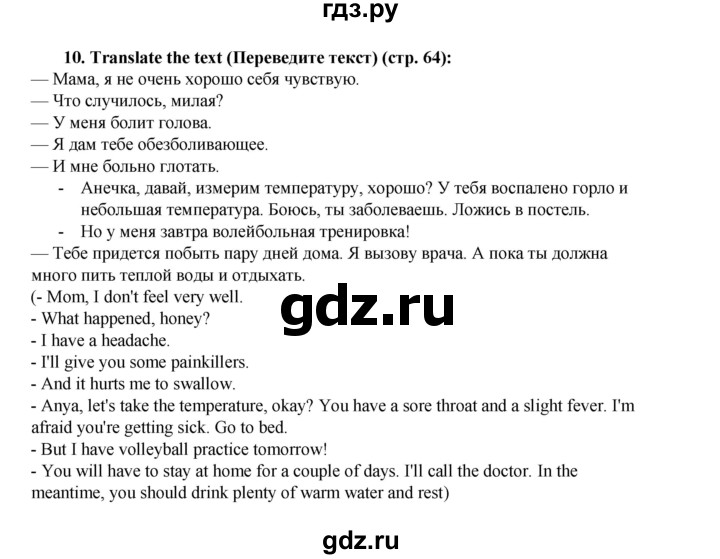
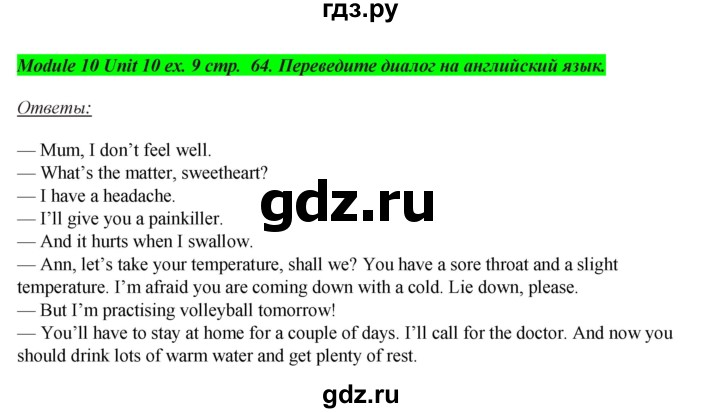
— Mum, I don’t feel very well.
— What’s the matter, dear? (*или* What's wrong, dear?)
— I have a headache.
— I’ll give you a painkiller.
— And it hurts to swallow.
— Anechka, let’s take your temperature, shall we? You have a sore throat and a slight temperature (*или* fever). I’m afraid you are falling ill (*или* coming down with something). Go to bed.
— But I have volleyball practice tomorrow!
— You’ll have to stay at home for a couple of days. I will call the doctor. Meanwhile, you should drink plenty of warm water and rest.
---
### **Пояснения к выполнению**
* **Упражнение 5 (Времена глаголов):**
1. *this year* указывает на период времени, который ещё не завершился $\rightarrow$ **Present Perfect** (*has visited*).
2. Вопрос подчеркивает длительное действие в течение всего дня, результат которого виден сейчас (усталость) $\rightarrow$ **Present Perfect Continuous** (*Have you been studying*).
3. Намерение и план на завтра $\rightarrow$ оборот **to be going to** (*am going to take*).
4. Временное действие, происходящее в текущий период (*these days*) $\rightarrow$ **Present Continuous** (*is working*).
5. Расписания поездов, фильмов и уроков выражаются через **Present Simple** (*starts*).
* **Упражнения 6 и 7 (Словообразование):**
* Суффикс **-ive** образует прилагательные от глаголов: *attract $\rightarrow$ attractive*, *impress $\rightarrow$ impressive*, *act $\rightarrow$ active*.
* Суффиксы **-ive** / **-ative**: *inform $\rightarrow$ informative*, *imagine $\rightarrow$ imaginative*.
* В упр. 7: *child* во множественном числе $\rightarrow$ *children*; *cheer $\rightarrow$ cheerful* (жизнерадостный); *infect $\rightarrow$ infectious* (инфекционный); приставка **un-** для противоположного значения: *well $\rightarrow$ unwell* (нездоровый); *profession $\rightarrow$ professional*; *ill $\rightarrow$ illnesses* (болезни); *inform $\rightarrow$ information* (информация).
* **Упражнения 8, 9, 10 (Лексика и грамматика здоровья):**
* Для описания симптомов используются устойчивые фразы: *to have a headache / toothache / stomach ache / a high temperature*.
* Для обозначения возвратных действий используются местоимения на **-self / -selves**: *to cut oneself*, *to hurt oneself*.
* Модальный глагол **should** выражает совет («следует»), **have to** — необходимость в силу обстоятельств («придется»).
Оцени решение:
Спасибо за оценку!