


ГДЗ по английскому языку 11 класс Афанасьева Spotlight Базовый уровень страница - 139

Авторы: Афанасьева О.В., Дули Д., Михеева И.В., Оби Б., Эванс В.
Серия: Spotlight
Тип книги: Учебник
Год: 2015-2024
Рекомендуем посмотреть


 Премиум
Подробное решение страница № 139 по английскому языку Spotlight для учащихся 11 класса Spotlight Базовый уровень, авторов Афанасьева, Дули, Михеева, Оби, Эванс 2015-2024
### Итоговый ответ
#### Exercise 5
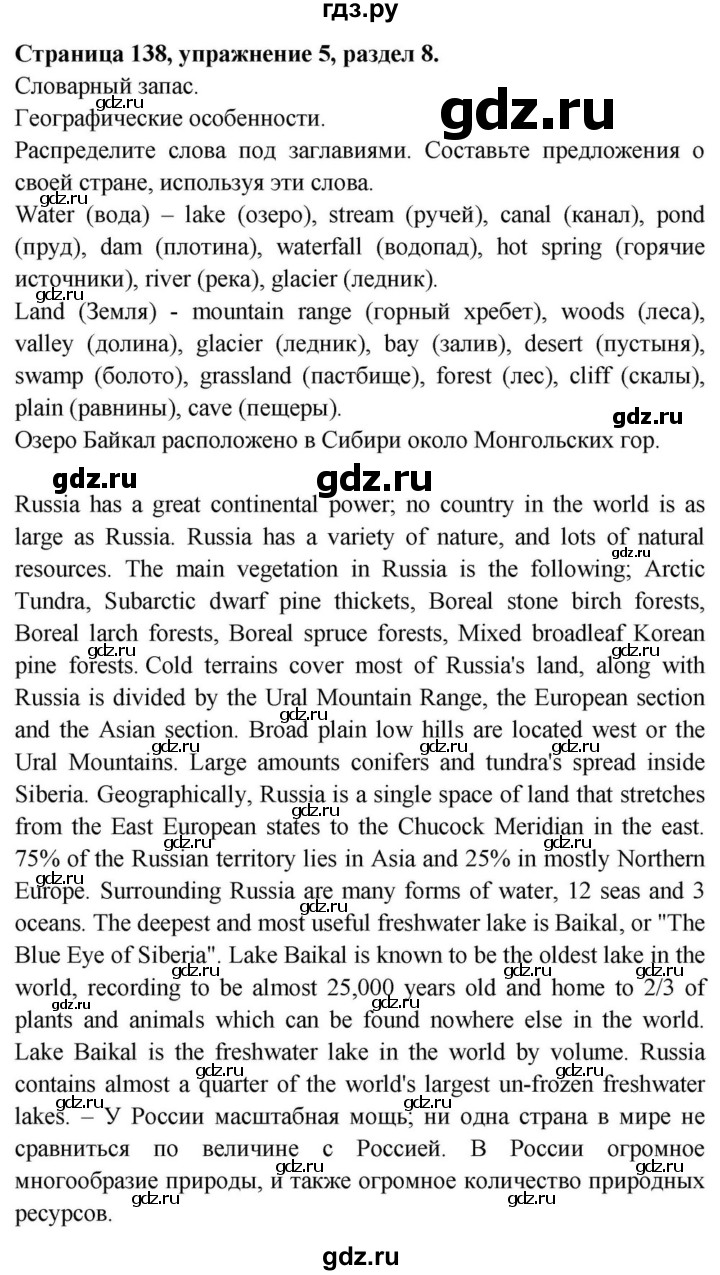
**Categorisation:**
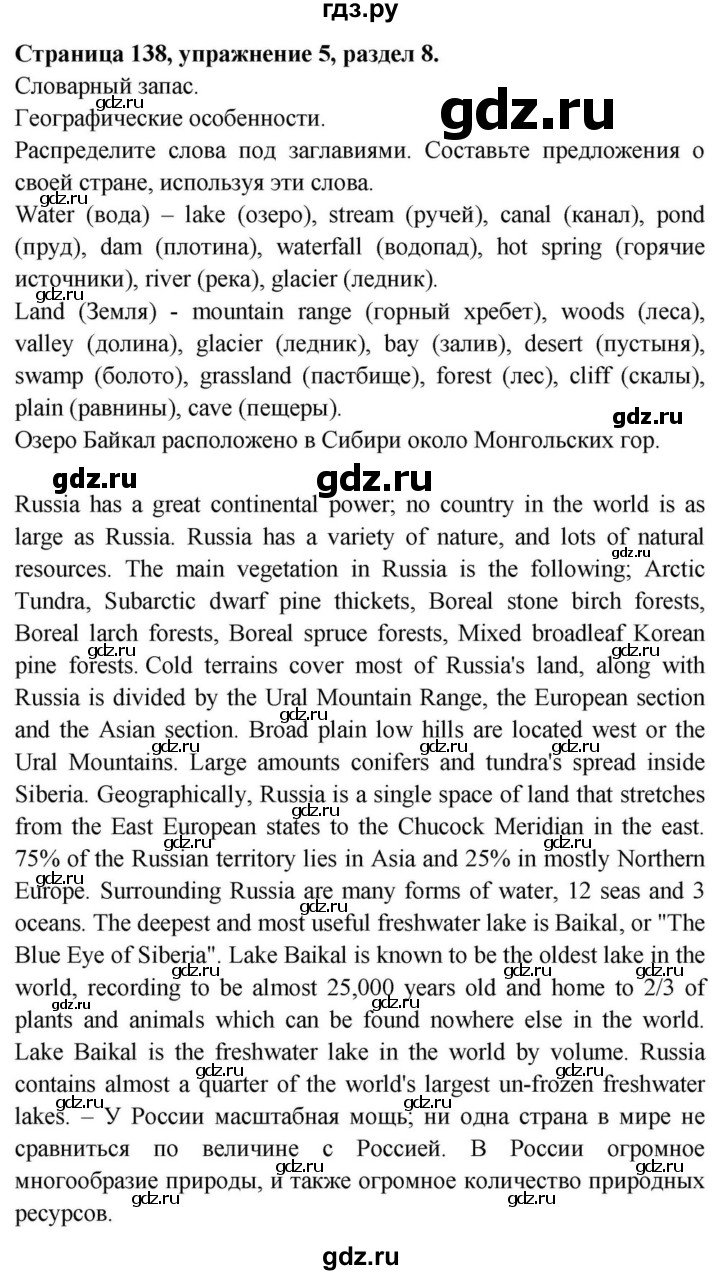
* **Water:** lake, stream, canal, pond, dam, glacier, waterfall, hot spring, bay, swamp, river.
* **Land:** mountain range, woods, valley, desert, grassland, forest, cliff, plain, cave.
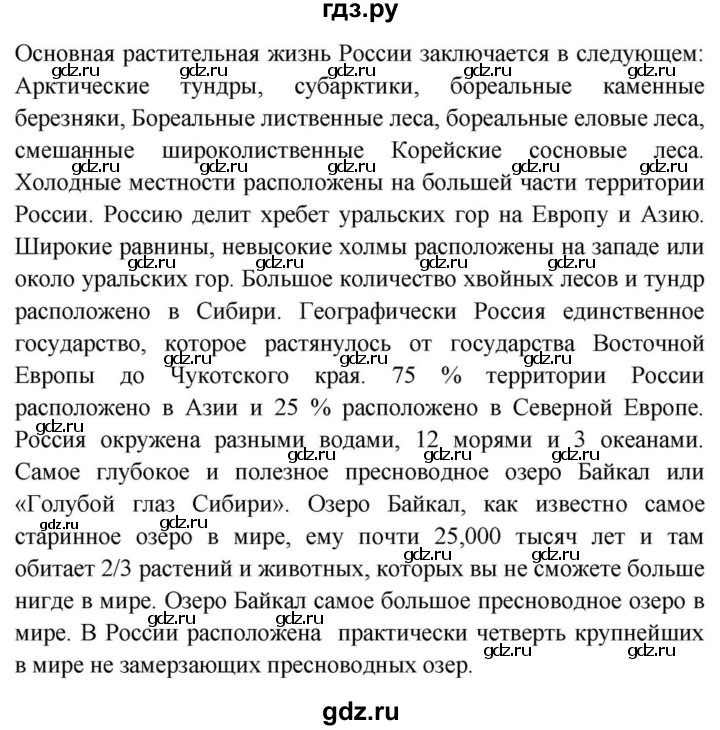
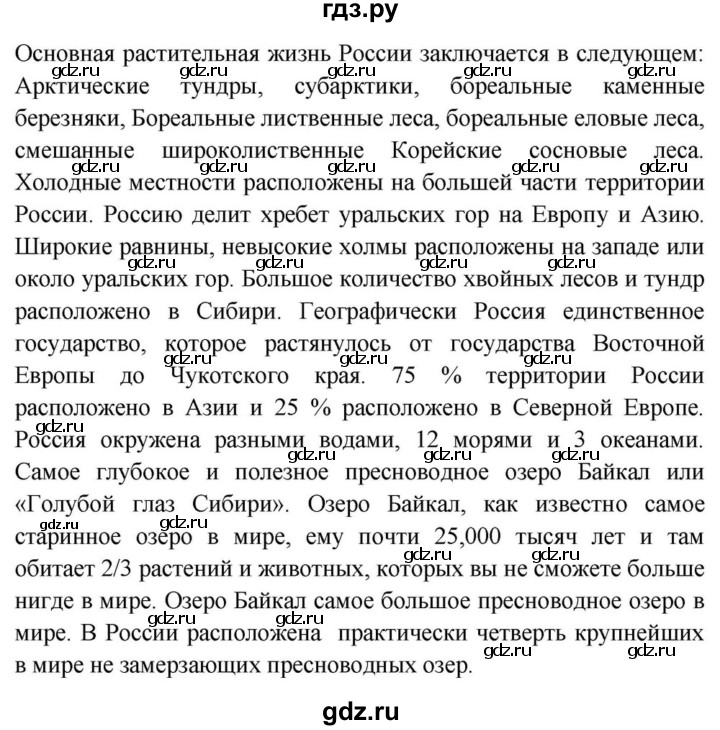
**Example sentences about Russia:**
1. The Ural **mountain range** forms a natural border between Europe and Asia.
2. The Volga is the longest **river** in Europe.
3. The Taiga is a massive coniferous **forest** that covers a large part of Siberia.
4. The Kungur Ice **cave** in the Urals is famous for its unique ice formations and underground lakes.
5. The Kamchatka Peninsula is well known for its active volcanoes and natural **hot springs**.
6. The Vasyugan **swamp** in Western Siberia is one of the largest wetlands in the world.
---
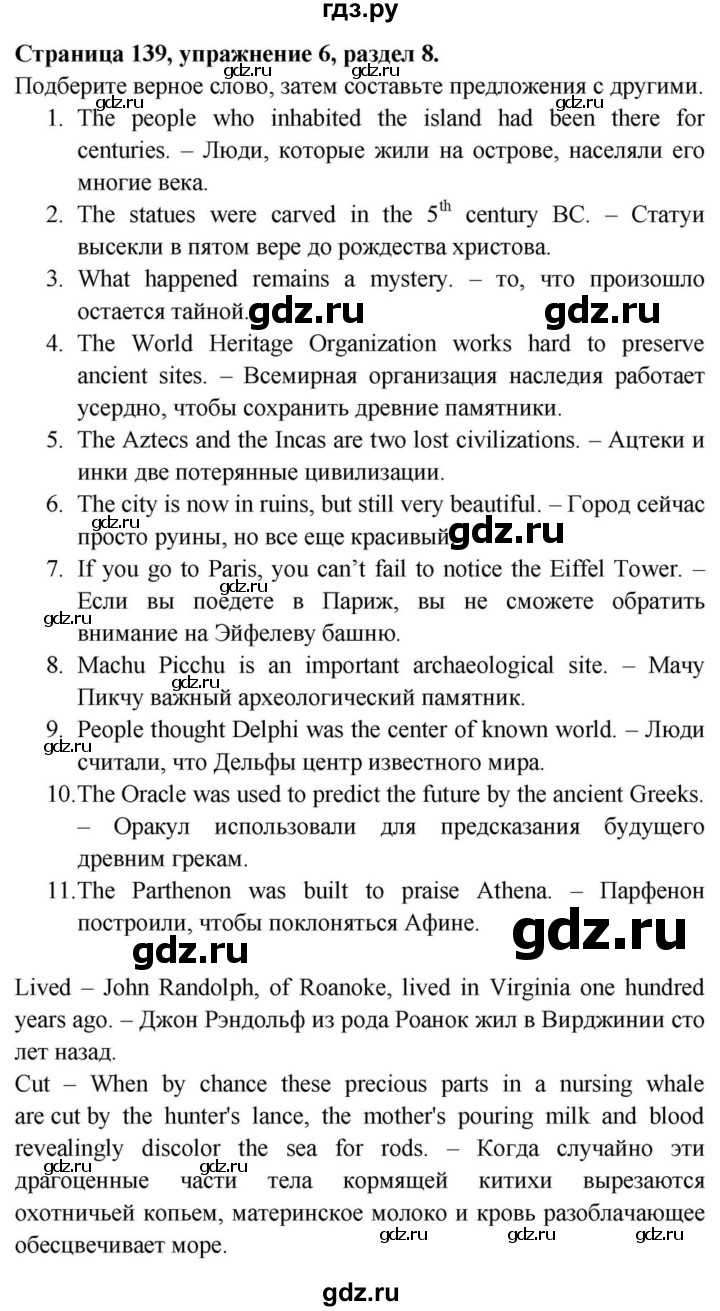
#### Exercise 6
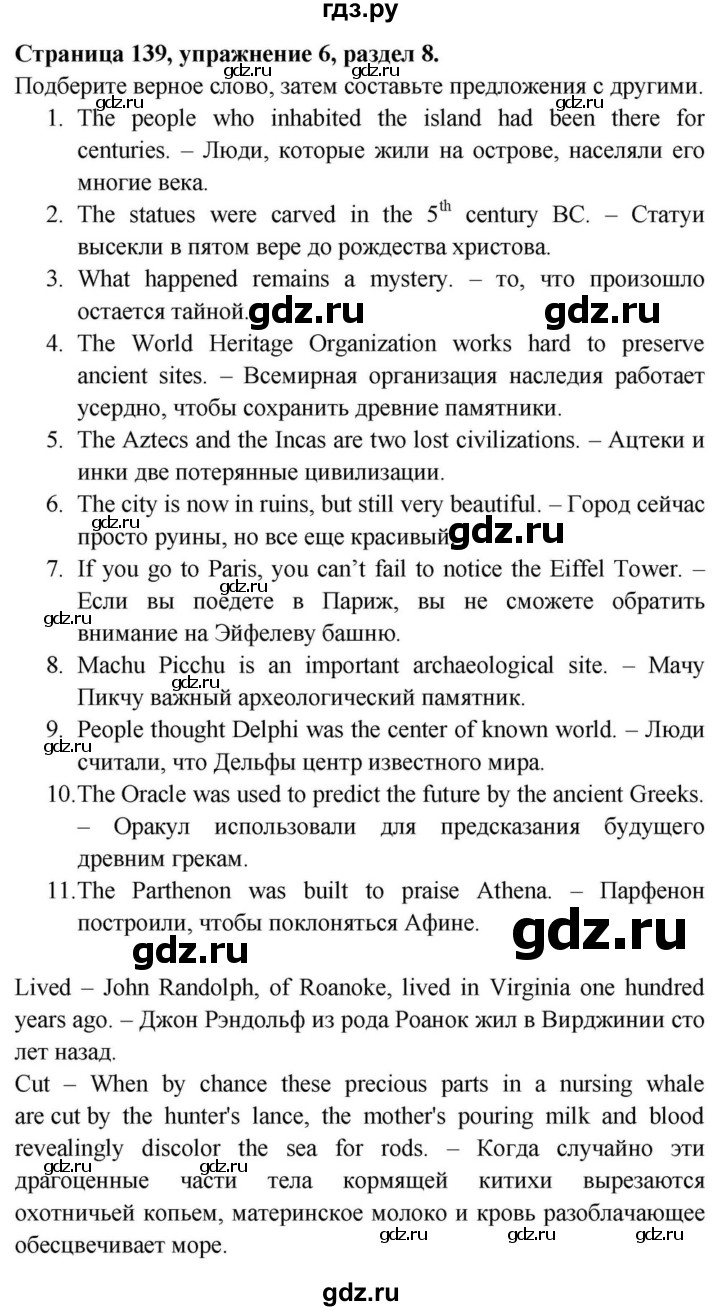
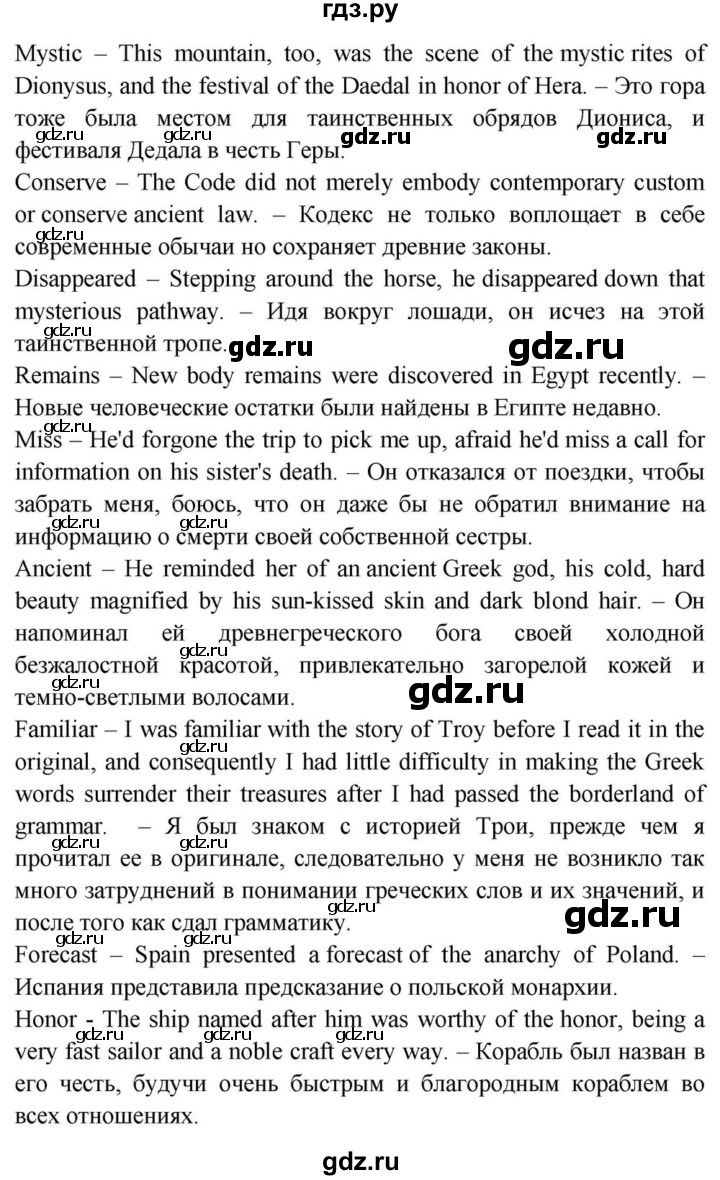
1. **inhabited**
* *Sentence with "lived":* My grandparents **lived** in a small wooden house by the lake for forty years.
2. **carved**
* *Sentence with "cut":* He carefully **cut** the paper into small pieces for his art project.
3. **mystery**
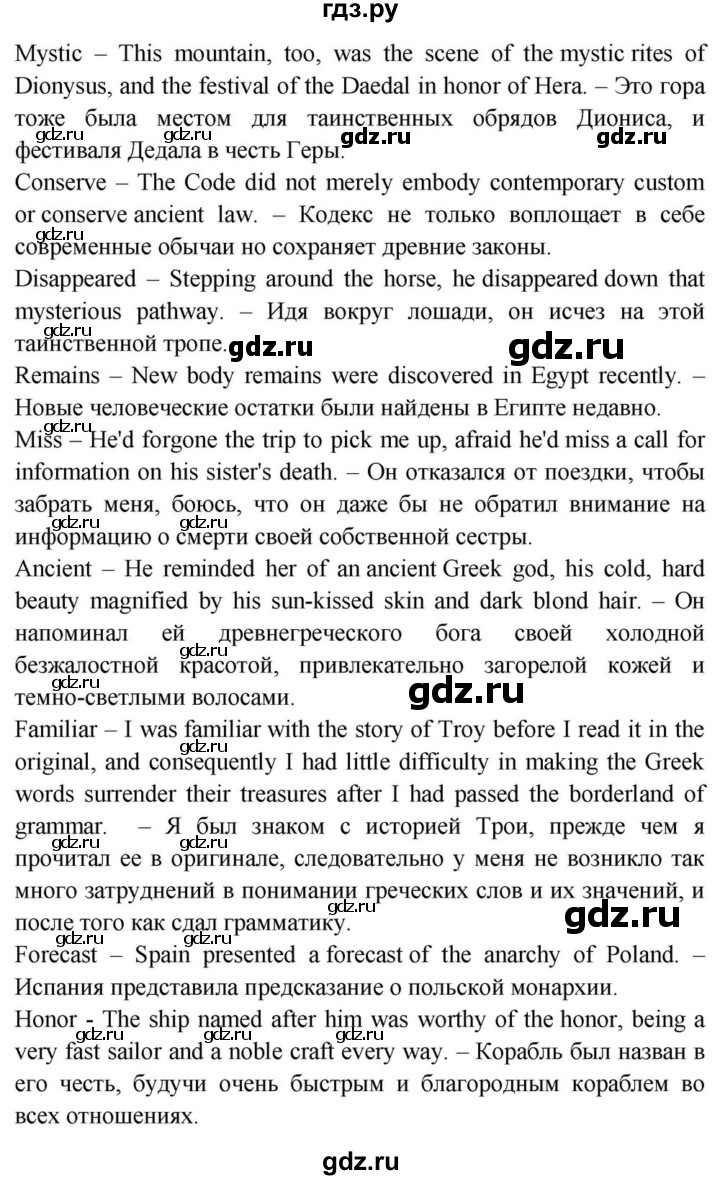
* *Sentence with "mystic":* She was interested in the teachings of an ancient **mystic** philosopher.
4. **preserve**
* *Sentence with "conserve":* We should turn off the tap while brushing our teeth to **conserve** water.
5. **lost**
* *Sentence with "disappeared":* The cat suddenly **disappeared** around the corner and we couldn't find it.
6. **ruins**
* *Sentence with "remains":* Archaeologists uncovered the ancient **remains** of a Roman soldier.
7. **fail**
* *Sentence with "miss":* Turn left at the crossroads and you can't **miss** the museum on your right.
8. **archaeological**
* *Sentence with "antique":* My grandmother has a collection of rare **antique** furniture in her living room.
9. **known**
* *Sentence with "familiar":* The streets of my hometown are very **familiar** to me.
10. **predict**
* *Sentence with "forecast":* The weather **forecast** says it is going to snow heavily tomorrow.
11. **honour**
* *Sentence with "praise":* The teacher always likes to **praise** hard-working students in front of the class.
---
#### Speaking 7
**Sample Answer:**
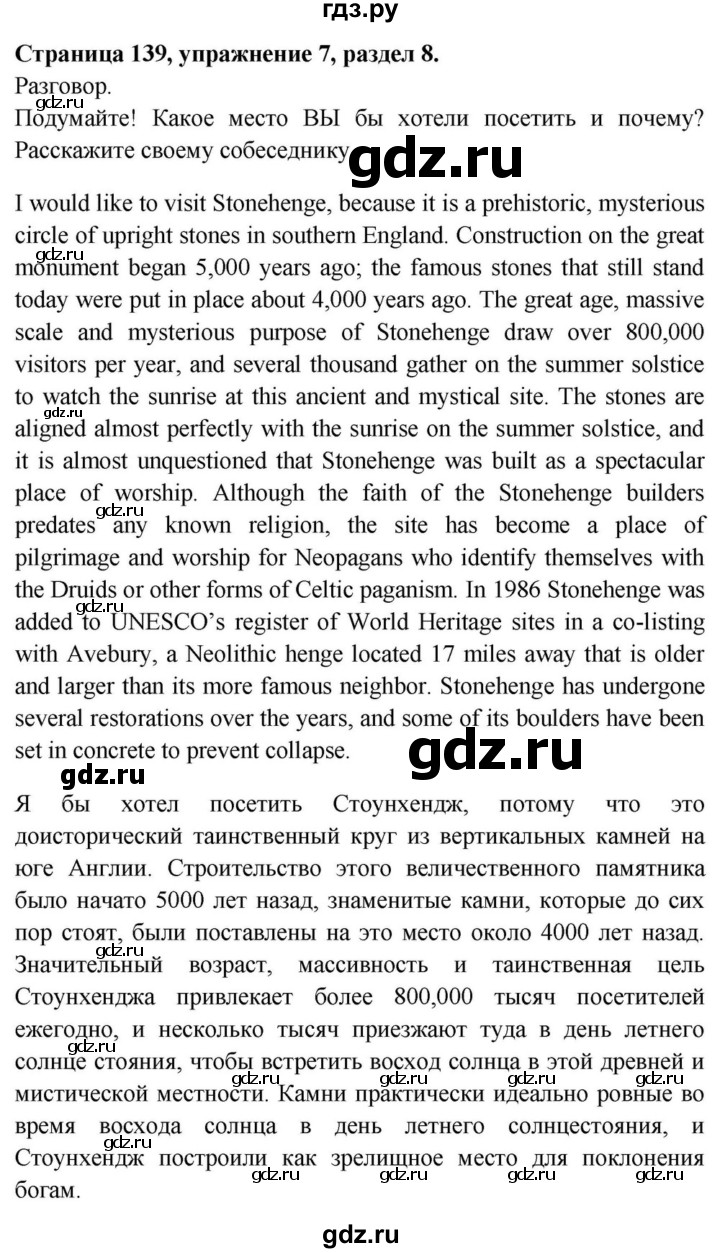
> "I would love to visit **Machu Picchu** in Peru. I have always been fascinated by the Inca civilisation and their incredible architectural skills. Seeing the stone structures high up in the Andes Mountains with my own eyes and experiencing the mysterious atmosphere of the 'Lost City' would be unforgettable."
---
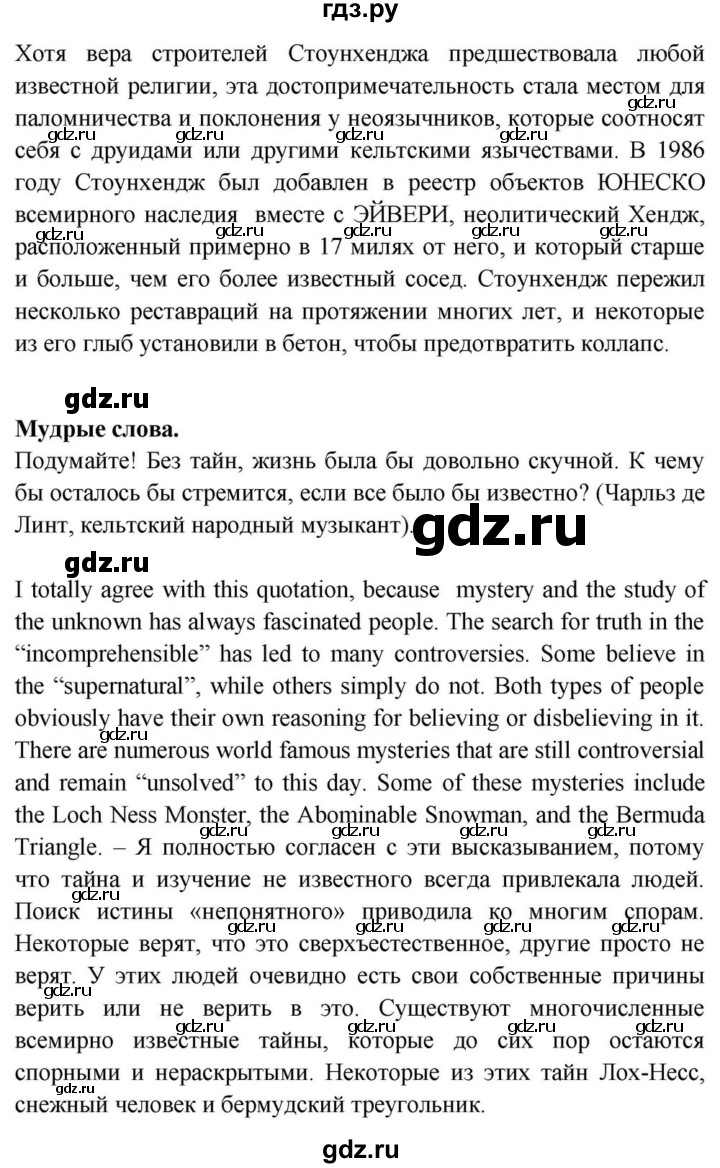
#### Words of Wisdom
**Sample Answer:**
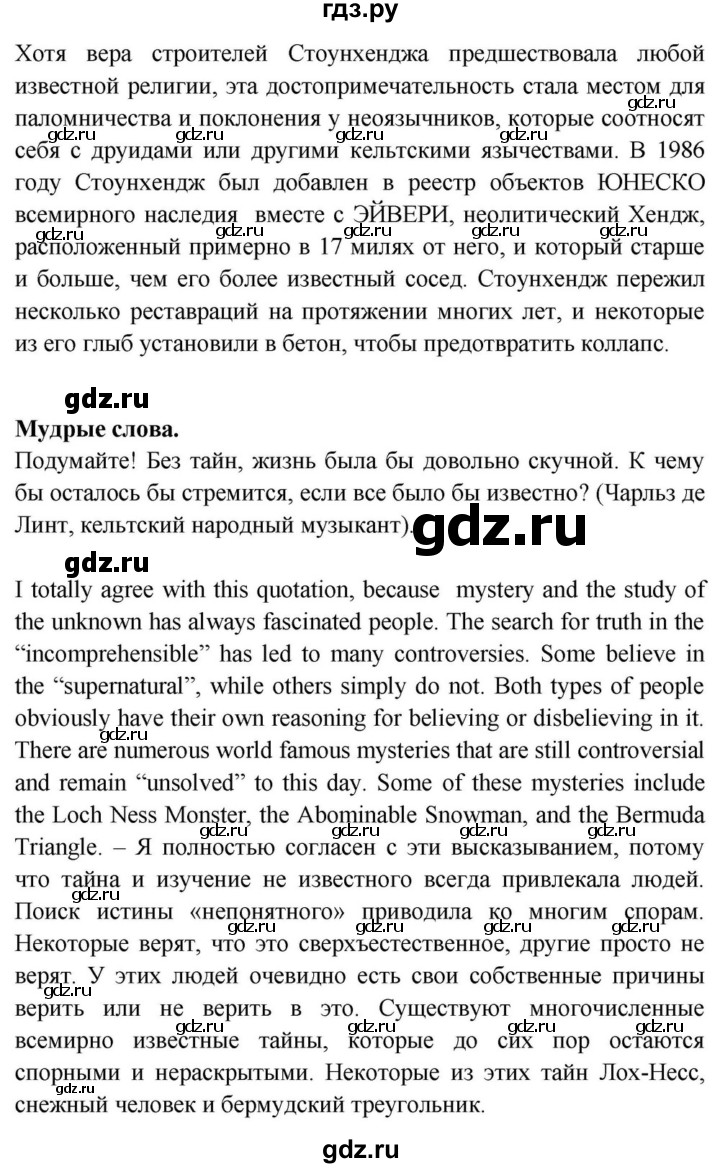
> Charles de Lint means that curiosity and the unknown are what drive human progress, imagination, and ambition. If we knew the answer to every question and solved every secret of the universe, life would lose its excitement, and people would have no new goals to achieve.
---
### Объяснение и правила
#### К упражнению 5
* Географические объекты делятся на водные объекты (**water**) и элементы суши/рельефа (**land**).
* Ледники (**glacier**) и болота (**swamp**) традиционно относятся к водным объектам / гидросфере.
#### К упражнению 6 (Лексические различия)
1. **Inhabit / live:** Глагол *inhabit* («населять») — переходный (после него идет прямое дополнение без предлога: *inhabit the island*). *Live* требует предлога места (*live on the island*).
2. **Carve / cut:** *Carve* означает «вырезать, высекать художественное изображение из камня или дерева», а *cut* — просто «резать, отрезать».
3. **Mystic / mystery:** *Mystic* — прилагательное («мистический») или существительное («мистик»), а после глагола-связки *remains a ...* требуется существительное со значением «загадка/тайна» — *mystery*.
4. **Preserve / conserve:** *Preserve* означает «сохранять в неизменном виде исторические памятники, памятники культуры или природу». *Conserve* чаще употребляется в значении «рационально использовать, беречь ресурсы (воду, энергию)».
5. **Lost / disappeared:** В устойчивых исторических контекстах используется сочетание *lost civilisation* («затерянная / исчезнувшая цивилизация»). *Disappeared* — глагол или причастие, не образующее устойчивого термина.
6. **In ruins / remains:** Устойчивое выражение — *to be in ruins* («лежать в руинах, быть разрушенным»). Слово *remains* используется как «останки / сохранившиеся фрагменты».
7. **Fail / miss:** Устойчивый оборот — *can't fail to notice / do sth* («невозможно не заметить / непременно сделаешь»). Слово *miss* с инфинитивом обычно не используется в этой конструкции (сравните: *you can't miss it*).
8. **Archaeological / antique:** *Archaeological site* — «археологический памятник / место раскопок». *Antique* относится к предметам старины и антиквариату (*antique furniture*).
9. **Known / familiar:** *The known world* — устойчивое понятие «известный мир (на тот исторический момент)». *Familiar* означает «хорошо знакомый кому-либо субъективно».
10. **Predict / forecast:** В отношении пророчеств, мистических предсказаний и исторических оракулов используется глагол *predict* («предсказывать будущее»). *Forecast* используется для расчетов и прогнозов (погода, экономика).
11. **Honour / praise:** *To honour a god / hero* означает «воздать почести, почтить память, возвести храм в честь кого-то». *Praise* — «хвалить, одобрять чьи-то действия».
Спасибо за оценку!


Открой больше возможностей
Войди через VK — задавай вопросы ИИ и сохраняй ГДЗ в избранное
