


ГДЗ по английскому языку 11 класс Афанасьева Spotlight Базовый уровень spotlight on russia - 8

Авторы: Афанасьева О.В., Дули Д., Михеева И.В., Оби Б., Эванс В.
Серия: Spotlight
Тип книги: Учебник
Год: 2015-2024
Рекомендуем посмотреть


 Премиум
Подробное решение spotlight on russia № 8 по английскому языку Spotlight для учащихся 11 класса Spotlight Базовый уровень, авторов Афанасьева, Дули, Михеева, Оби, Эванс 2015-2024
### Итоговый ответ
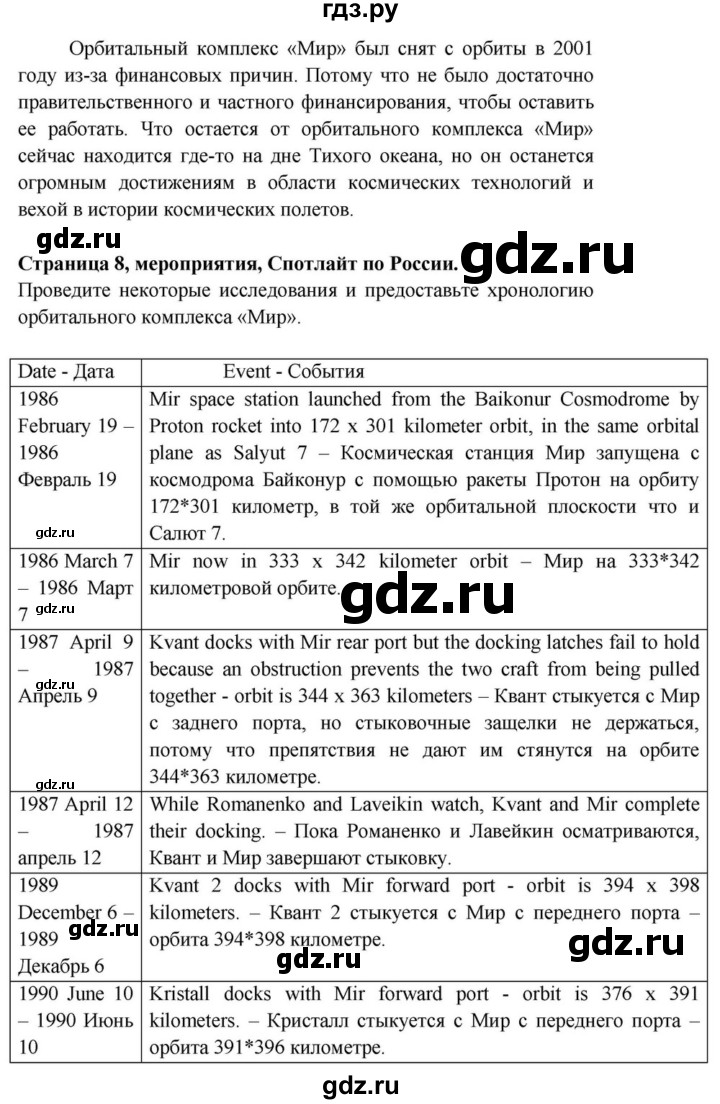
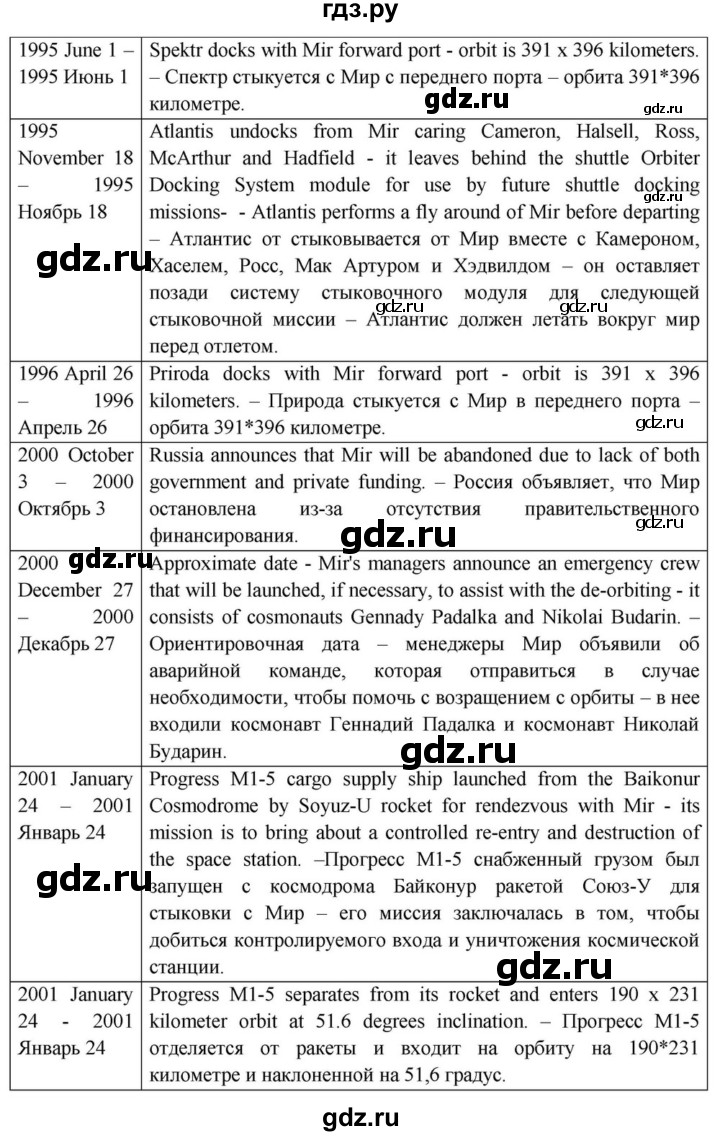
#### 1. Timeline of the Mir Orbital Complex (Хронология орбитального комплекса «Мир»)
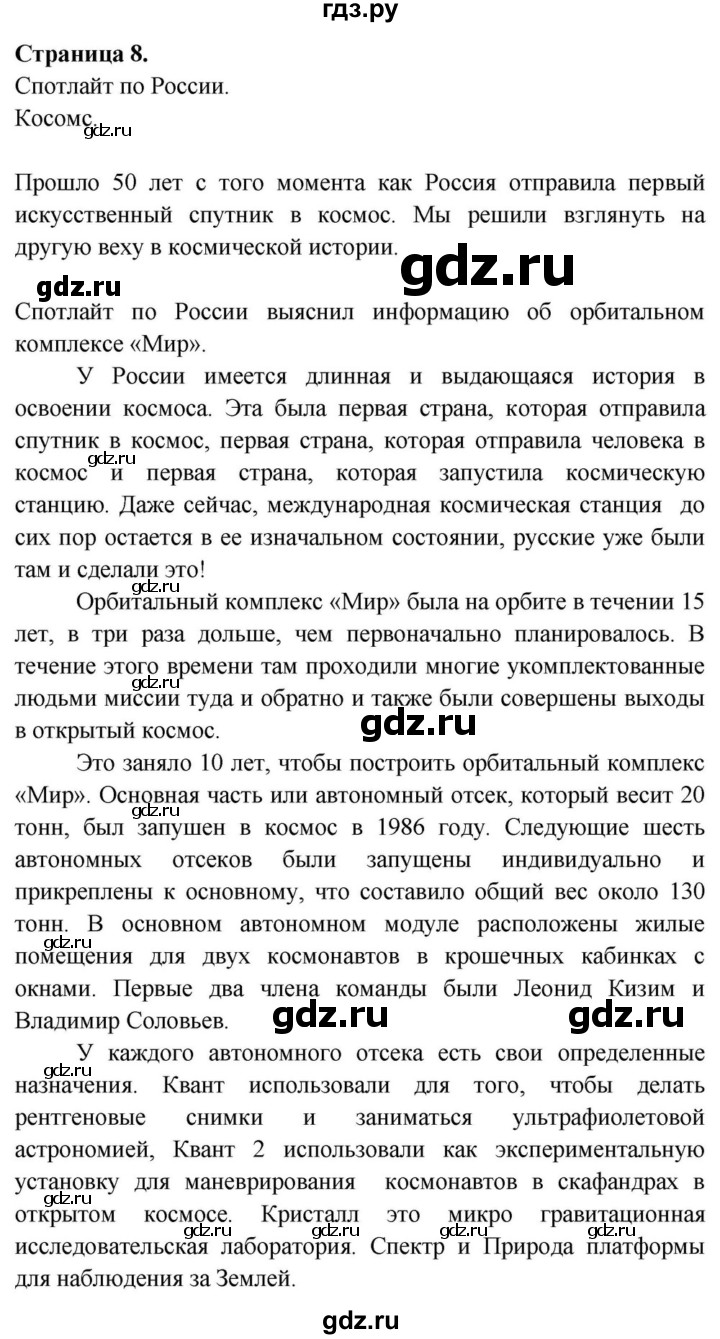
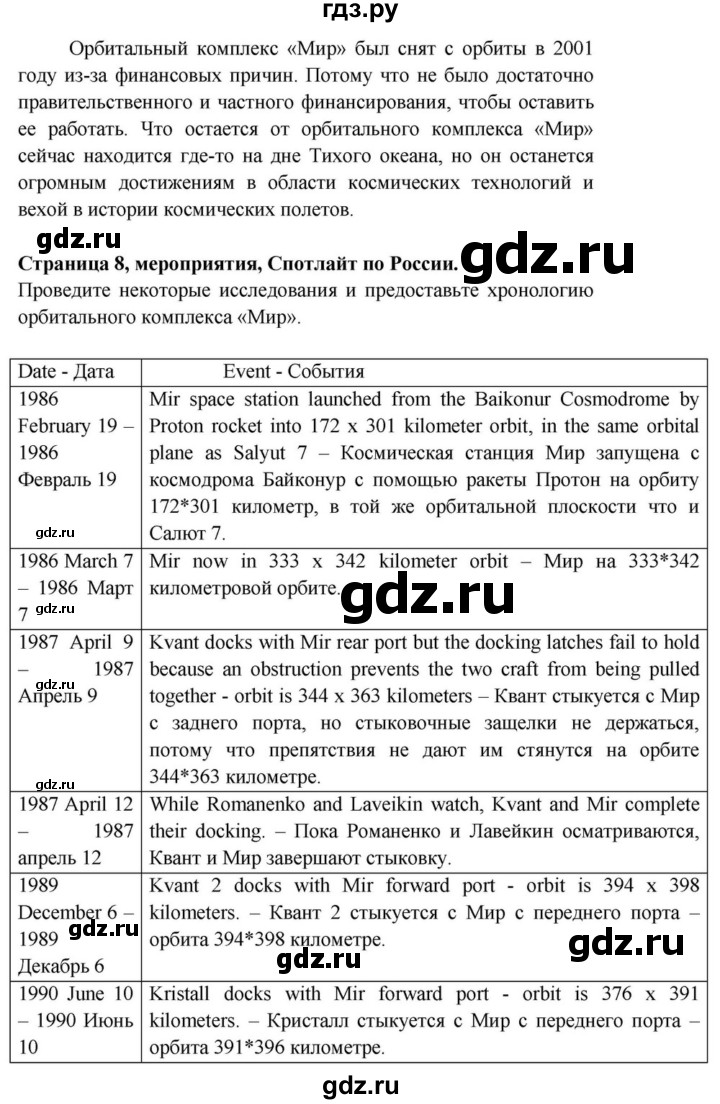
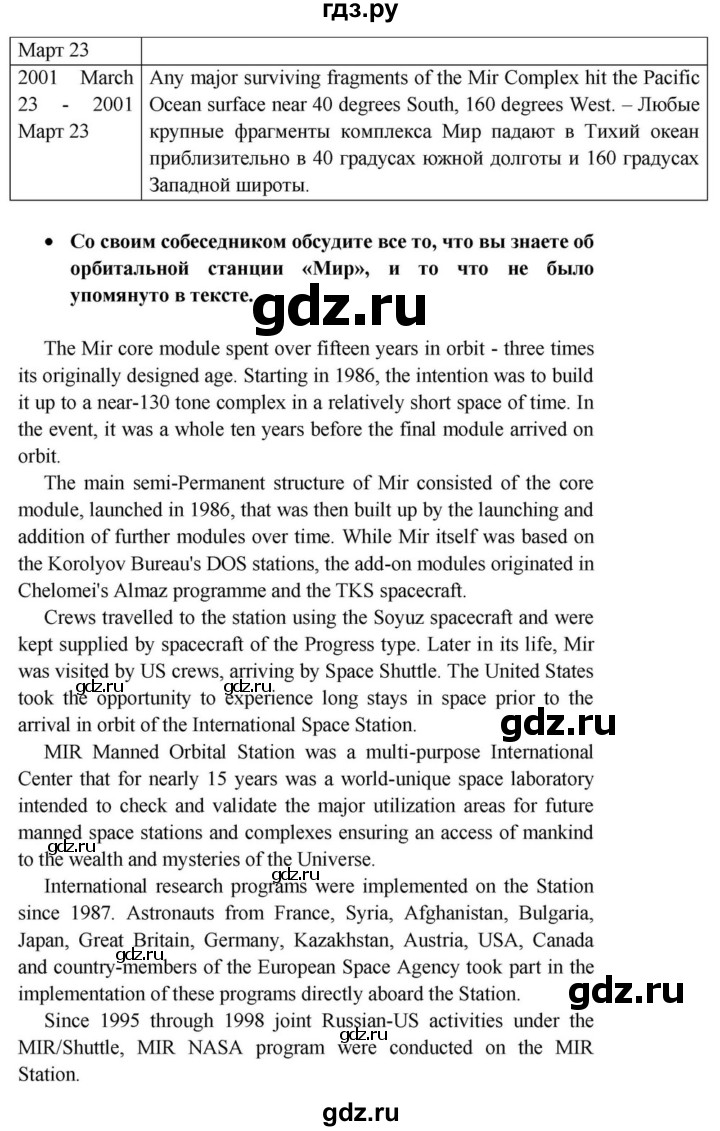
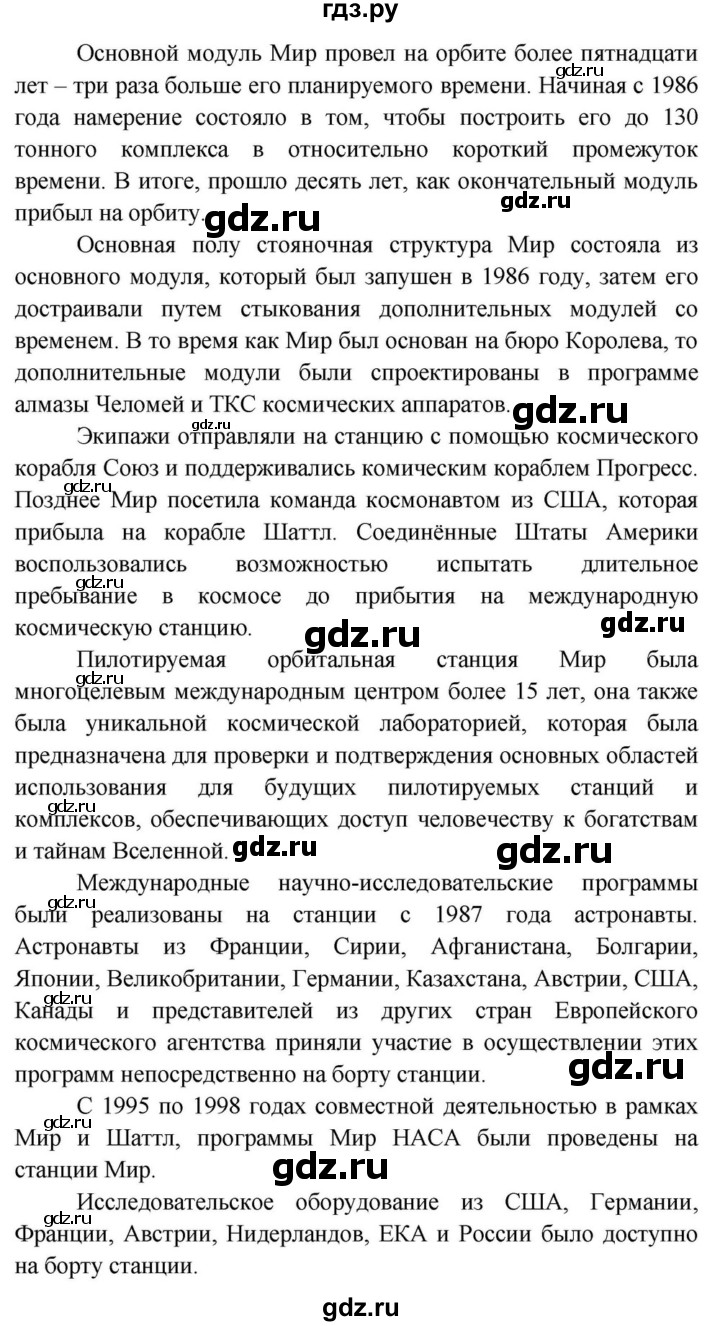
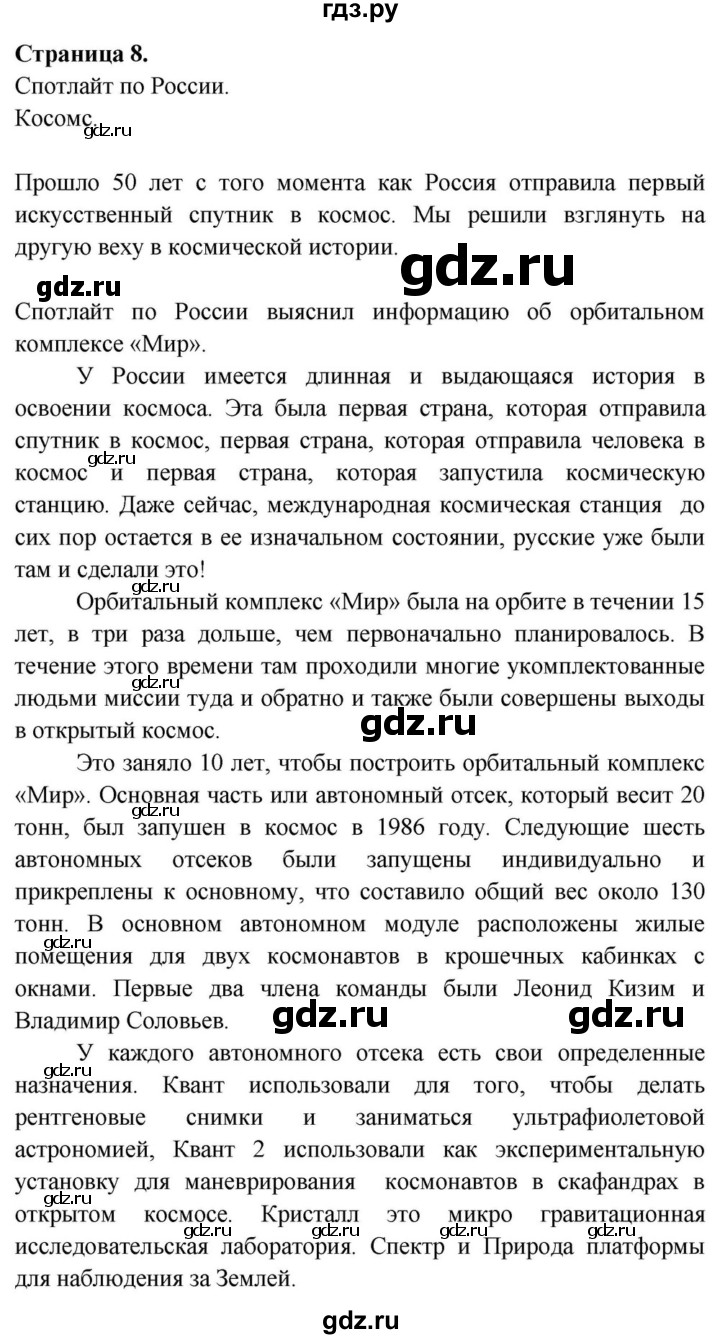
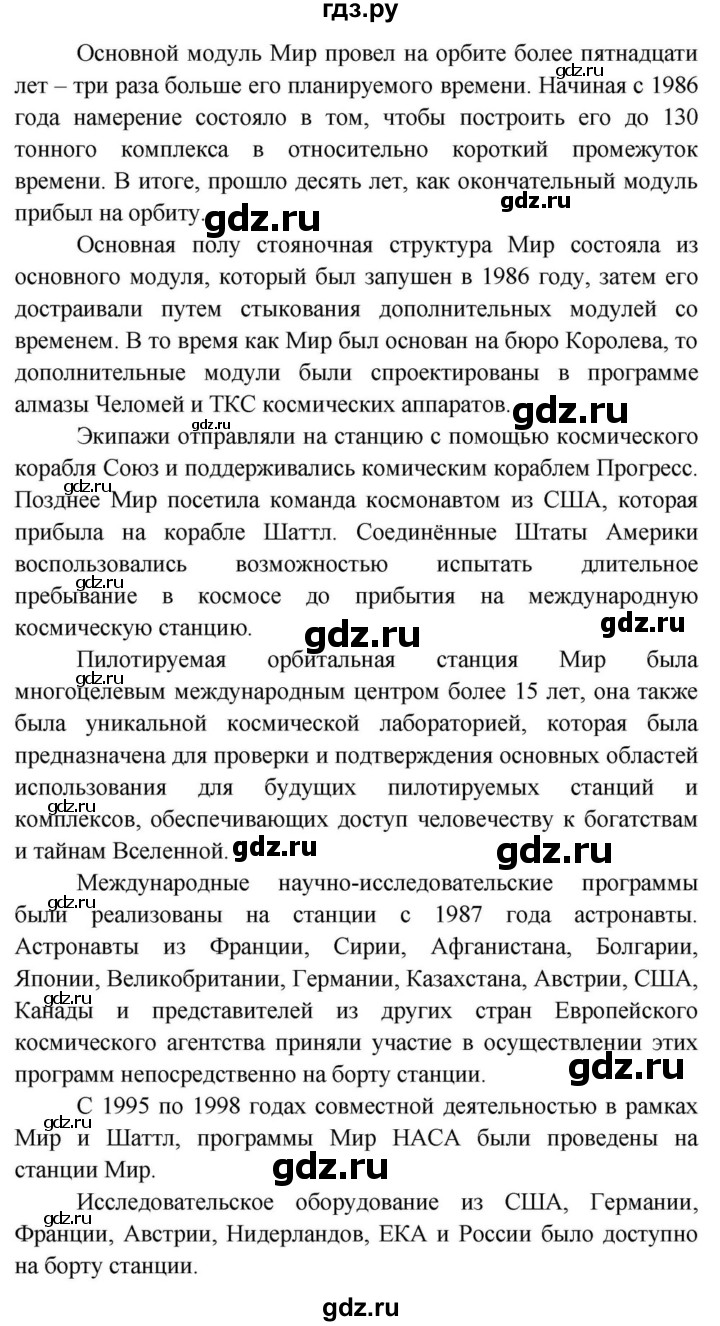
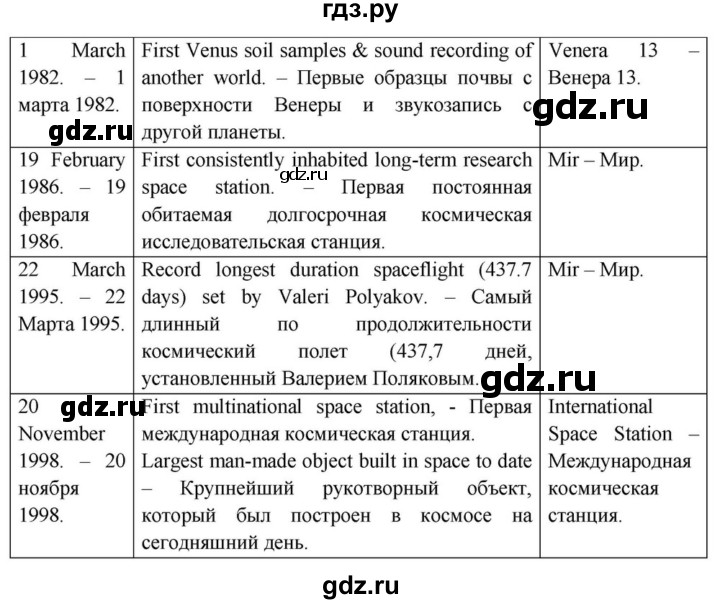
* **1986 (February 19):** The Core Module (the main piece weighing 20 tonnes) is launched into space.
* **1986 (March):** Cosmonauts Leonid Kizim and Vladimir Soloviev become the first crew to board Mir.
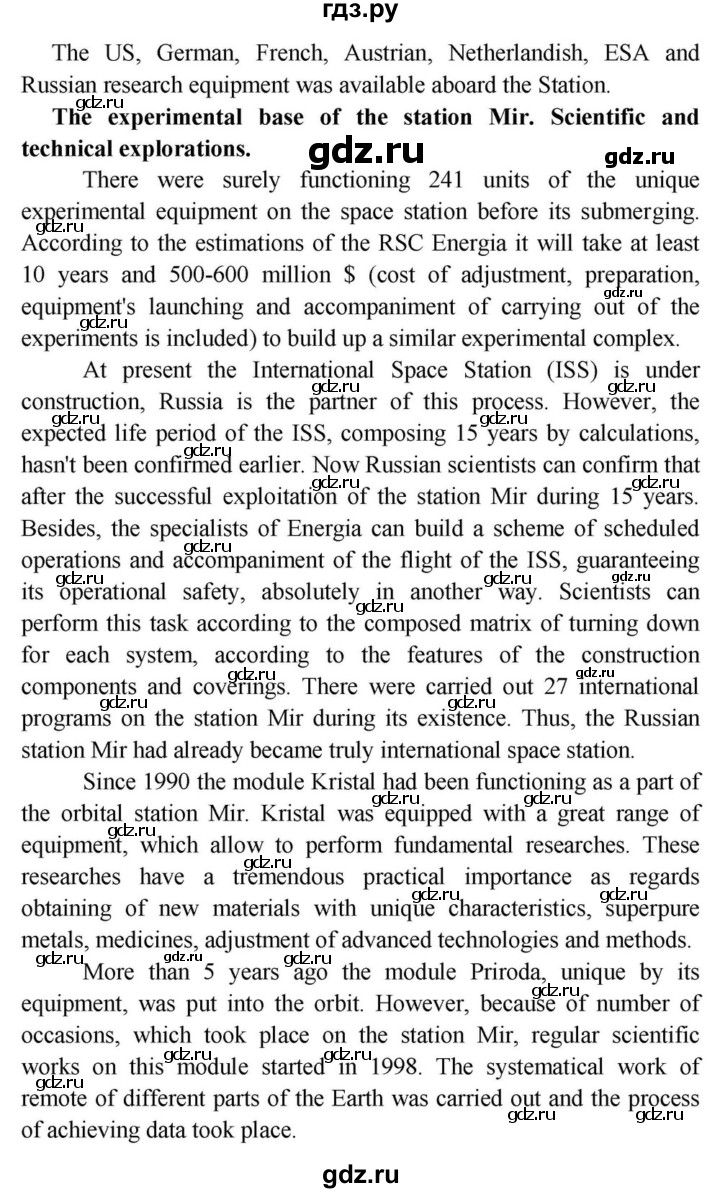
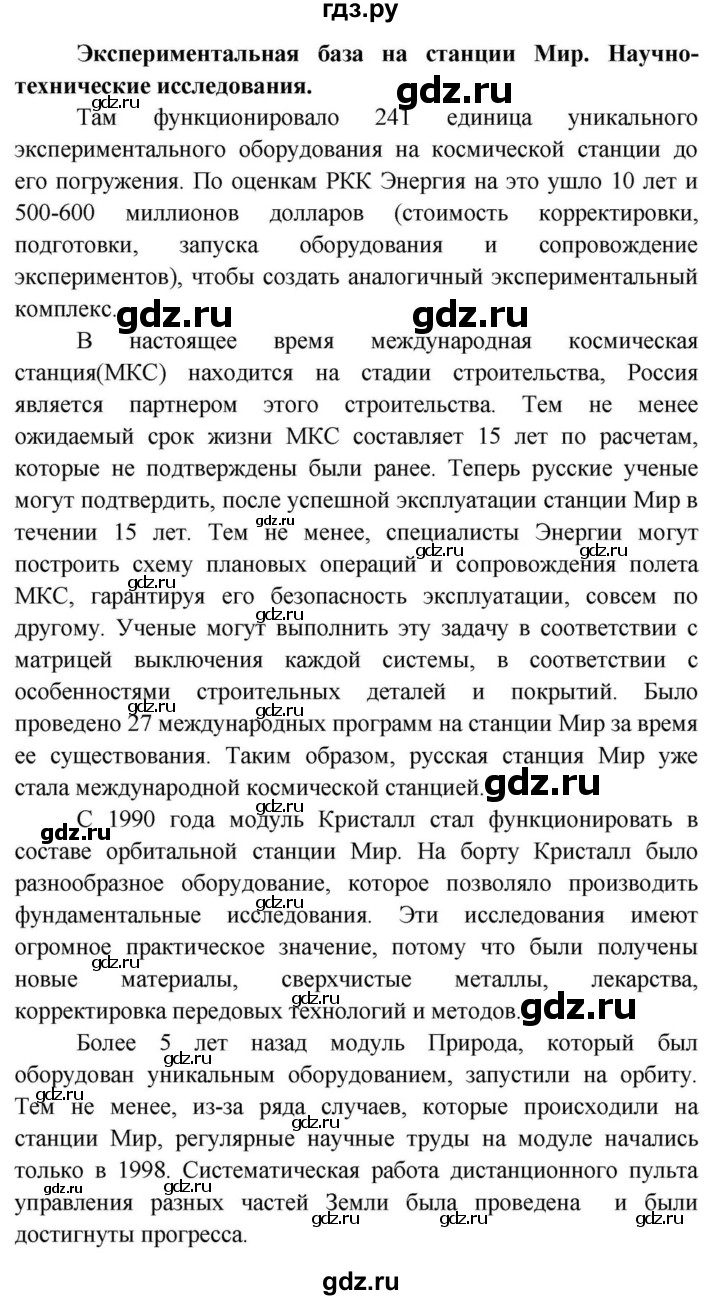
* **1987:** The **Kvant-1** module docks with the station for astrophysical research.
* **1989:** The **Kvant-2** module is added, providing an airlock for spacewalks and life support systems.
* **1990:** The **Kristall** module is attached to conduct materials science and microgravity experiments.
* **1994–1995:** Cosmonaut Valeri Polyakov sets the world record for the longest continuous spaceflight (437 days and 18 hours).
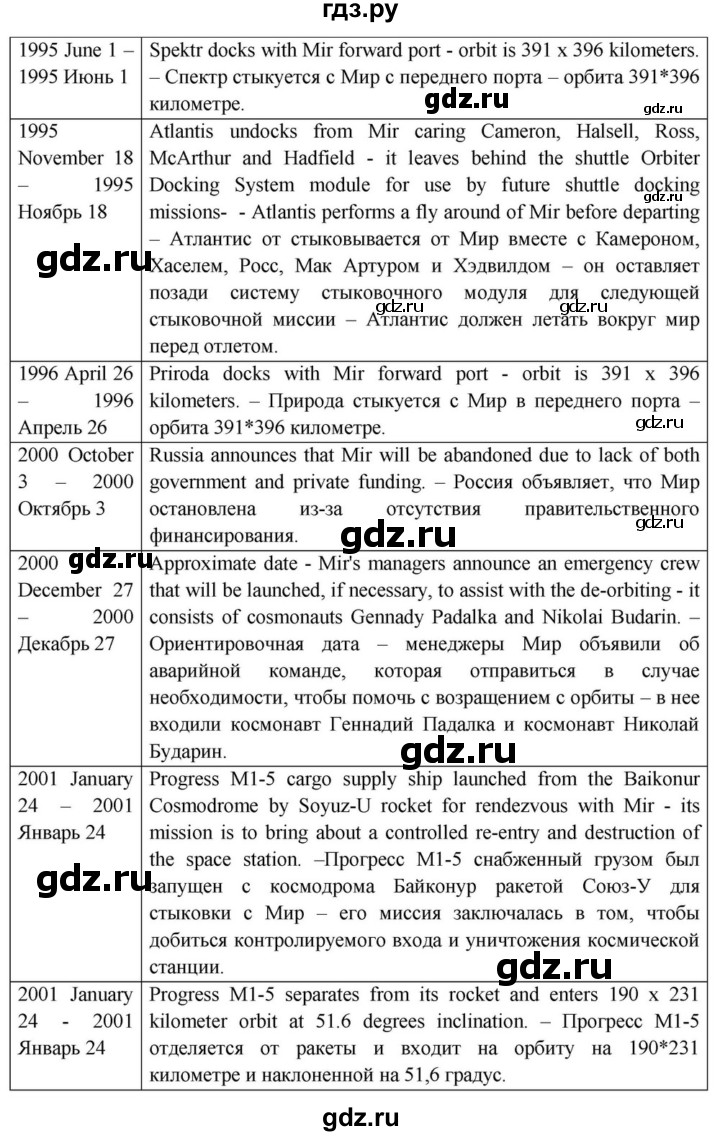
* **1995:** The **Spektr** module arrives for Earth observation. The first US Space Shuttle (*Atlantis*) docks with Mir.
* **1996:** The final module, **Priroda**, is attached, completing the 130-tonne station.
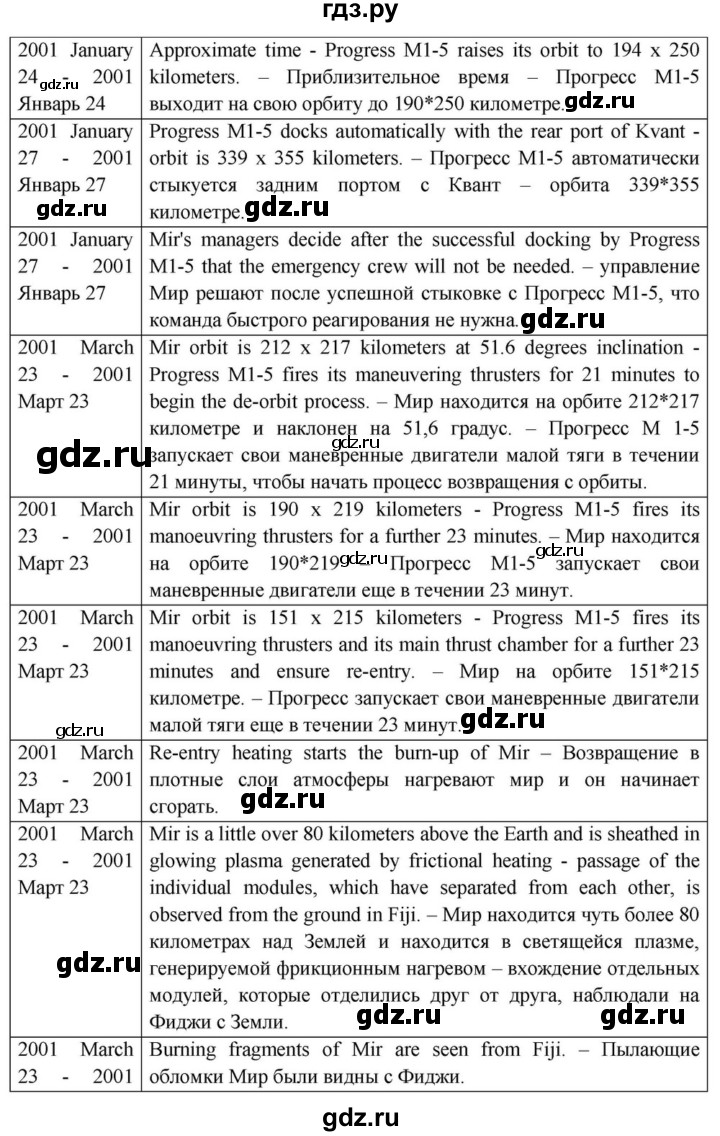
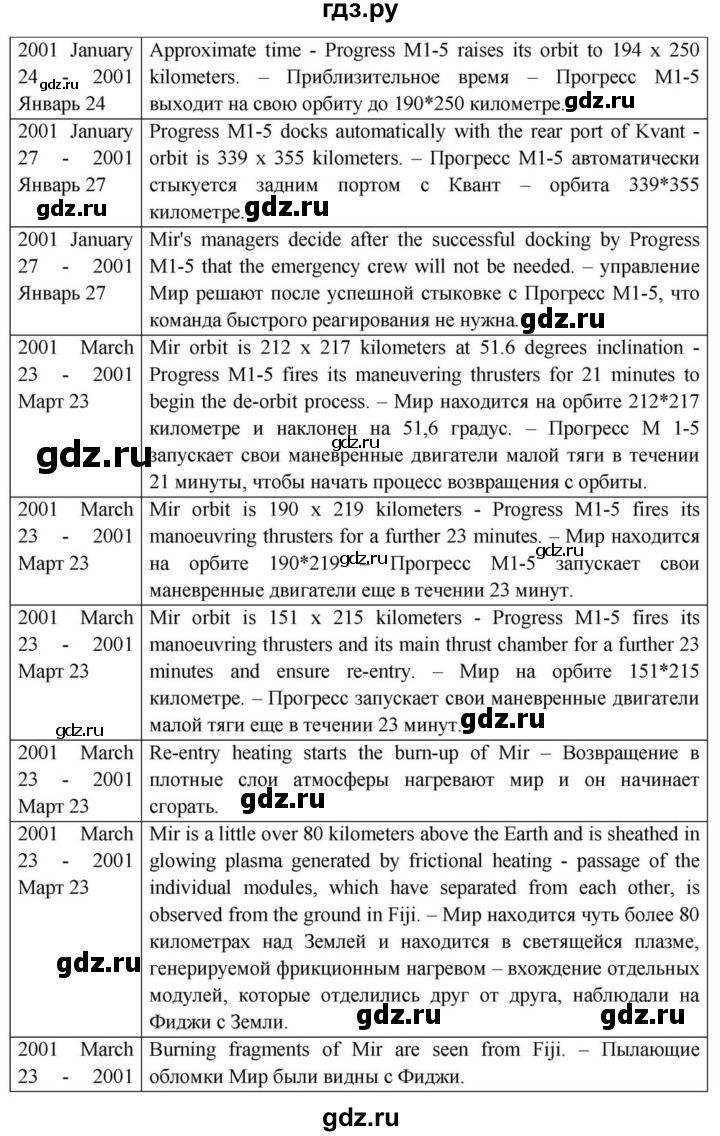
* **2001 (March 23):** Mir is intentionally deorbited and burns up upon re-entry, with its remnants falling into the South Pacific Ocean.
---
#### 2. Facts about Mir not mentioned in the text (Факты о «Мире» для обсуждения с партнером)
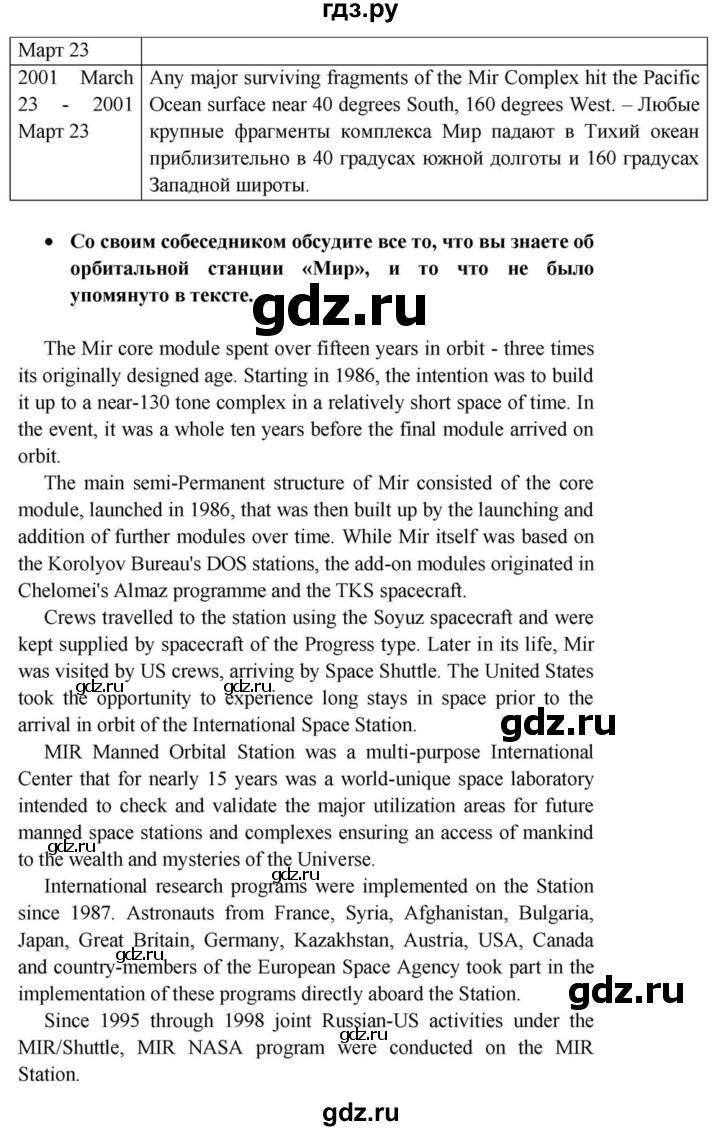
* **Shuttle-Mir Program:** Mir hosted astronauts from many countries, including the USA, France, Germany, and the UK. American Space Shuttles docked with Mir nine times.
* **Longest Single Spaceflight Record:** Valeri Polyakov spent nearly 14 months (437 days) continuously living on Mir, which remains the absolute world record.
* **Incidents and Survival:** The station survived a fire in 1997 and a collision with an uncrewed *Progress* cargo ship, proving the extraordinary resilience of Russian spacecraft engineering and cosmonauts.
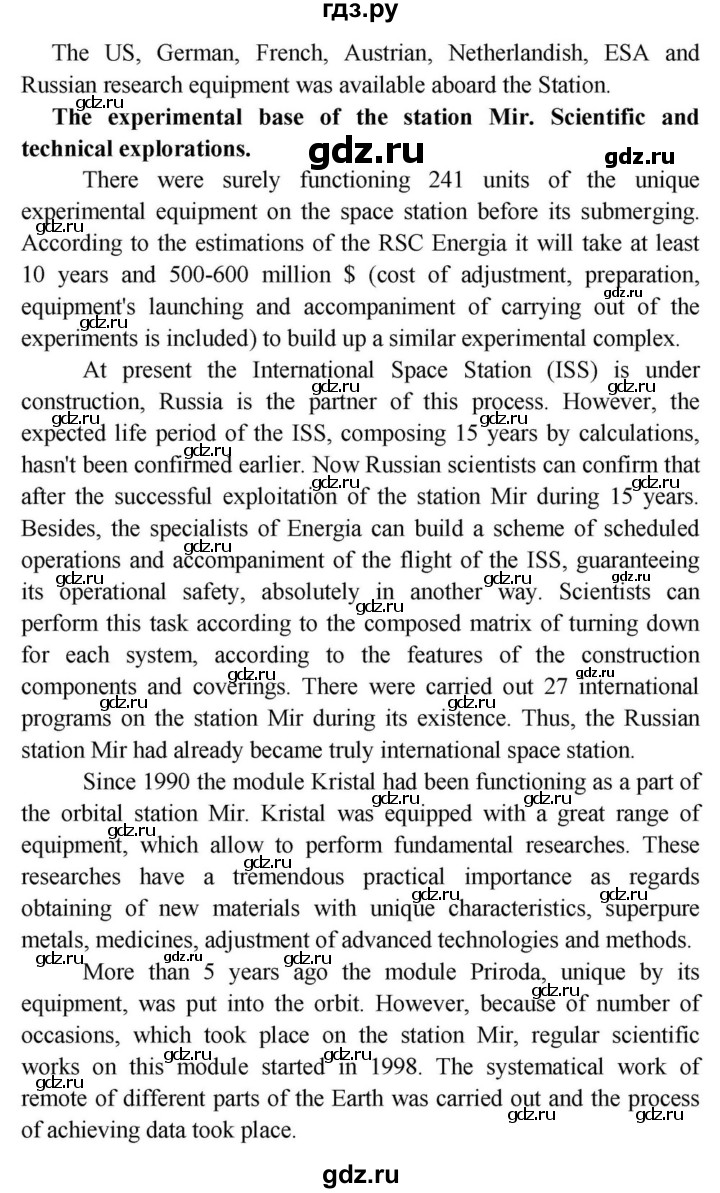
* **International Stepping Stone:** The experience gained during the Mir program served as the foundational basis for constructing the International Space Station (ISS).
---
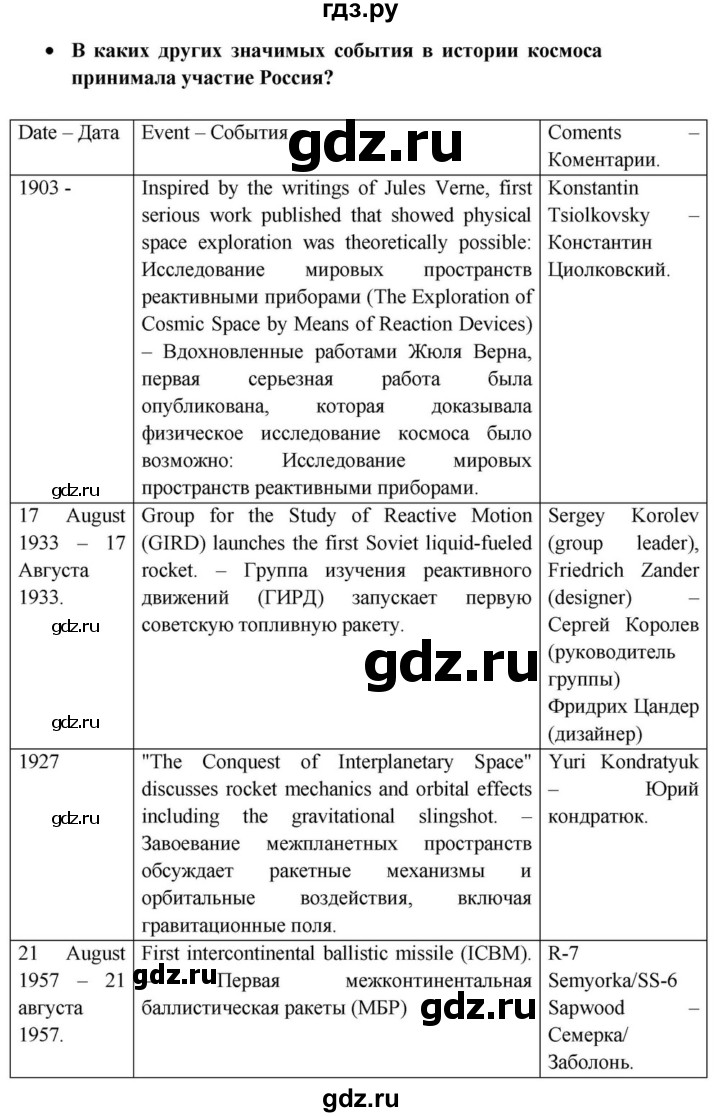
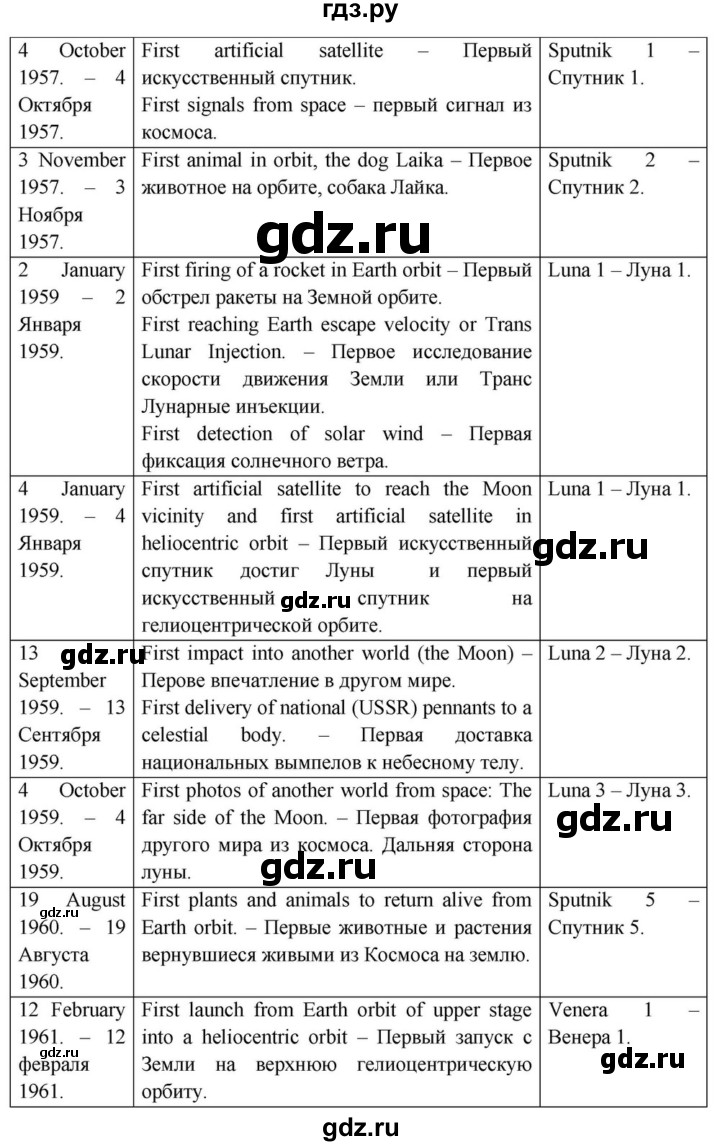
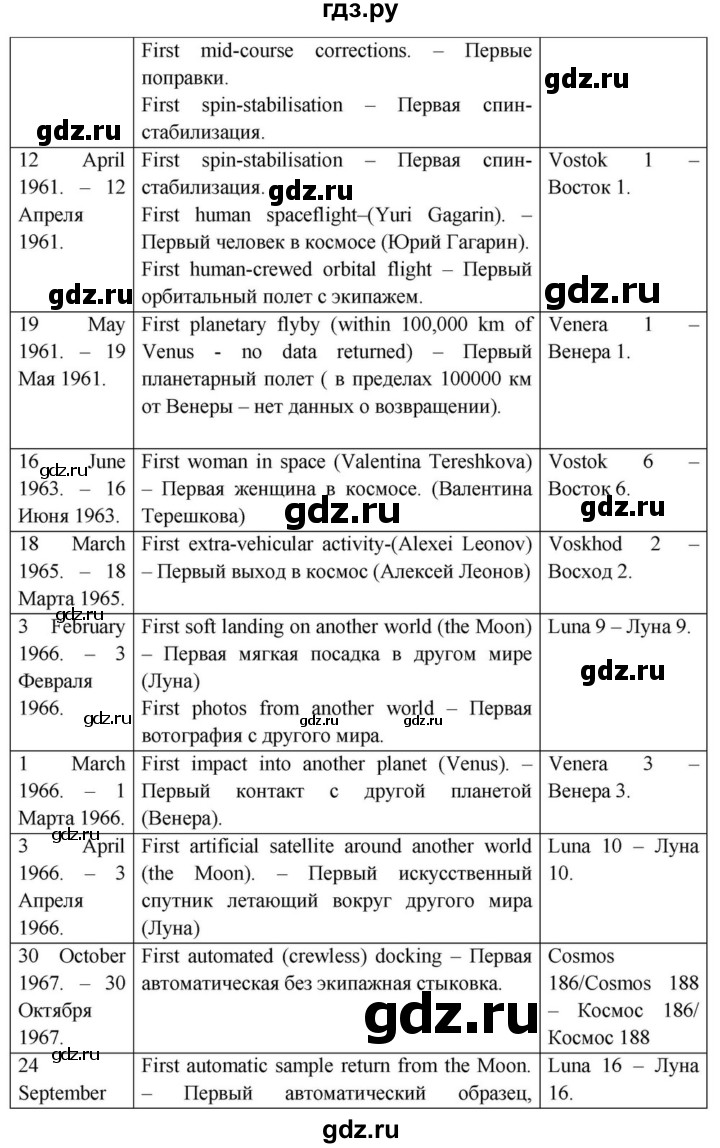
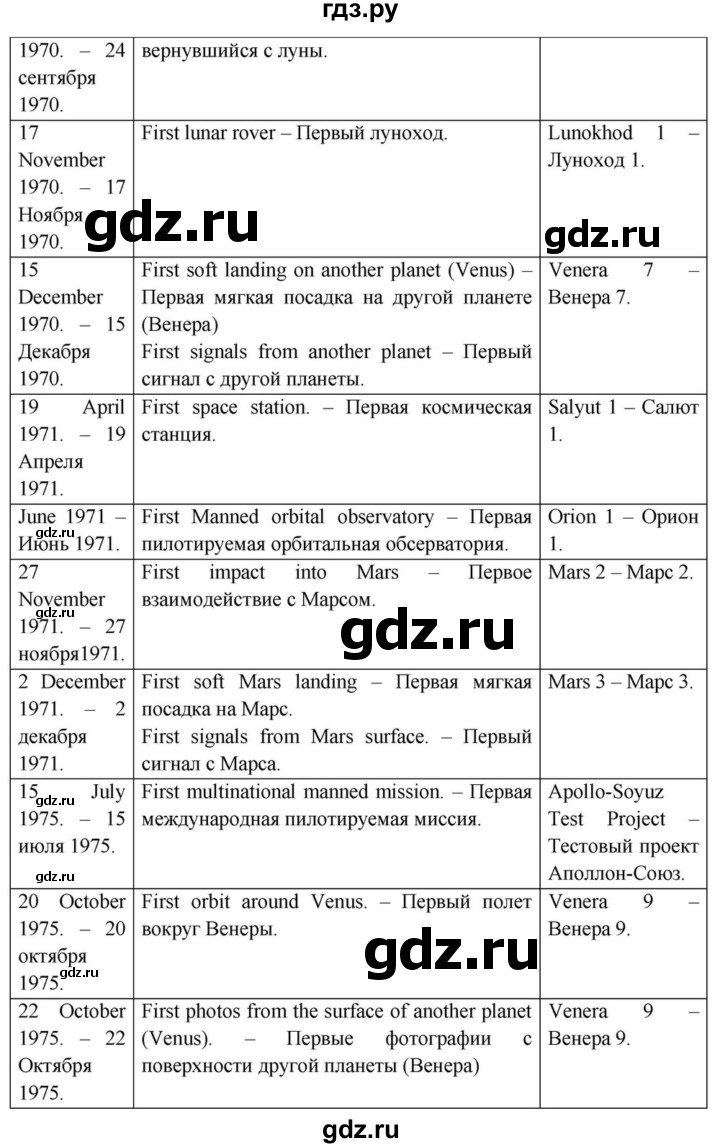
#### 3. Other landmark events in space Russia has been involved in (Другие знаковые события в космосе с участием России/СССР)
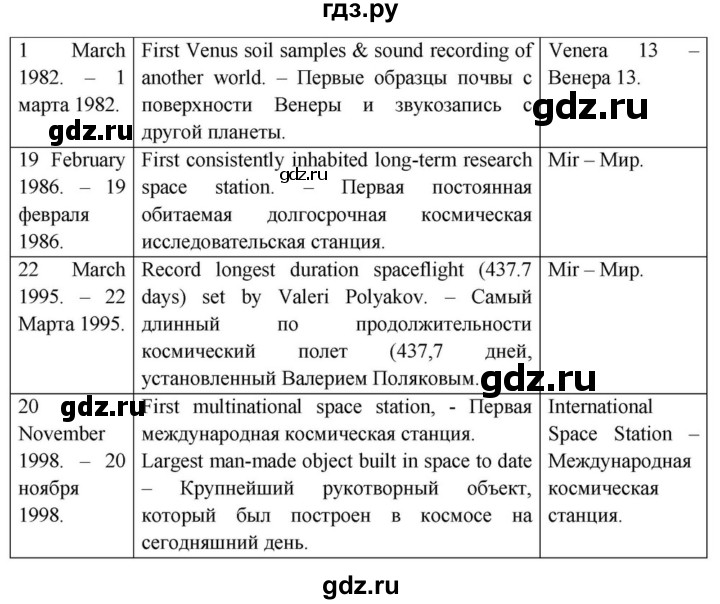
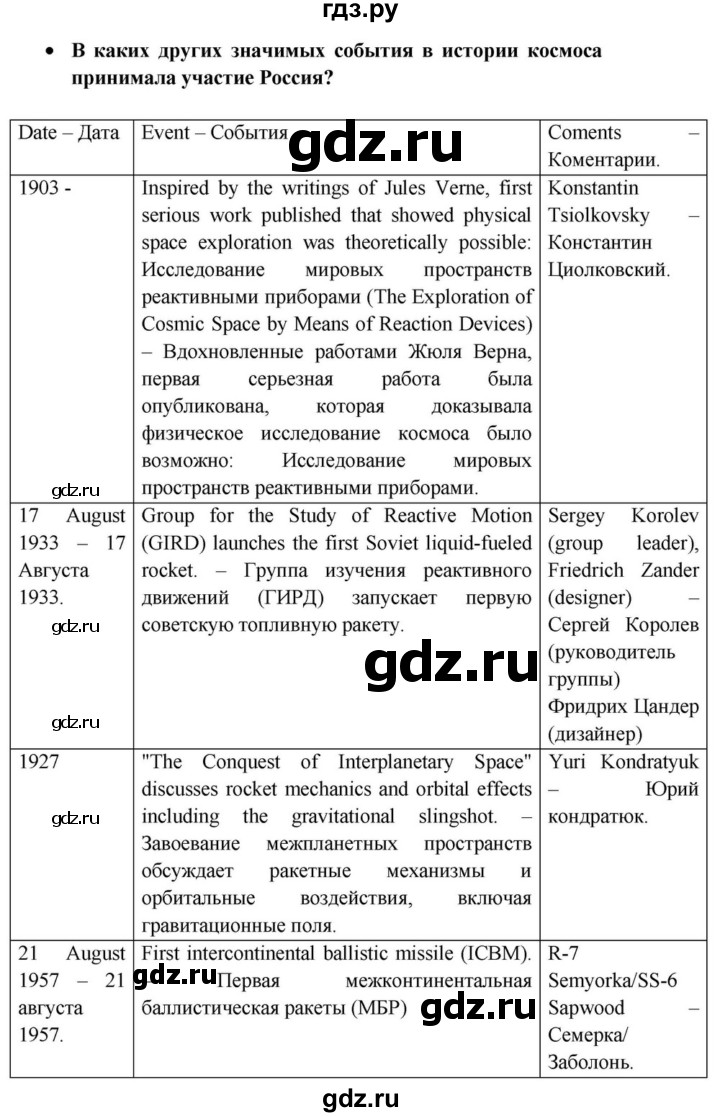
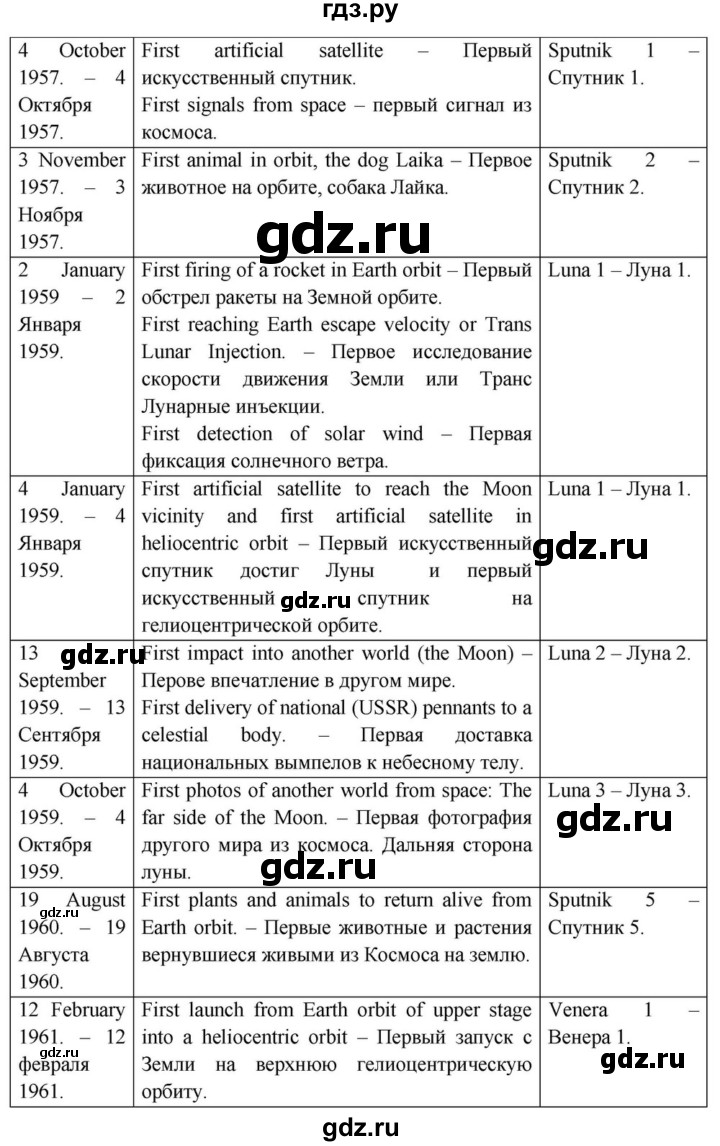
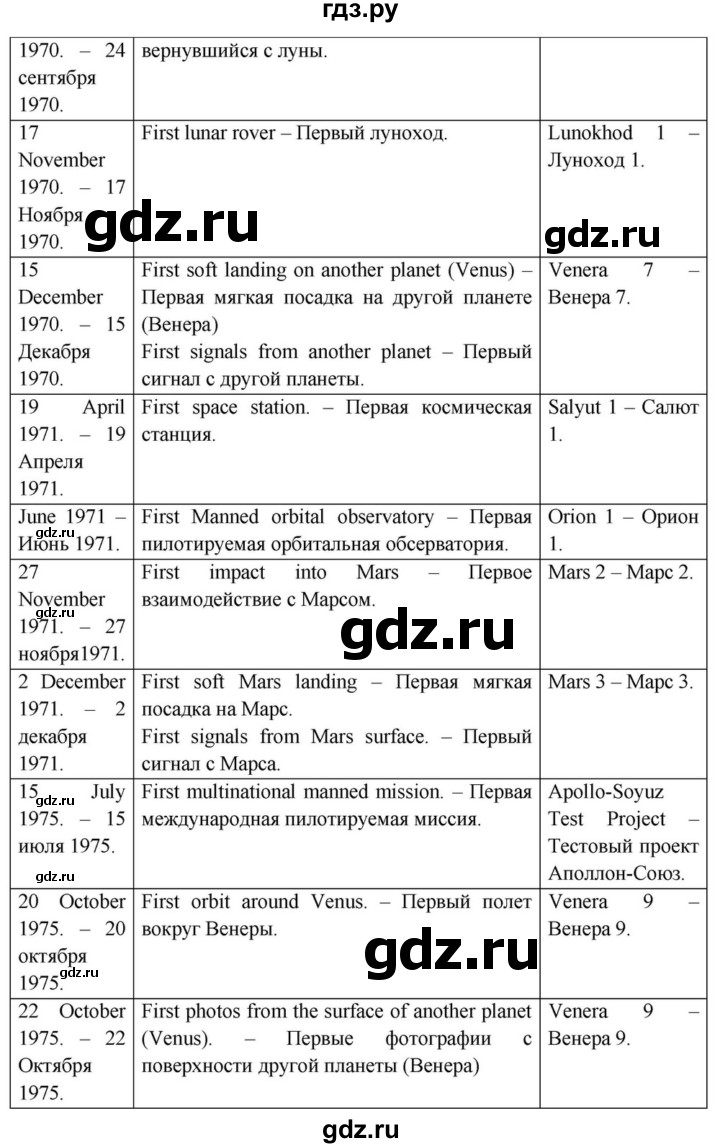
* **1957:** Launch of **Sputnik 1**, the world's first artificial satellite.
* **1957:** The dog **Laika** becomes the first living creature to orbit the Earth (*Sputnik 2*).
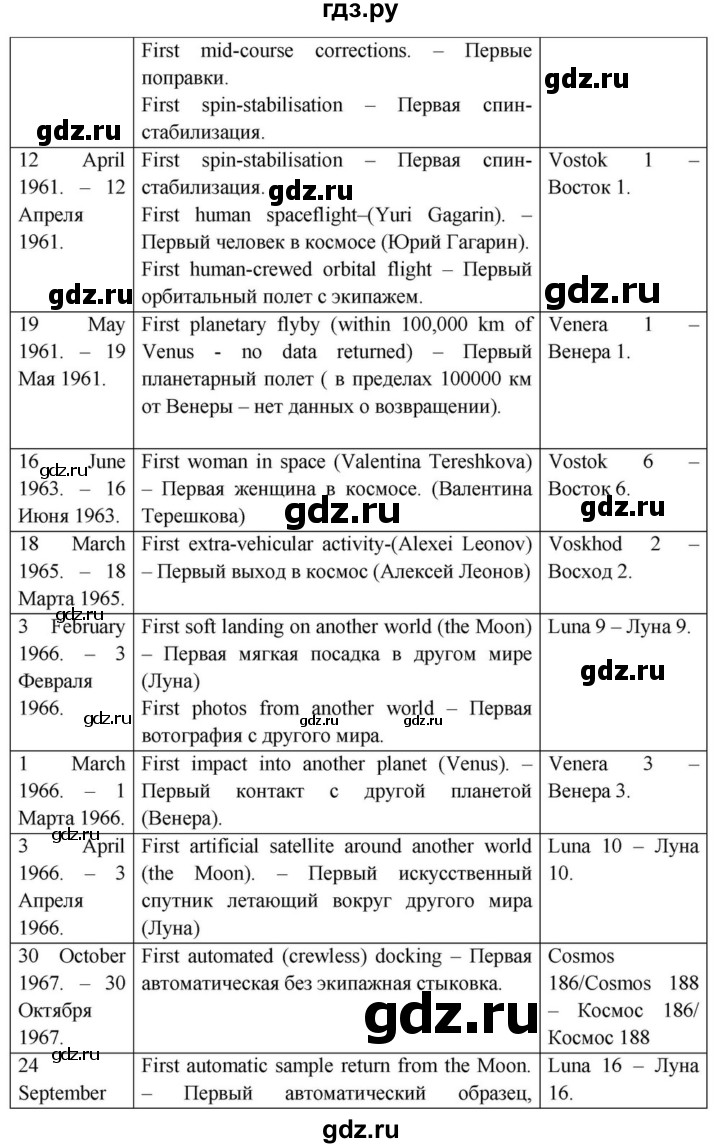
* **1961:** **Yuri Gagarin** becomes the first human in space and completes the first orbital flight (*Vostok 1*).
* **1963:** **Valentina Tereshkova** becomes the first woman in space (*Vostok 6*).
* **1965:** **Alexey Leonov** performs the first spacewalk (*Voskhod 2*).
* **1966:** **Luna 9** accomplishes the first soft landing on the Moon and transmits the first photographs from its surface.
* **1971:** Launch of **Salyut 1**, the world's first space station.
* **1998 – present:** Launch of the **Zarya** and **Zvezda** modules, playing a leading role in building and maintaining the **International Space Station (ISS)**.
---
### Объяснение и перевод для подготовки к уроку
Задание раздела **Spotlight on Russia** состоит из трех последовательных практических шагов:
1. **Создание таймлайна (Timeline):**
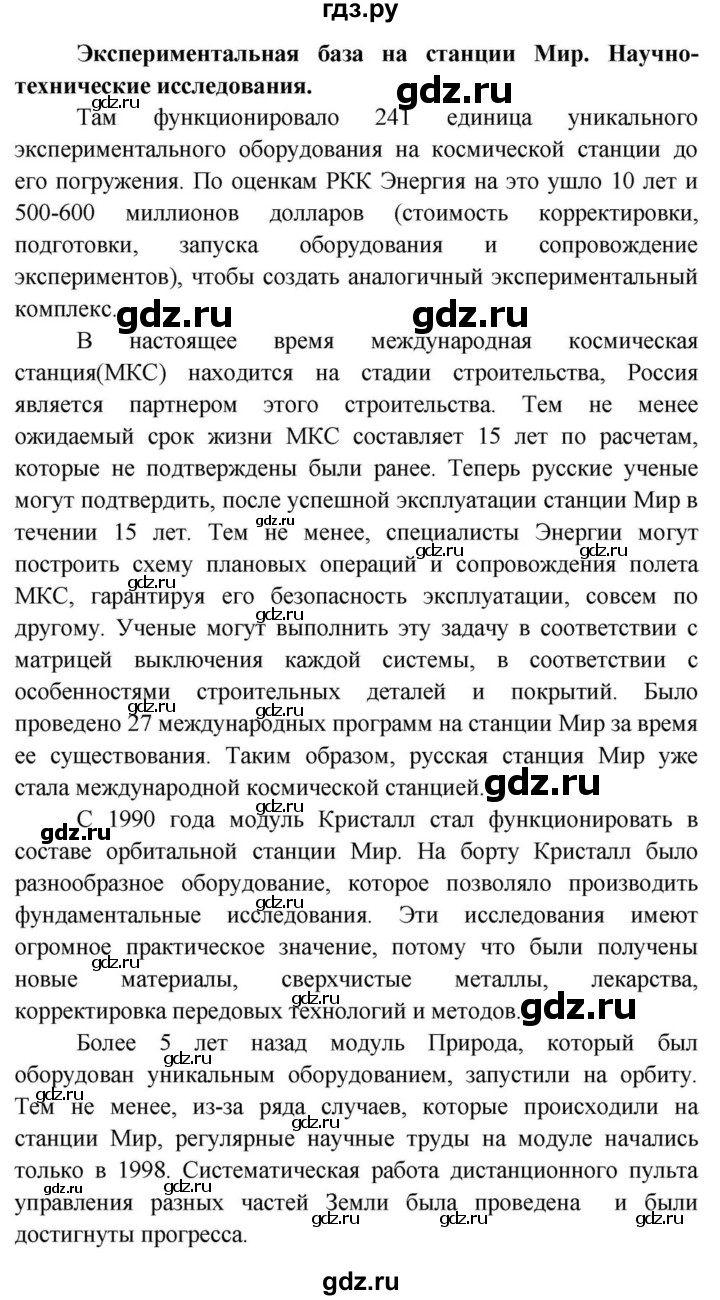
В тексте упомянуты основные модули станции (*Kvant, Kvant-2, Kristall, Spektr, Priroda*), годы запуска (1986) и завершения работы (2001). Таймлайн дополнен ключевыми историческими датами, чтобы показать 10-летний процесс сборки комплекса и его 15-летнюю эксплуатацию.
2. **Обсуждение неизвестных из текста фактов (Discussion):**
Текст не упоминает международное сотрудничество (программу «Мир — Шаттл»), мировой рекорд Валерия Полякова по непрерывному пребыванию человека в космосе, а также нештатные ситуации, с которыми успешно справился экипаж. Эти факты отлично подходят для диалога в паре.
3. **Знаковые космические события (Landmark events):**
Для ответа приведен список важнейших достижений отечественной космонавтики: от первого спутника и первого полета человека в космос до выходов в открытый космос, посадок аппаратов на Луну и ключевой роли в создании МКС.
Спасибо за оценку!

Открой больше возможностей
Войди через VK — задавай вопросы ИИ и сохраняй ГДЗ в избранное
