ГДЗ по английскому языку 7 класс Баранова Starlight Углубленный уровень страница - 89

Авторы: Баранова К.М., Дули Д., Копылова В.В., Мильруд Р.П., Эванс В.
Серия: Starlight
Тип книги: Учебник
Год: 2017-2023
Рекомендуем посмотреть


Подробное решение страница № 89 по английскому языку Starlight для учащихся 7 класса Starlight Углубленный уровень, авторов Баранова, Дули, Копылова, Мильруд, Эванс 2017-2023

 ИИ-решебник / страница / 89
Ответ подготовлен нейросетью и может содержать ошибки
Объяснение и пошаговое решение
### Итоговые ответы
#### Exercise 4
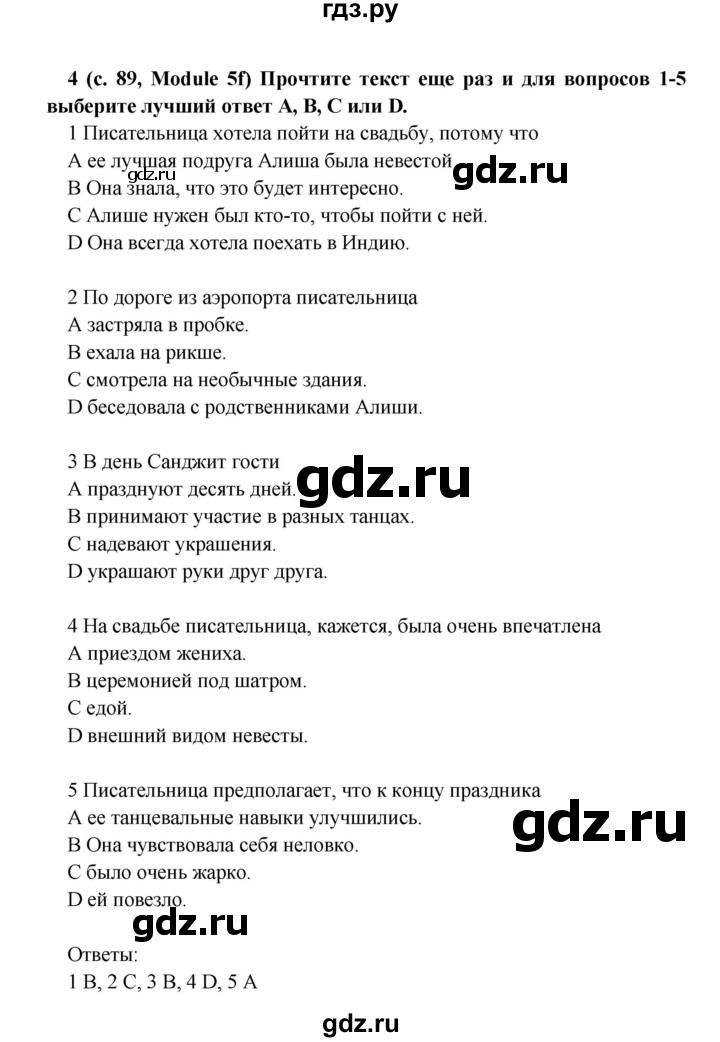
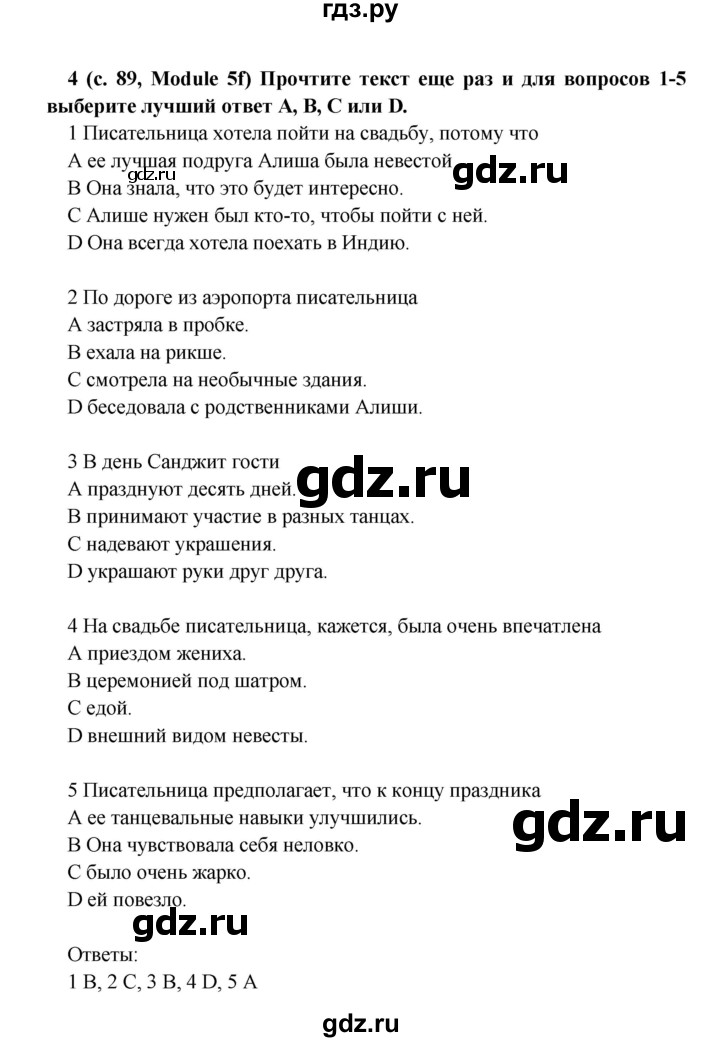
1. **B** (she knew it would be interesting)
2. **A** (got stuck in traffic)
3. **B** (take part in different dances)
4. **D** (the bride's appearance)
5. **A** (her dancing skills had improved)
---
#### Exercise 5
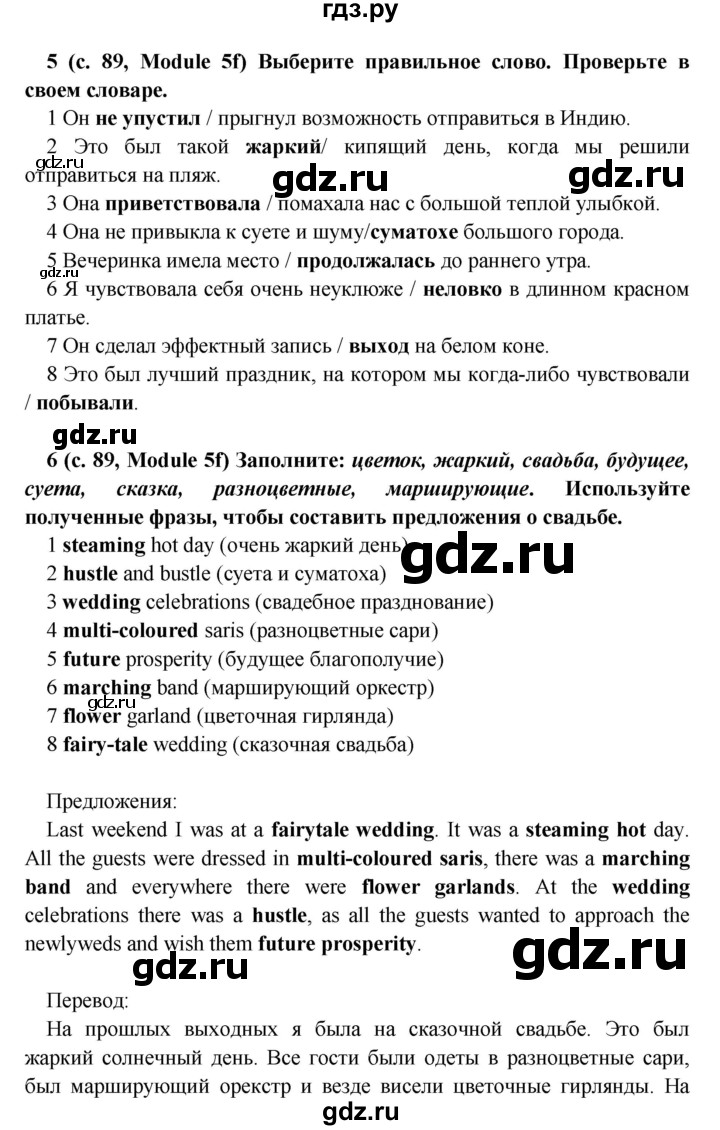
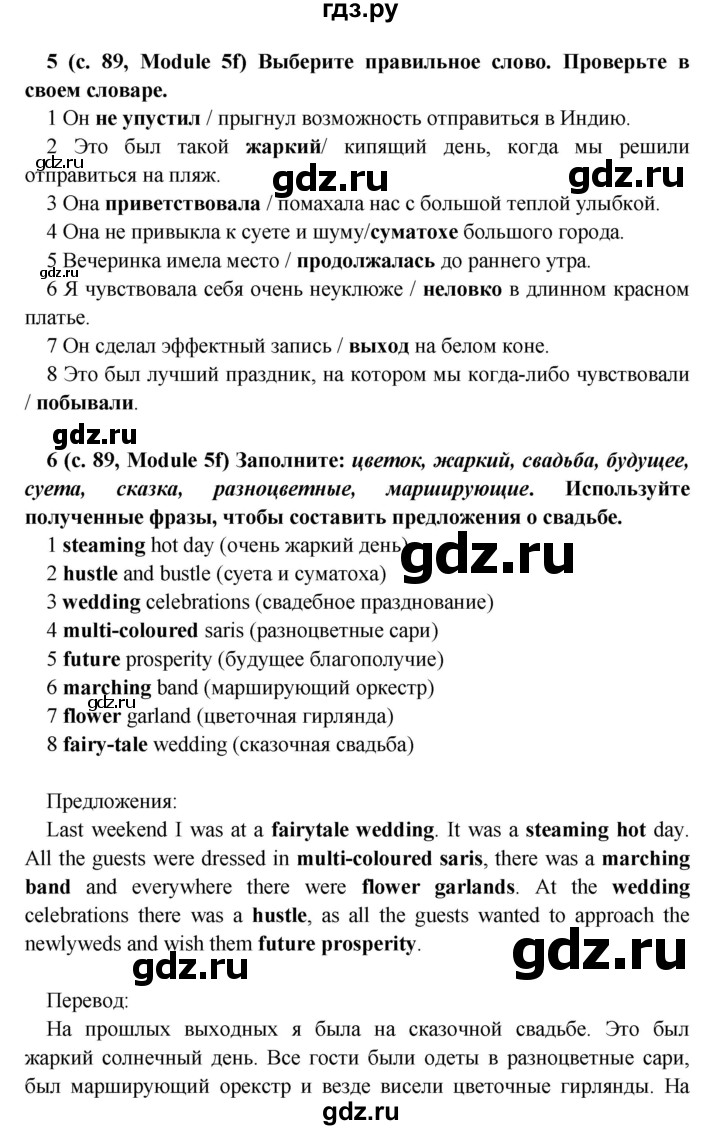
1. **leapt**
2. **steaming**
3. **greeted**
4. **bustle**
5. **lasted**
6. **awkward**
7. **entrance**
8. **experienced**
---
#### Exercise 6
**Словосочетания:**
1. **steaming** hot day
2. **hustle** and bustle
3. **wedding** celebrations
4. **multi-coloured** saris
5. **future** prosperity
6. **marching** band
7. **flower** garland
8. **fairytale** wedding
**Примеры предложений:**
1. It was a **steaming hot day** when we arrived in India.
2. The streets were filled with the **hustle and bustle** of the city.
3. The **wedding celebrations** lasted for three whole days.
4. The women looked gorgeous in their **multi-coloured saris**.
5. The henna patterns on the bride's hands were a symbol of **future prosperity**.
6. A lively **marching band** accompanied the groom on his white horse.
7. The groom put a beautiful **flower garland** around the bride's neck.
8. With all the decorations, music, and traditions, it felt like a true **fairytale wedding**.
---
#### Exercise 7
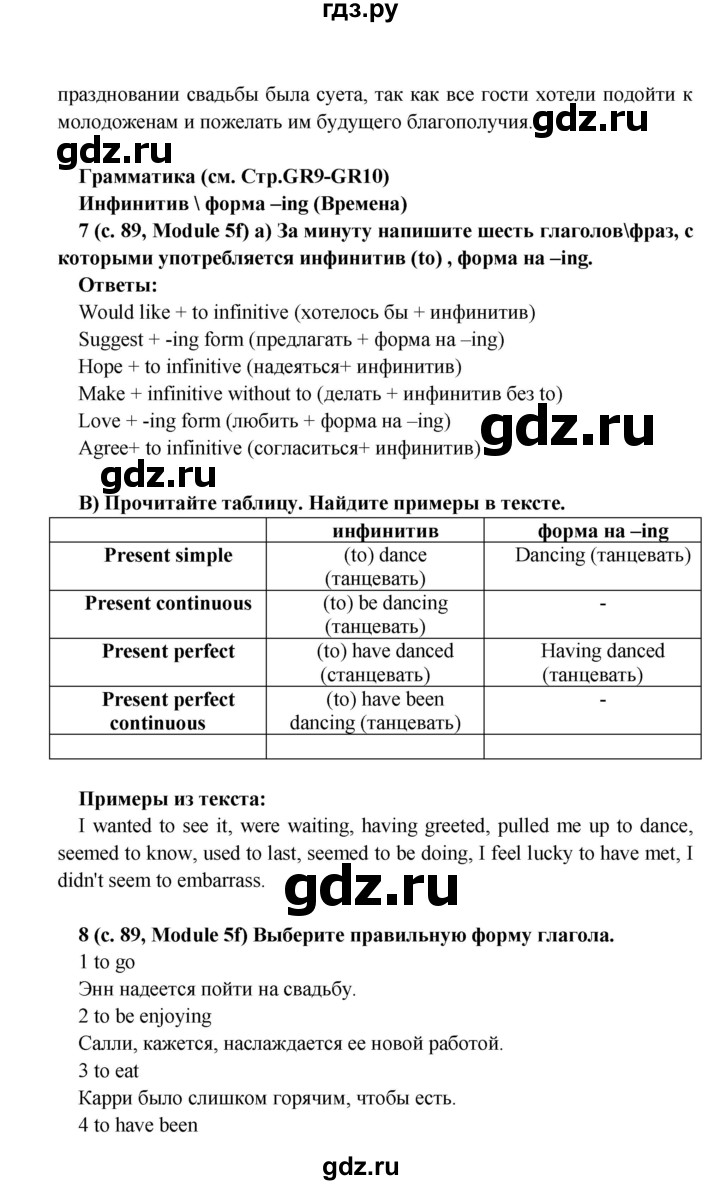
**a)**
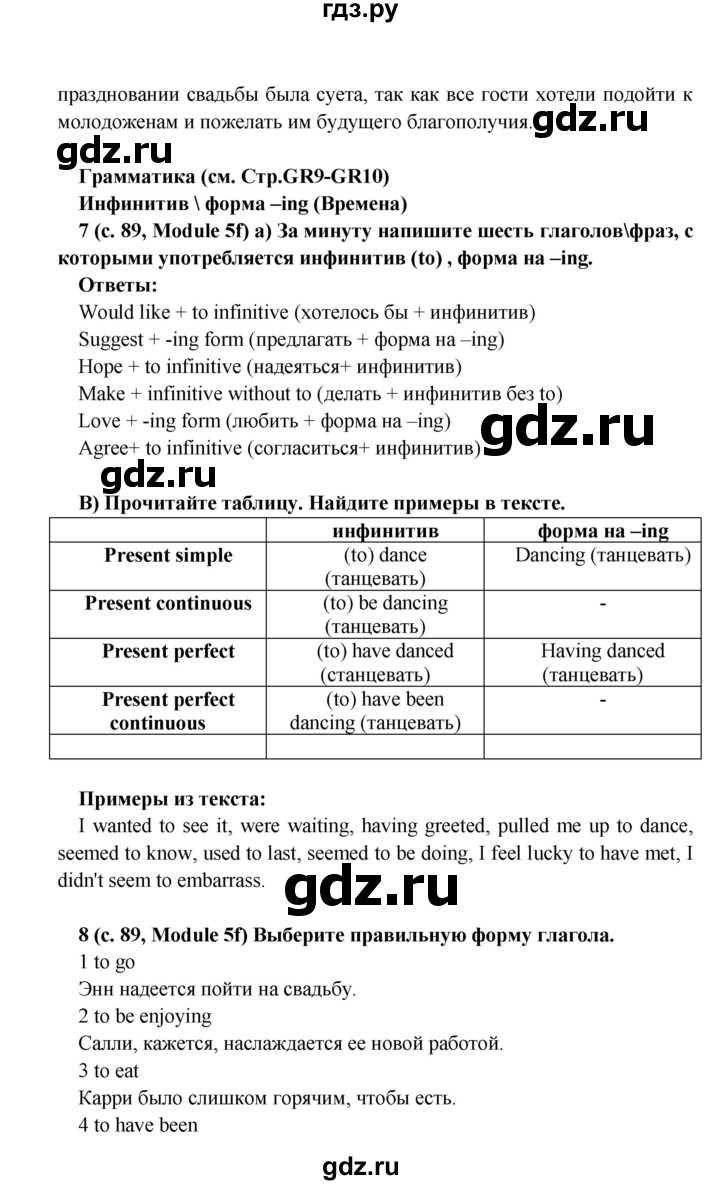
* **Verbs/phrases followed by (to) infinitive:** *decide, want, hope, promise, agree, would like.*
* **Verbs/phrases followed by -ing form:** *enjoy, avoid, suggest, can’t stand, look forward to, fancy.*
**b) Examples from the text (примеры из текста):**
* **Present Simple (to-inf):** *to go, to see, to learn, to take part*
* **-ing form:** *travelling, dancing, singing, watching*
* **Present Continuous (to-inf):** *to be having*
* **Present Perfect (to-inf):** *to have experienced*
---
#### Exercise 8
1. Ann hopes **to go** to the wedding.
2. Sally seems **to be enjoying** her new job.
3. The curry was too hot **to eat**.
4. Mark claims **to have been** away from home on the night of the fire.
5. Mike can't stand **dancing**.
6. John denied **having told** a lie.
7. They appear **to be walking** around the fire.
8. After **having eaten**, the wedding guests started to sing and dance.
---
#### Exercise 9
* The bride **seems to be wearing** a magnificent red sari and beautiful jewellery.
* The guests **appear to be having** a wonderful time during the Sangeet ceremony.
* The groom **seems to have arrived** on a decorated white horse.
* In Indian culture, people **tend to celebrate** weddings for several days.
---
#### Exercise 10
A typical wedding in Russia usually lasts for one or two days, whereas an Indian wedding can last for several days. In Russia, the bride traditionally wears a white dress, while an Indian bride wears a brightly coloured (often red) sari and gold jewellery. Both cultures love music, dancing, and large feasts with lots of guests, but Indian weddings include unique rituals like painting henna tattoos (*mehndi*) and walking around a sacred fire.
---
### Подробное объяснение и правила
#### К упражнению 4 (Чтение и понимание текста)
1. **1 — B:** Автор «ухватилась за возможность» поехать, так как знала, что это будет незабываемый и интересный опыт (*«unforgettable experience»*).
2. **2 — A:** Дорога из аэропорта заняла очень много времени из-за пробок (*«got stuck in traffic»*).
3. **3 — B:** На предсвадебном празднике Сангит (*Sangeet*) гости традиционно исполняют народные и болливудские танцы.
4. **4 — D:** Больше всего автора поразило появление невесты в роскошном красном сари (*«looked like a princess... never seen anything so beautiful»*).
5. **5 — A:** Автор отмечает, что к концу праздника она уже не чувствовала себя неловко и танцевала гораздо увереннее.
#### К упражнению 5 (Лексика и устойчивые выражения)
1. **leap at the chance** — устойчивая идиома «ухватиться за шанс/возможность» (в прошедшем времени — *leapt*).
2. **steaming hot** — коллокация «палящий, невыносимо жаркий» (о погоде).
3. **greeted** — «поприветствовала, встретила» (*wave* требует предлога *at* — *waved at us*).
4. **hustle and bustle** — идиома «суматоха, шум и суета».
5. **lasted** — «длилась/продолжалась» по времени.
6. **awkward** — «неловко, неуютно» (в длинном непривычном платье).
7. **make an entrance** — фразеологизм «эффектно появиться, совершить торжественный выход».
8. **experienced** — «пережили/испытали» (об отпуске и полученных впечатлениях).
#### К упражнению 8 (Грамматика: Инфинитив и Герундий / -ing форма)
1. Глагол **hope** всегда требует после себя инфинитив с частицей *to* (*hope to do smth*).
2. **seem** + длительный инфинитив (**to be enjoying**), так как процесс происходит в настоящий период времени.
3. Конструкция **too + adjective + to-infinitive** (*too hot to eat* — слишком горячий, чтобы есть).
4. **claim** + перфектный инфинитив (**to have been**), так как речь идет о действии, произошедшем до момента высказывания (в ночь пожара).
5. Фраза **can't stand** (терпеть не могу) всегда требует формы с окончанием **-ing** (*can't stand dancing*).
6. Глагол **deny** (отрицать) сочетается с -ing формой; здесь использован Perfect Gerund (**having told**), чтобы подчеркнуть, что ложь была сказана ранее.
7. **appear** + Continuous Infinitive (**to be walking**), так как действие происходит прямо сейчас, в момент наблюдения.
8. После предлогов (в данном случае **after**) используется -ing форма глагола (**having eaten** — совершённое причастие/герундий для обозначения завершённого действия).
Оцени решение:
Спасибо за оценку!