

ГДЗ по английскому языку 7 класс Ваулина рабочая тетрадь Spotlight страница - 28

Авторы: Ю.Е. Ваулина, Д. Дули, О.Е. Подоляко, В. Эванс
Серия: Spotlight
Тип книги: Рабочая тетрадь
Год: 2015-2024
Рекомендуем посмотреть



 Премиум
Подробное решение страница № 28 по английскому языку рабочая тетрадь Spotlight для учащихся 7 класса Spotlight , авторов Ваулина, Дули, Подоляко, Эванс 2015-2024

 ИИ-решебник / страница / 28
Ответ подготовлен нейросетью и может содержать ошибки
Объяснение и пошаговое решение
### Итоговые ответы
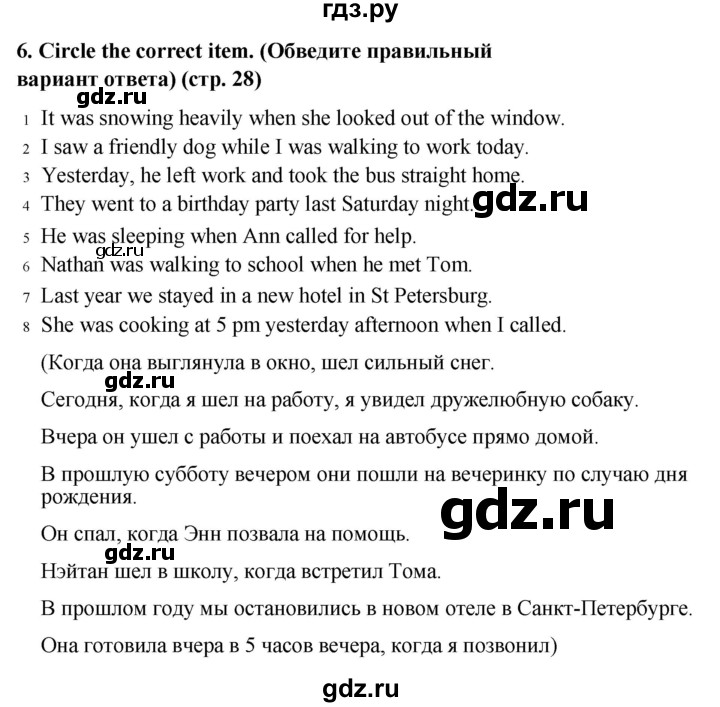
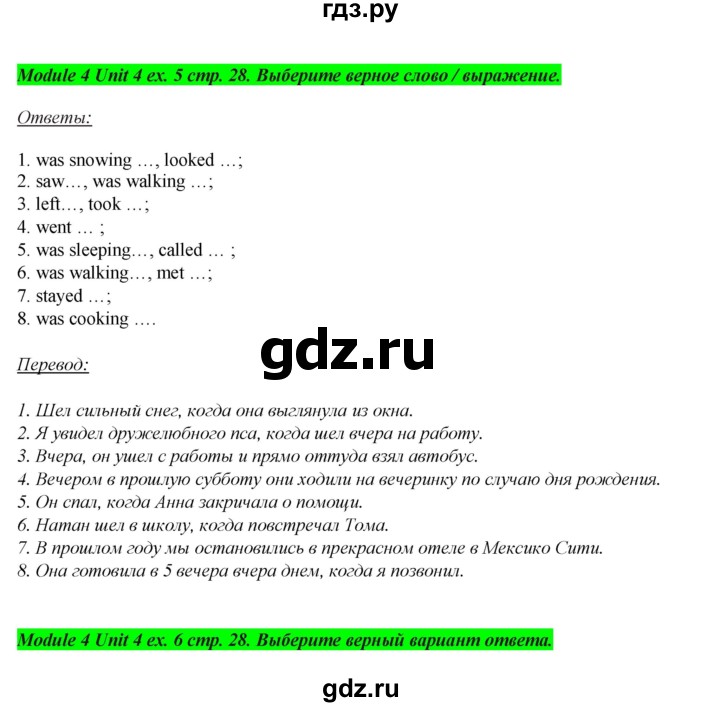
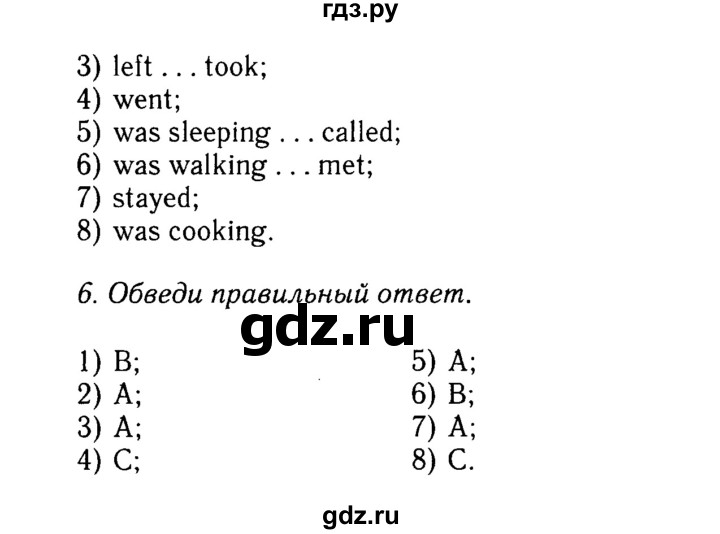
#### **Задание 6. Circle the correct item.**
1. It **was snowing** heavily when she **looked** out of the window.
2. I **saw** a friendly dog while I **was walking** to work today.
3. Yesterday, he **left** work and **took** the bus straight home.
4. They **went** to a birthday party last Saturday night.
5. He **was sleeping** when Ann **called** for help.
6. Nathan **was walking** to school when he **met** Tom.
7. Last year we **stayed** in a new hotel in St Petersburg.
8. She **was cooking** at 5 pm yesterday afternoon when I called.
---
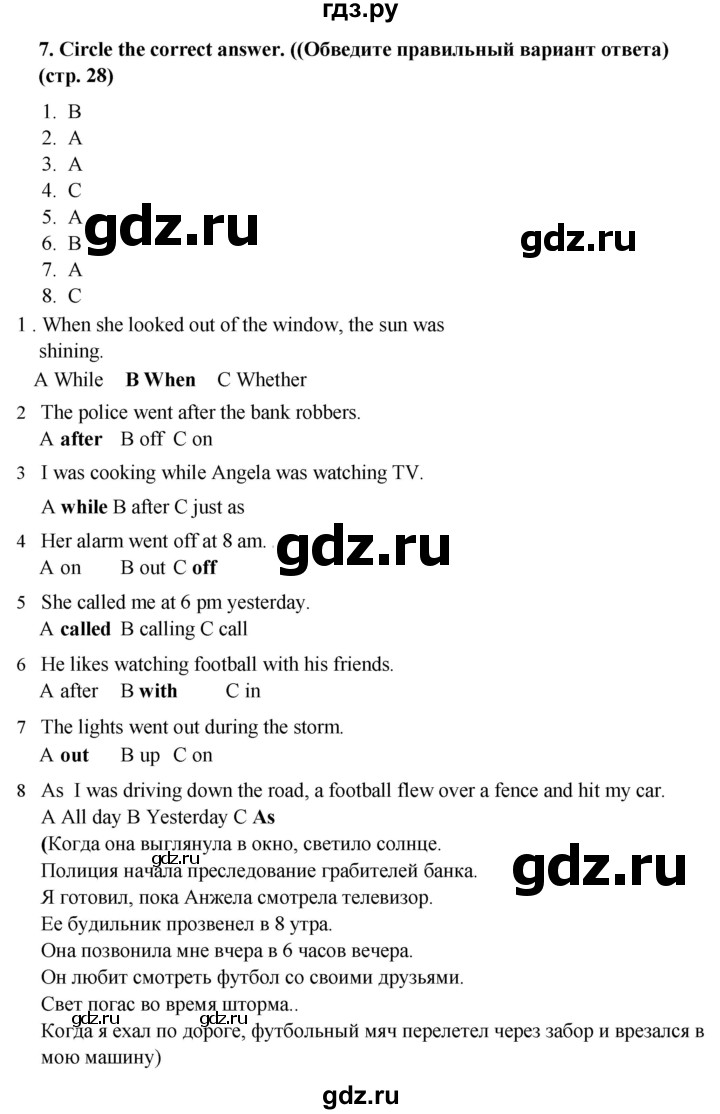
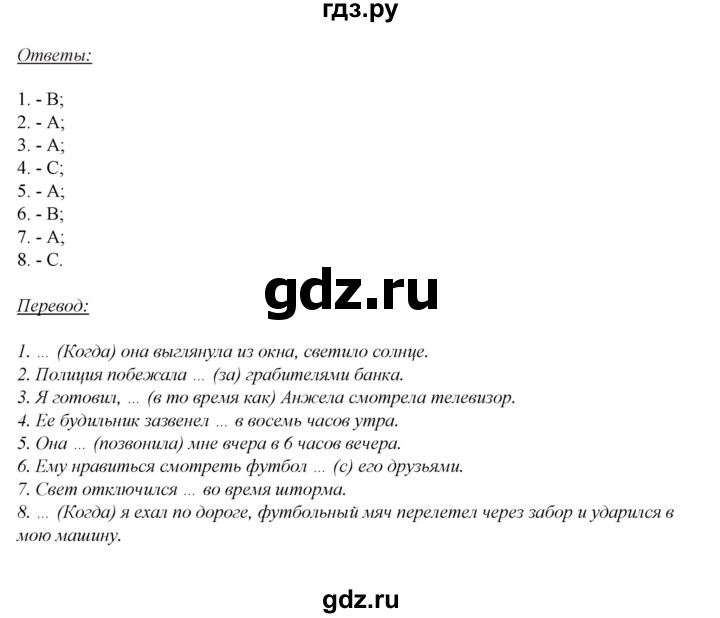
#### **Задание 7. Circle the correct answer.**
1. **B** (When) — **When** she looked out of the window, the sun was shining.
2. **A** (after) — The police went **after** the bank robbers.
3. **A** (while) — I was cooking **while** Angela was watching TV.
4. **C** (off) — Her alarm went **off** at 8 am.
5. **A** (called) — She **called** me at 6 pm yesterday.
6. **B** (with) — He likes watching football **with** his friends.
7. **A** (out) — The lights went **out** during the storm.
8. **C** (As) — **As** I was driving down the road, a football flew over a fence and hit my car.
---
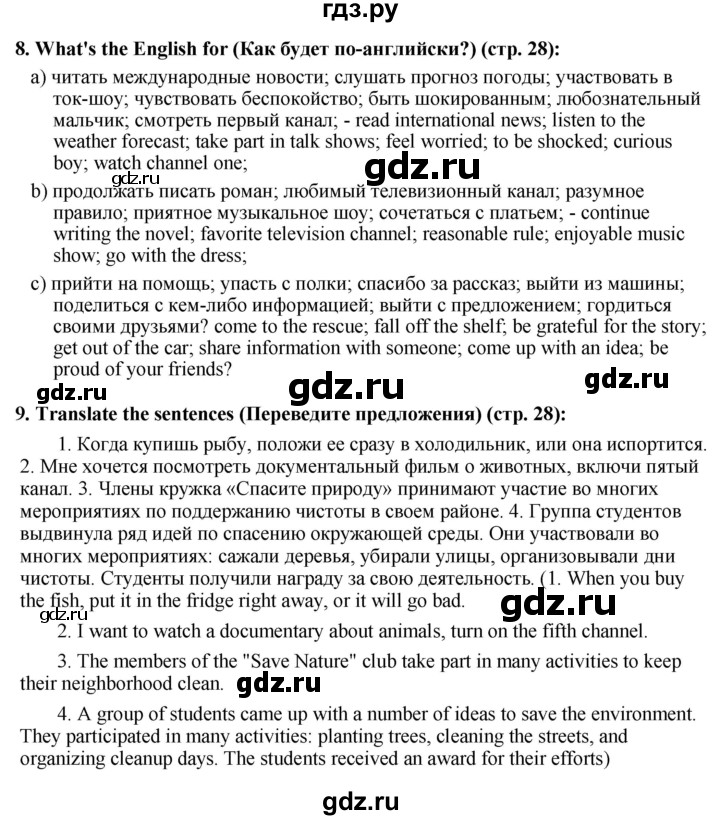
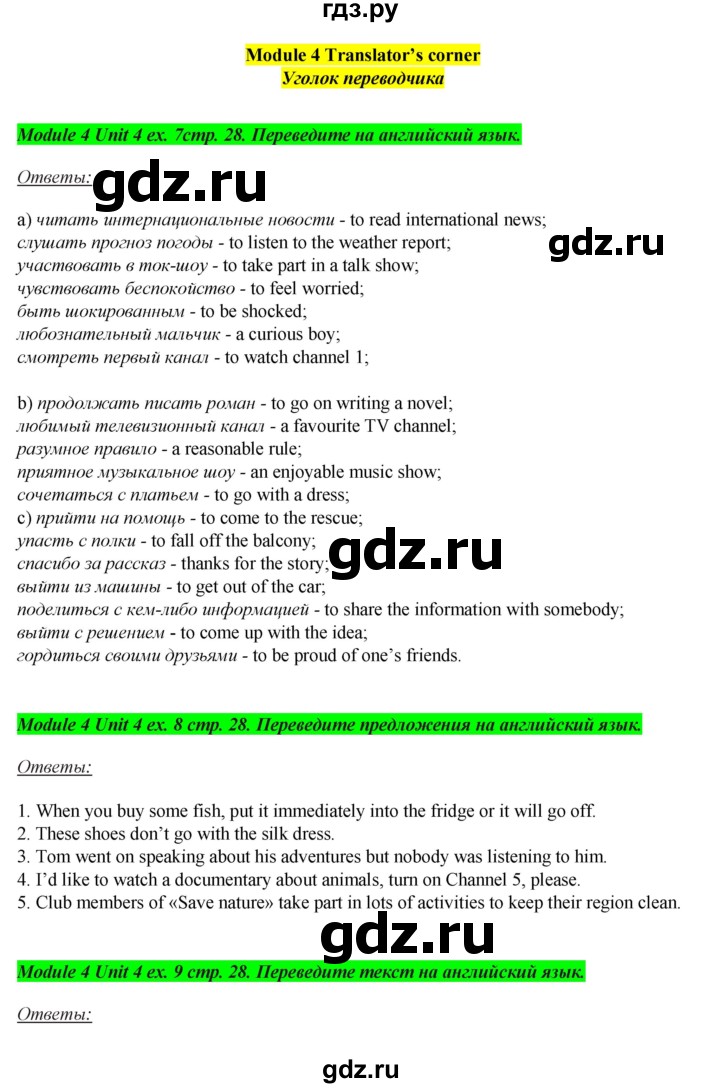
#### **Задание 8. What's the English for:**
**a)**
* читать международные новости — **to read international news**
* слушать прогноз погоды — **to listen to the weather forecast**
* участвовать в ток-шоу — **to take part in a talk show**
* чувствовать беспокойство — **to feel anxious** *(или to feel anxiety)*
* быть шокированным — **to be shocked**
* любознательный мальчик — **a curious boy** *(или an inquisitive boy)*
* смотреть первый канал — **to watch Channel One** *(или to watch the first channel)*
**b)**
* продолжать писать роман — **to go on writing a novel** *(или to continue writing a novel)*
* любимый телевизионный канал — **favourite TV channel**
* разумное правило — **a sensible rule**
* приятное музыкальное шоу — **a pleasant music show**
* сочетаться с платьем — **to go with a dress** *(или to match a dress)*
**c)**
* прийти на помощь — **to come to the rescue**
* упасть с полки — **to fall off a shelf**
* спасибо за рассказ — **thanks for the story** *(или thank you for the story)*
* выйти из машины — **to get out of the car**
* поделиться с кем-либо информацией — **to share information with somebody**
* выйти с предложением — **to come up with a suggestion / proposal**
* гордиться своими друзьями — **to be proud of one's friends**
---
#### **Задание 9. Translate the sentences:**
1. When you buy fish, put it in the fridge immediately, or it will go off *(или: spoil)*.
2. I feel like watching a documentary about animals, turn on Channel 5.
3. Members of the "Save Nature" club take part in many activities to keep their area clean *(или: to maintain cleanliness in their area)*.
4. A group of students came up with a number of ideas to save the environment. They took part in many activities: planted trees, cleaned the streets, and organised clean-up days. The students received an award for their activities.
---
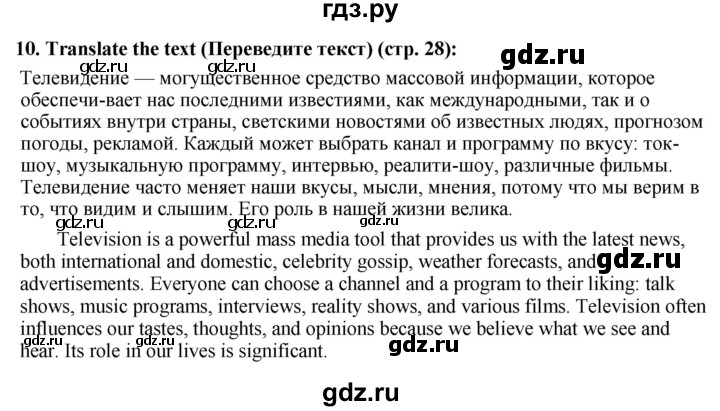
#### **Задание 10. Translate the text:**
Television is a powerful mass media that provides us with the latest news, both international and domestic, celebrity gossip about famous people, weather forecasts, and advertisements. Everyone can choose a channel and a programme to their taste: a talk show, a music programme, an interview, a reality show, various films. Television often changes our tastes, thoughts, and opinions because we believe what we see and hear. Its role in our life is great.
---
### Объяснения к заданиям
* **Past Simple vs Past Continuous (Задание 6 и 7):**
* **Past Continuous** (*was/were + V-ing*) используется для длительных фоновых действий в прошлом или действий, происходивших в конкретный момент времени (*was cooking at 5 pm*).
* **Past Simple** (*V-ed / V2*) используется для коротких, единичных или завершённых действий, а также для последовательности событий (*left work and took the bus*).
* Если одно действие прерывает другое, длительное действие стоит в **Past Continuous**, а прерывающее — в **Past Simple** (*Nathan was walking... when he met Tom*).
* **Фразовые глаголы (Phrasal Verbs with "Go"):**
* `go after` — преследовать, гнаться за кем-то;
* `go off` — срабатывать, звенеть (о будильнике); портиться (о еде);
* `go out` — гаснуть (об огне, свете);
* `go on` — продолжать;
* `go with` — подходить, сочетаться.
Оцени решение:
Спасибо за оценку!