


ГДЗ по английскому языку 11 класс Афанасьева Spotlight Базовый уровень страница - 86

Авторы: Афанасьева О.В., Дули Д., Михеева И.В., Оби Б., Эванс В.
Серия: Spotlight
Тип книги: Учебник
Год: 2015-2024
Рекомендуем посмотреть


 Премиум
Подробное решение страница № 86 по английскому языку Spotlight для учащихся 11 класса Spotlight Базовый уровень, авторов Афанасьева, Дули, Михеева, Оби, Эванс 2015-2024
### Итоговый ответ
#### Exercise 1
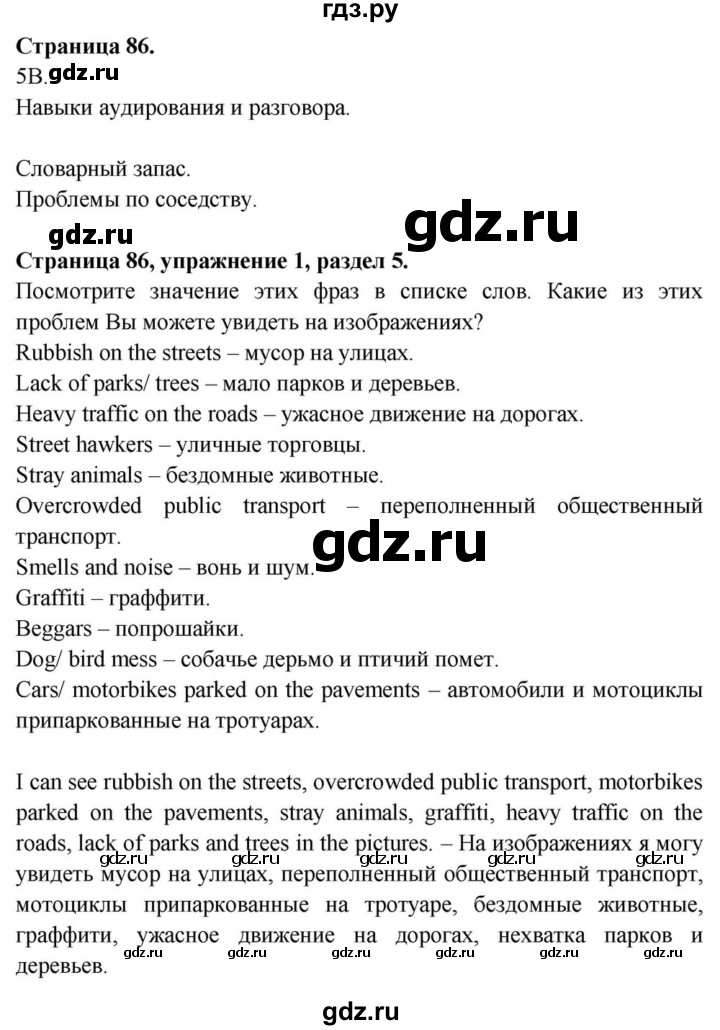
**Problems shown in the pictures (на картинках на с. 86):**
* Picture 1: **heavy traffic on the roads** (интенсивное дорожное движение)
* Picture 2: **graffiti** (граффити / надписи на стенах)
* Picture 3: **overcrowded public transport** (переполненный общественный транспорт)
* Picture 4: **stray animals** (бездомные животные)
* Picture 5: **cars/motorbikes parked on the pavements** (автомобили/мотоциклы, припаркованные на тротуарах)
* Picture 6: **lack of parks/trees** (нехватка парков и деревьев)
* Picture 7: **rubbish on the streets** (мусор на улицах)
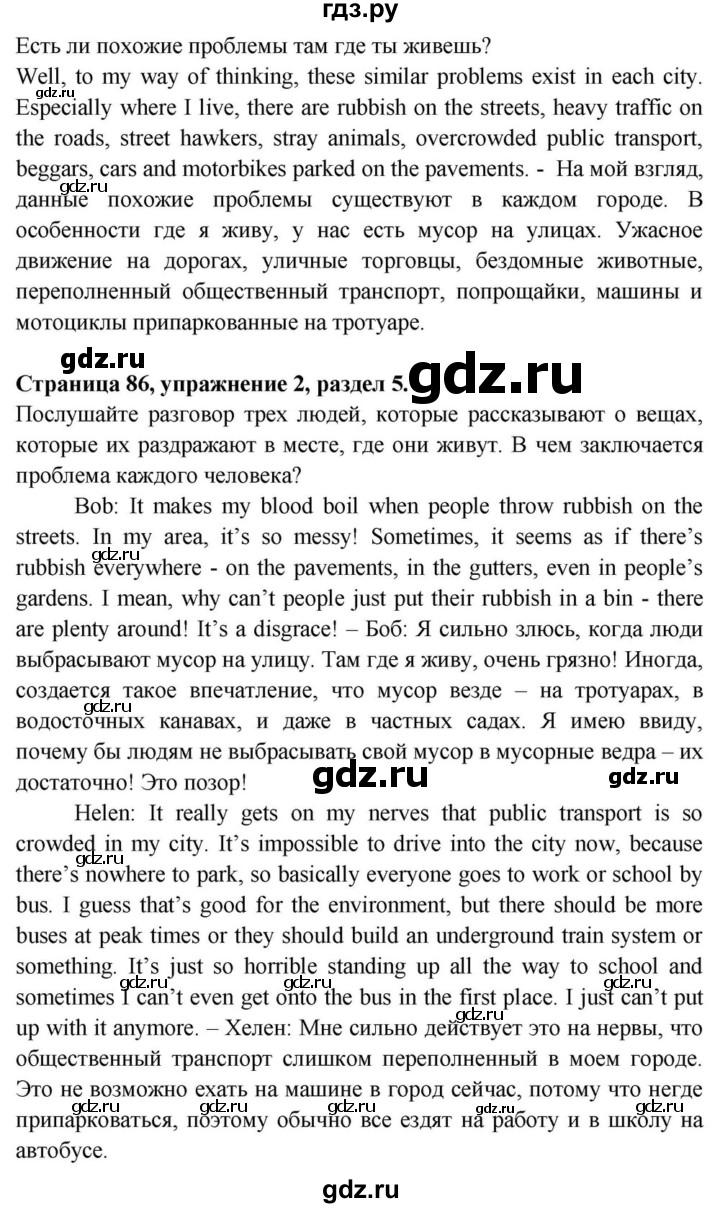
**Sample answer for *Are there similar problems where you live?*:**
> Yes, where I live, heavy traffic and cars parked on the pavements are quite common. Sometimes we also see rubbish on the streets and stray animals, but we are lucky to have plenty of green parks.
---
#### Exercise 2
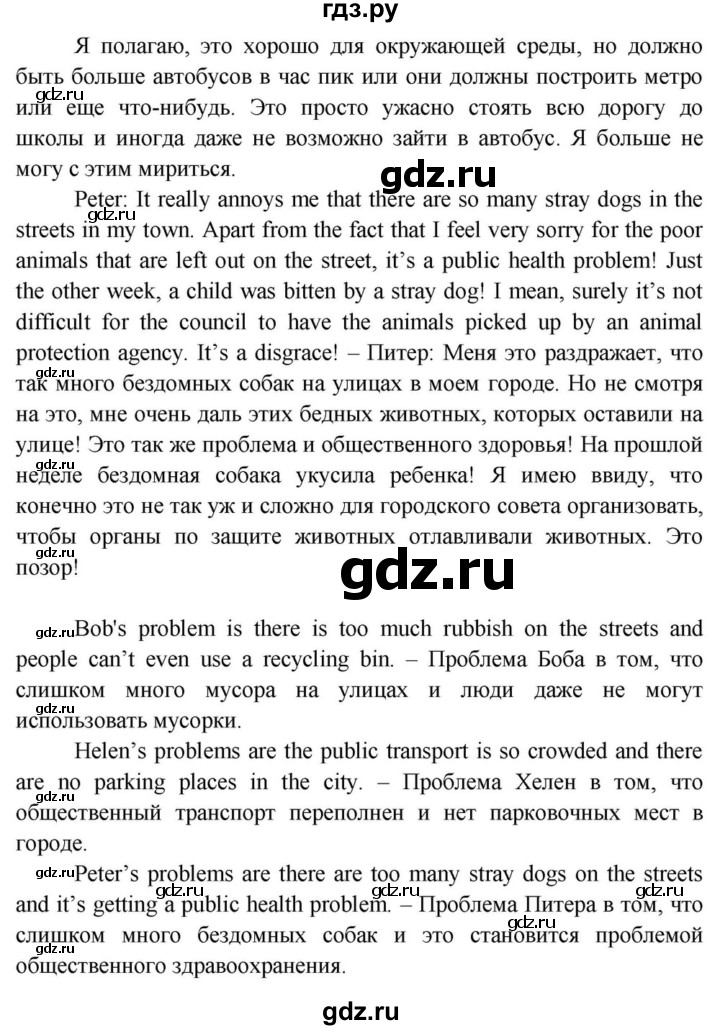
* **Bob:** cars and motorbikes parked on the pavements (машины, припаркованные на тротуарах).
* **Helen:** stray animals (бездомные животные).
* **Peter:** graffiti / vandalism on buildings (граффити на стенах зданий).
---
#### Exercise 3
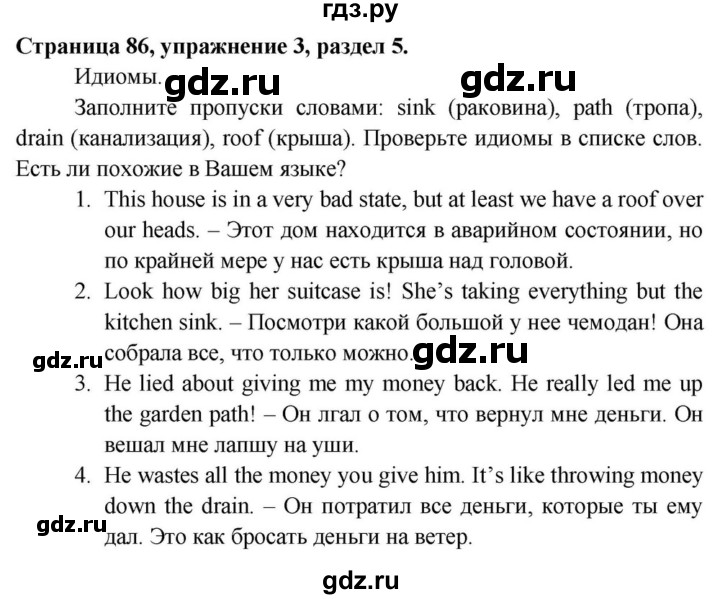
1. This house is in a very bad state, but at least we have a **roof** over our heads.
2. Look how big her suitcase is! She's taking everything but the kitchen **sink**.
3. He lied about giving me my money back. He really led me up the garden **path**!
4. He wastes all the money you give him. It's like throwing money down the **drain**.
**Similar idioms in Russian:**
1. *a roof over one's head* — «крыша над головой».
2. *everything but the kitchen sink* — «взять всё, вплоть до утюга» / «целый воз вещей».
3. *lead someone up the garden path* — «водить за нос» / «вводить в заблуждение».
4. *throw money down the drain* — «бросать деньги на ветер» / «вылетать в трубу».
---
#### Exercise 4
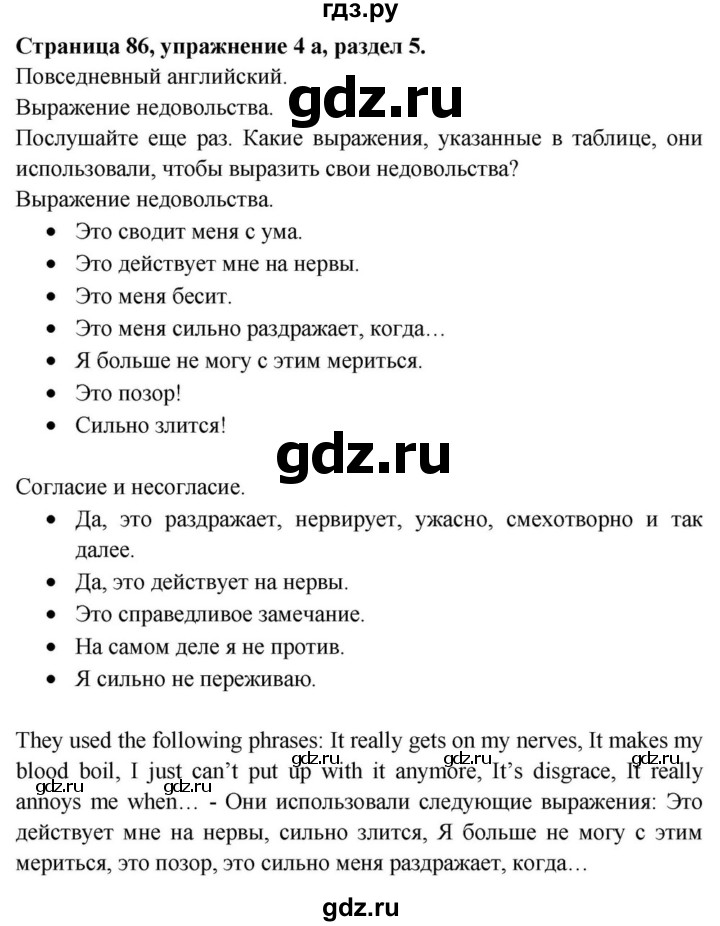
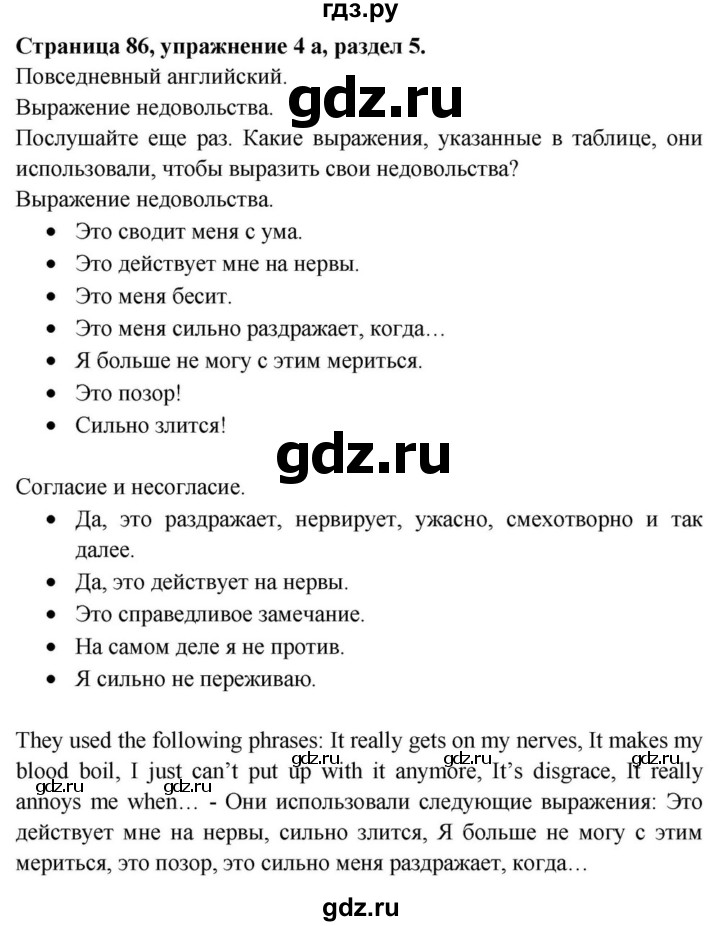
**a) Phrases used by the speakers:**
* **Bob:** *It drives me crazy.* / *I just can’t put up with it any more.*
* **Helen:** *It really gets on my nerves.* / *It makes me angry.*
* **Peter:** *It’s a disgrace!* / *It makes my blood boil!*
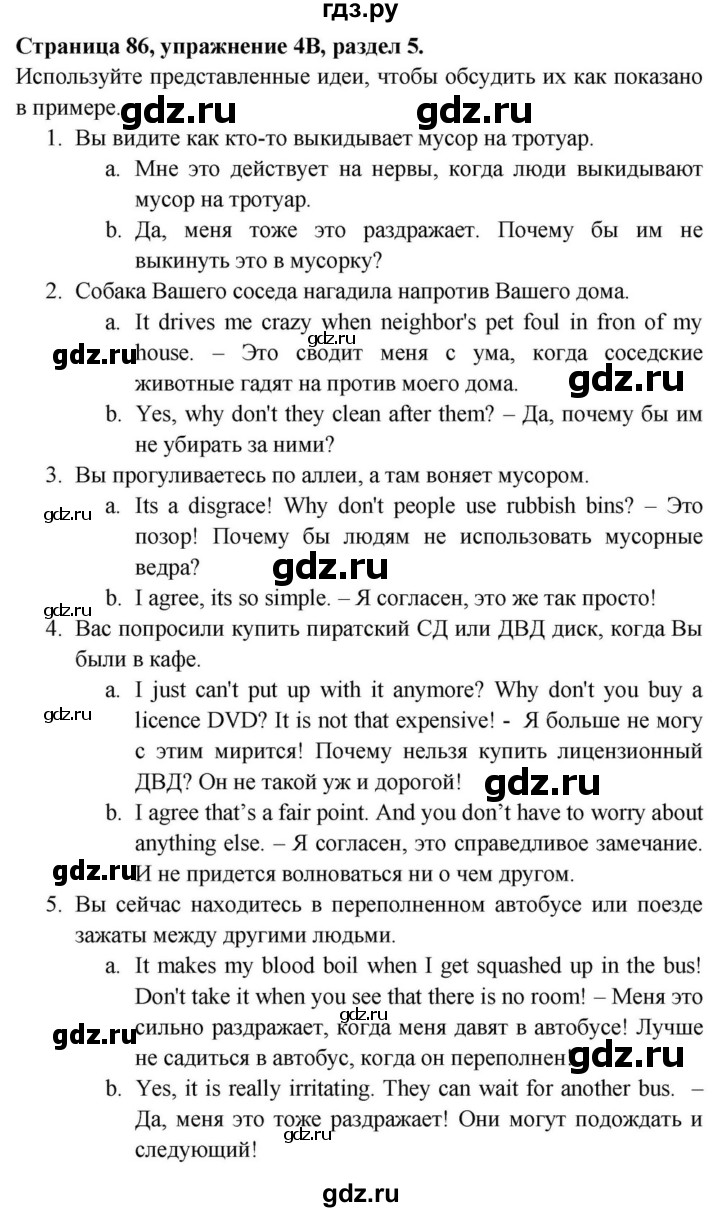
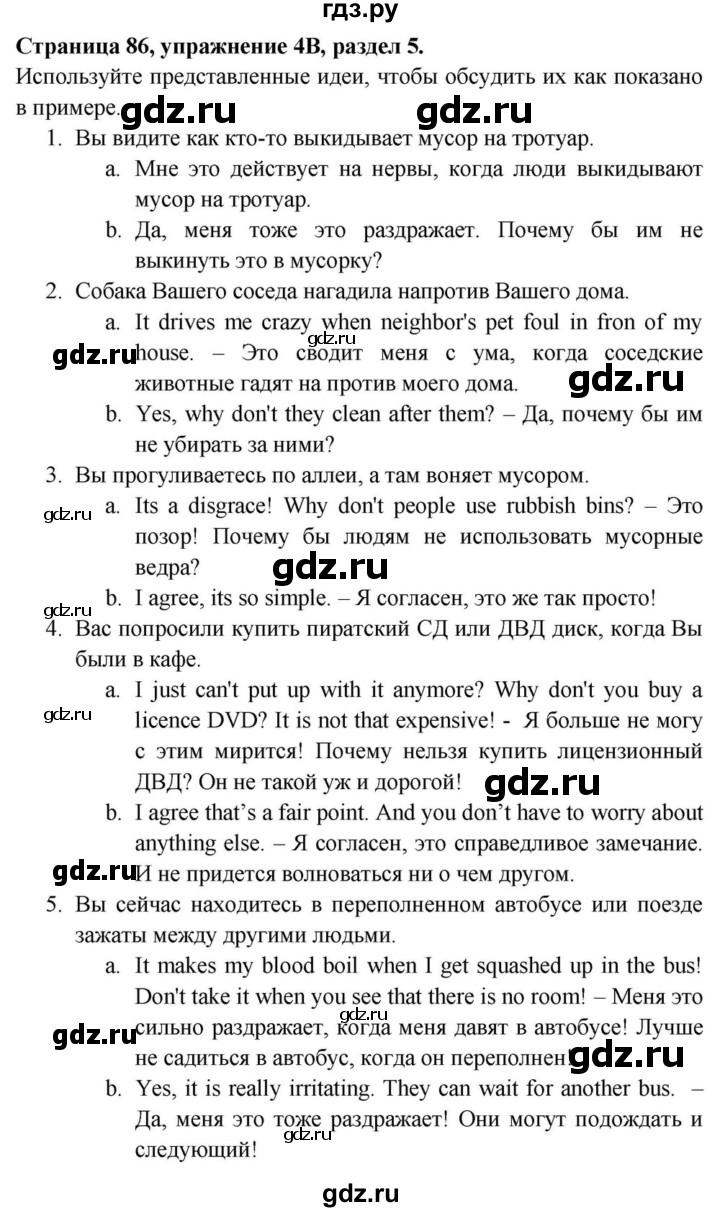
**b) Sample dialogues:**
* **Situation 1 (Neighbour's dog fouling the pavement):**
> **A:** It makes me angry when people let their dogs foul the pavement and don't clean it up!
> **B:** Yes, it is awful. Dog owners really need to be more responsible.
* **Situation 2 (Alley stinking of rubbish):**
> **A:** It drives me crazy when people leave rubbish to rot in alleys. It smells terrible!
> **B:** Yes, it gets on my nerves, too. Why can't the rubbish collectors come more often?
* **Situation 3 (Asked to buy a pirate CD/DVD in a café):**
> **A:** It really gets on my nerves when street hawkers interrupt you in cafés to sell pirate DVDs.
> **B:** Well, actually, I don’t mind it. You can just politely say no.
* **Situation 4 (Squashed in a crowded bus/train):**
> **A:** It makes my blood boil when I have to take overcrowded public transport every morning!
> **B:** Yes, it is irritating, but it doesn't really bother me as long as I arrive on time.
---
### Пояснение к выполнению заданий
1. **Exercise 1 (Vocabulary):**
Фразы описывают типичные городские проблемы. Значения ключевых понятий:
* *street hawkers* — уличные торговцы-зазывалы;
* *beggars* — попрошайки;
* *dog/bird mess* — экскременты животных/птиц;
* *lack of...* — недостаток чего-либо.
2. **Exercise 2 (Listening):**
В аудиозаписи каждый говорящий жалуется на одну конкретную городскую проблему: Боб рассказывает о том, что пешеходам негде пройти из-за машин на тротуарах; Хелен переживает из-за бродячих кошек и собак; Питер возмущен тем, что стены разрисованы граффити.
3. **Exercise 3 (Idioms):**
* **have a roof over one's head** — иметь крышу над головой (базовое жилье).
* **everything but the kitchen sink** — практически всё, что только можно представить (включая ненужные вещи).
* **lead sb up the garden path** — обманывать, вводить в заблуждение (водить за нос).
* **throw money down the drain** — тратить деньги впустую (буквально: спускать в канализацию / на ветер).
4. **Exercise 4 (Everyday English):**
В диалогах отрабатываются речевые клише для выражения раздражения (*Expressing Annoyance*) и согласия/несогласия с собеседником (*Agreeing/Disagreeing*). При построении высказываний обратите внимание на грамматику: после выражений *It drives me crazy when...* или *It annoys me when...* используется придаточное предложение в Present Simple.
Спасибо за оценку!

Открой больше возможностей
Войди через VK — задавай вопросы ИИ и сохраняй ГДЗ в избранное
