


ГДЗ по английскому языку 11 класс Афанасьева Spotlight Базовый уровень страница - 67

Авторы: Афанасьева О.В., Дули Д., Михеева И.В., Оби Б., Эванс В.
Серия: Spotlight
Тип книги: Учебник
Год: 2015-2024
Рекомендуем посмотреть


 Премиум
Подробное решение страница № 67 по английскому языку Spotlight для учащихся 11 класса Spotlight Базовый уровень, авторов Афанасьева, Дули, Михеева, Оби, Эванс 2015-2024
### Итоговый ответ
#### **Reading**
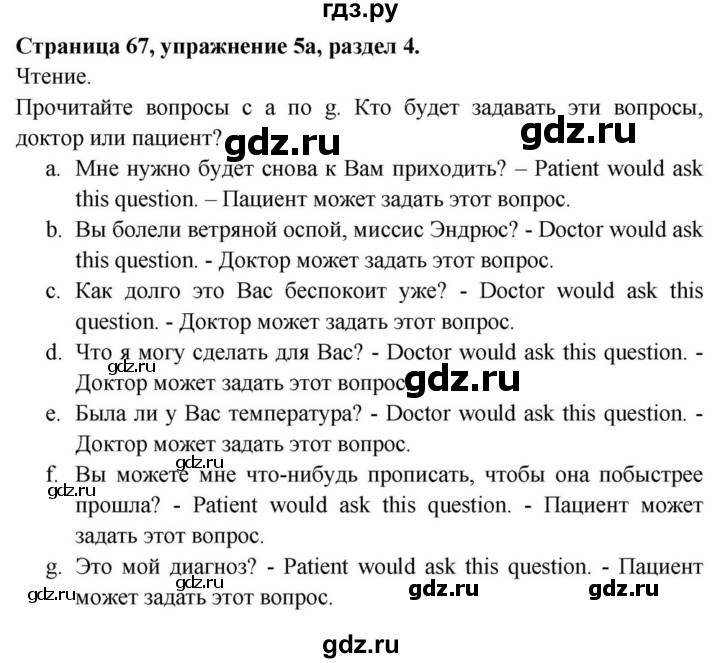
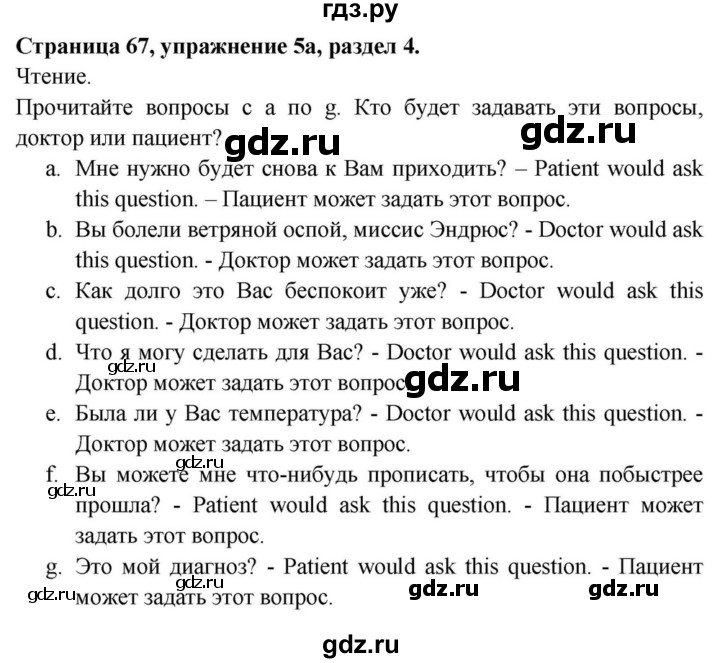
**Ex. 5 a**
* **a** — Patient (Пациент)
* **b** — Doctor (Врач)
* **c** — Doctor (Врач)
* **d** — Doctor (Врач)
* **e** — Doctor (Врач)
* **f** — Patient (Пациент)
* **g** — Patient (Пациент)
---
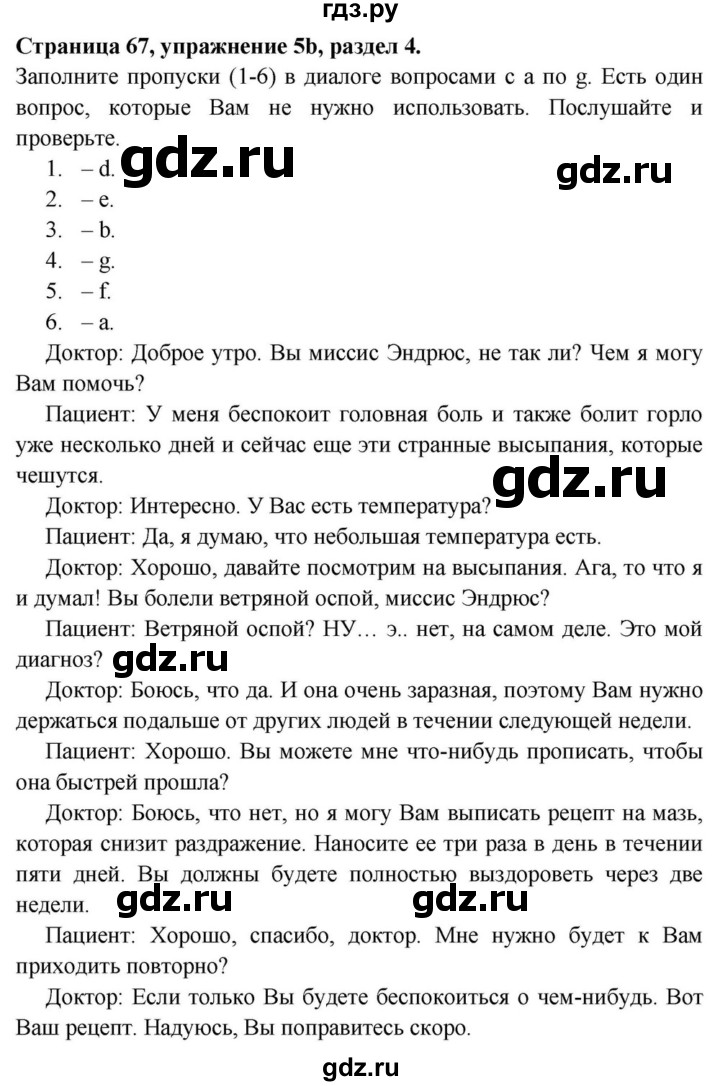
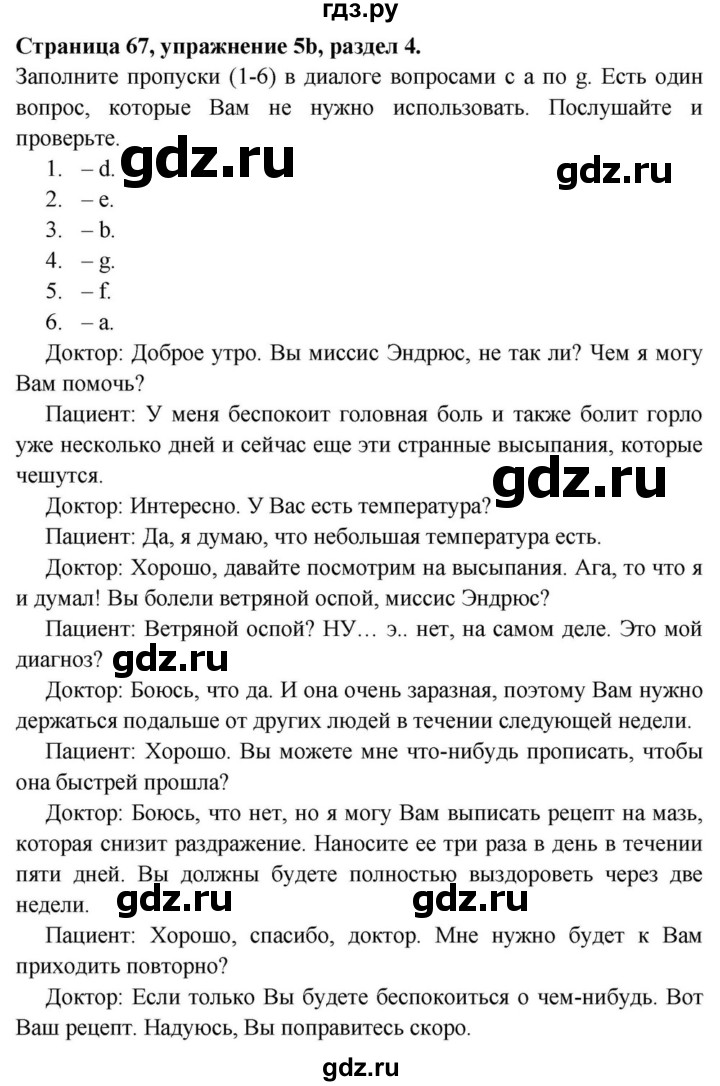
**Ex. 5 b**
* **1 — d** (*What can I do for you?*)
* **2 — e** (*Have you got a temperature?*)
* **3 — b** (*Have you had chickenpox, Miss Andrews?*)
* **4 — g** (*Is that what I've got?*)
* **5 — f** (*Is there anything you can give me to make it go away faster?*)
* **6 — a** (*Do I need to come back and see you again?*)
*Лишний вопрос:* **c** (*How long has it been bothering you?*)
---
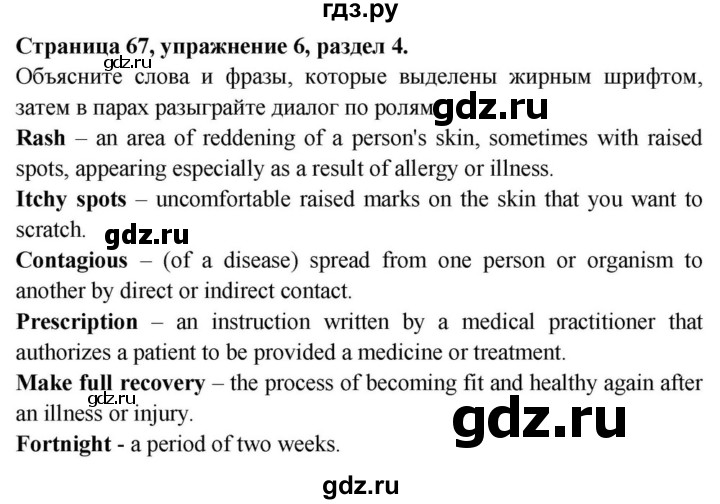
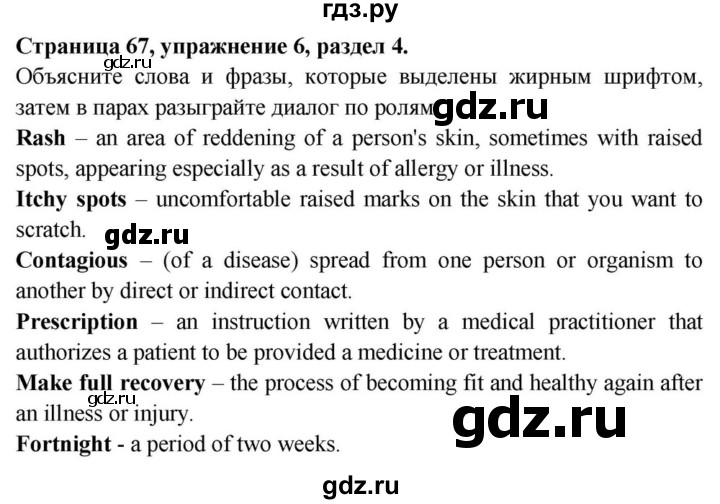
**Ex. 6**
* **rash** — an area of red spots on the skin caused by an illness or allergy *(сыпь)*;
* **itchy spots** — irritating marks or bumps on the skin that make you want to scratch them *(зудящие пятна/прыщики)*;
* **contagious** — easily spread from person to person through contact or air *(заразный, инфекционный)*;
* **prescription** — a doctor’s written order specifying a medicine for a patient *(рецепт на лекарство)*;
* **ointment** — a medical cream rubbed onto the skin to relieve pain or heal a condition *(мазь)*;
* **make a full recovery** — to become completely healthy again after an illness *(полностью выздороветь)*;
* **fortnight** — a period of two weeks / fourteen days *(две недели)*.
---
#### **Listening**
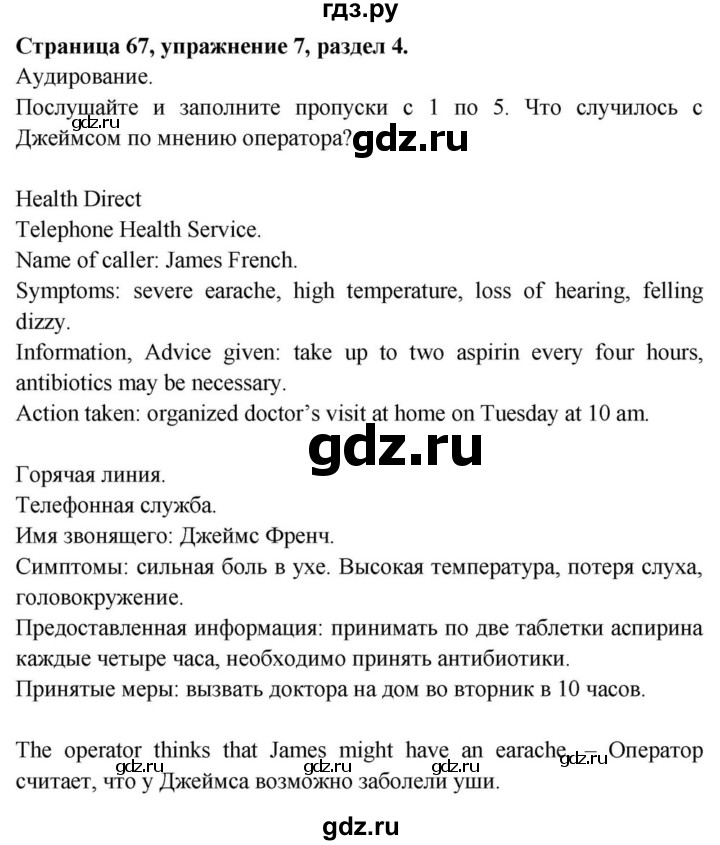
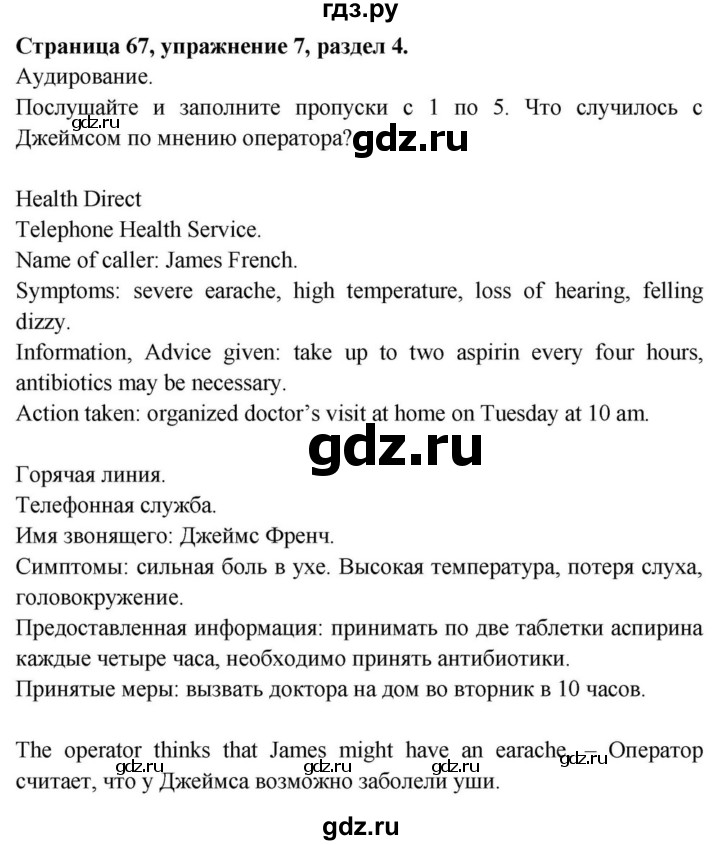
**Ex. 7**
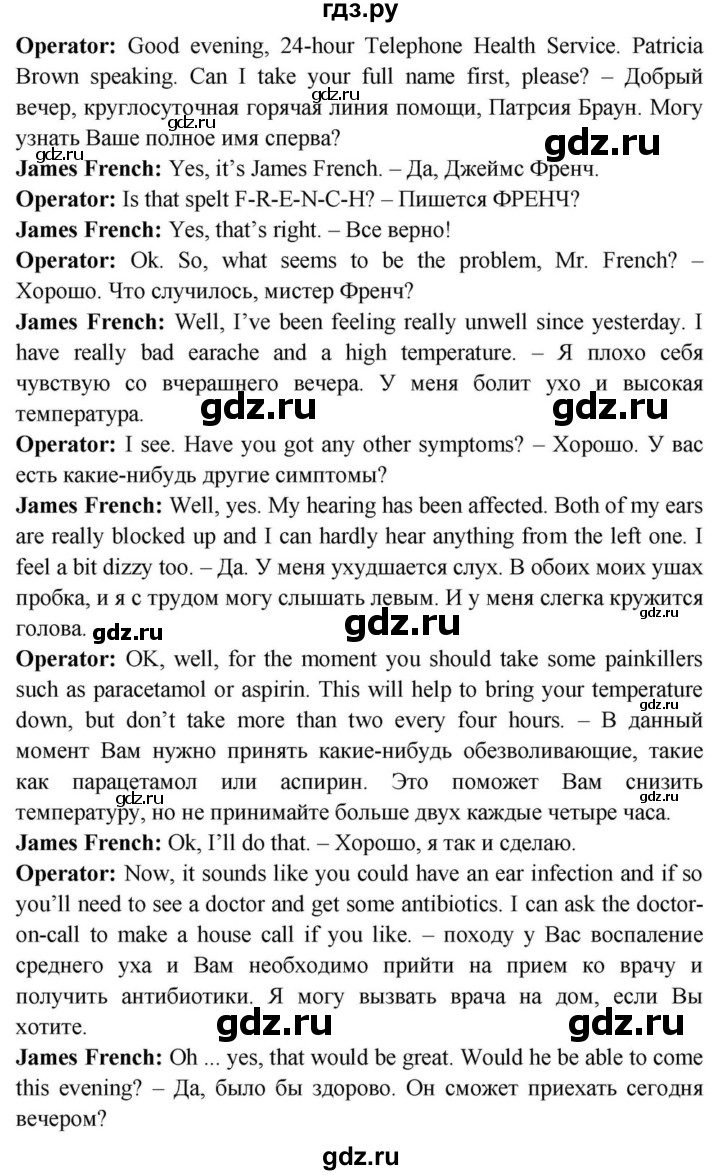
* **1)** Simpson
* **2)** headache
* **3)** appetite
* **4)** 2 *(two)*
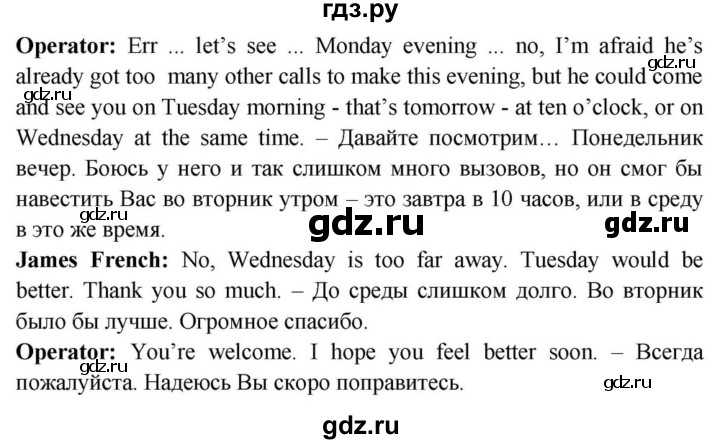
* **5)** Friday
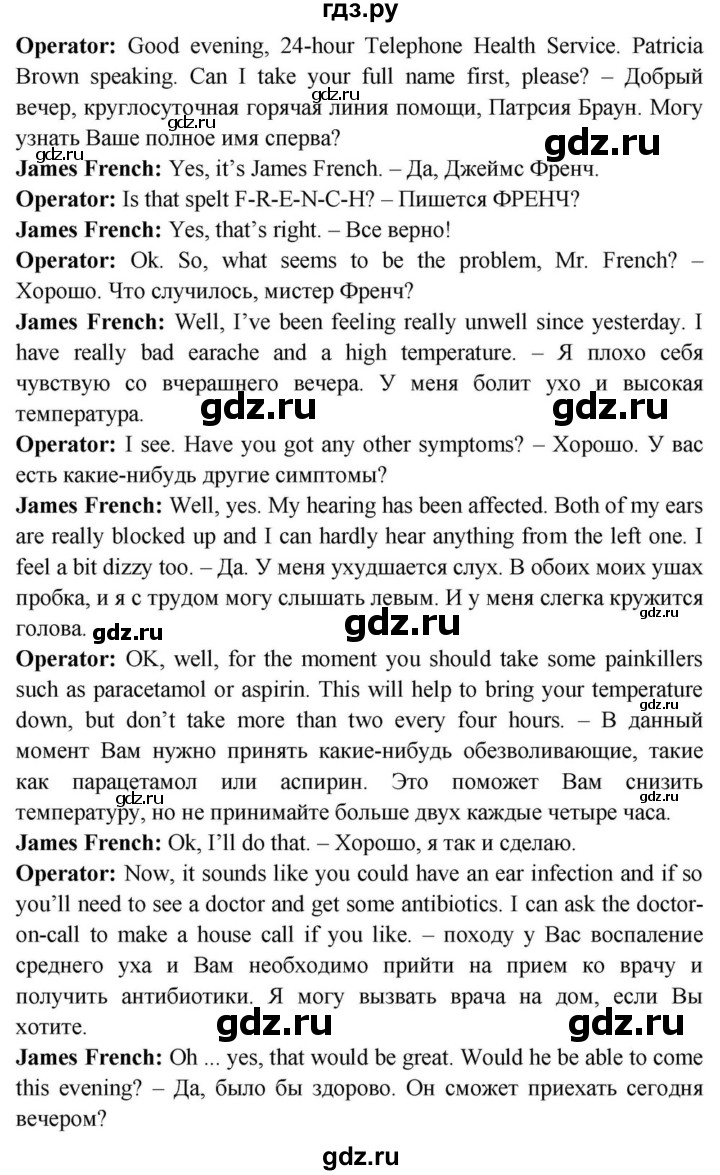
**Diagnosis / Opinion:** The operator thinks James might have **the flu** *(грипп)*.
---
#### **Speaking**
**Ex. 8 (Пример диалога для разыгрывания по ролям)**
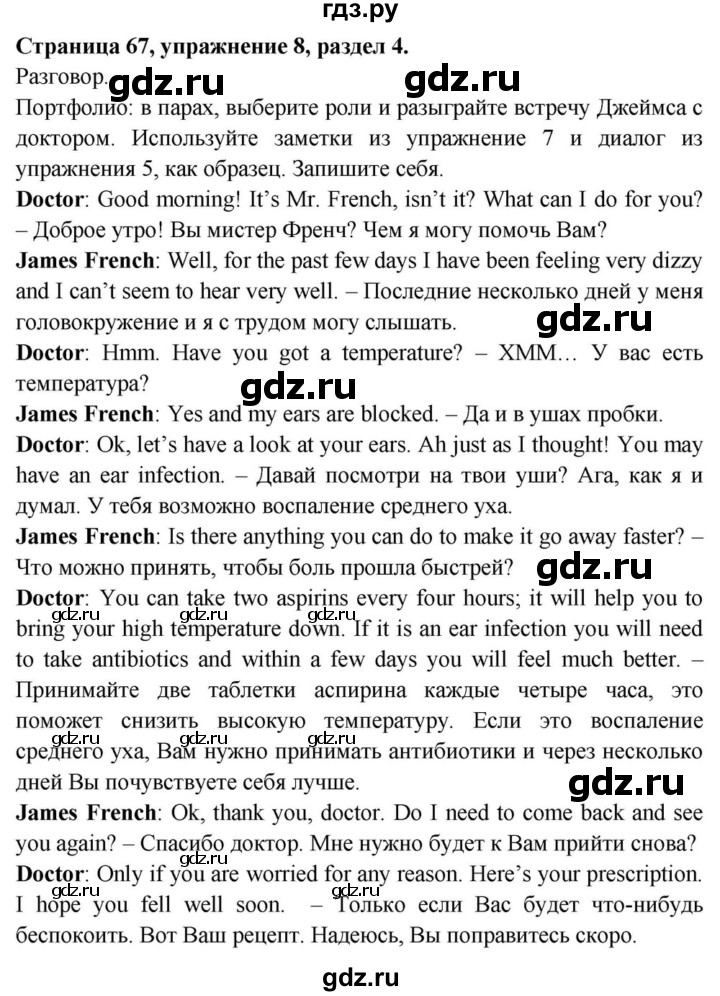
> **Doctor:** Good morning, Mr Simpson. What seems to be the problem?
> **James:** Good morning, Doctor. I’ve been feeling dizzy, and I've had a severe headache and a high temperature since yesterday. I've also had a complete loss of appetite.
> **Doctor:** I see. Let me examine you. Yes, your temperature is quite high. I suspect you have caught the flu.
> **James:** Is it serious?
> **Doctor:** You should stay in bed, drink plenty of fluids, and take two aspirins every four hours to bring down the fever. I'll also write you a prescription for some antibiotics in case the infection worsens.
> **James:** Do I need to come to the clinic for a check-up?
> **Doctor:** Only if your symptoms don't improve in three days. Get well soon!
> **James:** Thank you, Doctor.
---
#### **Say it right: Speculating – responding**
**Ex. 9**
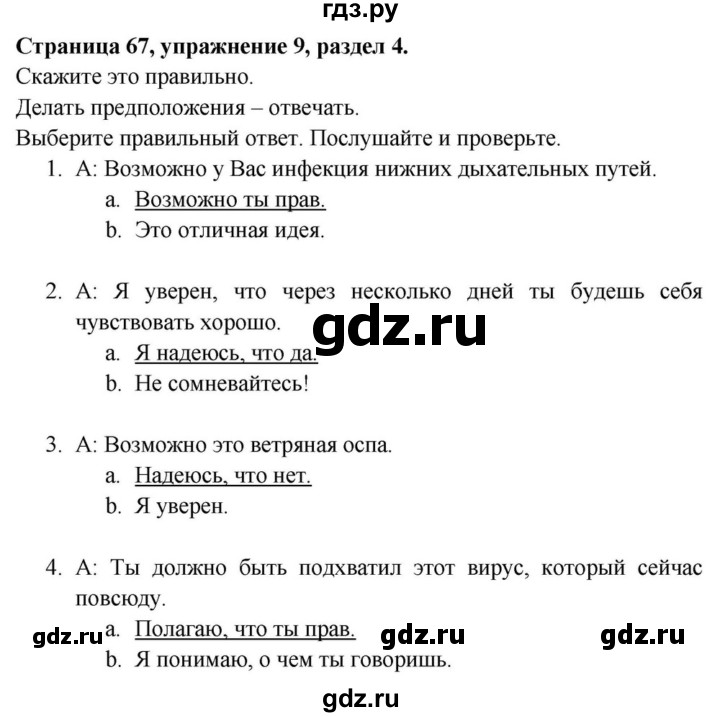
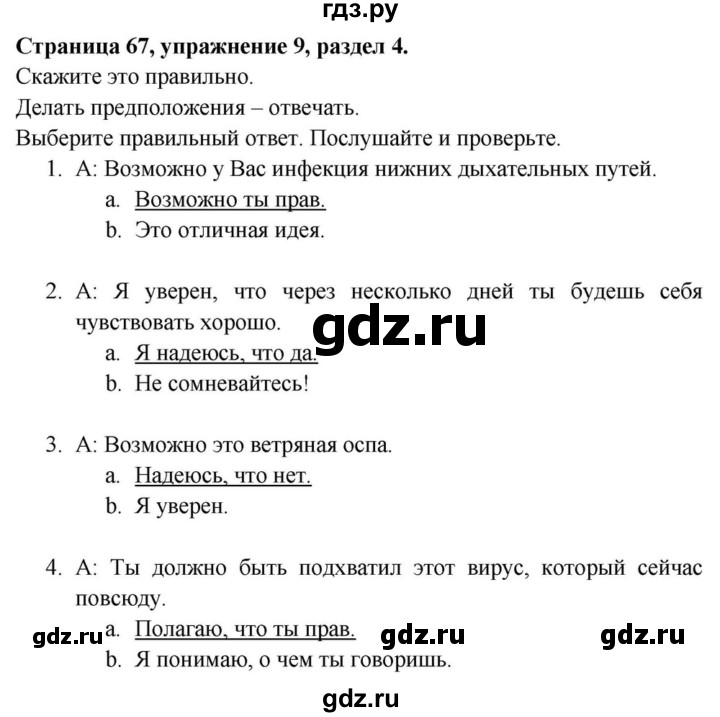
1. **a** (*You could be right.*)
2. **a** (*I hope so!*)
3. **b** (*I hope not!*)
4. **a** (*I think you're right.*)
---
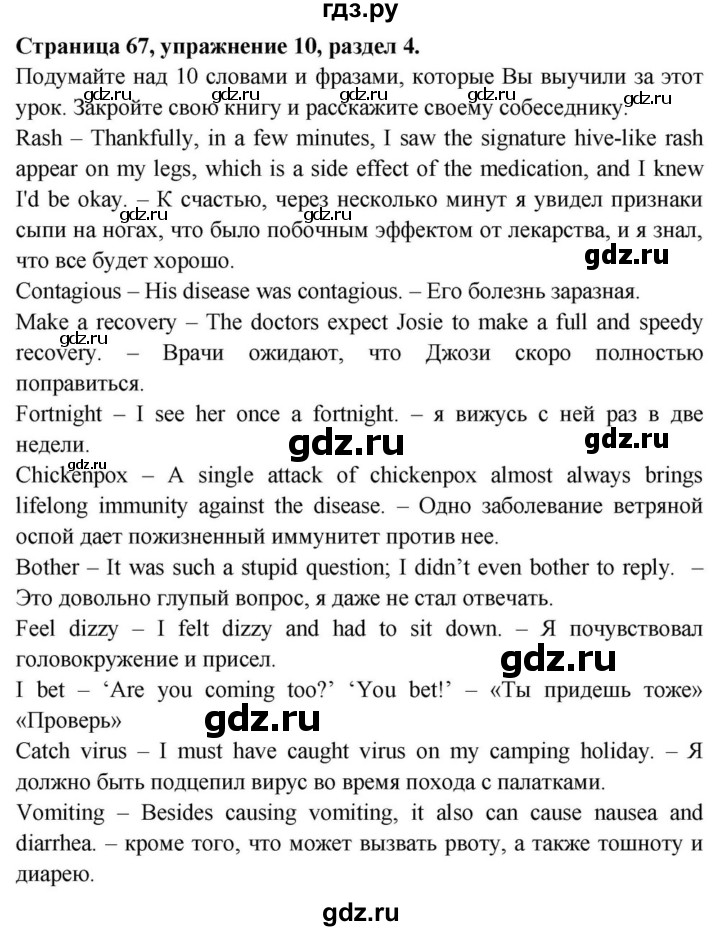
**Ex. 10 (10 полезных слов и выражений из урока)**
1. **rash** — сыпь
2. **itchy spots** — зудящие прыщики/пятна
3. **contagious** — заразный
4. **prescription** — рецепт (медицинский)
5. **ointment** — мазь
6. **make a full recovery** — полностью поправиться
7. **fortnight** — две недели
8. **loss of appetite** — потеря аппетита
9. **dizzy** — чувствующий головокружение
10. **chest infection** — инфекция дыхательных путей (грудной клетки)
---
### Подробное объяснение и логика выполнения
1. **Ex. 5 a & 5 b (Диалог у врача):**
* В реплике 1 доктор здоровается и открывает консультацию стандартным вопросом: *«What can I do for you?»* (**d**).
* В реплике 2 доктор уточняет симптом, на что пациент отвечает: *«Yes, I think I've got a slight one»* (да, есть небольшая), следовательно, вопрос о температуре — *«Have you got a temperature?»* (**e**).
* В реплике 3 доктор осматривает сыпь и задает наводящий вопрос об анамнезе: *«Have you had chickenpox, Miss Andrews?»* (**b**).
* В реплике 4 пациентка пугается диагноза «ветрянка» и спрашивает: *«Is that what I've got?»* (**g**), на что врач подтверждает: *«I'm afraid so»*.
* В реплике 5 пациентка интересуется ускорением лечения: *«Is there anything you can give me to make it go away faster?»* (**f**), врач отвечает: *«I'm afraid not, but I can give you a prescription...»*.
* В реплике 6 перед уходом пациентка спрашивает о повторном визите: *«Do I need to come back and see you again?»* (**a**), и врач говорит: *«Only if you are worried...»*.
2. **Ex. 9 (Реакции на предположения):**
* **1:** На предположение о диагнозе (*probably got...*) соглашаются фразой *«You could be right»* (Ты, возможно, прав).
* **2:** На ободрение *«I bet you'll feel fine»* (Уверен, ты поправишься) логично ответить надеждой: *«I hope so!»* (Надеюсь на это!).
* **3:** На нежелательное предположение *«It could be chickenpox»* отвечают: *«I hope not!»* (Надеюсь, что нет!).
* **4:** На логический вывод *«You must have caught...»* соглашаются: *«I think you're right»* (Думаю, ты прав).
Спасибо за оценку!




Открой больше возможностей
Войди через VK — задавай вопросы ИИ и сохраняй ГДЗ в избранное
