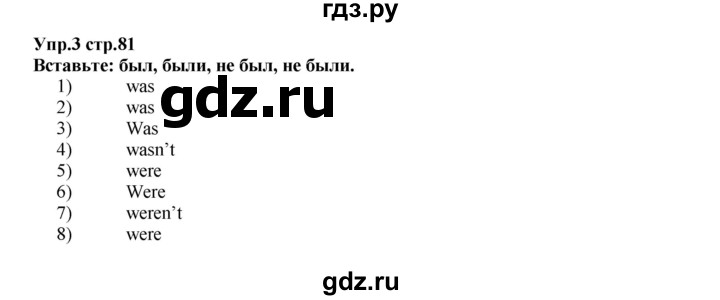
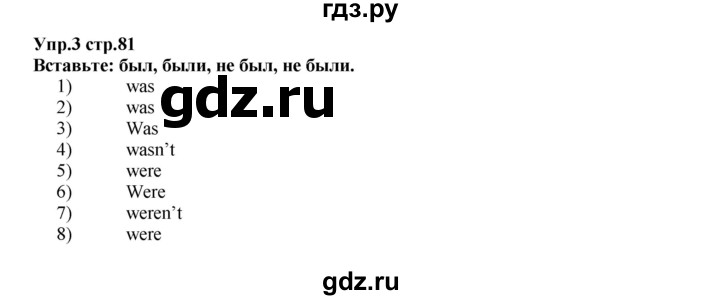
ГДЗ по английскому языку 5 класс Баранова Starlight Углубленный уровень страница - 81

Авторы: Баранова К.М., Дули Д., Копылова В.В., Мильруд Р.П., Эванс В.
Серия: Starlight
Тип книги: Учебник
Год: 2015-2023
Рекомендуем посмотреть


Подробное решение страница № 81 по английскому языку Starlight для учащихся 5 класса Starlight Углубленный уровень, авторов Баранова, Дули, Копылова, Мильруд, Эванс 2015-2023

 ИИ-решебник / страница / 81
Ответ подготовлен нейросетью и может содержать ошибки
Объяснение и пошаговое решение
### Итоговый ответ
#### **Exercise 5**
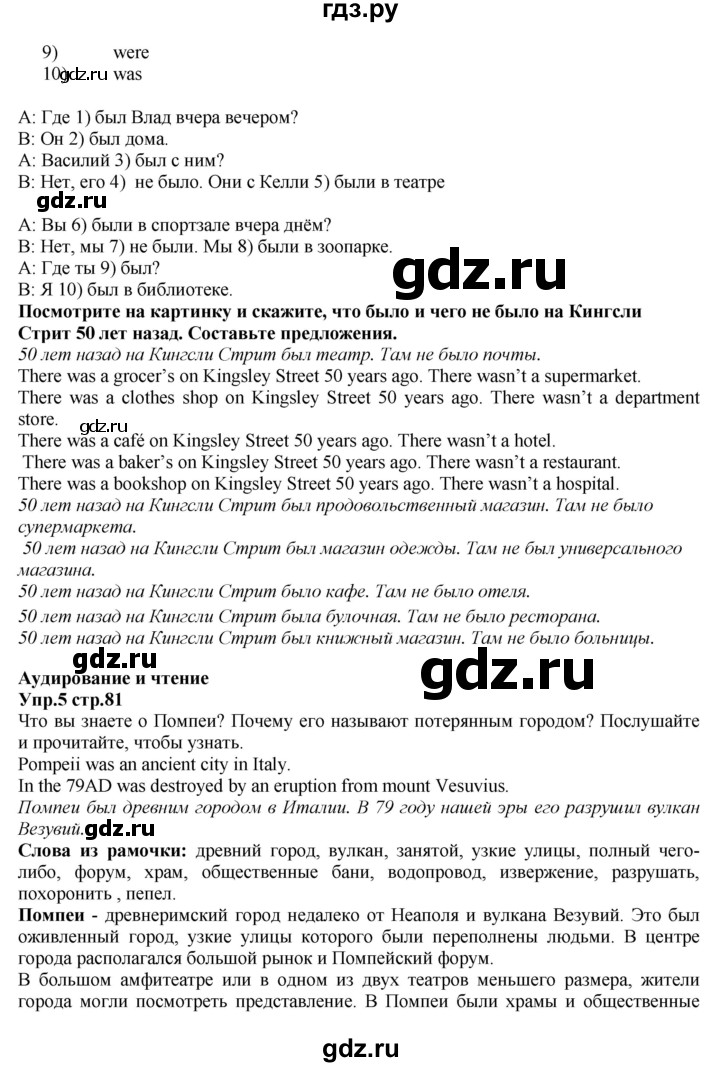
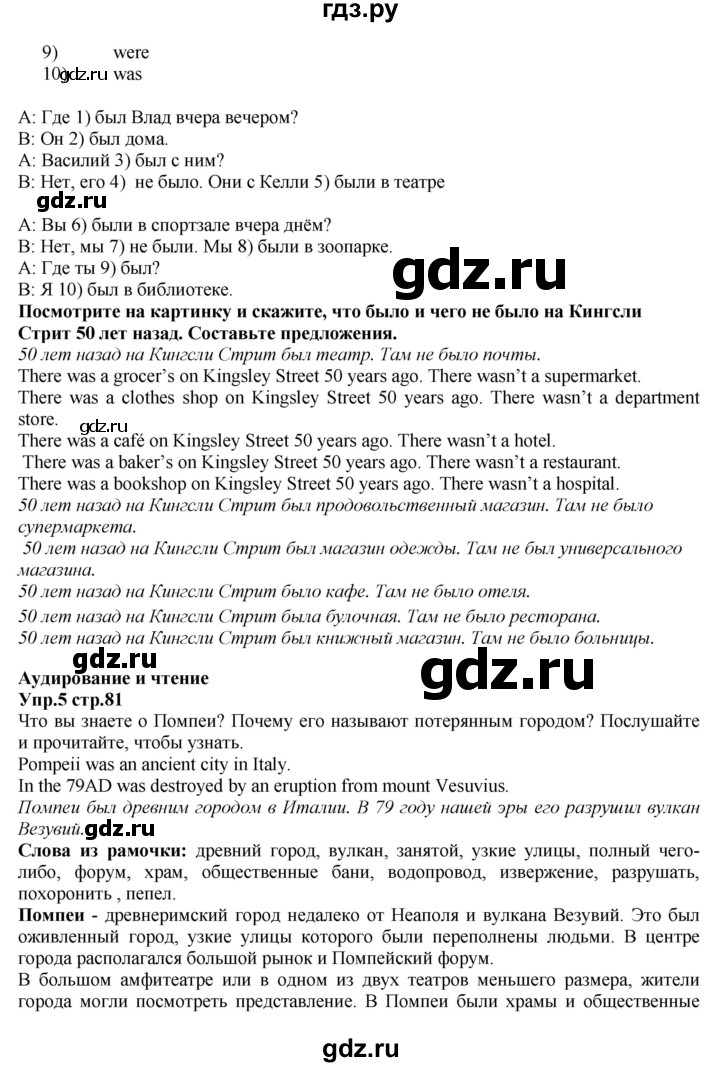
* **What do you know about Pompeii?**
Pompeii was an ancient Roman city near Naples in Italy. In 79 AD, the volcano Mount Vesuvius erupted and buried the city under ash.
* **Why do they call it The Lost City?**
They call it «The Lost City» because it was buried under volcanic ash for hundreds of years and forgotten until archaeologists discovered it.
---
#### **Exercise 6**
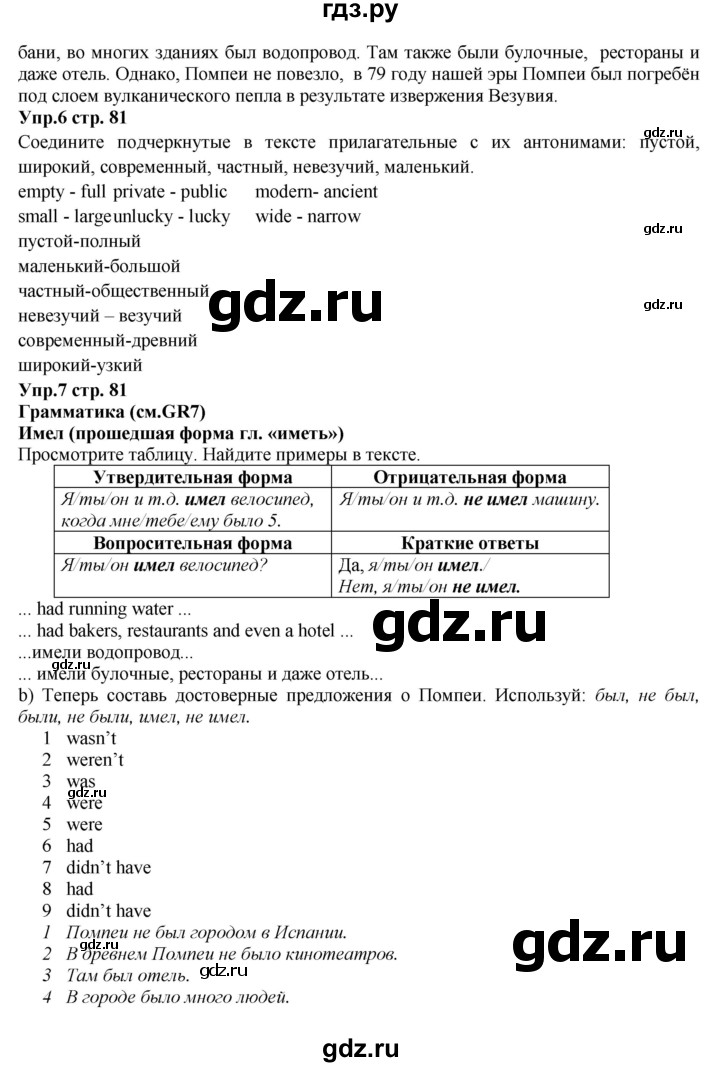
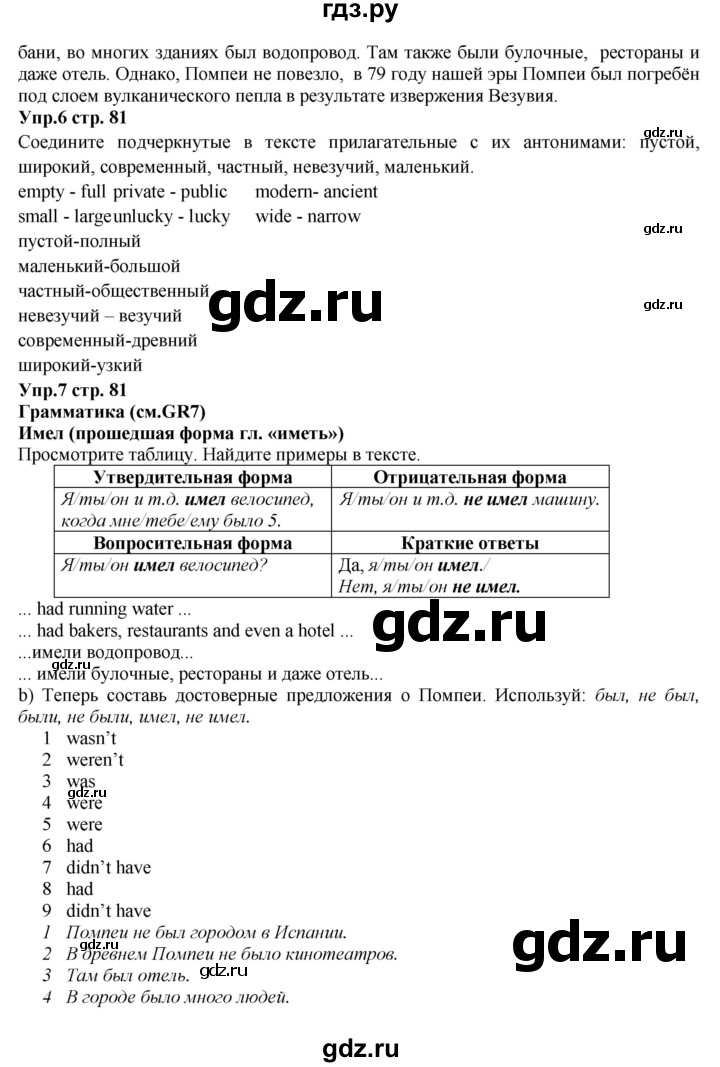
* **ancient** — modern *(древний — современный)*
* **busy / full** — empty *(оживленный / полный — пустой)*
* **narrow** — wide *(узкий — широкий)*
* **large** — small *(большой — маленький)*
* **public** — private *(общественный — частный)*
* **lucky** — unlucky *(удачливый — неудачливый)*
---
#### **Exercise 7**
**a)** Примеры из текста с глаголом **had**:
* *«...many buildings **had** running water.»*
* *«The town **had** bakers', restaurants and even a hotel.»*
**b)**
1. Pompeii **wasn't** a Spanish town.
2. There **weren't** cinemas in ancient Pompeii.
3. There **was** a hotel.
4. There **were** a lot of people in the city.
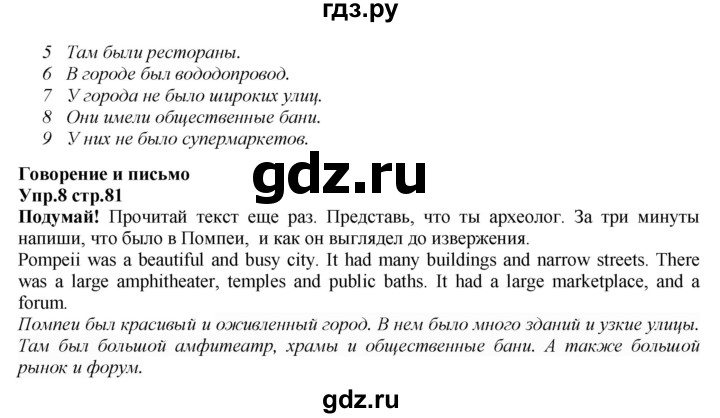
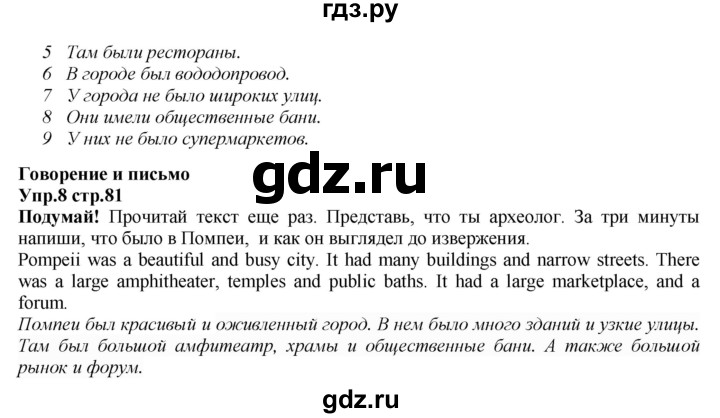
5. There **were** restaurants.
6. The town **had** running water.
7. The town **didn't have** wide streets.
8. They **had** public baths.
9. They **didn't have** supermarkets.
---
#### **Exercise 8**
**Archaeologist's story:**
> Before the eruption, Pompeii was a busy and beautiful Roman town. The streets were narrow and full of people. There were bakers', restaurants, public baths, temples and even a hotel. Many houses had running water and lovely gardens. It was an amazing place to live!
---
### Объяснение и правила
1. **Exercise 6 (Антонимы — слова с противоположным значением):**
* *ancient* (древний) $\leftrightarrow$ *modern* (современный);
* *narrow* (узкий) $\leftrightarrow$ *wide* (широкий);
* *large* (большой) $\leftrightarrow$ *small* (маленький);
* *public* (общественный) $\leftrightarrow$ *private* (частный);
* *lucky* (удачливый) $\leftrightarrow$ *unlucky* (неудачливый);
* *busy / full* (оживленный / полный) $\leftrightarrow$ *empty* (пустой).
2. **Exercise 7b (Употребление Past Simple: Was / Were / Had):**
* **Was / Wasn't** используется с подлежащим в единственном числе: *Pompeii wasn't...* (Помпеи не были...), *There was a hotel...* (Там был отель...).
* **Were / Weren't** используется с подлежащим во множественном числе: *There weren't cinemas...* (Кинотеатров не было...), *There were a lot of people...* (Там было много людей...).
* **Had / Didn't have** обозначает наличие или владение чем-либо в прошлом:
* В Помпеях был водопровод $\rightarrow$ *The town **had** running water.*
* Улицы были узкими (*narrow*), значит, широких улиц не было $\rightarrow$ *The town **didn't have** wide streets.*
* Супермаркетов в древности не было $\rightarrow$ *They **didn't have** supermarkets.*
Оцени решение:
Спасибо за оценку!