


ГДЗ по английскому языку 11 класс Афанасьева Spotlight Базовый уровень страница - 113

Авторы: Афанасьева О.В., Дули Д., Михеева И.В., Оби Б., Эванс В.
Серия: Spotlight
Тип книги: Учебник
Год: 2015-2024
Рекомендуем посмотреть


 Премиум
Подробное решение страница № 113 по английскому языку Spotlight для учащихся 11 класса Spotlight Базовый уровень, авторов Афанасьева, Дули, Михеева, Оби, Эванс 2015-2024
Ниже представлены готовые ответы и подробные пояснения к заданиям со страницы 113 учебника **Spotlight 11** (*Culture Corner: Celtic Languages*).
---
### Итоговые ответы к упражнениям (Key / Answers)
#### Exercise 1
* **How many languages are spoken in the British Isles?**
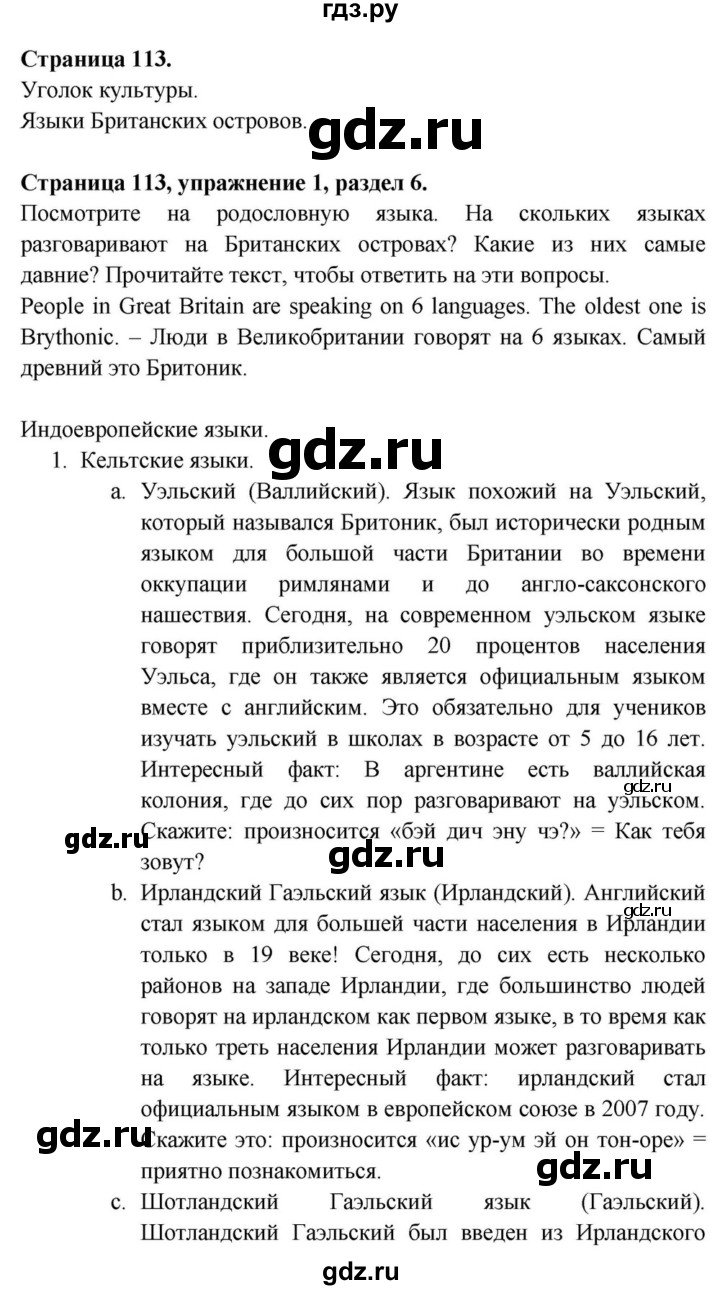
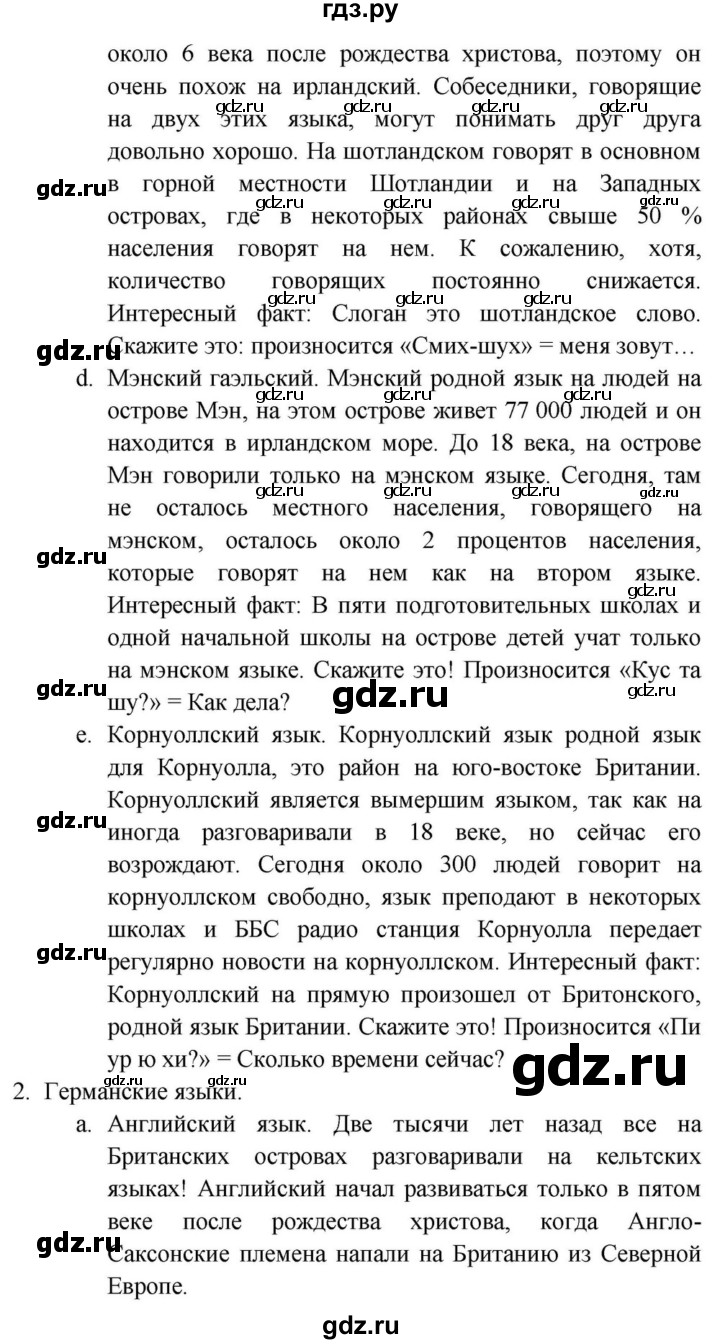
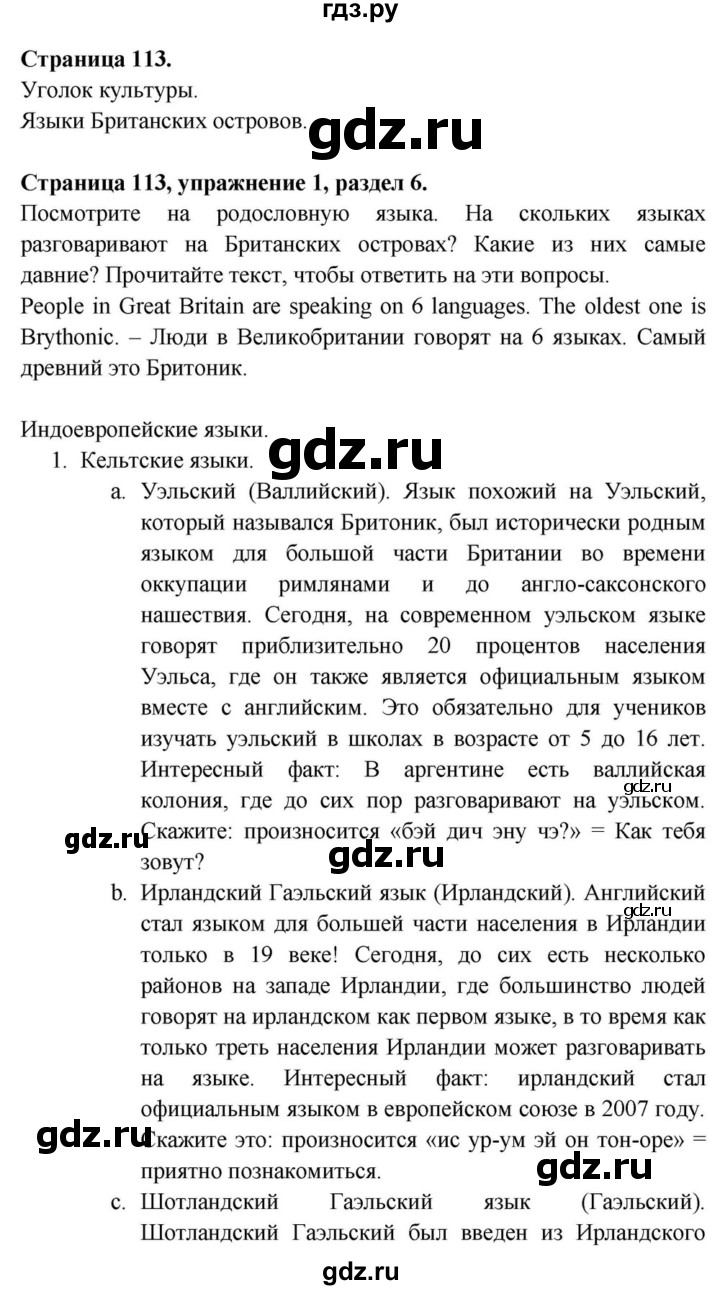
According to the text, there are **6 main indigenous languages** mentioned: 5 Celtic languages (**Welsh, Irish Gaelic, Scottish Gaelic, Manx Gaelic, Cornish**) and 1 Germanic language (**English**).
* **Which is the oldest?**
**Celtic languages** are the oldest family spoken in the British Isles (dating back before the Roman occupation, over 2,000 years ago). Among the specific languages mentioned, **Welsh** and **Cornish** directly descend from **Brythonic**, which was the historic native tongue of Britain before the Anglo-Saxon invasion.
---
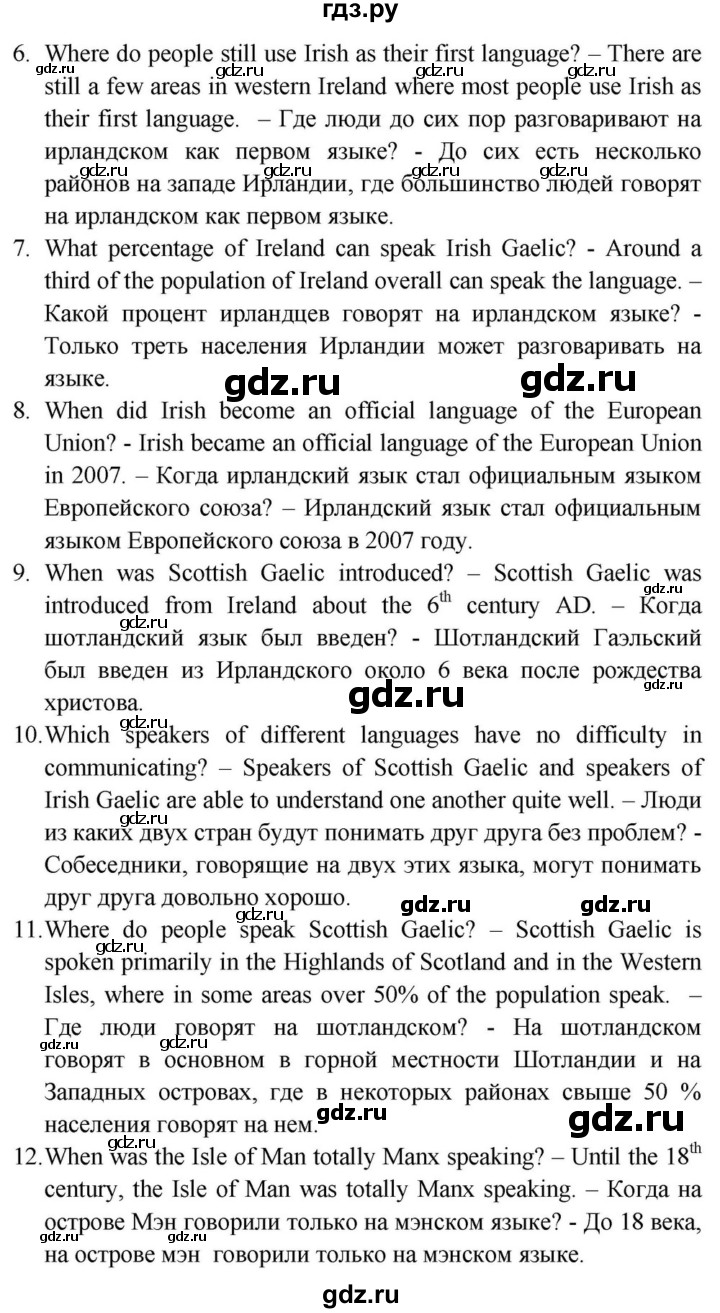
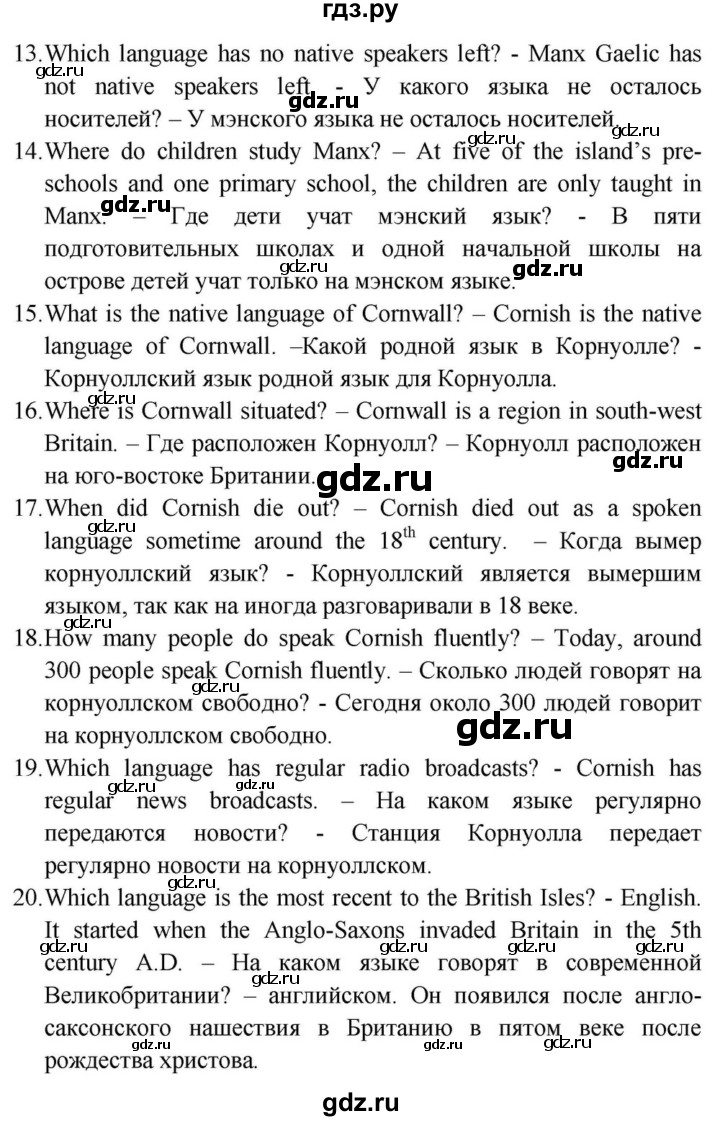
#### Exercise 2 (Sample Questions & Answers)
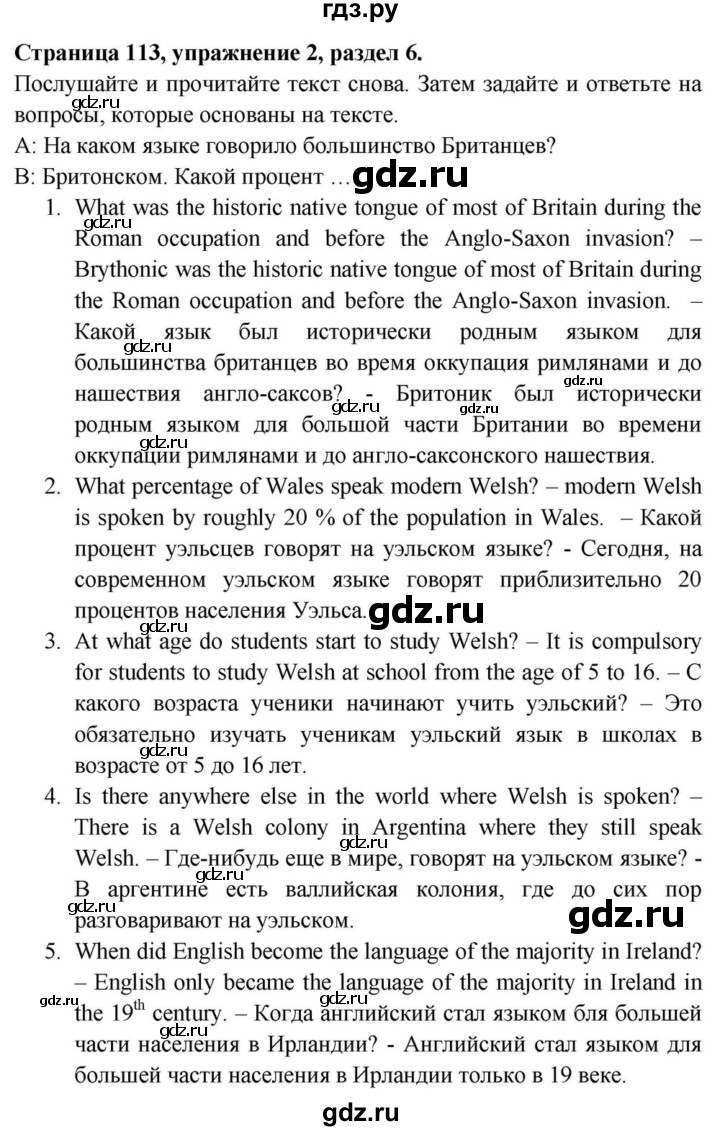
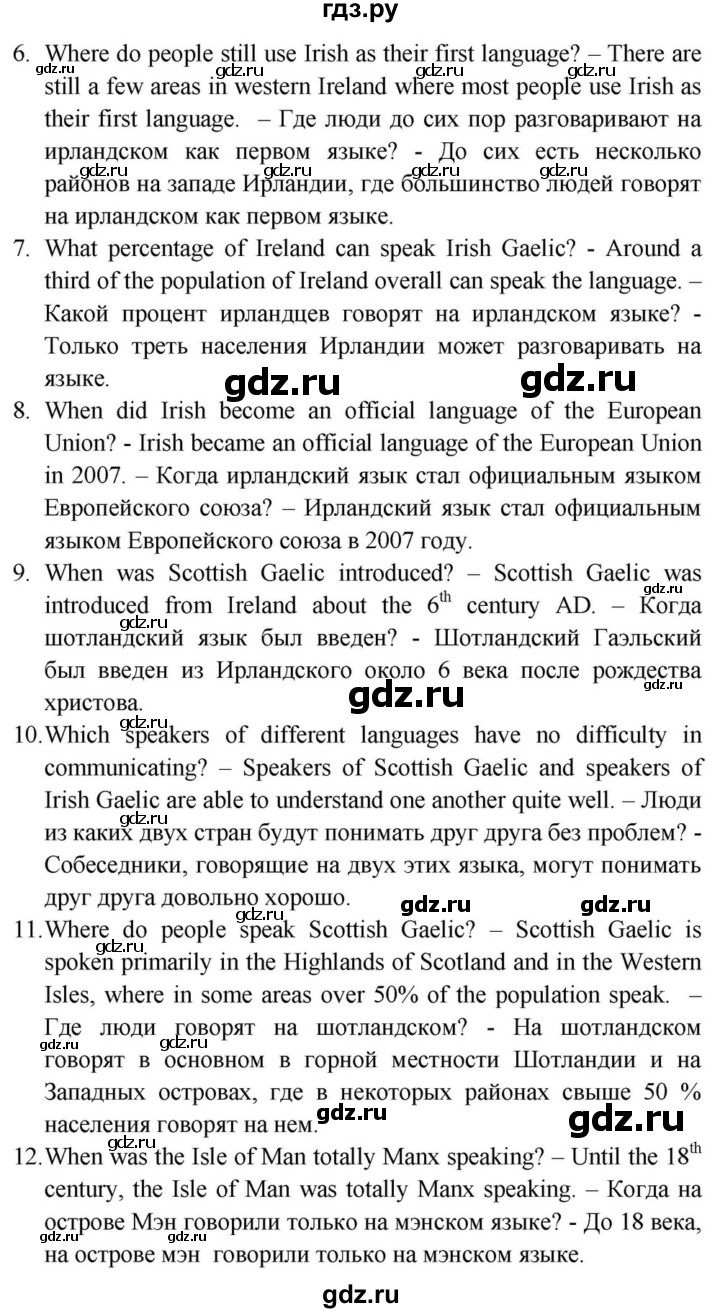
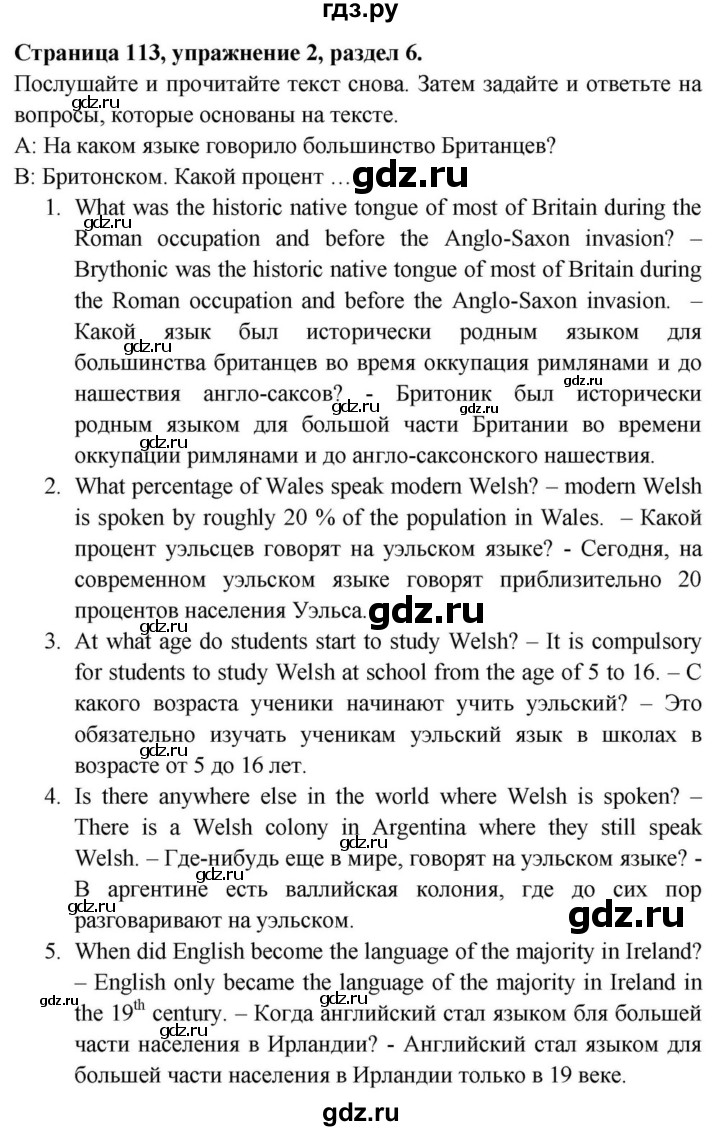
* **A:** What percentage of the population in Wales speaks Welsh?
**B:** Roughly 20% of the population.
* **A:** When did Irish Gaelic become an official language of the EU?
**B:** In 2007.
* **A:** Where is Scottish Gaelic mainly spoken today?
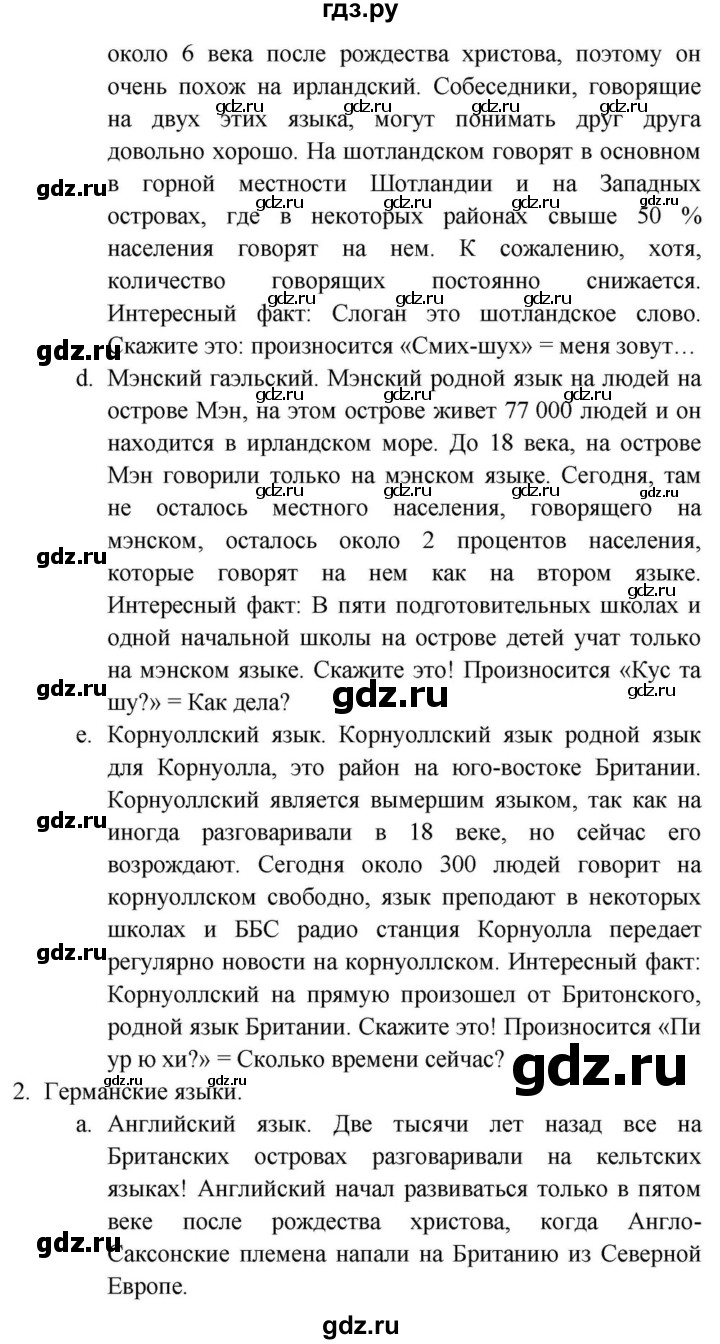
**B:** In the Highlands of Scotland and in the Western Isles.
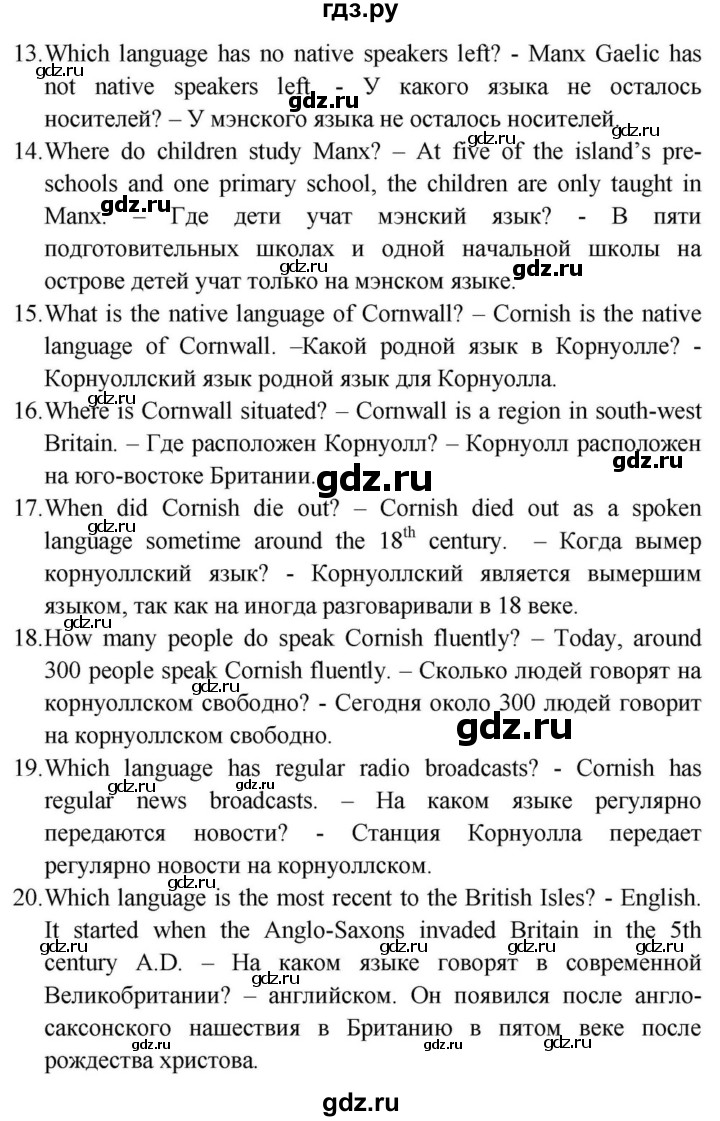
* **A:** Are there any native speakers of Manx left today?
**B:** No, but about 2% of the island's population speak it as a second language.
* **A:** When did English begin to develop in Britain?
**B:** In the 5th century AD, after Anglo-Saxon tribes invaded Britain.
---
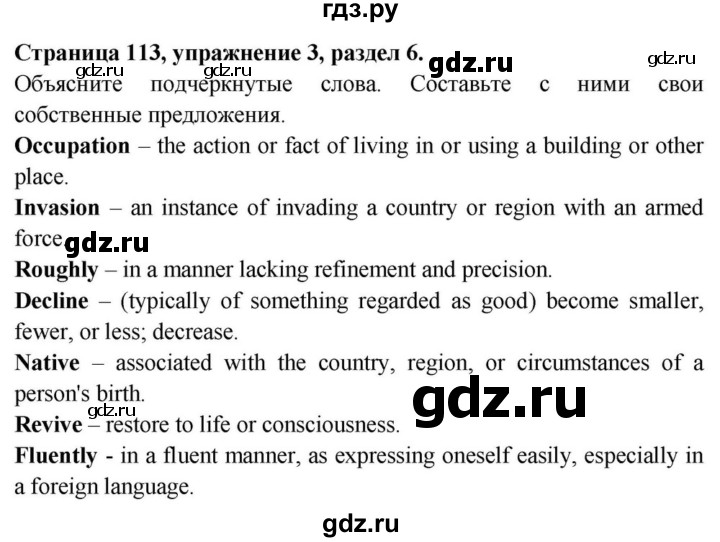
#### Exercise 3 (Vocabulary Explanations & Sentences)
1. **Compulsory** (обязательный) — required by law or a rule; mandatory.
*Example sentence:* Secondary education is compulsory for all children under sixteen.
2. **Majority** (большинство) — the greater number or part of something (more than 50%).
*Example sentence:* The majority of students passed the final exam successfully.
3. **Closely related** (тесно связанный, близкородственный) — having a strong connection or similar origin.
*Example sentence:* Spanish and Italian are closely related languages.
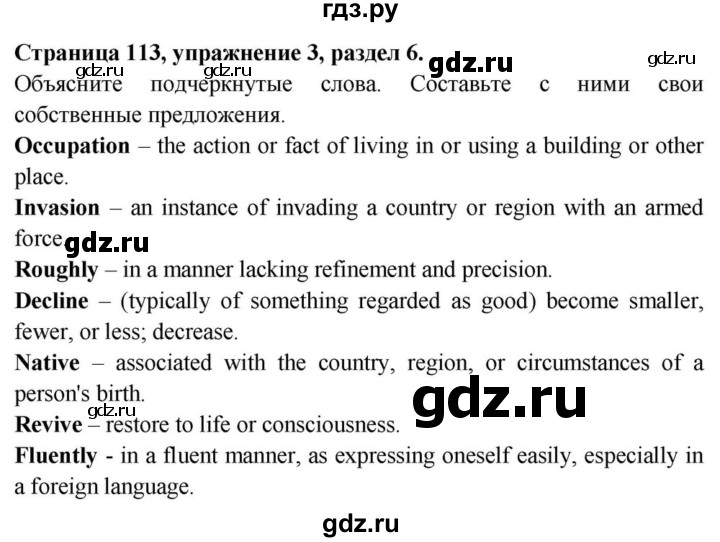
4. **Declining** (снижающийся, идущий на убыль) — becoming smaller, fewer, or less.
*Example sentence:* The number of rare bird species in this forest is declining.
5. **Native speakers** (носители языка) — people who have spoken a particular language from earliest childhood.
*Example sentence:* Practising with native speakers is a great way to improve your pronunciation.
6. **Revived** (возрожденный) — brought back to life, health, or active use.
*Example sentence:* The ancient tradition of folk dancing was revived by local enthusiasts.
7. **Descendant** (потомок) — something that has developed or originated from an earlier form.
*Example sentence:* Modern Italian is a direct descendant of Latin.
---
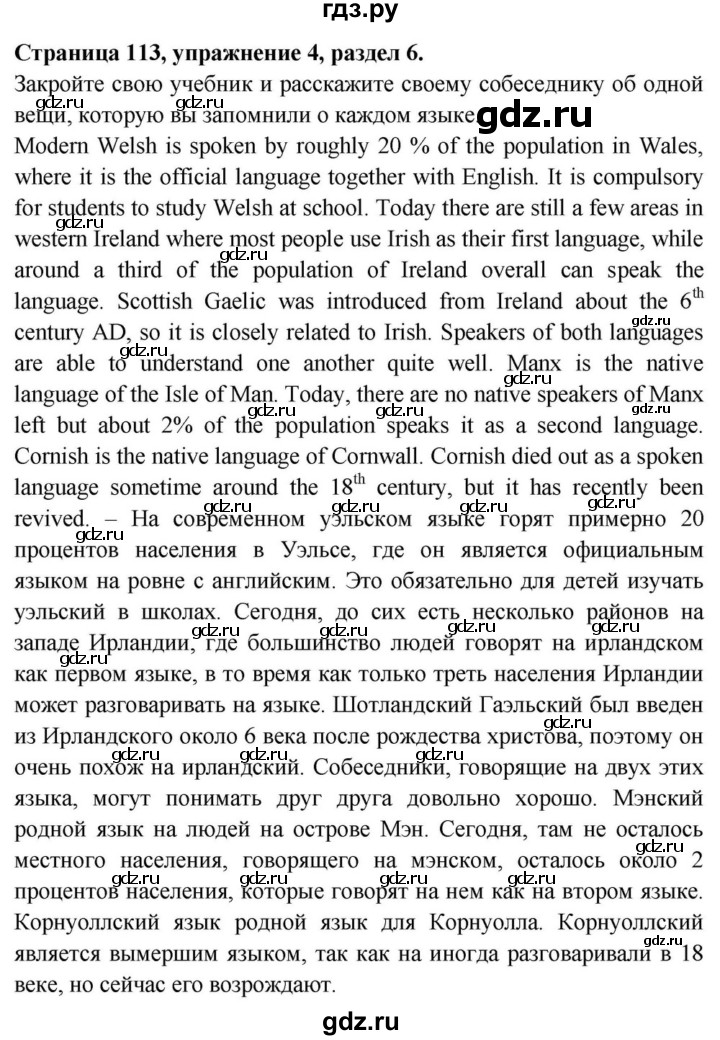
#### Exercise 4 (One Fact About Each Language)
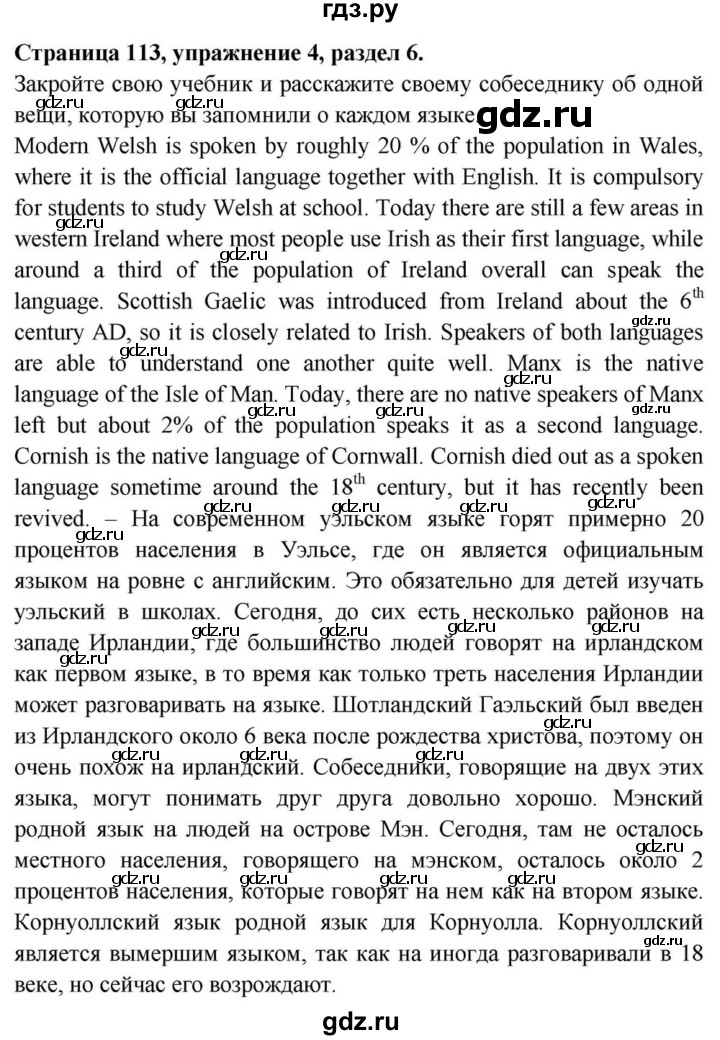
* **Welsh:** It is mandatory for school children in Wales to study it from age 5 to 16, and there is a Welsh-speaking colony in Argentina.
* **Irish Gaelic:** It became an official language of the European Union in 2007.
* **Scottish Gaelic:** The common English word *slogan* comes from Scottish Gaelic.
* **Manx Gaelic:** Although there are no native speakers left, some pre-schools and one primary school on the Isle of Man teach entirely in Manx.
* **Cornish:** It died out in the 18th century but has been successfully revived, with around 560 fluent speakers today.
* **English:** It arrived in Britain in the 5th century AD with Germanic Anglo-Saxon invaders.
---
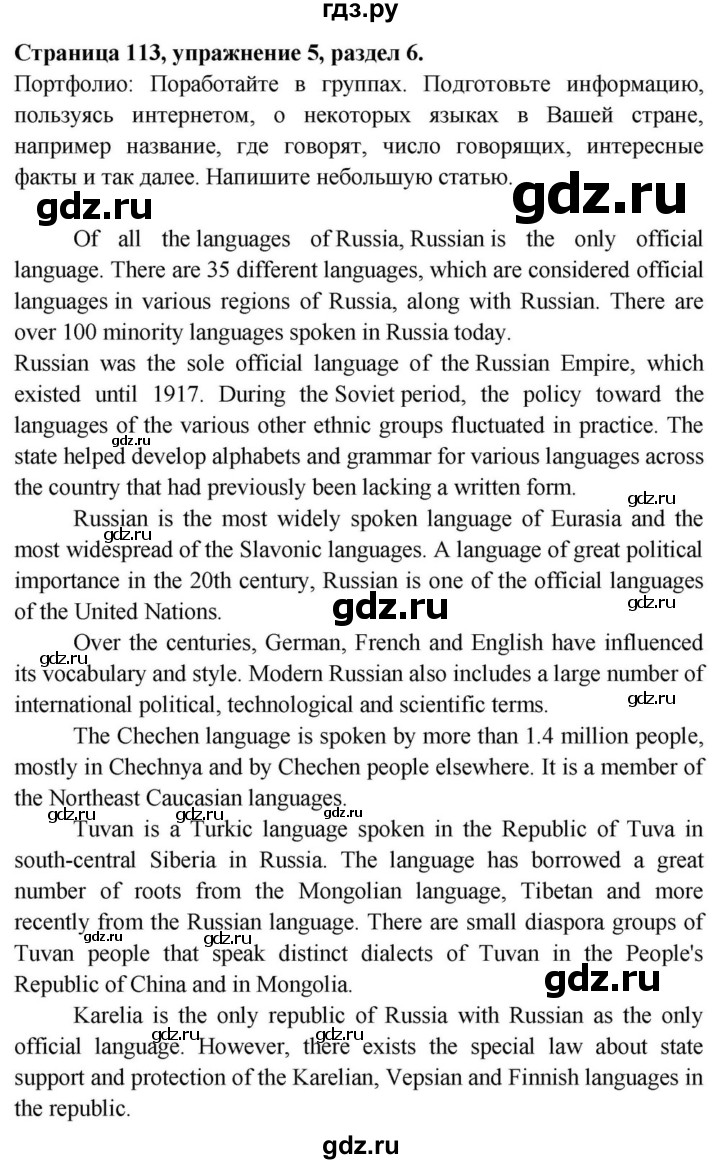
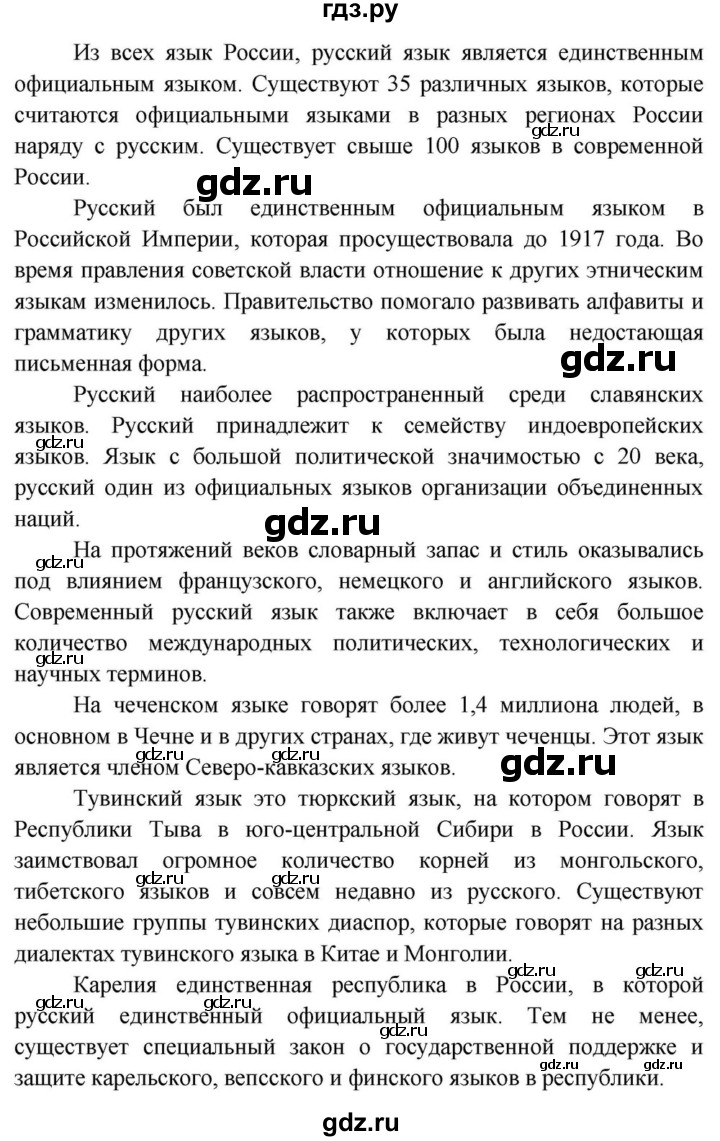
#### Exercise 5 (ICT Portfolio: Article)
**Languages of the Russian Federation: Tatar and Yakut**
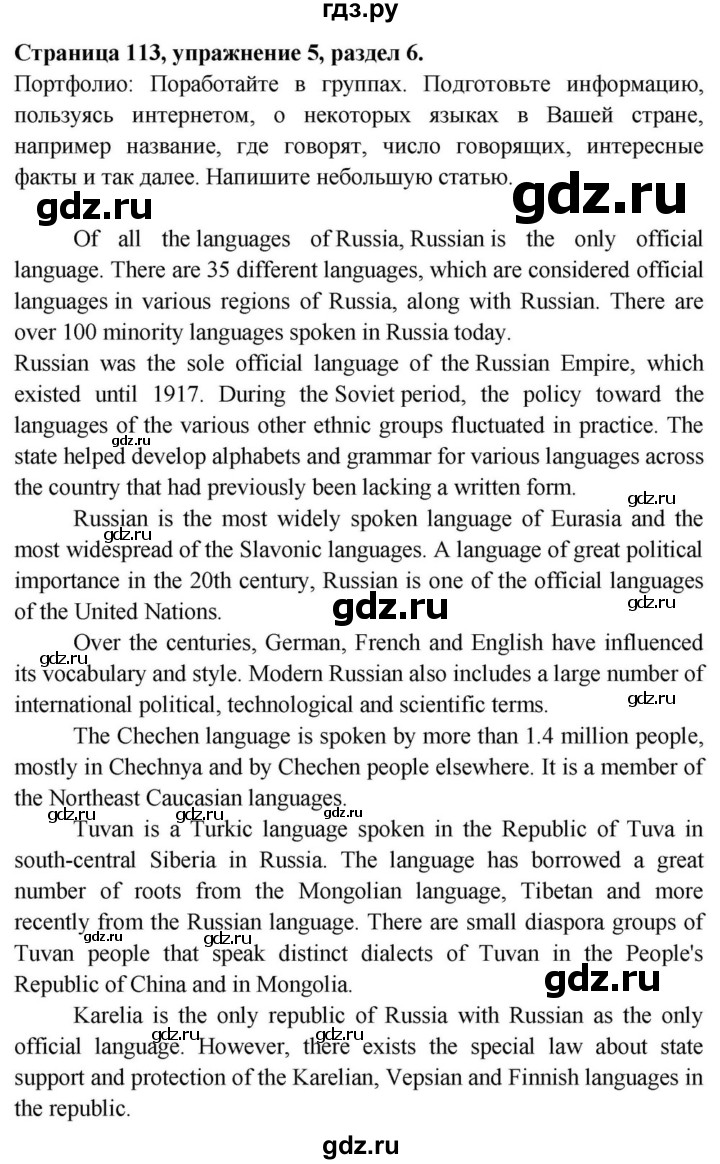
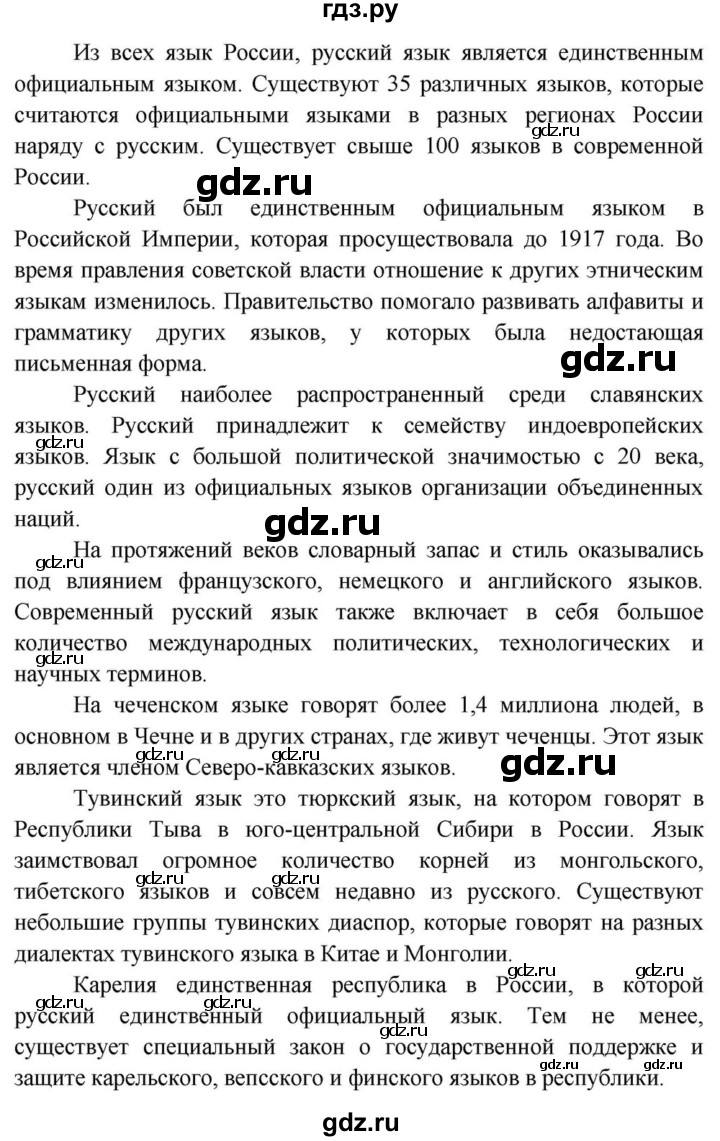
Russia is a vast, multicultural country with more than 150 indigenous languages belonging to different language families.
* **Tatar:**
* **Where spoken:** Mainly in the Republic of Tatarstan, as well as in other regions along the Volga River.
* **Number of speakers:** Over 4 million people.
* **Interesting facts:** Tatar belongs to the Turkic language family. It has co-official status alongside Russian in Tatarstan, and it is widely used in media, education, and theatre.
* **Yakut (Sakha):**
* **Where spoken:** In the Sakha Republic (Yakutia) in north-eastern Siberia.
* **Number of speakers:** Around 450,000 people.
* **Interesting facts:** Despite being a Turkic language, it has developed in extreme isolation in the coldest inhabited region on Earth, incorporating many words of Tungusic and Mongolic origin. The epic tradition *Olonkho* in the Yakut language is recognized by UNESCO.
---
### Пояснения к выполнению заданий
1. **Задание 1:** Требует ознакомительного чтения текстов для поиска конкретной информации (кельтские языки существовали на островах задолго до прихода англосаксов в V веке н.э.).
2. **Задание 2:** Диалог-расспрос строится с использованием специальных вопросов (*Wh-questions*) в форме *Past Simple* или *Present Simple*.
3. **Задание 3:** Ключевые термины связаны с языкознанием и социолингвистикой (выделенные курсивом/подчеркиванием в оригинальном тексте учебника). При составлении собственных предложений следите за правильным согласованием времен и грамматических форм.
4. **Задание 4:** Устное задание для работы в парах с опорой на запомненные интересные факты (*Interesting facts*) из каждого микротекста.
5. **Задание 5:** Проектная работа оформляется в виде небольшой заметки/статьи с подзаголовками, отражающими регион распространения, число носителей и уникальные культурные особенности выбранных языков.
Спасибо за оценку!

Открой больше возможностей
Войди через VK — задавай вопросы ИИ и сохраняй ГДЗ в избранное
