


ГДЗ по английскому языку 11 класс Афанасьева Spotlight Базовый уровень страница - 124

Авторы: Афанасьева О.В., Дули Д., Михеева И.В., Оби Б., Эванс В.
Серия: Spotlight
Тип книги: Учебник
Год: 2015-2024
Рекомендуем посмотреть


 Премиум
Подробное решение страница № 124 по английскому языку Spotlight для учащихся 11 класса Spotlight Базовый уровень, авторов Афанасьева, Дули, Михеева, Оби, Эванс 2015-2024
### Ответы к упражнениям (Spotlight 11, стр. 124)
---
#### Exercise 1
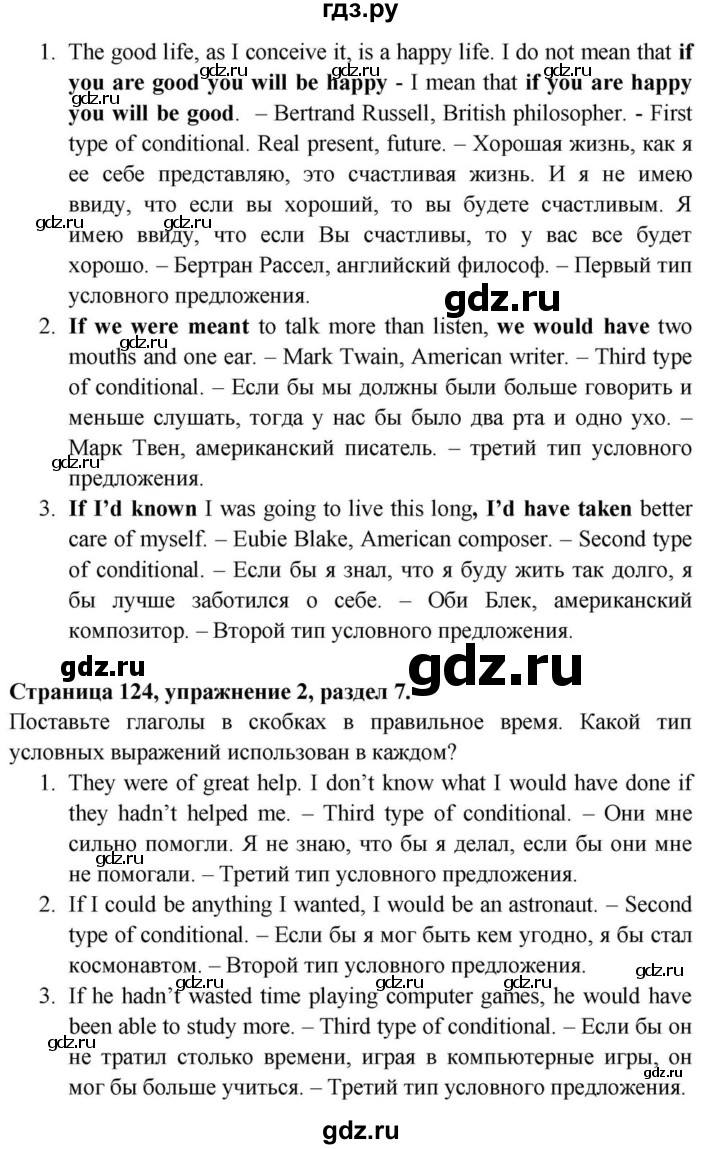
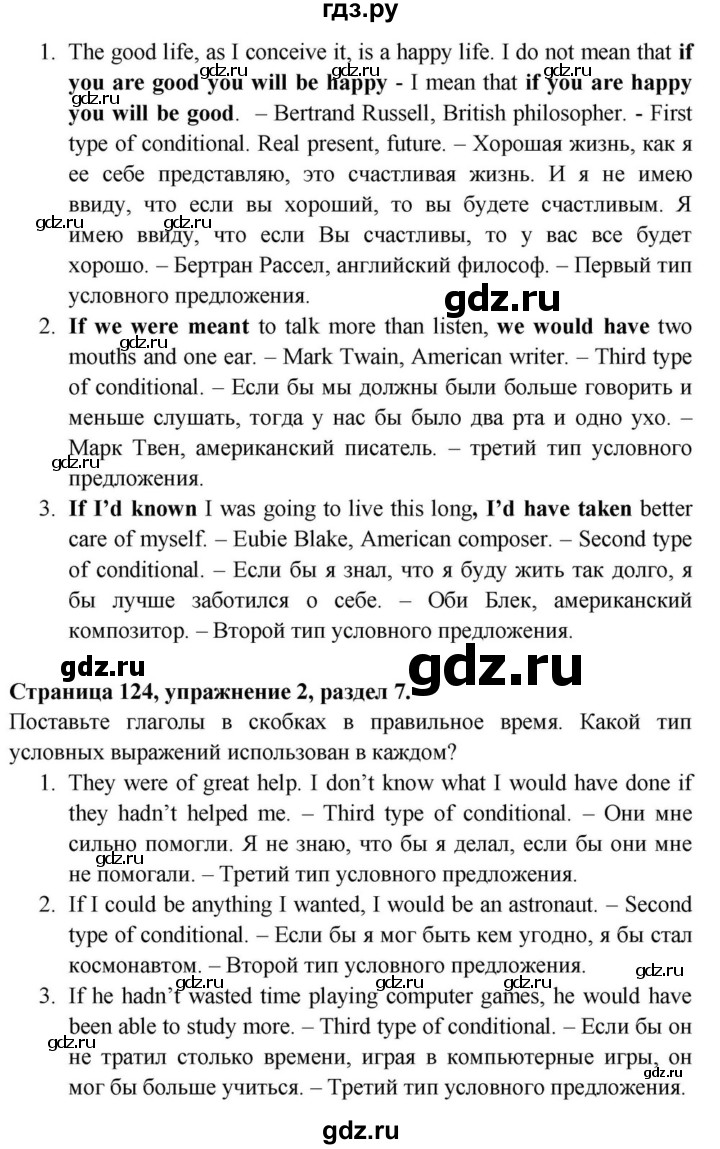
1. **Quote 1 (Bertrand Russell):** *«...if you are good you will be happy...» / «...if you are happy you will be good.»* — **Type 1** (Real Present/Future)
2. **Quote 2 (Mark Twain):** *«If we were meant to talk more than listen, we would have two mouths and one ear.»* — **Type 2** (Unreal Present)
3. **Quote 3 (Eubie Blake):** *«If I’d known I was going to live this long, I’d have taken better care of myself.»* — **Type 3** (Unreal Past)
---
#### Exercise 2
1. **would have done** (*Type 3*)
2. **would be** (*Type 2*)
3. **hadn't wasted** (*Type 3*)
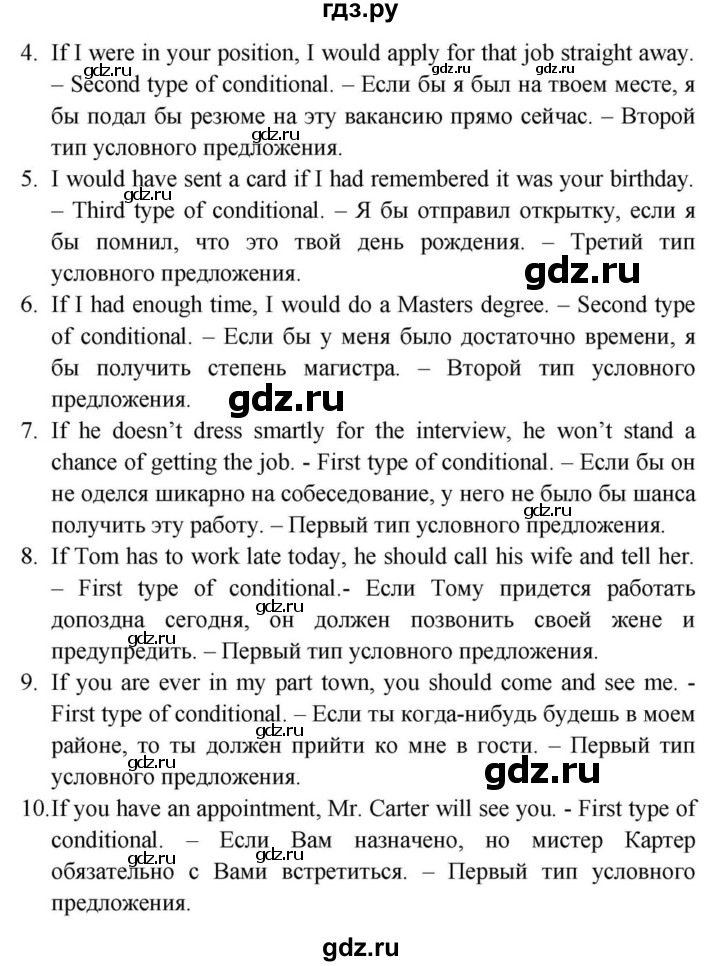
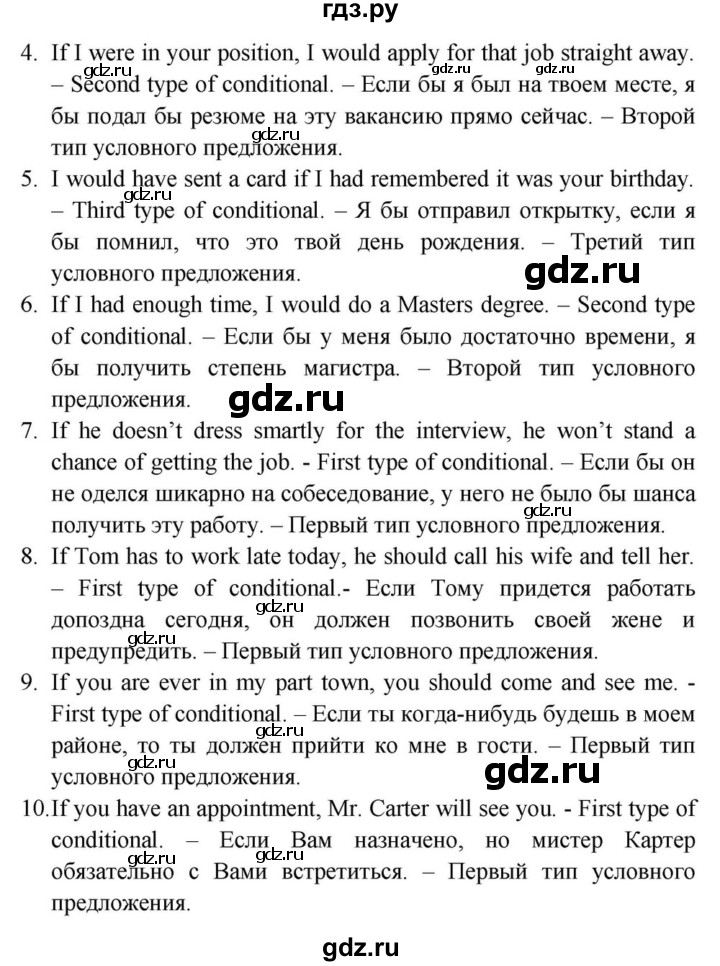
4. **were** / **was** (*Type 2*)
5. **had remembered** (*Type 3*)
6. **had** (*Type 2*)
7. **won't stand** (*Type 1*)
8. **will call** (*Type 1*)
9. **are** (*Type 1*)
10. **will see** (*Type 1*)
---
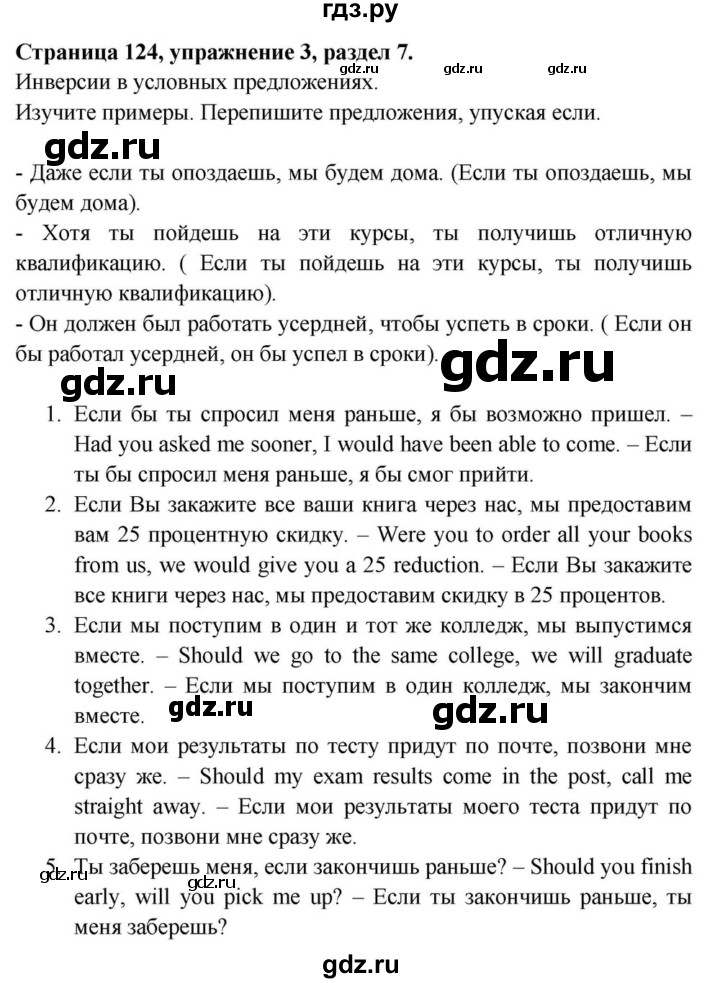
#### Exercise 3
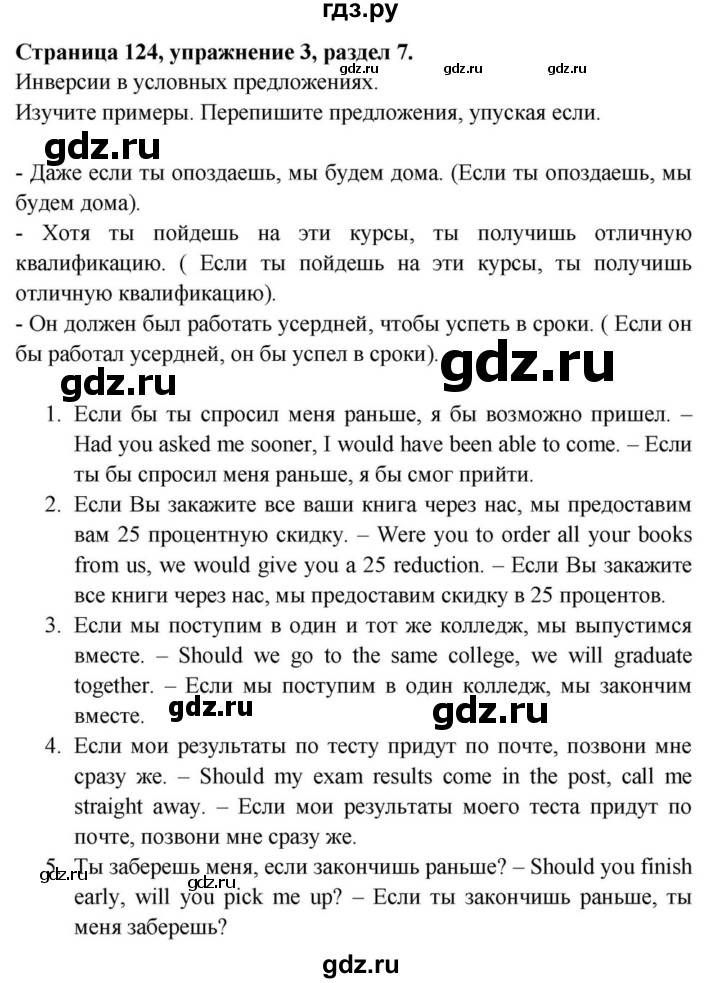
1. **Had you asked** me sooner, I would have been able to come.
2. **Were you to order** all your books from us, we would give you a 25% discount.
3. **Were we to go** to the same college, we would graduate together.
4. **Should my exam results come** in the post, call me straight away.
5. Will you pick me up **should you finish** early? *(или: **Should you finish** early, will you pick me up?)*
---
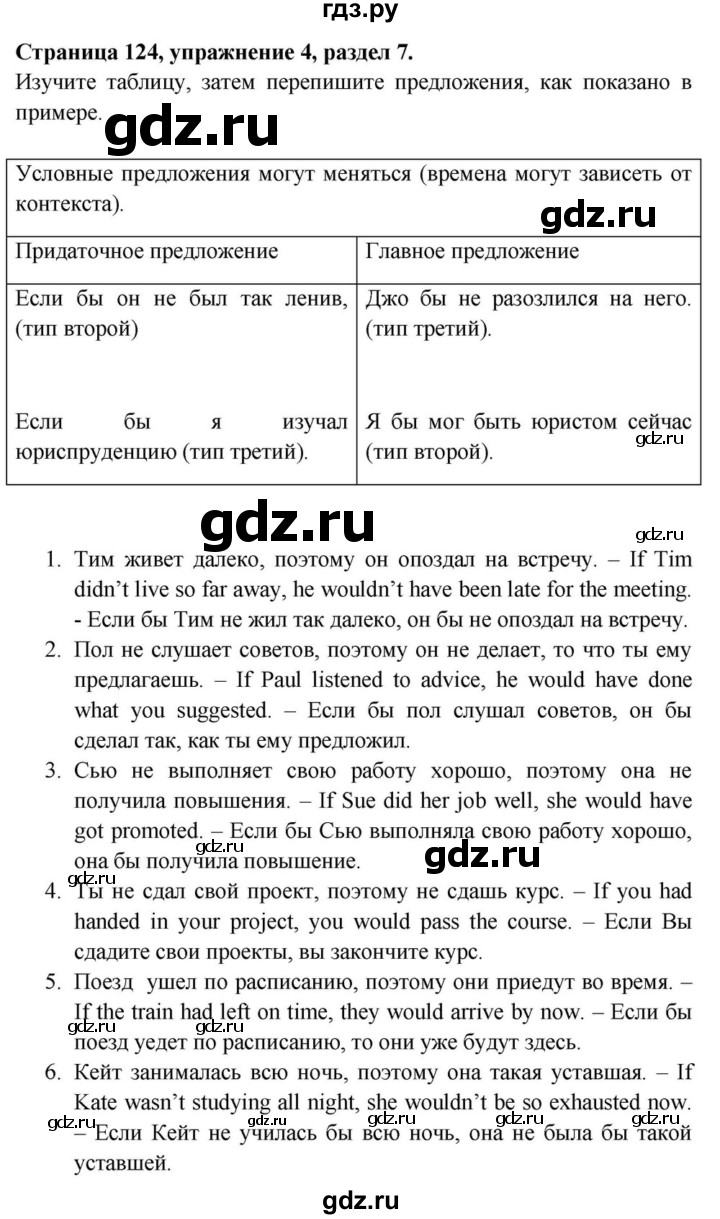
#### Exercise 4
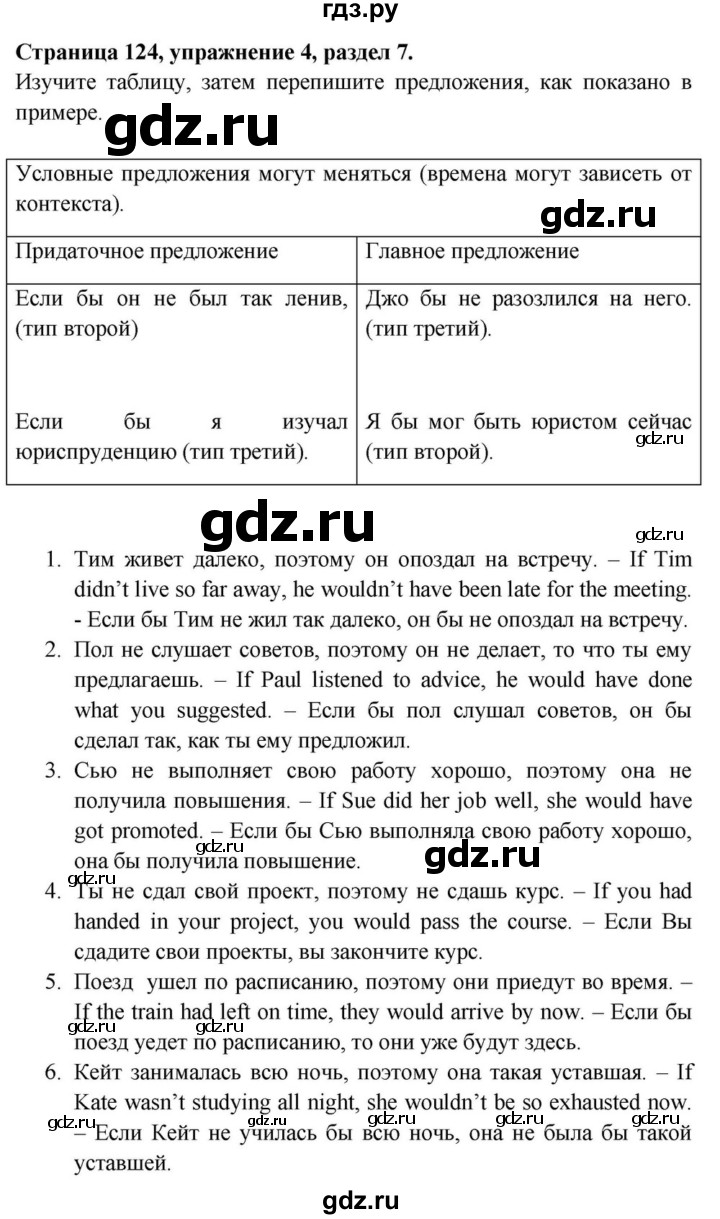
1. *Пример:* If Tim didn't live so far away, he wouldn't have been late for the meeting.
2. **If Paul listened to advice, he would have done what you suggested.**
3. **If Sue did her job well, she would have got promoted.**
4. **If you had handed in your project, you would pass the course.**
5. **If the train hadn't left an hour late, they would arrive before noon.**
6. **If Kate hadn't been studying (hadn't studied) all night, she wouldn't be exhausted now.**
---
### Подробный разбор и грамматические правила
#### 1. Типы условных предложений (Conditionals)
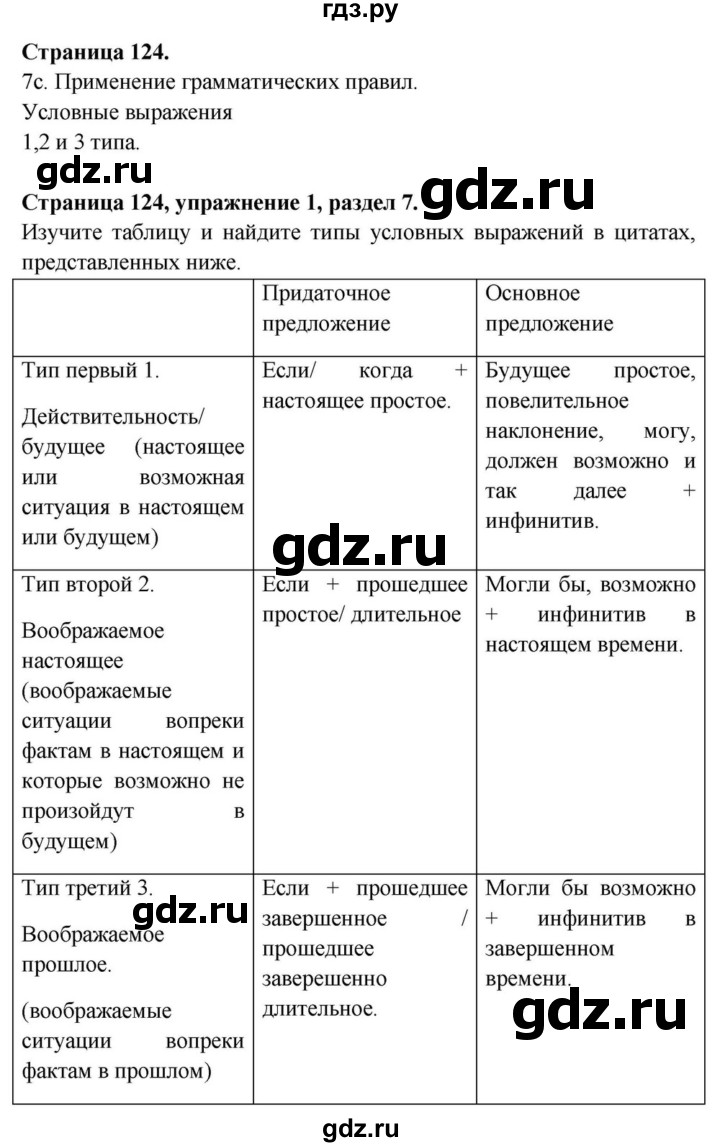
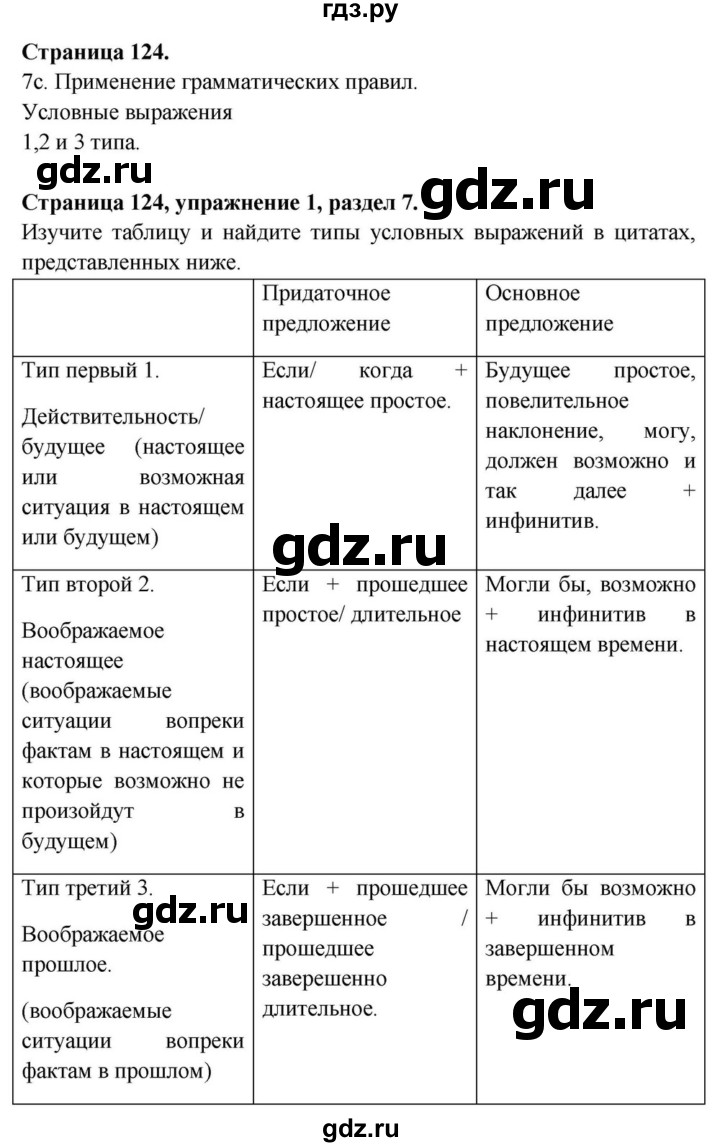
* **Type 1 (Реальное условие в настоящем/будущем):**
* Схема: `If + Present Simple, will / can / must / imperative + bare infinitive`
* *Пример 2.7:* «If he **doesn't dress** (Present Simple) smartly..., he **won't stand** (will not + V) a chance...»
* **Type 2 (Нереальное условие в настоящем / совет / маловероятное будущее):**
* Схема: `If + Past Simple / Past Continuous, would / could / might + bare infinitive`
* *Примечание:* Для глагола *to be* традиционно используется форма **were** для всех лиц (*If I were you...*).
* *Пример 2.2:* «If I **could be**..., I **would be** (would + V)...»
* **Type 3 (Нереальное условие в прошлом — сожаление о совершенном):**
* Схема: `If + Past Perfect, would / could / might + have + V3 (Past Participle)`
* *Пример 2.1:* «...what I **would have done** if they **hadn't helped** me.»
---
#### 2. Инверсия в условных предложениях (Inversion)
В официальной речи союз **if** можно опустить, переставив вспомогательный глагол перед подлежащим:
* **Type 1:** `If + Present Simple` $\rightarrow$ `Should + subject + bare infinitive`
* *If my results come...* $\rightarrow$ *Should my results come...*
* **Type 2:** `If + Past Simple` $\rightarrow$ `Were + subject + to-infinitive` (или `Were + subject` для глагола *to be*)
* *If you ordered...* $\rightarrow$ *Were you to order...*
* **Type 3:** `If + Past Perfect` $\rightarrow$ `Had + subject + V3`
* *If you had asked...* $\rightarrow$ *Had you asked...*
---
#### 3. Смешанный тип условий (Mixed Conditionals)
Используется, когда условие и результат относятся к разным временным планам:
* **Type 2 (условие в настоящем) + Type 3 (результат в прошлом):**
* Предложение 2: Пол в принципе не слушает советы (*постоянное свойство $\rightarrow$ Past Simple*), поэтому не сделал этого в прошлом (*$\rightarrow$ would have done*).
* Предложение 3: Сью вообще плохо работает (*постоянное свойство $\rightarrow$ Past Simple*), поэтому её не повысили в прошлом (*$\rightarrow$ would have got promoted*).
* **Type 3 (условие в прошлом) + Type 2 (результат в настоящем/будущем):**
* Предложение 4: Проект не сдали в прошлом (*$\rightarrow$ Past Perfect*), поэтому не сдадите курс сейчас/в будущем (*$\rightarrow$ would pass*).
* Предложение 5: Поезд опоздал в прошлом (*$\rightarrow$ Past Perfect*), поэтому не прибудут вовремя в будущем (*$\rightarrow$ would arrive*).
* Предложение 6: Кейт училась всю прошлую ночь (*$\rightarrow$ Past Perfect Continuous*), поэтому она истощена прямо сейчас (*$\rightarrow$ wouldn't be exhausted*).
Спасибо за оценку!

Открой больше возможностей
Войди через VK — задавай вопросы ИИ и сохраняй ГДЗ в избранное
