


ГДЗ по английскому языку 11 класс Афанасьева Spotlight Базовый уровень страница - 145

Авторы: Афанасьева О.В., Дули Д., Михеева И.В., Оби Б., Эванс В.
Серия: Spotlight
Тип книги: Учебник
Год: 2015-2024
Рекомендуем посмотреть


 Премиум
Подробное решение страница № 145 по английскому языку Spotlight для учащихся 11 класса Spotlight Базовый уровень, авторов Афанасьева, Дули, Михеева, Оби, Эванс 2015-2024
### Итоговые ответы
---
### Exercise 5
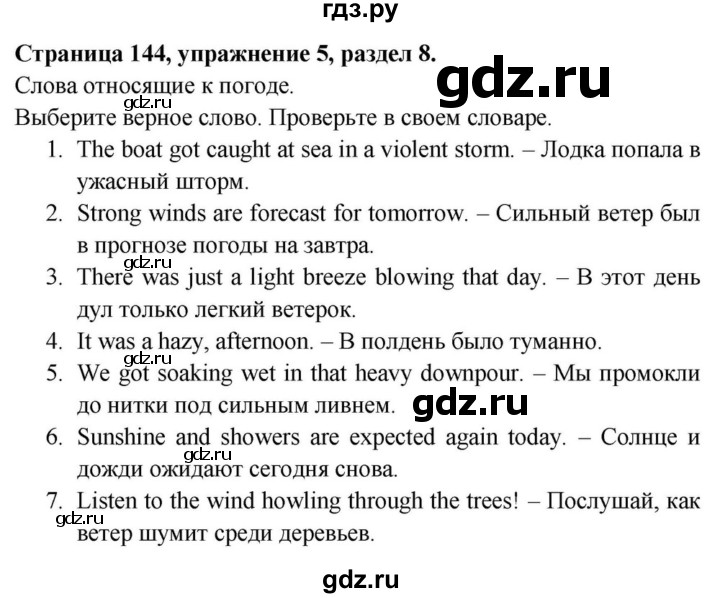
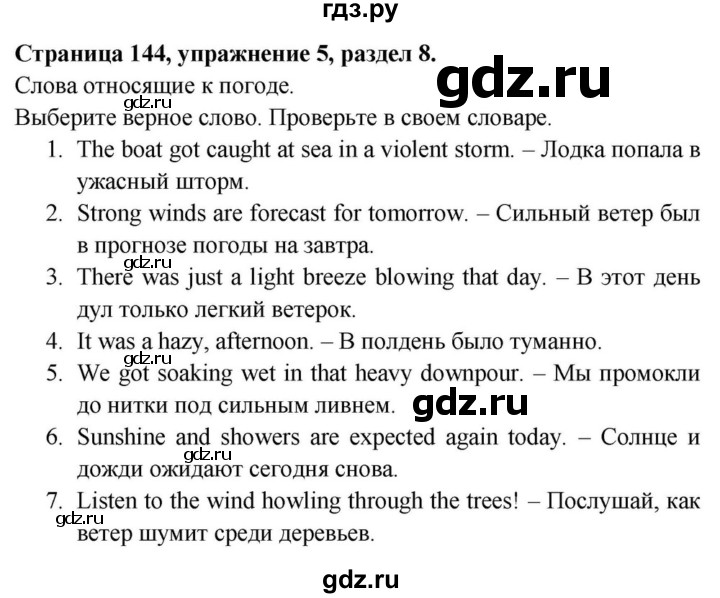
1. **violent**
2. **Strong**
3. **breeze**
4. **hazy**
5. **downpour**
6. **showers**
7. **howling**
---
### Exercise 6
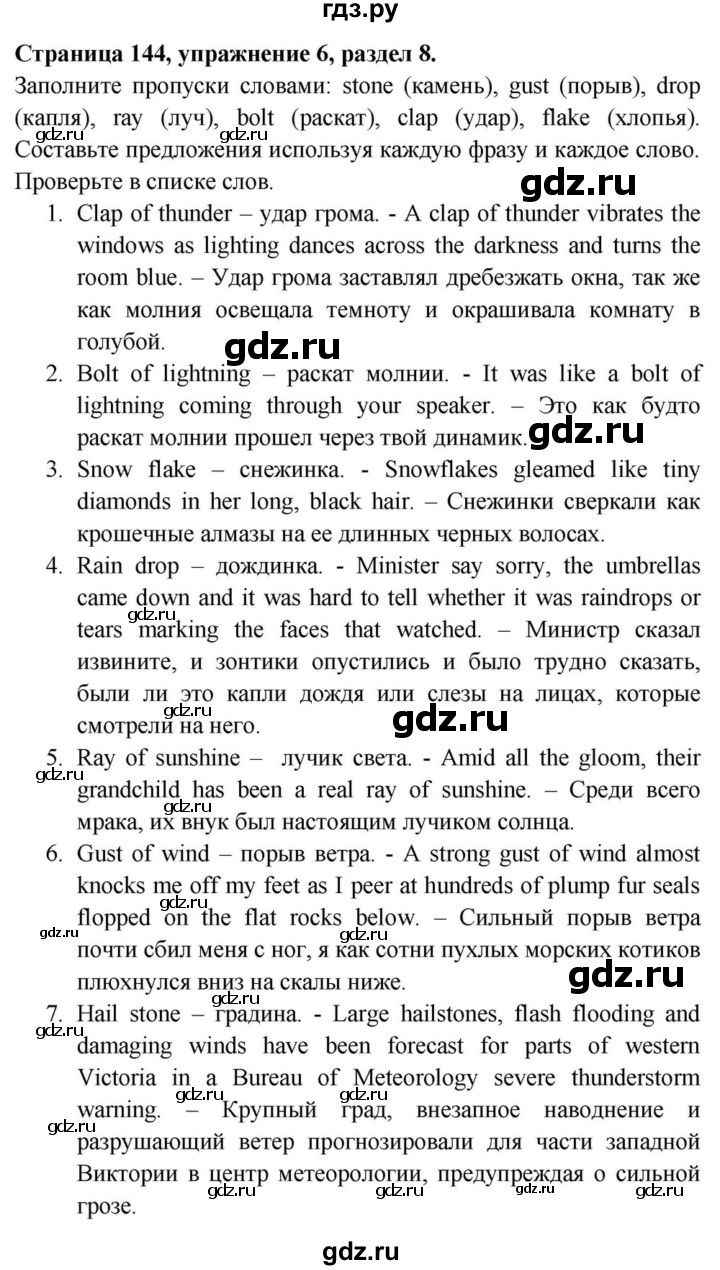
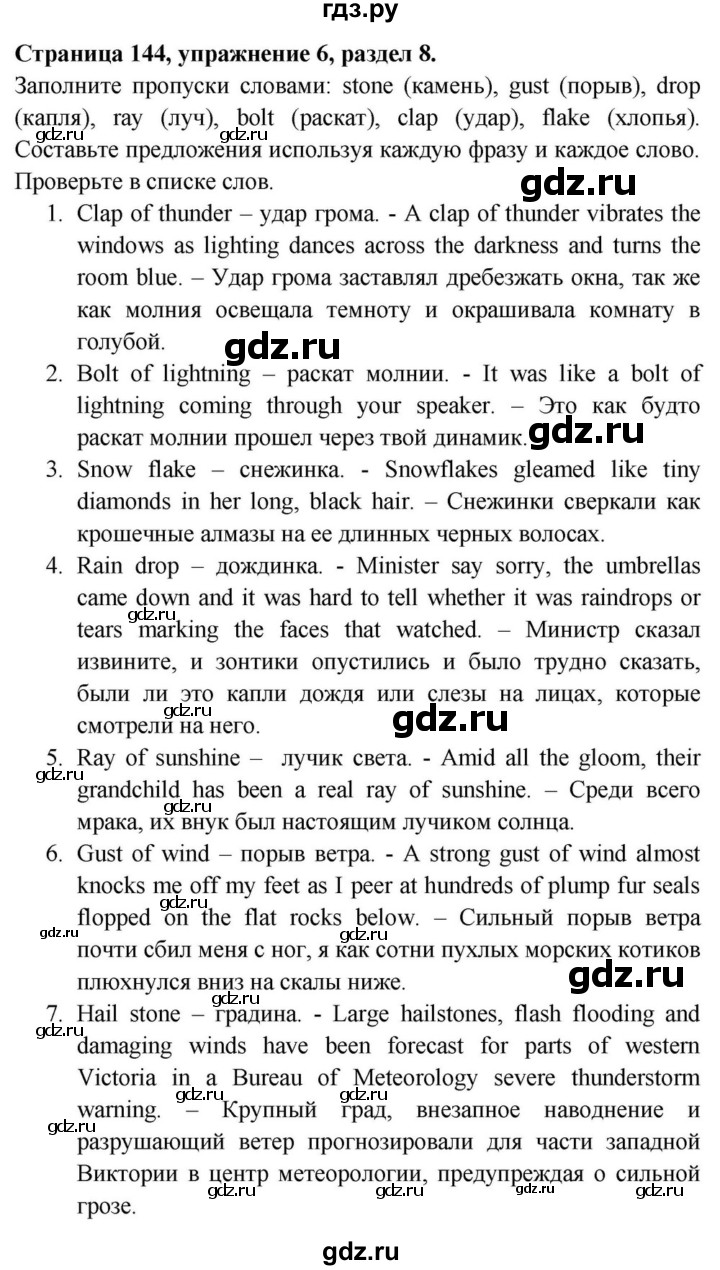
1. **clap** of thunder *(раскат грома)*
2. **bolt** of lightning *(удар/вспышка молнии)*
3. snow**flake** *(снежинка)*
4. rain**drop** *(дождевая капля)*
5. **ray** of sunshine *(луч солнца)*
6. **gust** of wind *(порыв ветра)*
7. hail**stone** *(градина)*
**Примеры предложений (Sentences):**
1. A sudden **clap of thunder** made everyone jump.
2. A bright **bolt of lightning** lit up the entire night sky.
3. A single **snowflake** landed softly on her glove and melted.
4. I felt a **raindrop** fall on my nose, so I opened my umbrella.
5. A warm **ray of sunshine** broke through the heavy clouds.
6. A strong **gust of wind** blew my hat right off my head.
7. Each **hailstone** was as large as a marble and damaged the car.
---
### Exercise 7
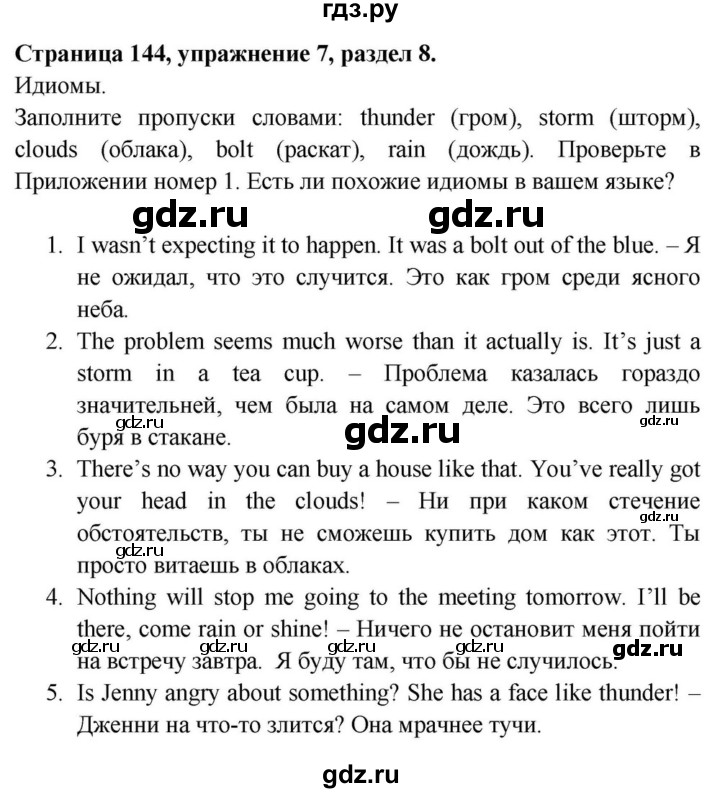
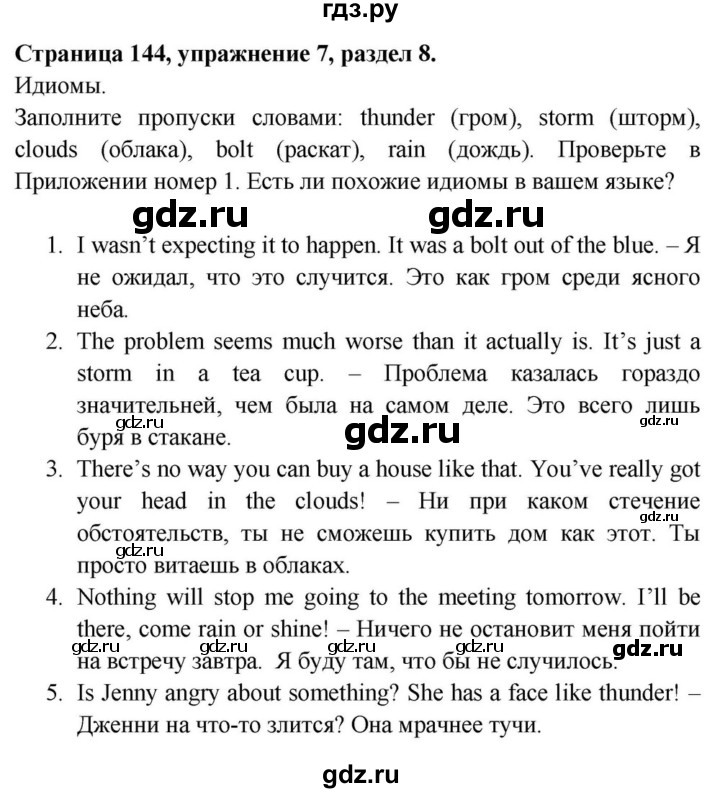
1. **bolt** (*a bolt out of the blue*)
2. **storm** (*a storm in a tea cup*)
3. **clouds** (*head in the clouds*)
4. **rain** (*come rain or shine*)
5. **thunder** (*a face like thunder*)
**Русские эквиваленты:**
1. *A bolt out of the blue* — Как гром среди ясного неба.
2. *A storm in a tea cup* — Буря в стакане воды / делать из мухи слона.
3. *Have one's head in the clouds* — Витать в облаках.
4. *Come rain or shine* — При любой погоде / что бы ни случилось.
5. *A face like thunder* — Мрачнее тучи / лицо темнее грозовой тучи.
---
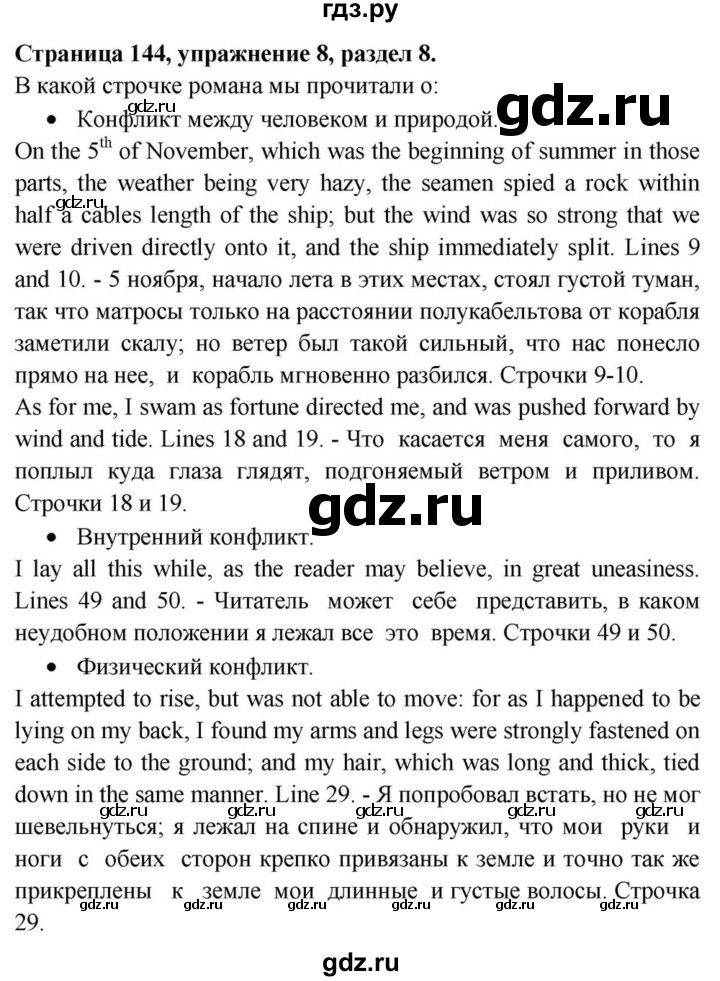
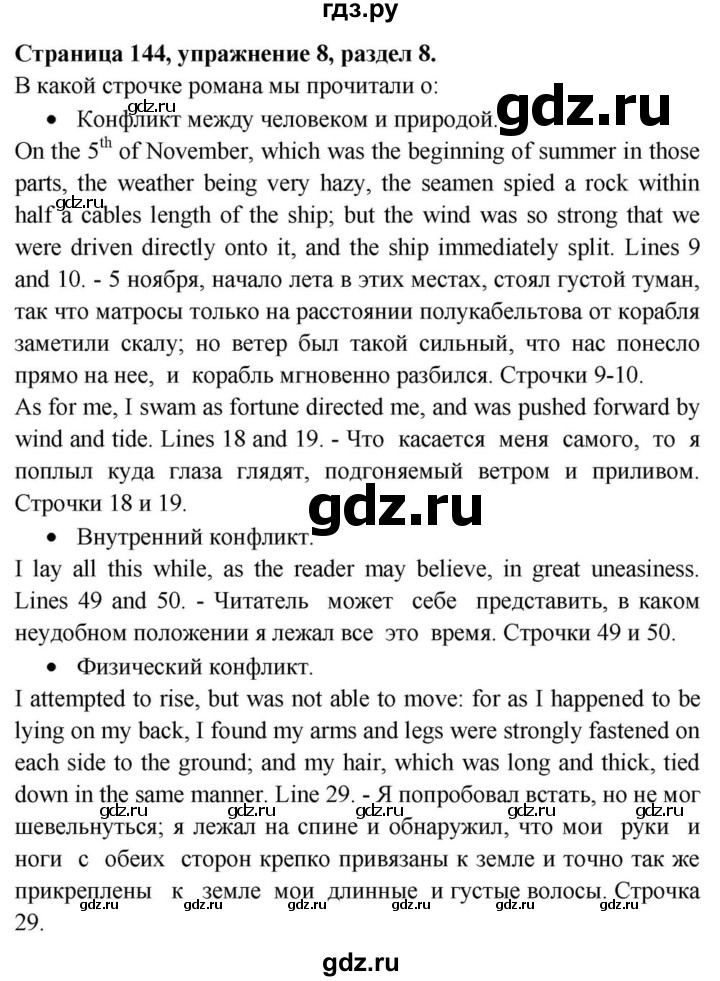
### Exercise 8 (По тексту «Gulliver’s Travels» на с. 144)
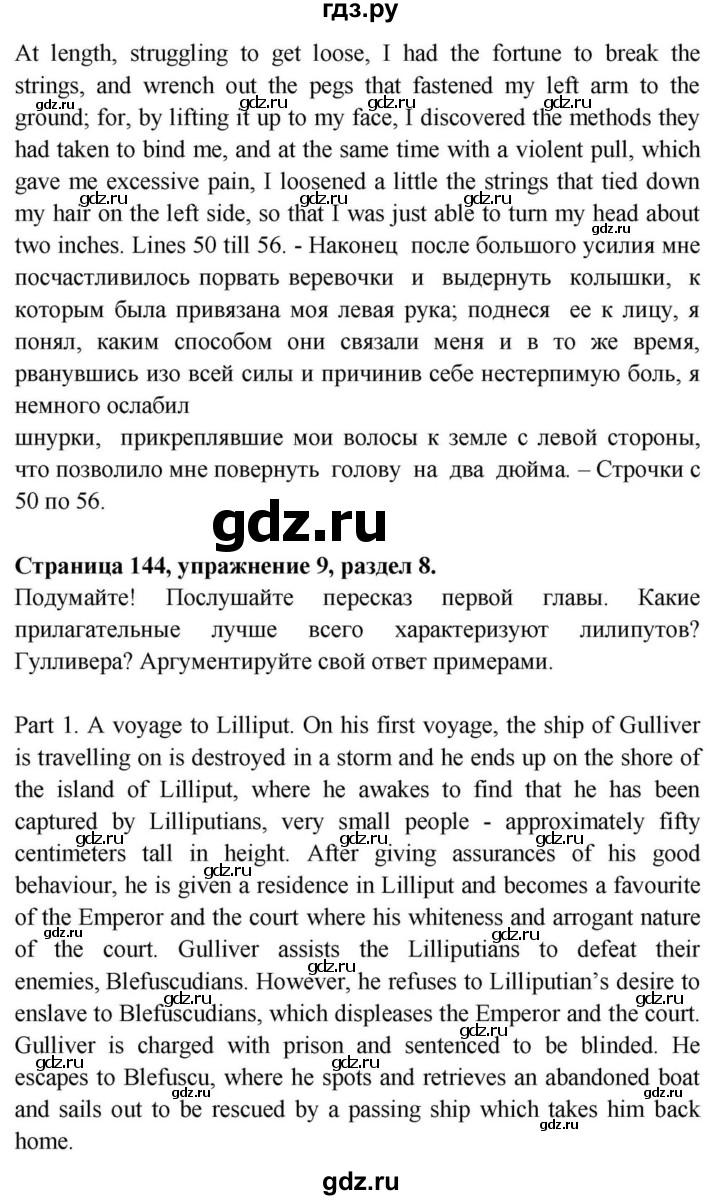
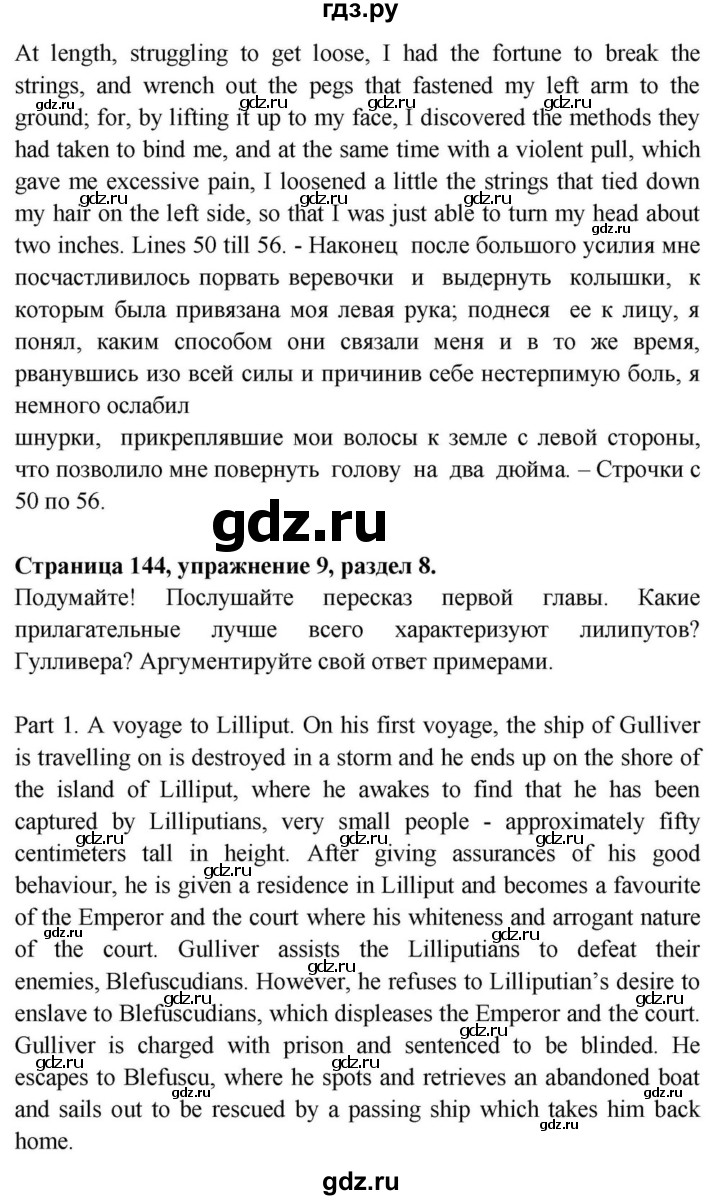
* **A conflict of man against nature:** lines 1–13 *(борьба Гулливера со штормом, ветром и волнами в море)*.
* **An internal conflict:** lines 35–43, 48–52 *(внутренние сомнения Гулливера: атаковать ли лилипутов или проявить терпение и подчиниться)*.
* **Physical conflict:** lines 31–34, 44–47 *(лилипуты стреляют в Гулливера стрелами и колют его копьями)*.
---
### Exercise 9
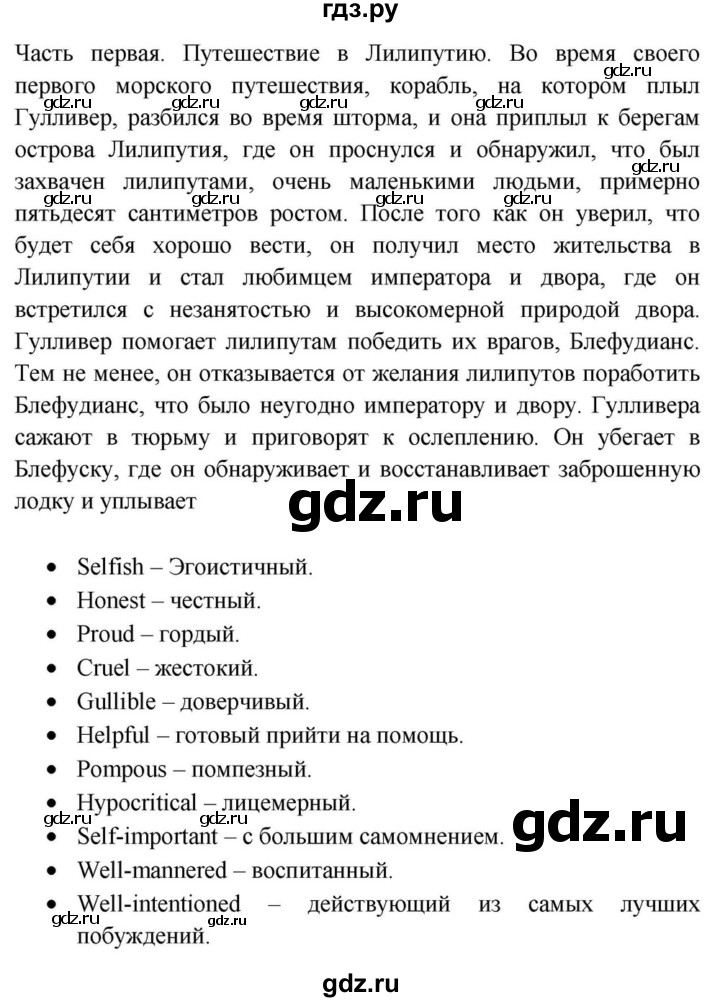
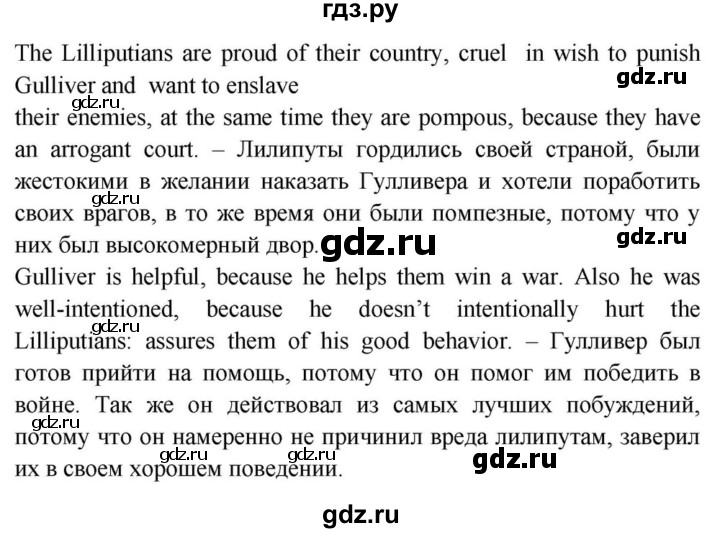
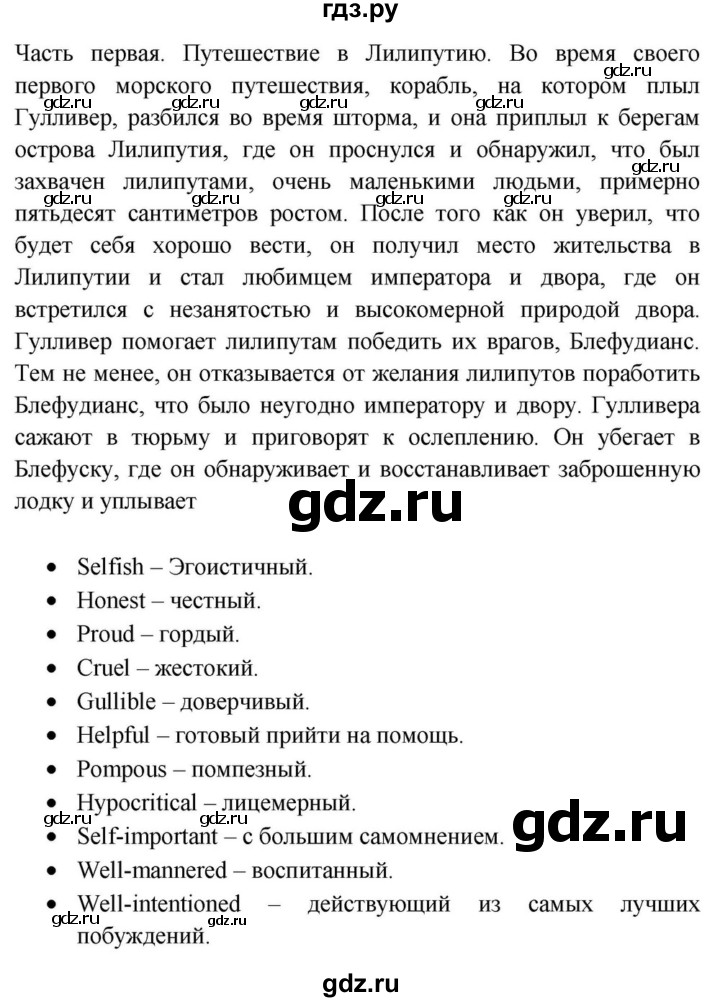
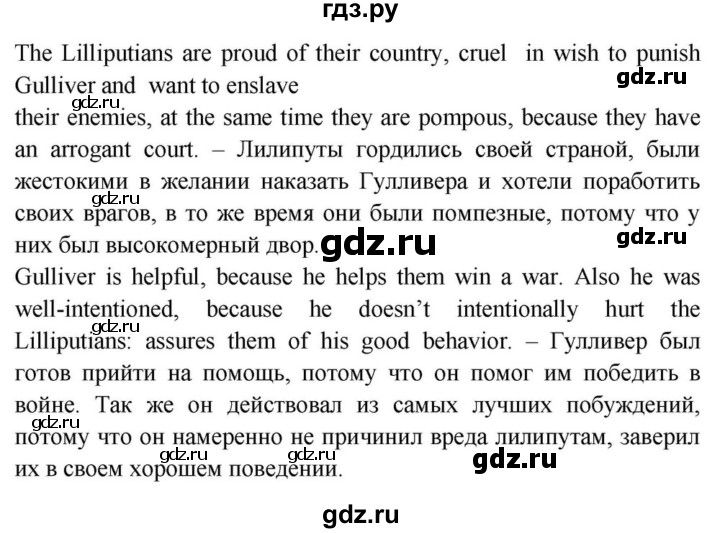
* **Lilliputians:** *proud, cruel, pompous, self-important, aggressive*.
*Пример:* They attack a helpless, tied-up giant with arrows and act like they are mighty rulers despite their tiny size.
* **Gulliver:** *kind-hearted, well-mannered, well-intentioned, gullible, helpful*.
*Пример:* Even though he could easily crush them, he chooses not to hurt them, remains calm, and tries to understand them peacefully.
---
### Exercise 10 (Model Modern Summary)
**Modern Adaptation:**
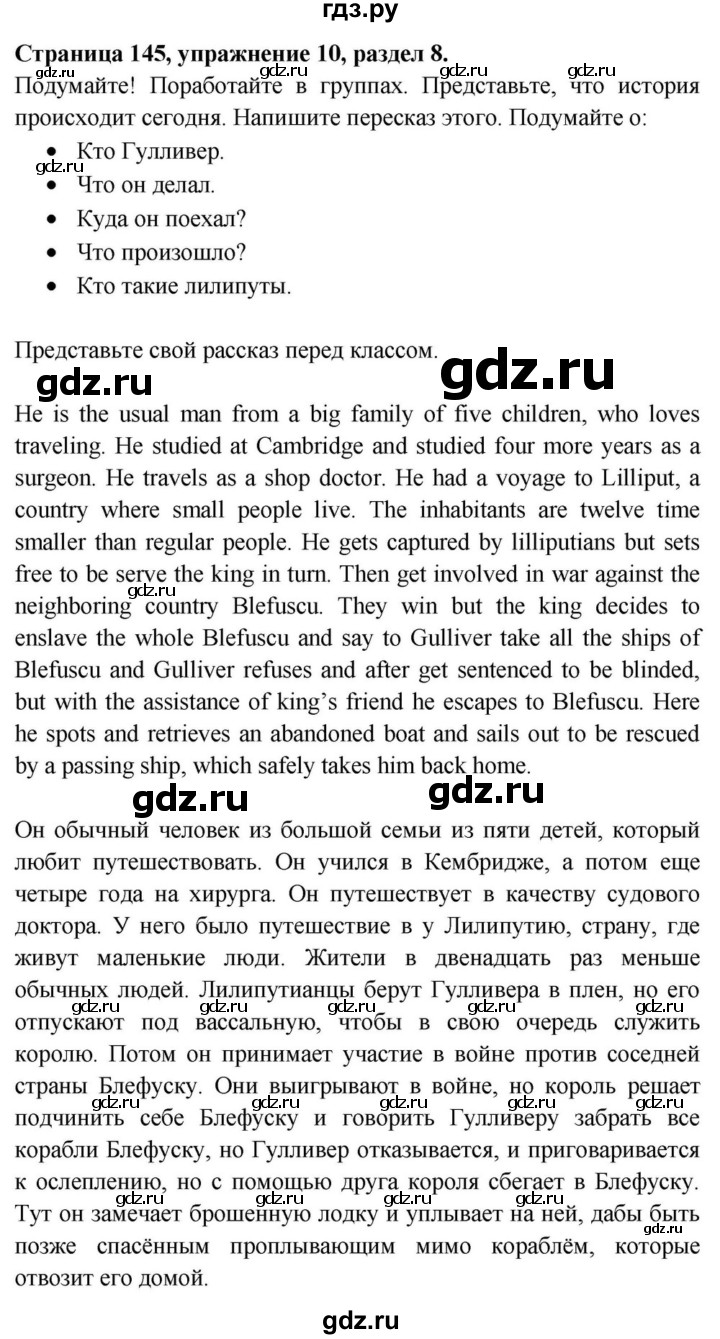
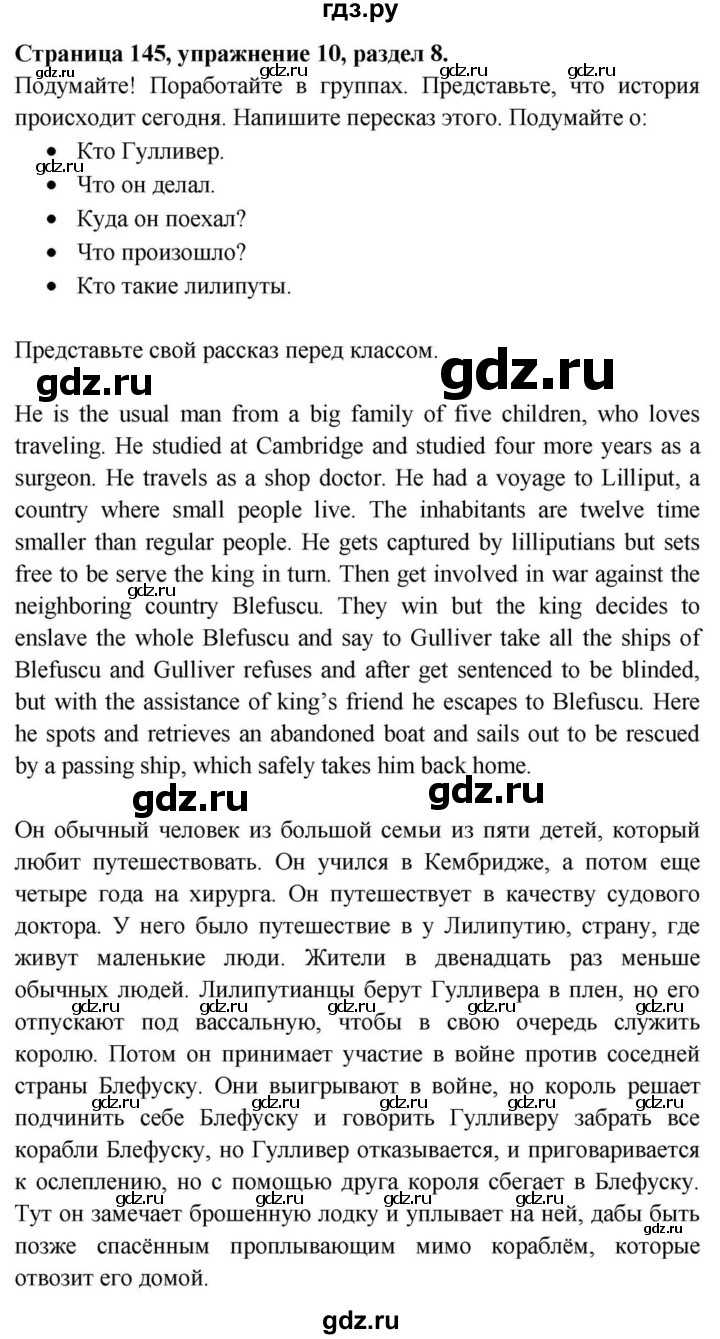
> In a modern retelling, Gulliver is an astronaut or a deep-sea drone engineer whose spacecraft crashes onto an uncharted, technologically isolated island or a micro-planet. Gulliver is a curious and peaceful scientist. While he is unconscious, the inhabitants — tiny humanoid beings — tie him down with micro-cables and aim miniature laser weapons at him.
>
> The inhabitants represent miniature politicians: pompous, arrogant, and self-important, convinced of their own supremacy. Gulliver resolves the conflict not by violence, but by showing kindness and helping them repair their power station, teaching them about peaceful coexistence.
---
### Объяснение и комментарии
1. **Ex. 5 (Устойчивая сочетаемость слов — Collocations):**
* *violent storm* — яростный, разрушительный шторм (устойчивое сочетание).
* *strong winds* — о ветре в английском языке всегда говорят *strong*, а не *heavy* (*heavy* используется для осадков: *heavy rain/snow*).
* *light breeze* — легкий бриз (*gale* означает «штормовой ветер»).
* *hazy sunshine* — солнце в легкой дымке/мареве (устойчивое клише прогноза погоды).
* *heavy downpour* — сильный ливень (*drizzle* — мелкая морось).
* *showers* — кратковременные дожди, ливни (*blizzard* — снежная метель).
* *howling* — завывающий (звук ветра, *pour* — лить).
2. **Ex. 6 (Partitives & Compound Nouns):**
* Существительные погоды часто неисчисляемые (*thunder, lightning, wind, rain*), поэтому для обозначения единичного проявления используются партитивы: *a clap of...*, *a bolt of...*, *a ray of...*, *a gust of...* или сложные слова (*raindrop, snowflake, hailstone*).
3. **Ex. 7 (Идиомы погоды):**
* Все идиомы построены на метафорическом переносе природных явлений на человеческие эмоции и жизненные ситуации (например, гнев сравнивается с грозой: *a face like thunder*).
Спасибо за оценку!

Открой больше возможностей
Войди через VK — задавай вопросы ИИ и сохраняй ГДЗ в избранное
