


ГДЗ по английскому языку 11 класс Афанасьева Spotlight Базовый уровень страница - 146

Авторы: Афанасьева О.В., Дули Д., Михеева И.В., Оби Б., Эванс В.
Серия: Spotlight
Тип книги: Учебник
Год: 2015-2024
Рекомендуем посмотреть


 Премиум
Подробное решение страница № 146 по английскому языку Spotlight для учащихся 11 класса Spotlight Базовый уровень, авторов Афанасьева, Дули, Михеева, Оби, Эванс 2015-2024
Ниже представлены полные ответы на все задания со страницы 146 (модуль *Writing Skills: Descriptions of places*).
---
### Итоговый ответ
#### Exercise 1
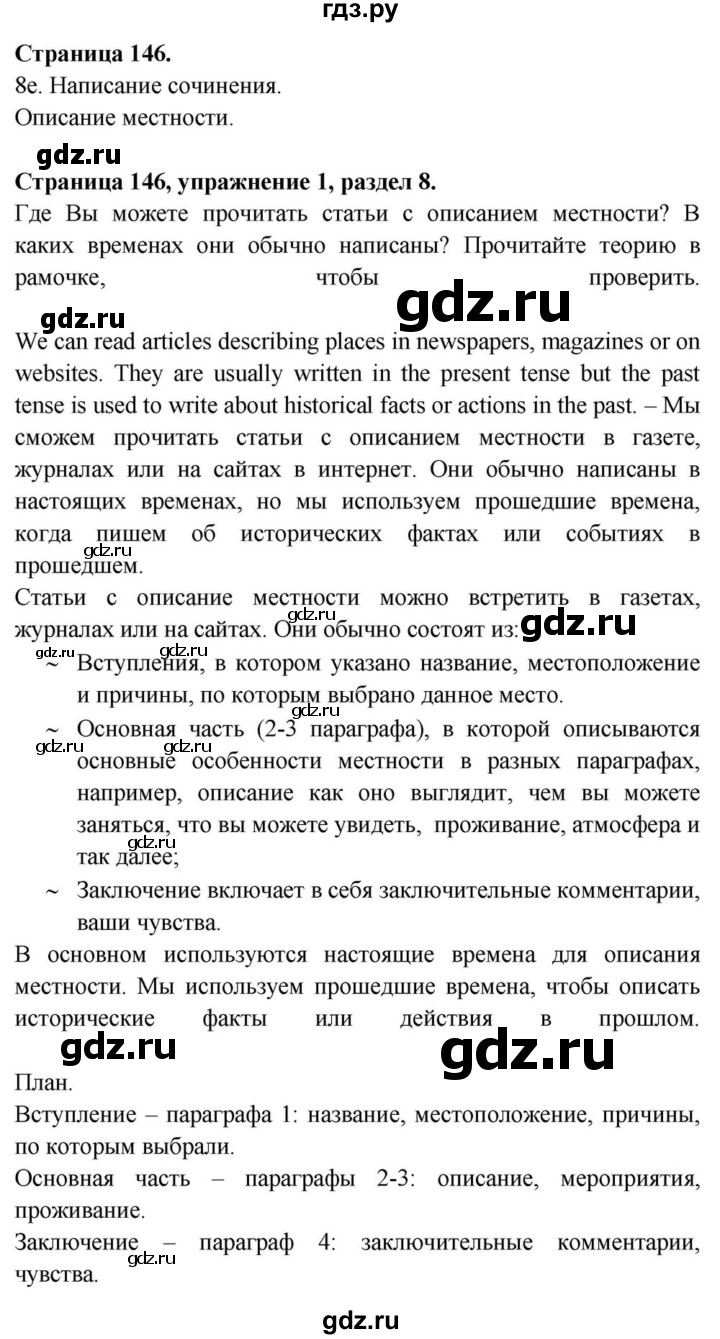
* **Where can you read articles describing places?**
We can read them in newspapers, magazines, travel brochures or on websites.
* **What tenses are they usually written in?**
They are usually written in **present tenses** (for general descriptions, geography, current facilities) and **past tenses** (to write about historical facts, personal experiences, or past events).
---
#### Exercise 2
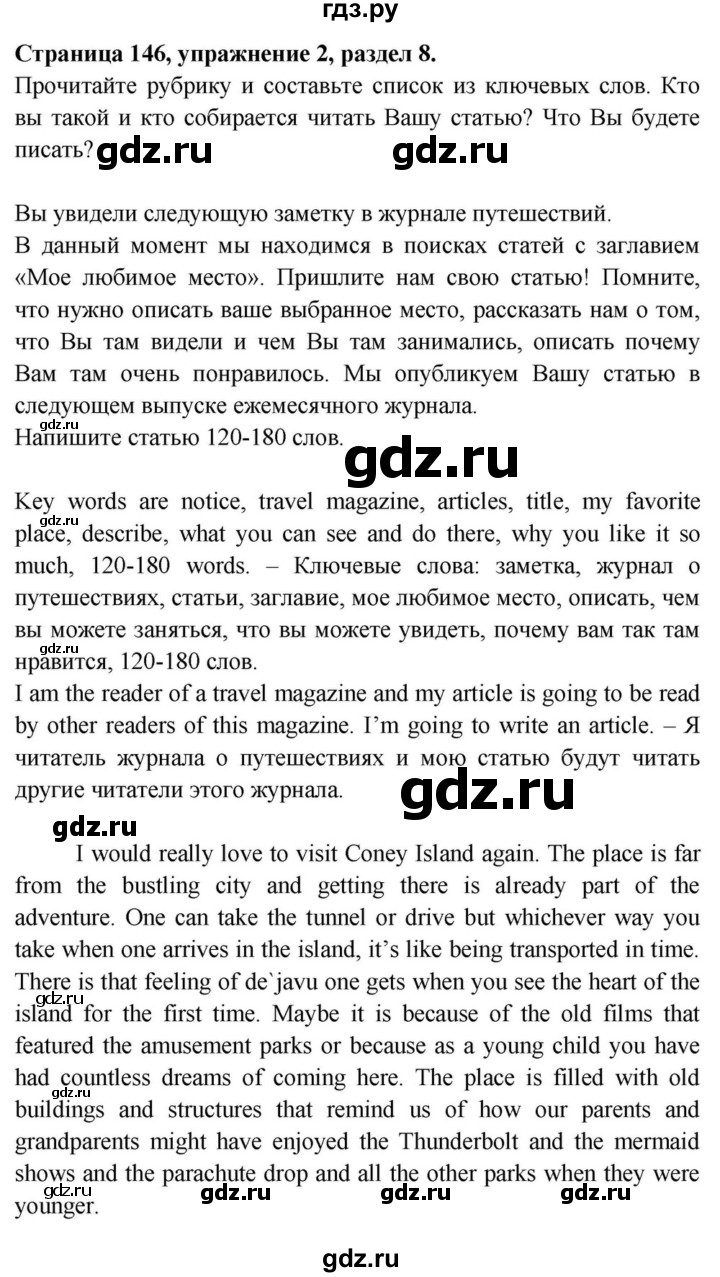
* **Key words:**
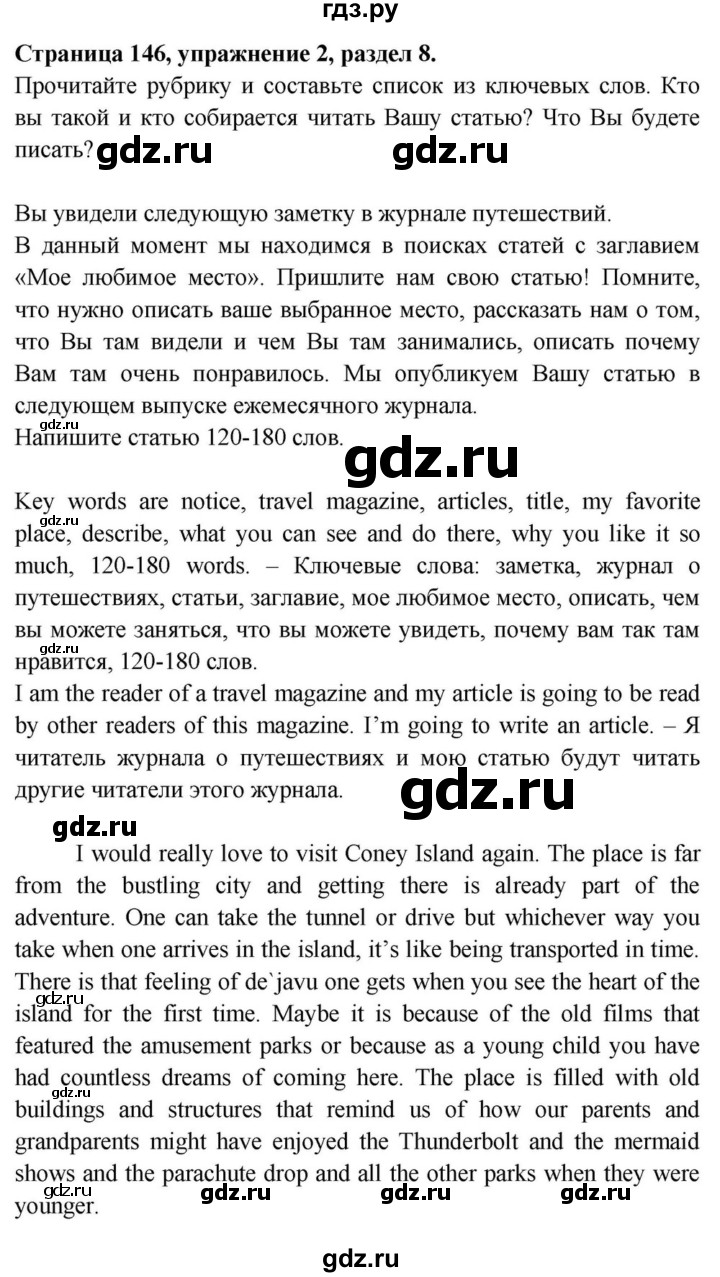
*travel magazine, notice, articles, title: "My Favourite Place", describe your chosen place, what you can see and do there, why you like it so much, publish, 100–140 words.*
* **Who are you?**
I am a reader of the travel magazine (a competition entrant).
* **Who will read your article?**
The magazine editor and readers of the travel magazine.
* **What will you write?**
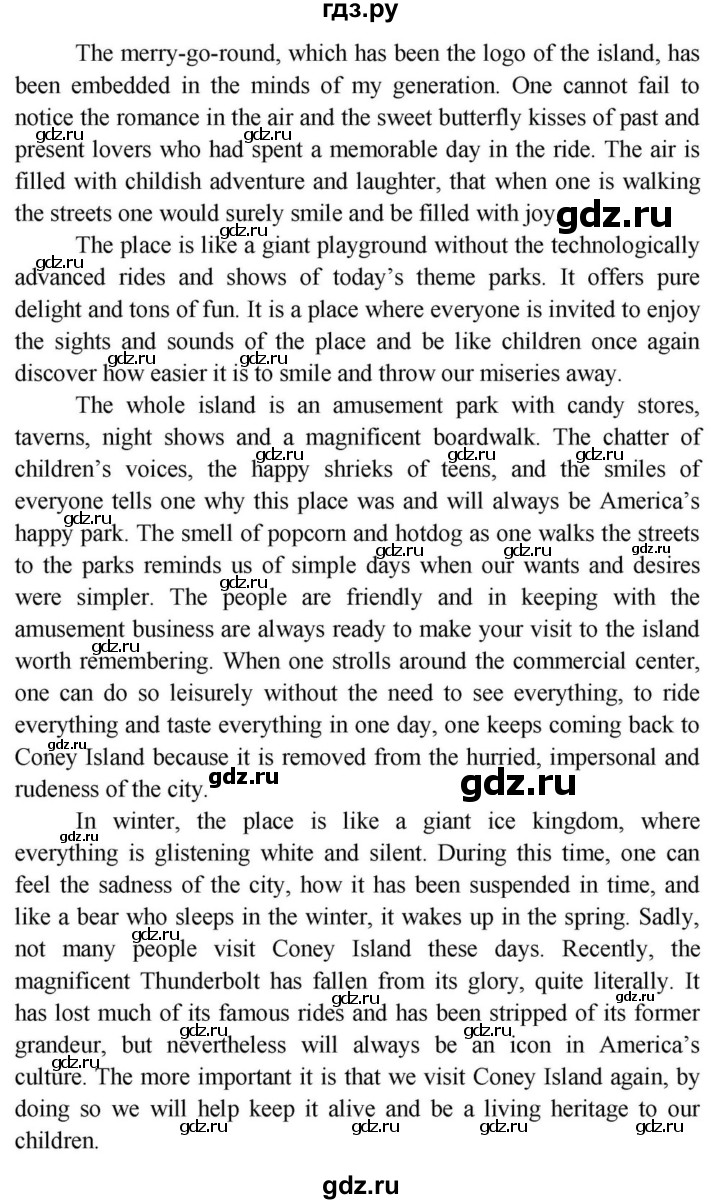
An article (100–140 words) describing my favourite place, explaining what visitors can see and do there, and giving reasons why I like it so much.
---
#### Exercise 3
* **What each paragraph is about:**
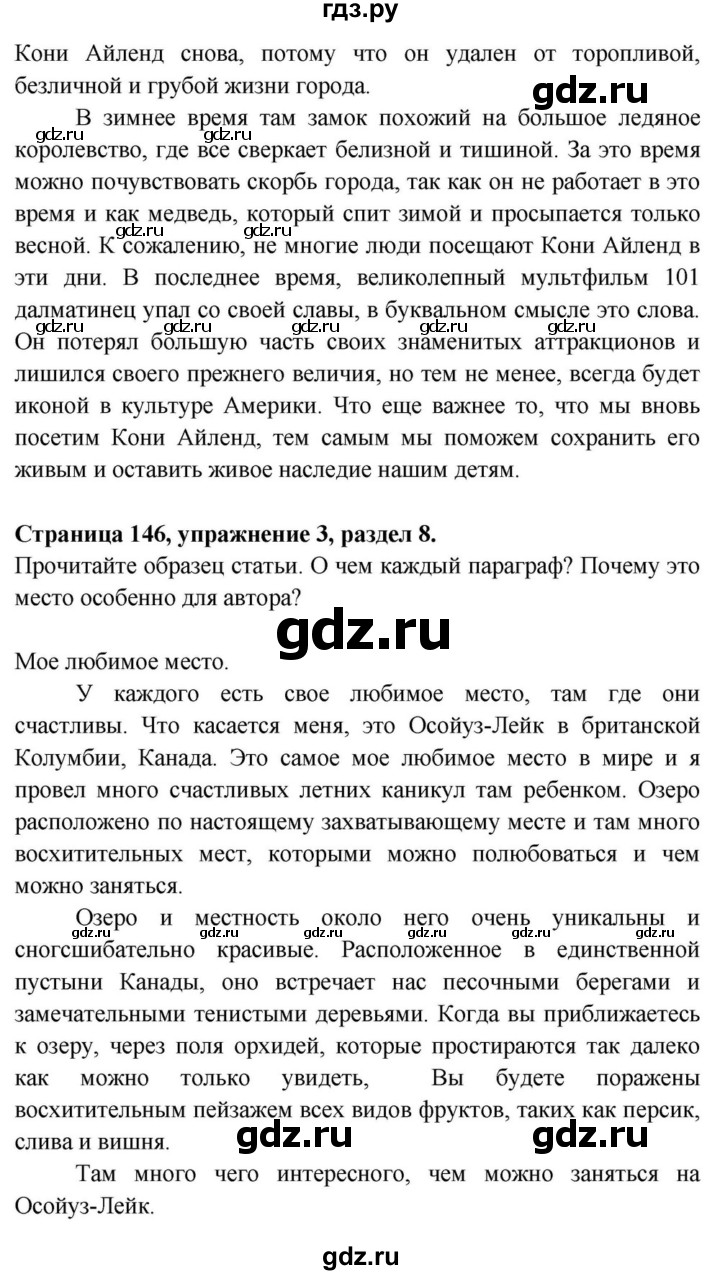
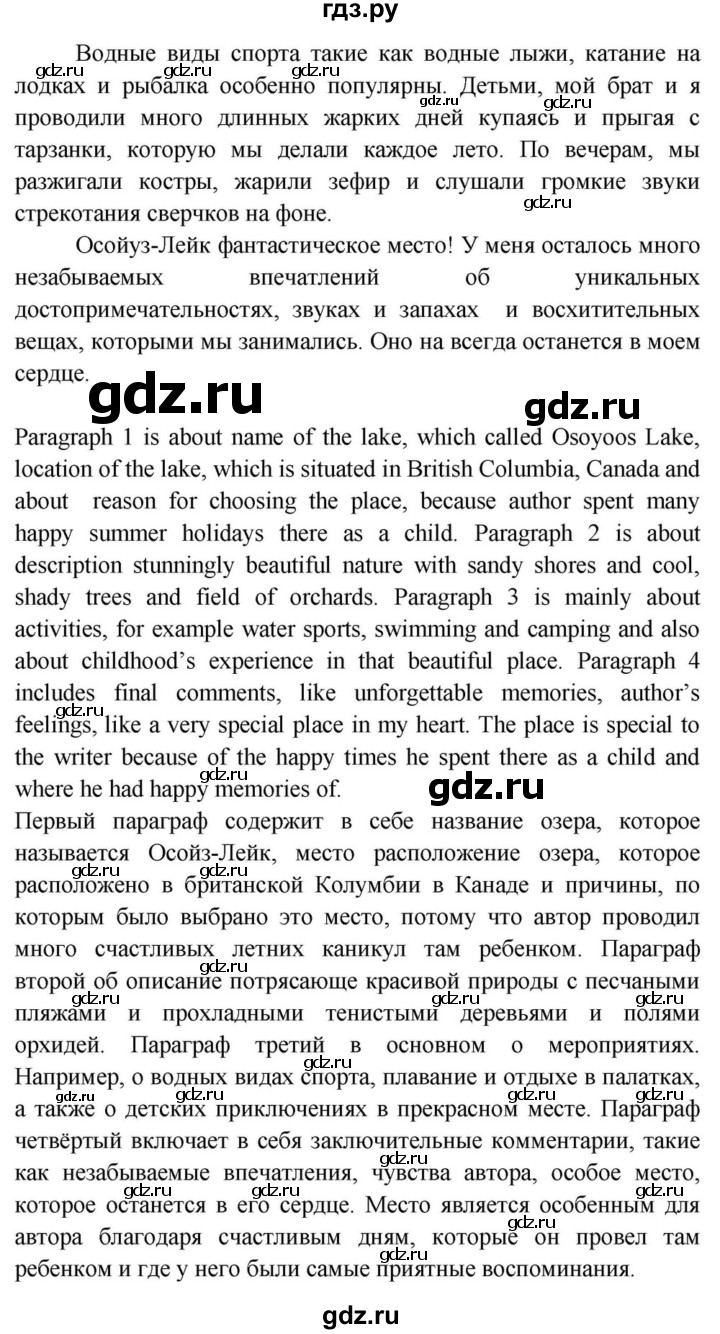
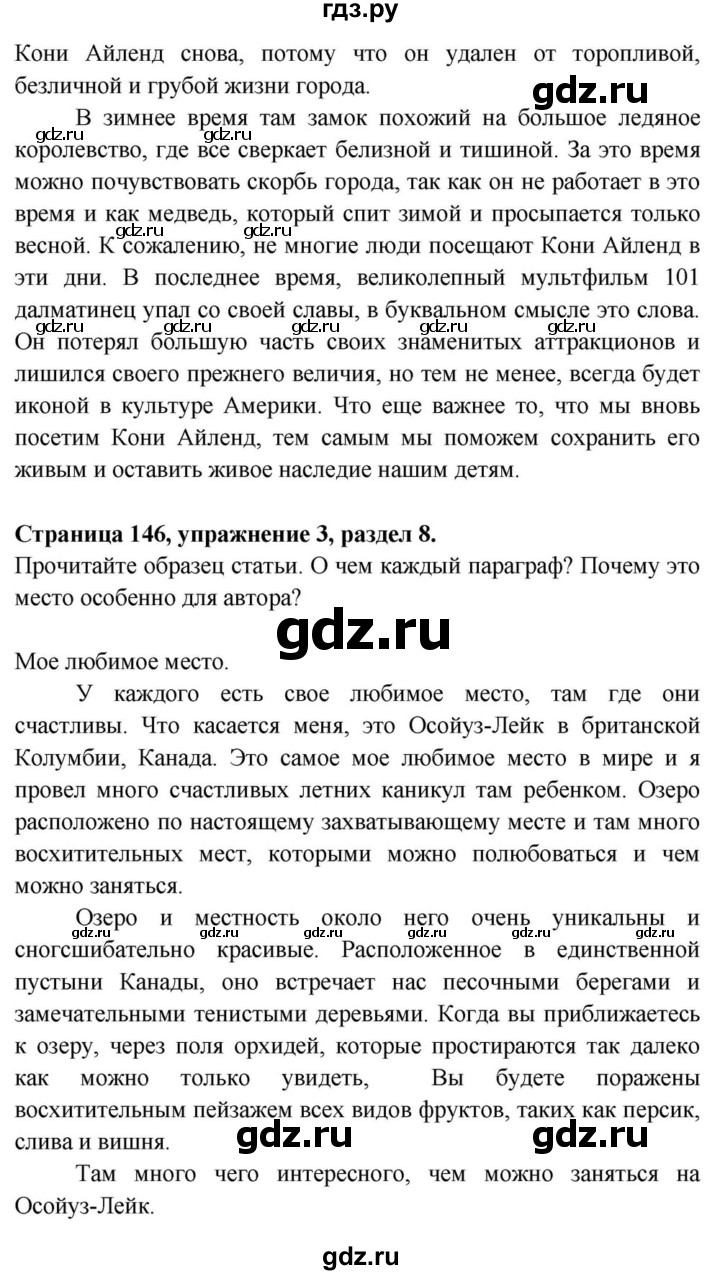
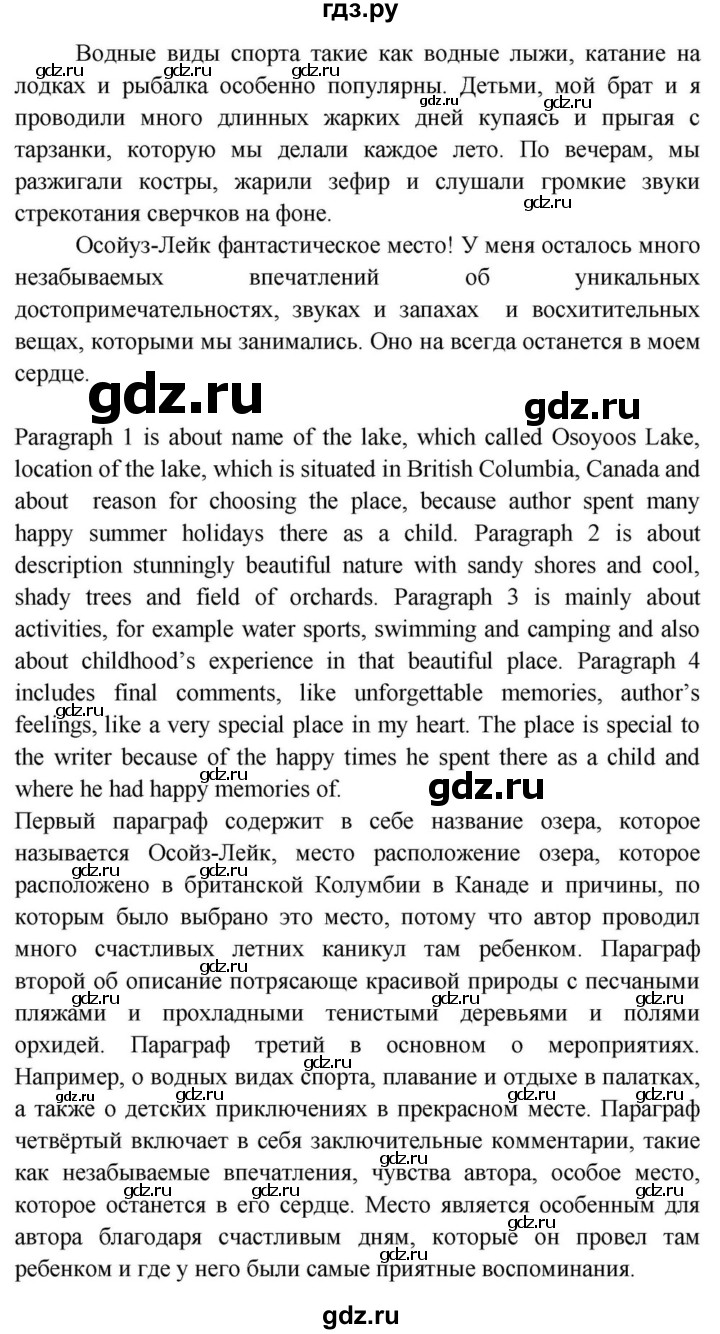
* **Paragraph 1:** Introduction — name of the place (*Osoyoos Lake*), its location (*British Columbia, Canada*), and the reason for choosing it (*happy childhood summer holidays*).
* **Paragraph 2:** General description and scenery of the area (*located in a desert, sandy shores, cool shady trees, fruit orchards*).
* **Paragraph 3:** Activities, things to do and see (*water sports, swimming, raft jumping, campfires, roasting marshmallows*).
* **Paragraph 4:** Conclusion — final feelings and personal comments (*unforgettable memories, special place in the heart*).
* **What makes this place special to the author?**
It is special because the author spent many happy summer holidays there as a child with their brothers, forming unforgettable memories connected with its unique beauty, activities, sights, sounds, and smells.
---
#### Exercise 4
Примеры из текста статьи, делающие описание живым (*vivid*):
1. **Adjectives (Прилагательные):**
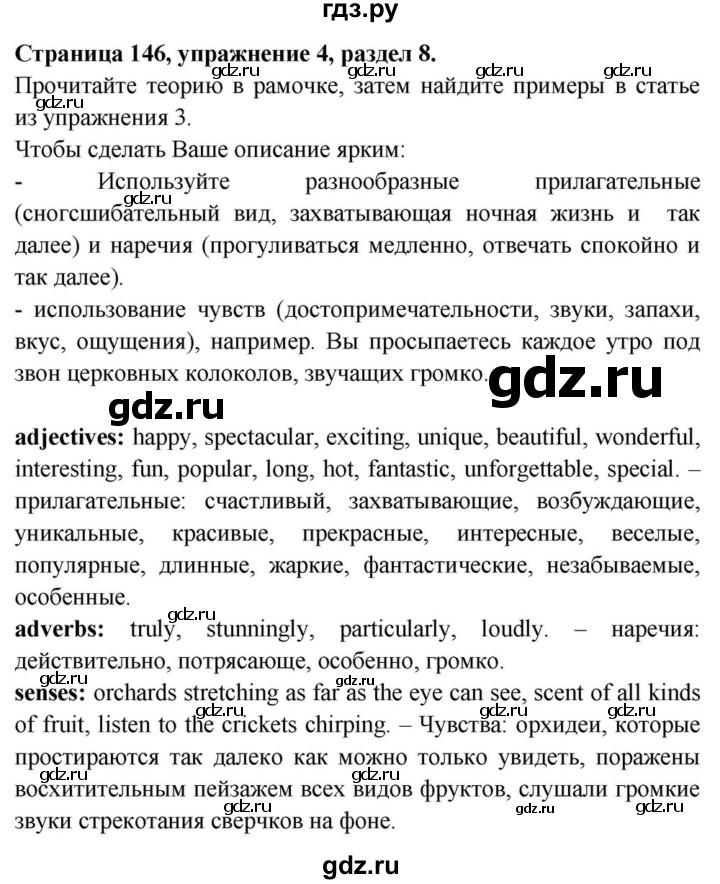
*special, happy, spectacular, exciting, unique, stunningly beautiful, sandy, cool, shady, wonderful, interesting, fun, popular, long, hot, unforgettable.*
2. **Adverbs (Наречия):**
*truly (spectacular), stunningly (beautiful), particularly (popular), loudly (chirping).*
3. **The Senses (Органы чувств):**
* **Sight (Зрение):** *spectacular location, stunningly beautiful, sandy shores, cool, shady trees, orchards stretching as far as the eye can see, unique sights.*
* **Hearing / Sound (Слух):** *the sound of crickets chirping loudly.*
* **Smell (Обоняние):** *the wonderful scent of all kinds of fruit (apricots, plums and cherries).*
* **Taste (Вкус):** *fruit (apricots, plums, cherries), roast marshmallows.*
* **Touch (Осязание):** *sandy shores, cool trees, long, hot afternoons.*
---
### Объяснение и правила написания описания места (Description of a place)
1. **Структура статьи-описания:**
* **Title (Заголовок):** Должен быть броским и отражать тему (например, *My Favourite Place*).
* **Introduction (Введение / Para 1):** Называем место, указываем, где оно находится (страна, регион), и объясняем причину выбора.
* **Main Body (Основная часть / Paras 2–3):**
* Один абзац посвящается внешнему виду, природе, пейзажам и атмосфере.
* Второй абзац — развлечениям, достопримечательностям и тому, чем там можно заняться (*activities, sights, facilities*).
* **Conclusion (Заключение / Para 4):** Итоговое впечатление, личные эмоции и рекомендации для читателей.
2. **Использование грамматических времен:**
* **Present Simple** — для описания постоянных характеристик (географическое положение, природа, доступные развлечения).
* **Past Simple / Past Continuous / would + V** — для описания воспоминаний и реальных событий из прошлого.
3. **Средства выразительности:**
* Чтобы текст не выглядел сухо, используйте богатый словарный запас (сильные прилагательные: *breathtaking, magnificent, spectacular*) и наречия степени (*truly, extremely, particularly*).
* Обращайтесь к пяти чувствам (*senses*): описывайте не только то, что видно, но и звуки природы, запахи местной еды или растений, тактильные ощущения (прохладный ветер, теплый песок).
Спасибо за оценку!




Открой больше возможностей
Войди через VK — задавай вопросы ИИ и сохраняй ГДЗ в избранное
