


ГДЗ по английскому языку 11 класс Афанасьева Spotlight Базовый уровень страница - 147

Авторы: Афанасьева О.В., Дули Д., Михеева И.В., Оби Б., Эванс В.
Серия: Spotlight
Тип книги: Учебник
Год: 2015-2024
Рекомендуем посмотреть


 Премиум
Подробное решение страница № 147 по английскому языку Spotlight для учащихся 11 класса Spotlight Базовый уровень, авторов Афанасьева, Дули, Михеева, Оби, Эванс 2015-2024
### Итоговый ответ
#### Упражнение 5
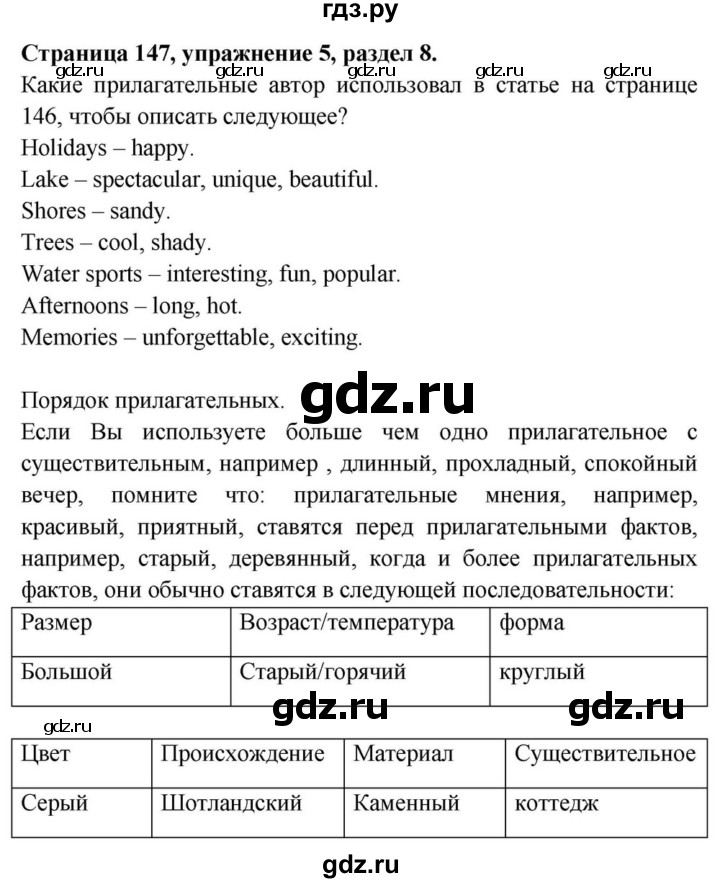
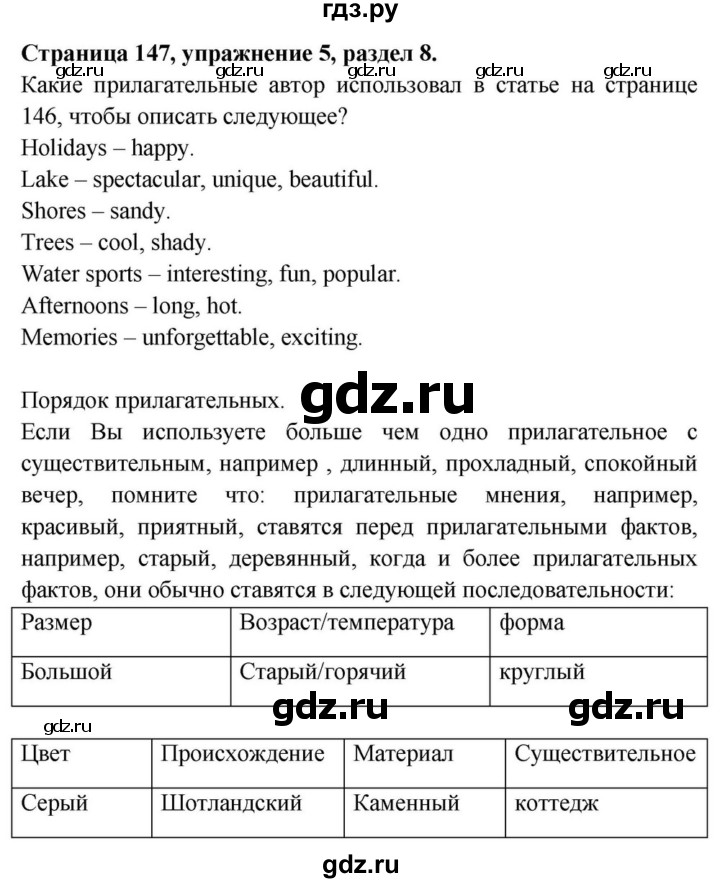
Прилагательные из текста на с. 146 к указанным существительным:
* **holidays:** memorable *(незабываемые)*
* **lake:** peaceful / man-made *(спокойное / искусственное)*
* **shores:** tree-covered / peaceful *(поросшие деревьями / мирные)*
* **trees:** fir / pine *(еловые / сосновые)*
* **water sports:** exciting *(захватывающие)*
* **afternoons:** relaxing / lazy *(расслабляющие / ленивые)*
* **memories:** fond *(теплые, приятные)*
---
#### Упражнение 6
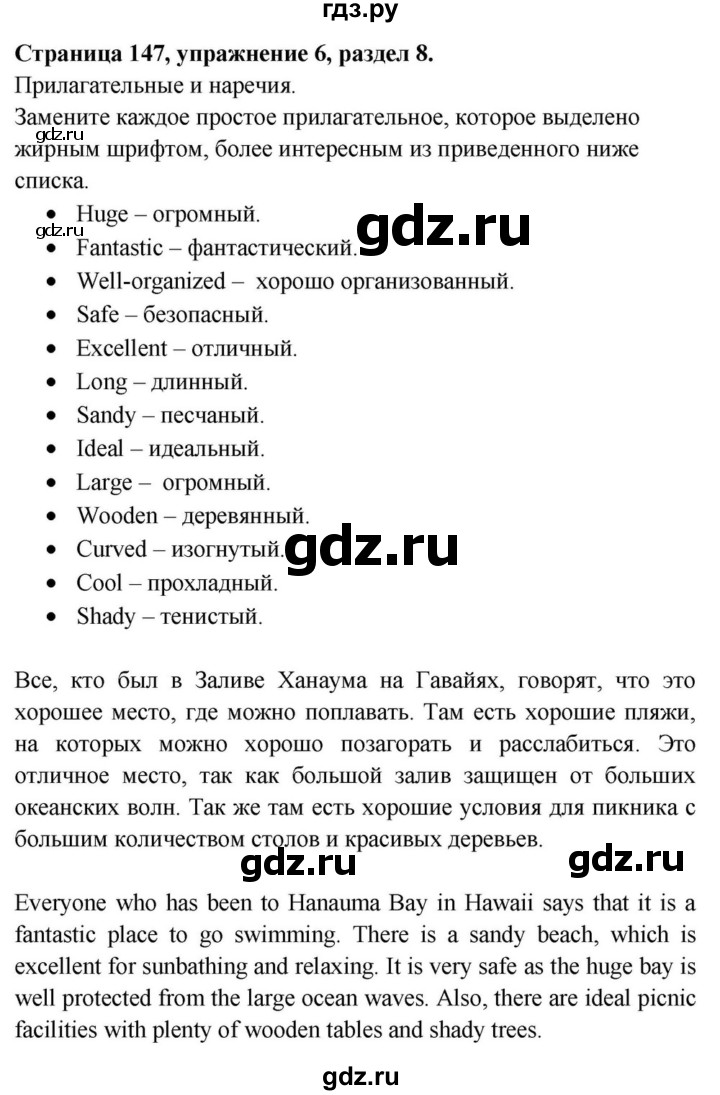
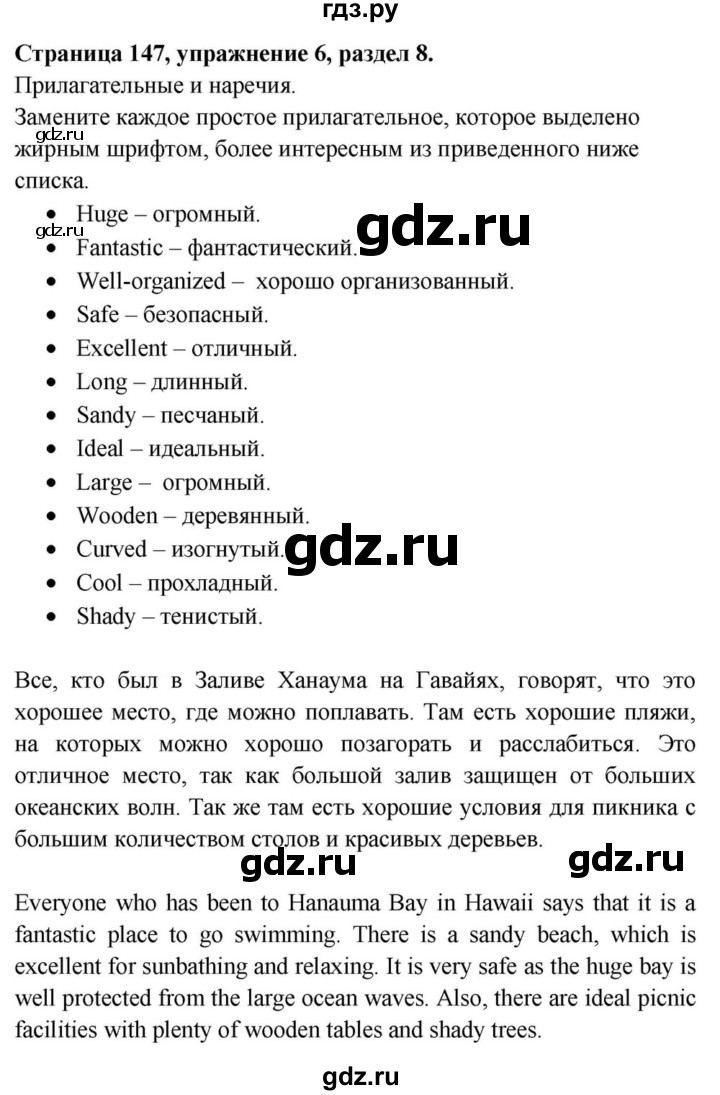
1) **ideal** / **fantastic**
2) **curved** / **sandy**
3) **excellent**
4) **safe**
5) **large**
6) **huge**
7) **well-organised**
8) **wooden**
9) **shady** / **cool**
*Текст с заменами:*
Everyone who has been to Hanauma Bay in Hawaii says that it is an **1) ideal** place to go swimming. There is a **2) curved / sandy** beach which is **3) excellent** for sunbathing and relaxing. It is very **4) safe** as the **5) large** bay is well protected from the **6) huge** ocean waves. Also, there are **7) well-organised** picnic facilities with plenty of **8) wooden** tables and **9) shady** trees.
---
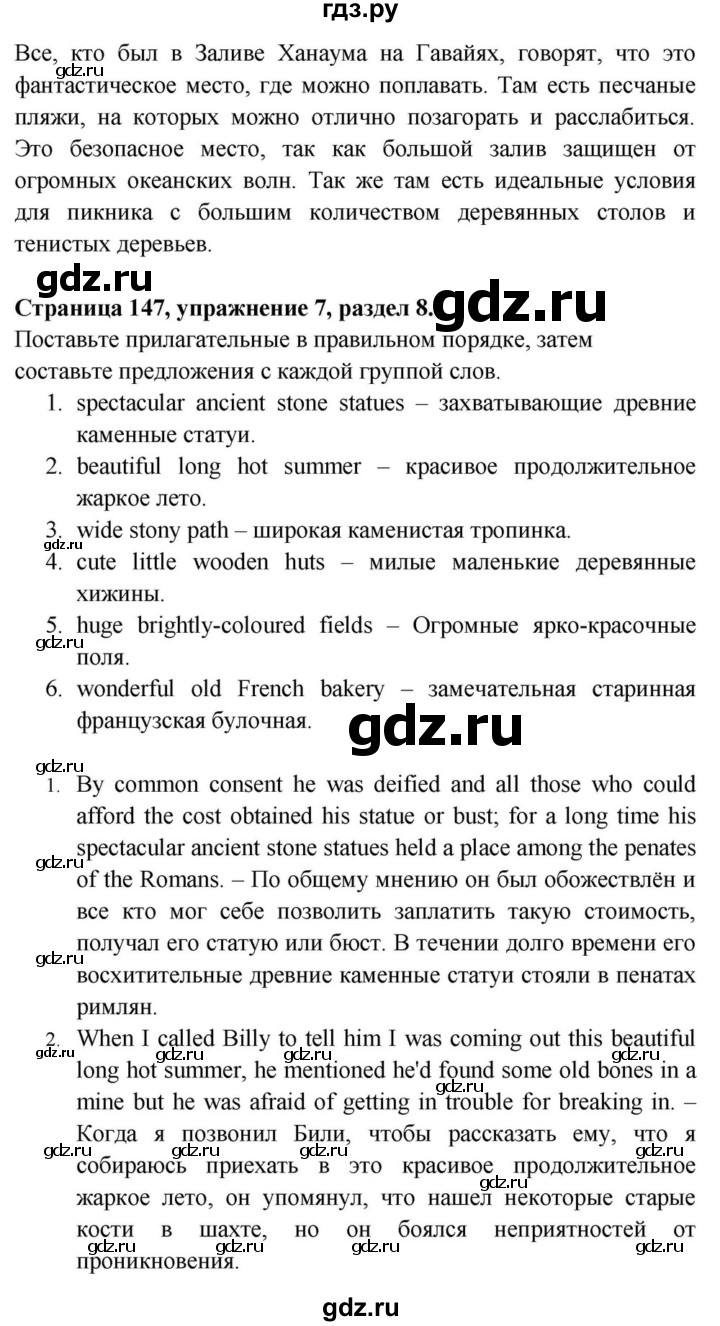
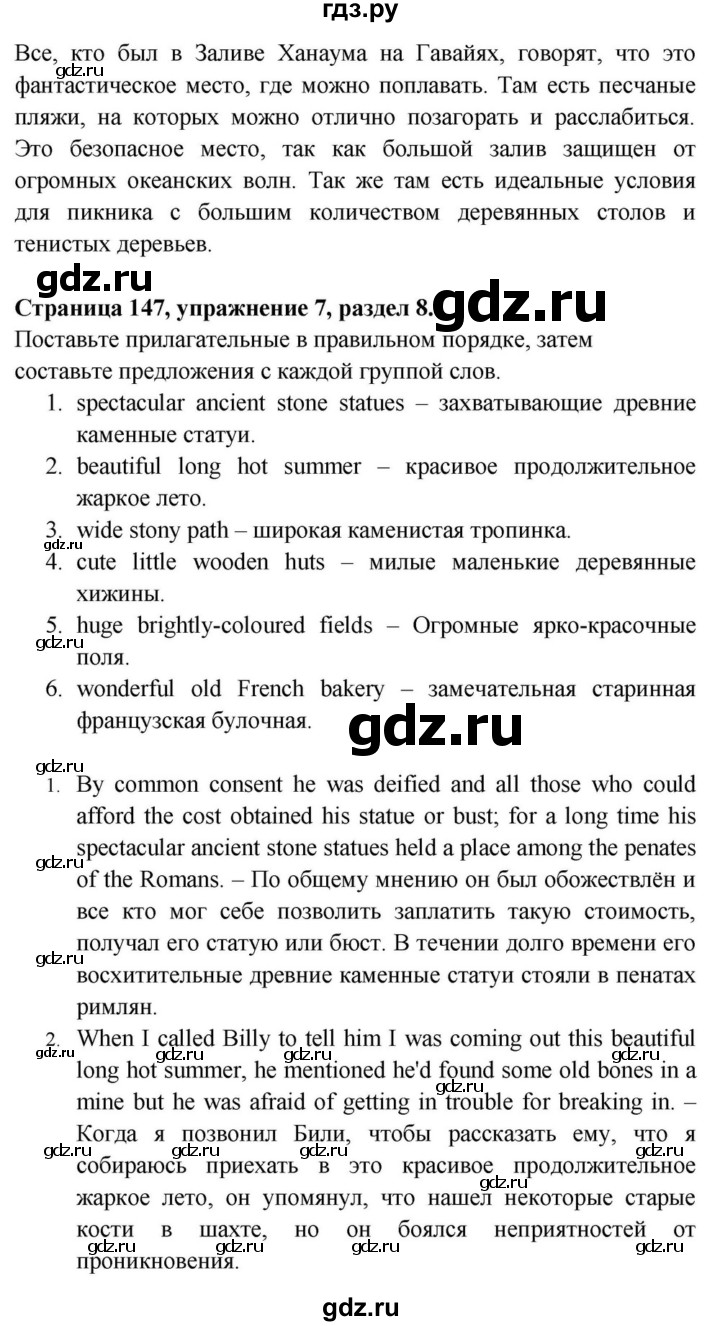
#### Упражнение 7
**Правильный порядок прилагательных и примеры предложений:**
1. **spectacular ancient stone statues**
*Sentence:* The tourists stopped to take pictures of the spectacular ancient stone statues.
2. **beautiful long hot summer**
*Sentence:* We enjoyed spending our beautiful long hot summer in the countryside.
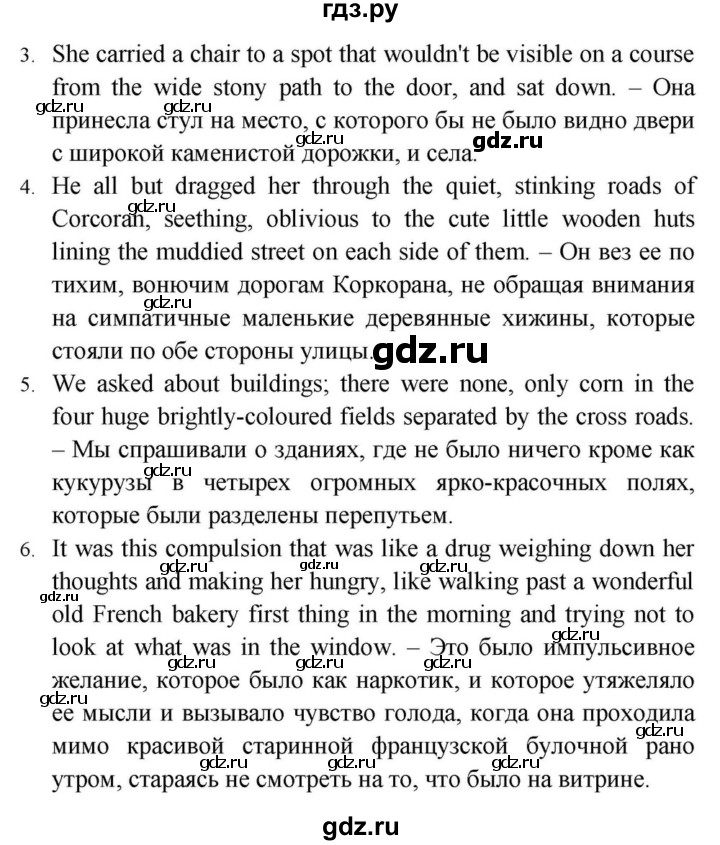
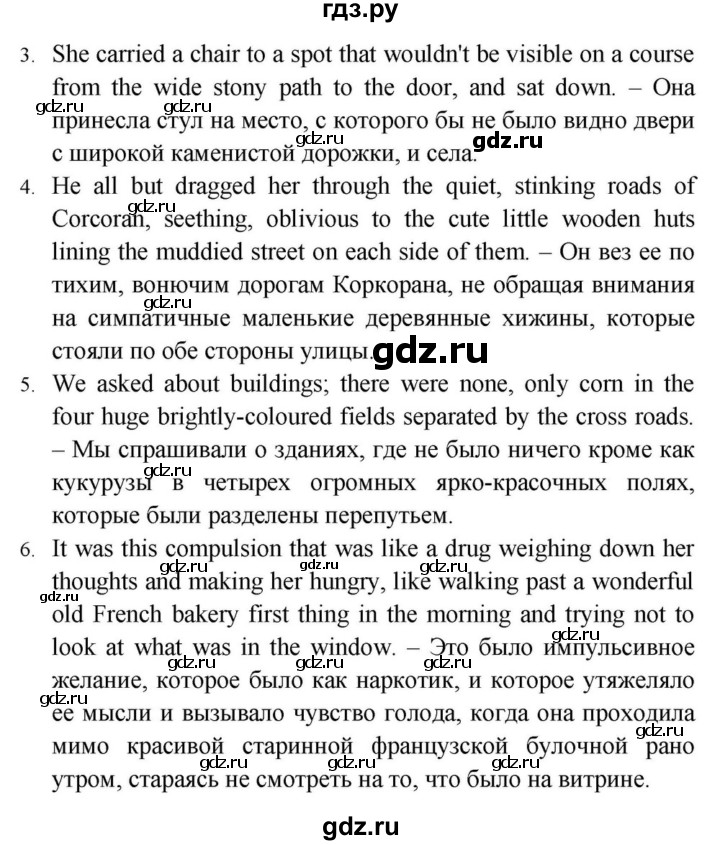
3. **wide stony path**
*Sentence:* A wide stony path led all the way to the top of the mountain.
4. **cute little wooden huts**
*Sentence:* There were several cute little wooden huts along the shore of the lake.
5. **huge brightly-coloured fields**
*Sentence:* From the airplane, we could see huge brightly-coloured fields stretching to the horizon.
6. **wonderful old French bakery**
*Sentence:* Every morning, we bought fresh bread at a wonderful old French bakery around the corner.
---
#### Упражнение 8
**a)**
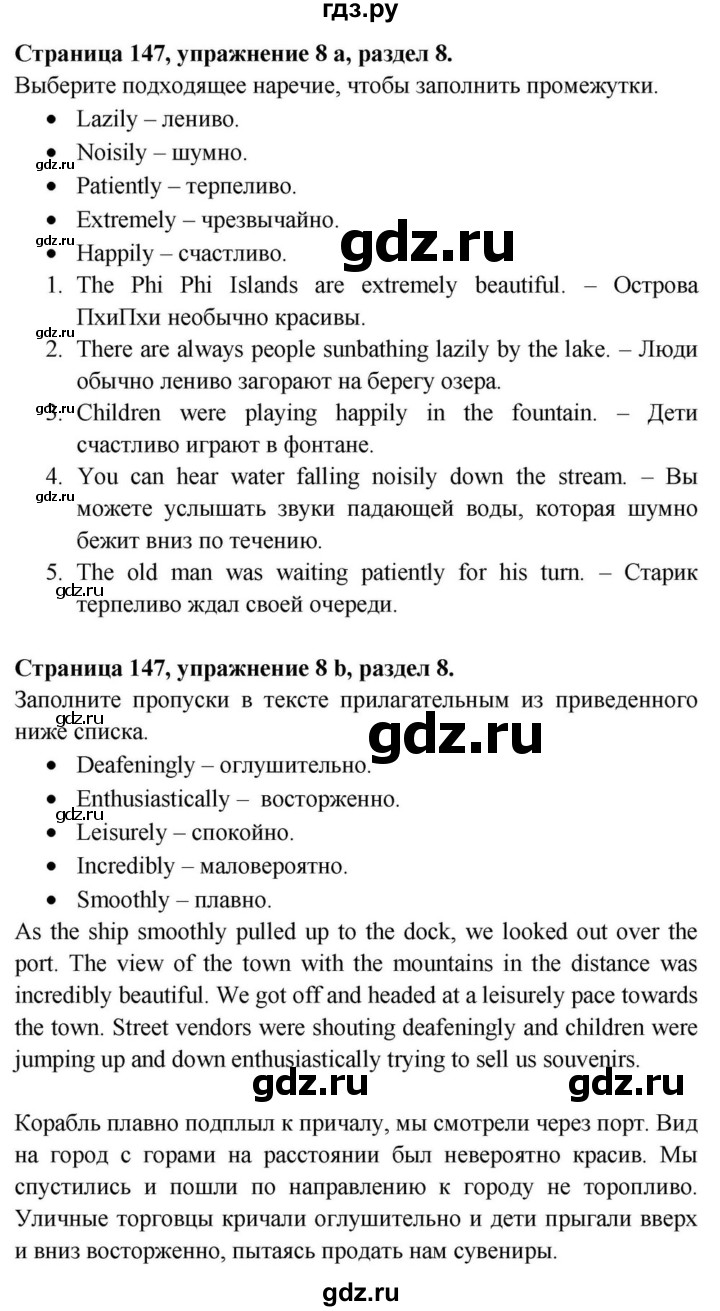
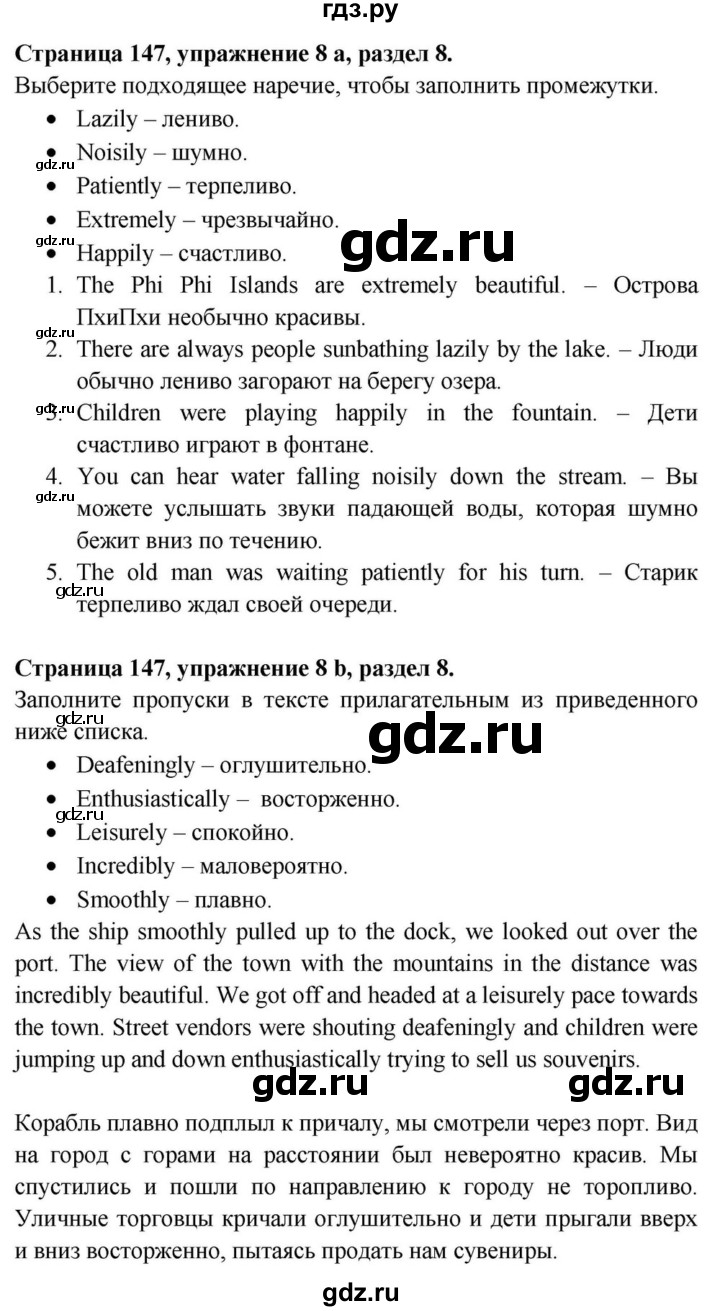
1. The Phi Phi Islands are **extremely** beautiful.
2. There are always people sunbathing **lazily** by the lake.
3. Children were playing **happily** in the fountain.
4. You can hear water falling **noisily** down the stream.
5. The old man was waiting **patiently** for his turn.
**b)**
As the ship **1) smoothly** pulled up to the dock, we looked out over the port. The view of the town with the mountains in the distance was **2) incredibly** beautiful. We got off and walked **3) leisurely** towards the town. Street vendors were shouting **4) deafeningly** and children were jumping up and down **5) enthusiastically** trying to sell us souvenirs.
---
#### Упражнение 9
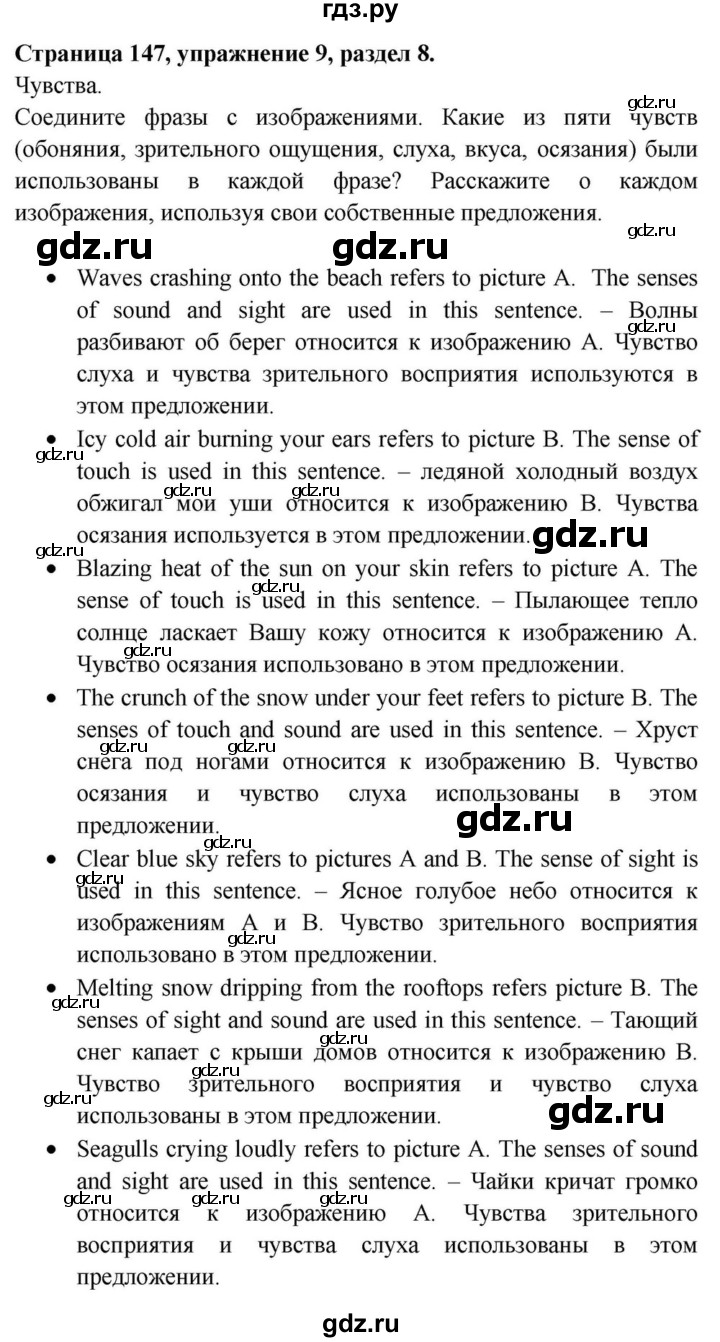
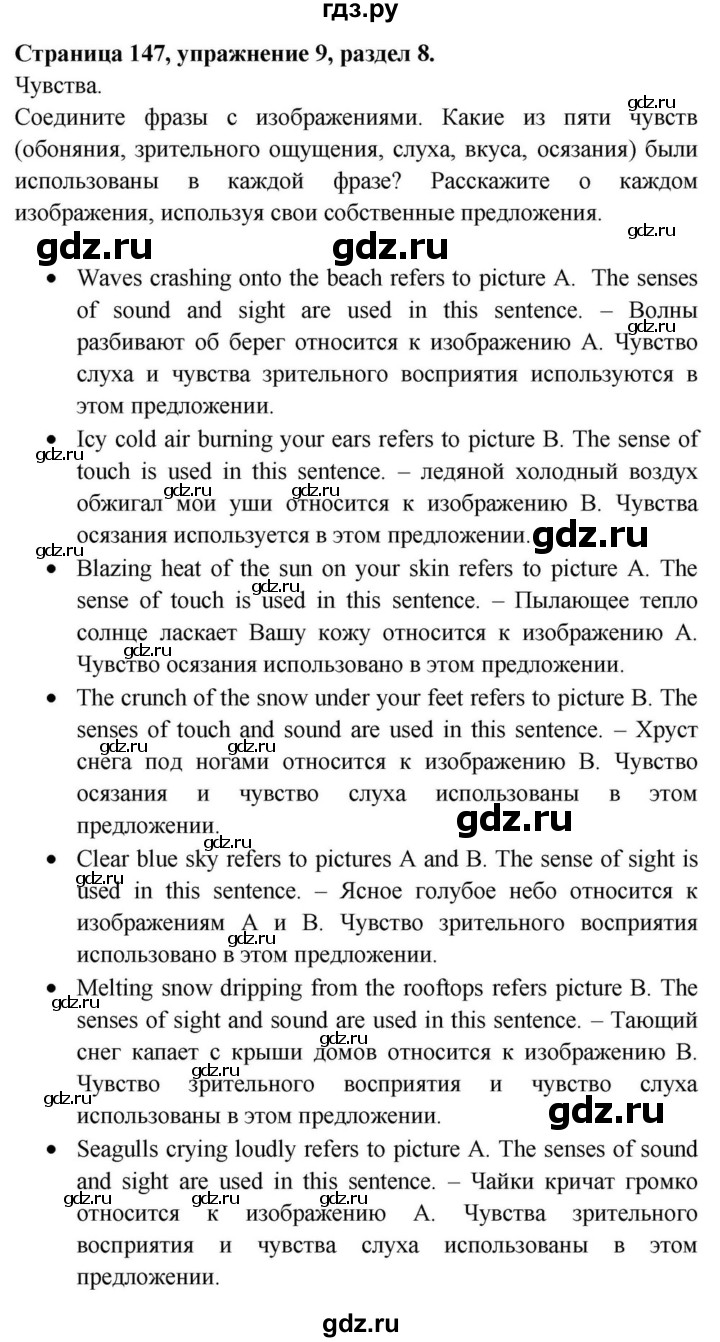
**Определение чувств восприятия (senses):**
* *waves crashing onto the beach* — **sound** *(слух)* (Beach scene)
* *icy cold air burning your ears* — **touch** *(осязание)* (Winter scene)
* *blazing heat of the sun on your skin* — **touch** *(осязание)* (Beach scene)
* *the crunch of snow under your feet* — **sound** *(слух)* (Winter scene)
* *clear blue sky* — **sight** *(зрение)* (Both / Beach scene)
* *melting snow dripping from the rooftops* — **sound / sight** *(слух / зрение)* (Winter scene)
* *seagulls crying loudly* — **sound** *(слух)* (Beach scene)
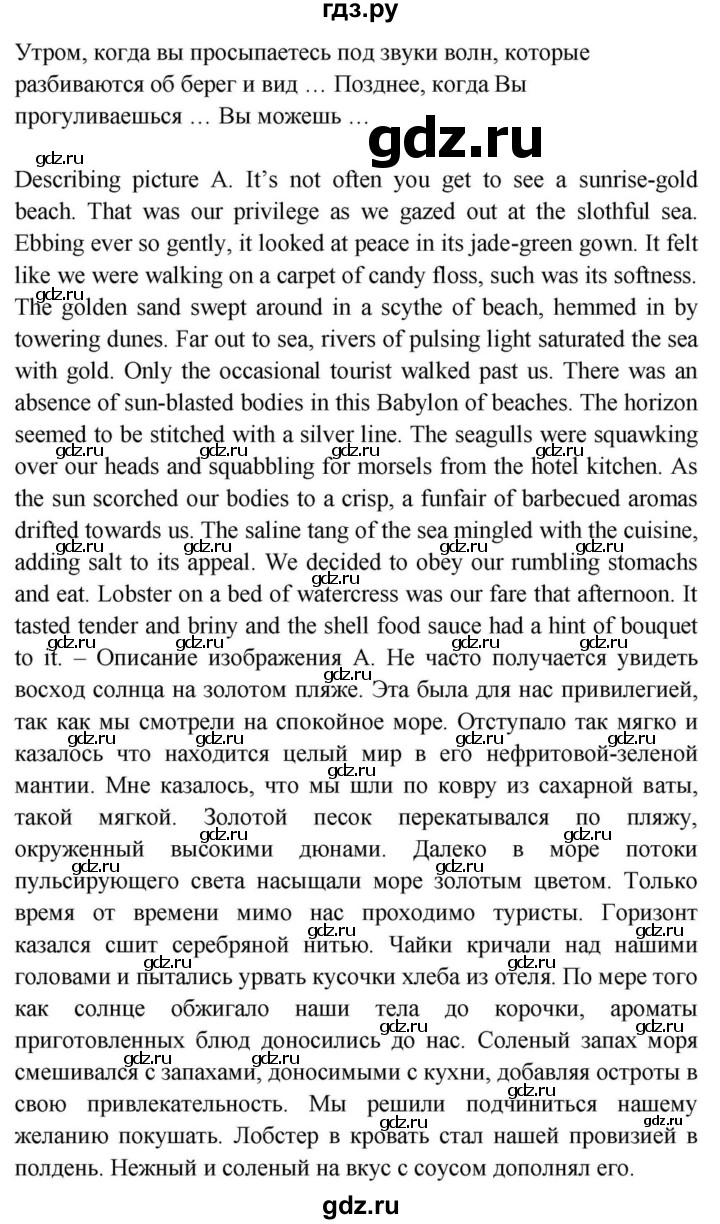
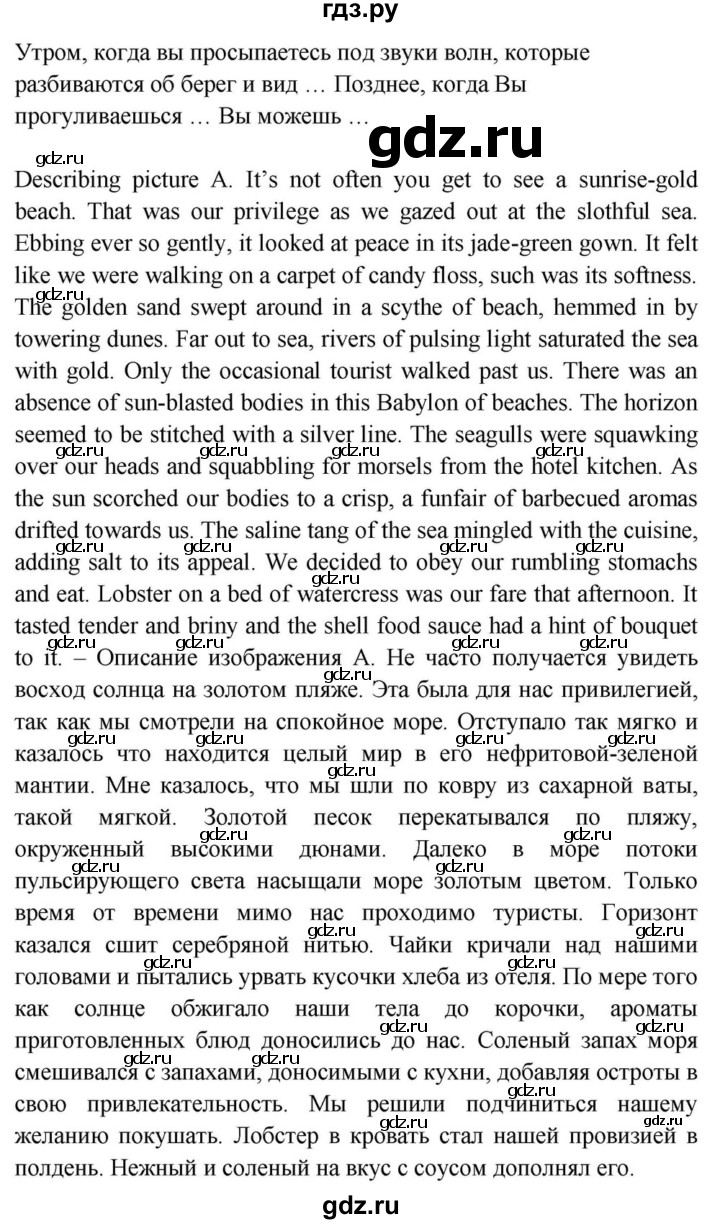
**Пример описания картинок:**
* **Beach:** In the morning, you wake up to the *sound of waves crashing onto the beach* and the *sight of a clear blue sky*. Later on, as you walk along the shore, you can hear *seagulls crying loudly* and feel the *blazing heat of the sun on your skin*.
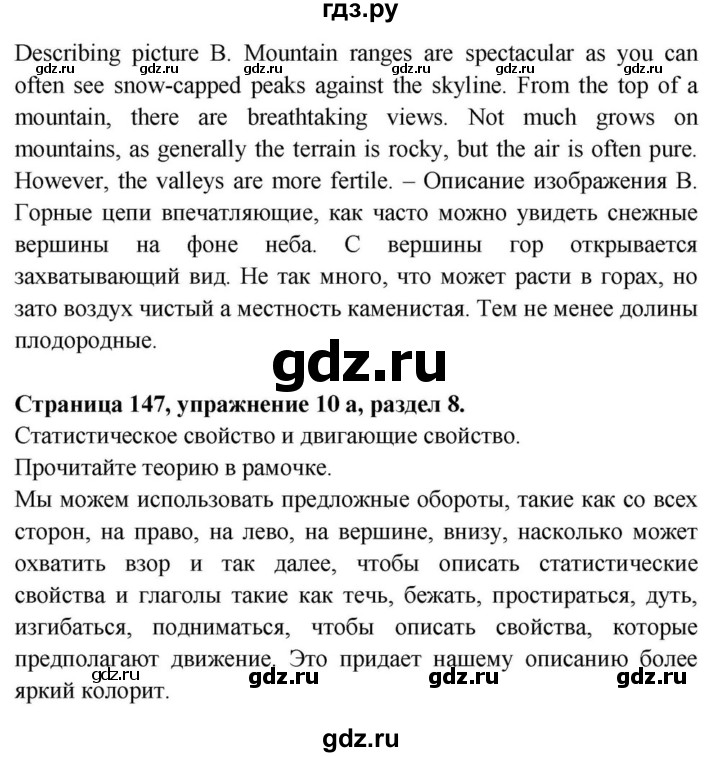
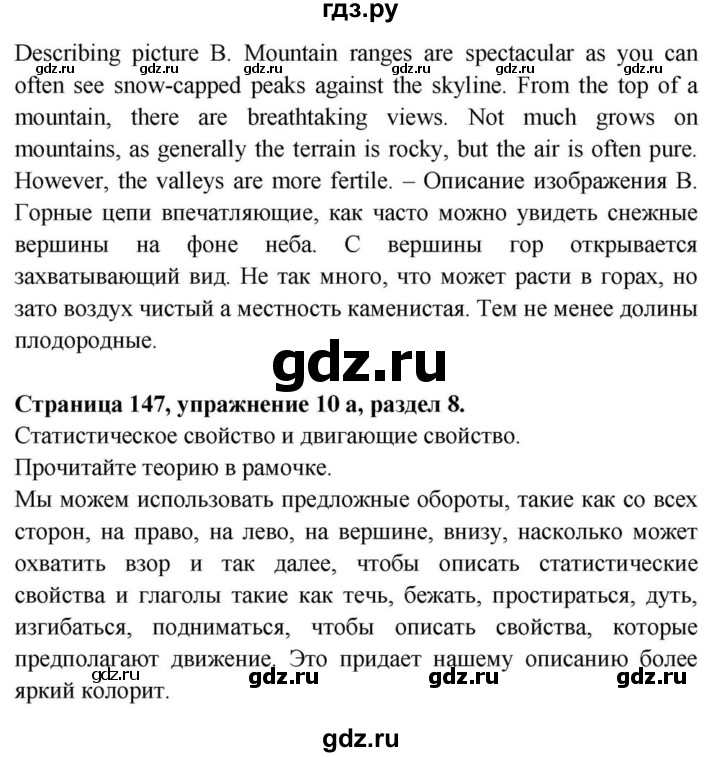
* **Winter scene:** As you step outside, you feel the *icy cold air burning your ears*. You can hear *the crunch of snow under your feet* and the sound of *melting snow dripping from the rooftops*.
---
#### Упражнение 10
**b) Static and Moving features в тексте:**
* **Moving features (глаголы движения):** *climbs gently upwards*, *runs along the bottom*, *stretch for mile after mile*, *running through it*, *leading to*.
* **Static features (предлоги и статические конструкции):** *at the end of a narrow road*, *at the bottom of the garden*, *beyond the house*, *to the left*, *nearby little village*.
**c) Пример описания собственного дома:**
> My house is situated **at the corner of** a quiet green street. **To the left of** the house, there is a small garden with apple trees. A paved path **runs from** the front gate **to** the entrance. **Behind** the house, wide open fields **stretch** as far as the eye can see.
---
### Объяснение и правила
1. **Замена простых прилагательных (Упр. 6):**
Для создания выразительного описания (*descriptive essay*) слова вроде *good, big, nice* заменяются контекстными синонимами (*huge, shady, wooden, well-organised*).
2. **Порядок нескольких прилагательных перед существительным (Упр. 7):**
Общее правило порядка прилагательных в английском языке:
$$\text{Opinion} \rightarrow \text{Size} \rightarrow \text{Age/Temp} \rightarrow \text{Shape} \rightarrow \text{Colour} \rightarrow \text{Origin} \rightarrow \text{Material} \rightarrow \text{Noun}$$
* *cute (opinion) + little (size) + wooden (material) + huts (noun)*;
* *wonderful (opinion) + old (age) + French (origin) + bakery (noun)*.
3. **Описательные наречия (Упр. 8):**
Наречия образа действия (*lazily, happily, noisily, smoothly*) показывают, *как именно* совершается действие, а наречия степени (*extremely, incredibly*) усиливают качество прилагательного.
4. **Статические и динамические элементы описания (Упр. 10):**
Использование «движущихся» глаголов (*a road climbs*, *fields stretch*, *a stream runs*) оживляет пейзаж и делает текст образным. Предложные фразы (*at the end of, to the left, beyond*) задают четкую ориентацию в пространстве.
Спасибо за оценку!

Открой больше возможностей
Войди через VK — задавай вопросы ИИ и сохраняй ГДЗ в избранное
