


ГДЗ по английскому языку 11 класс Афанасьева Spotlight Базовый уровень страница - 39

Авторы: Афанасьева О.В., Дули Д., Михеева И.В., Оби Б., Эванс В.
Серия: Spotlight
Тип книги: Учебник
Год: 2015-2024
Рекомендуем посмотреть


 Премиум
Подробное решение страница № 39 по английскому языку Spotlight для учащихся 11 класса Spotlight Базовый уровень, авторов Афанасьева, Дули, Михеева, Оби, Эванс 2015-2024
### Ответы к заданиям (Spotlight 11, стр. 39)
---
### Exercise 1
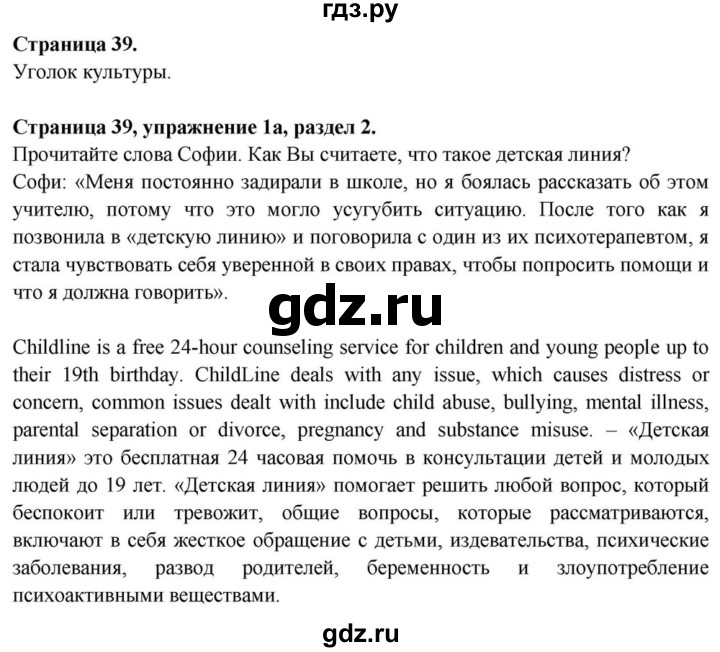
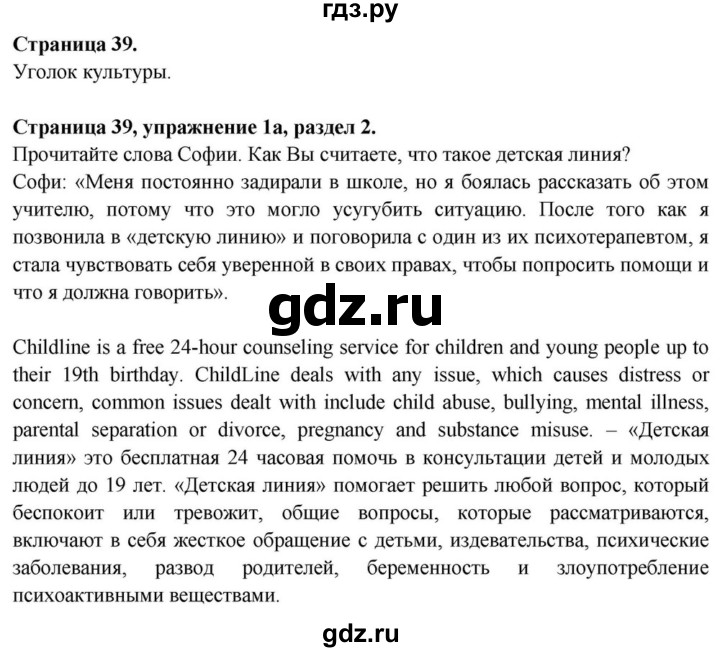
**a)** I think **ChildLine** is a free, confidential telephone helpline and support service for children and teenagers who are experiencing difficulties (such as bullying, family issues, stress) and need advice, comfort, or protection.
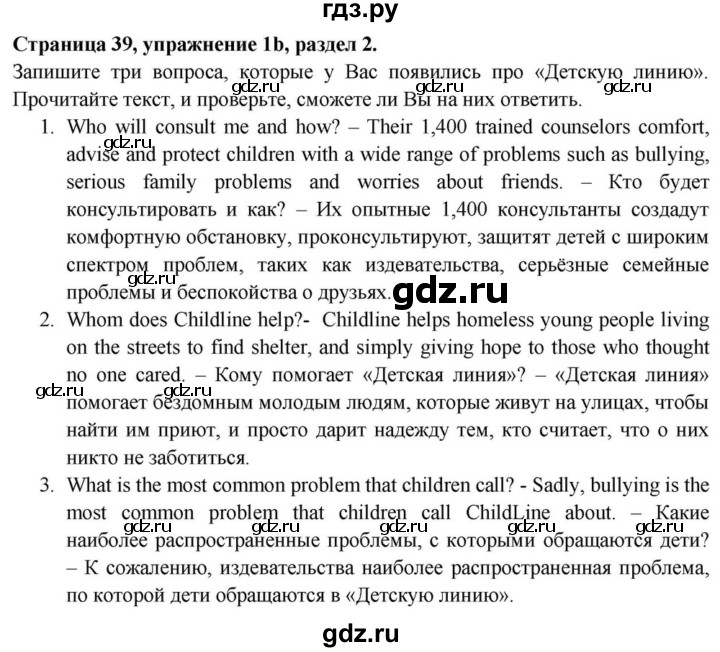
**b) Three questions about ChildLine:**
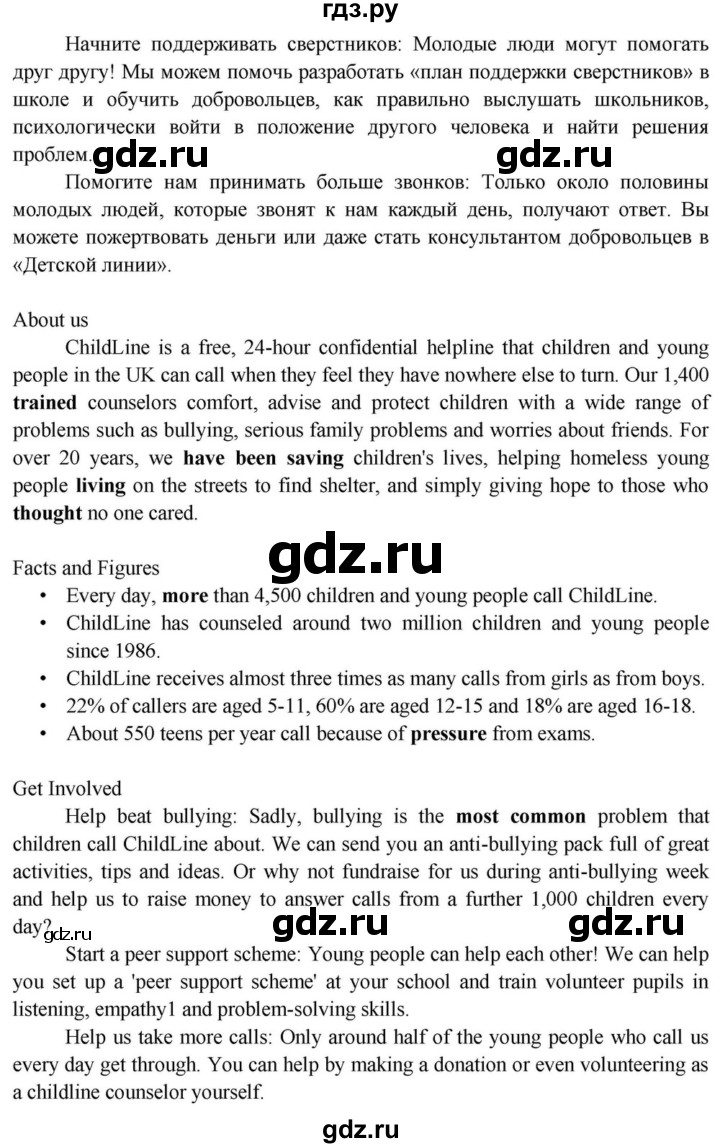
1. *Who can call ChildLine?* (Answer from text: Children and young people in the UK.)
2. *How much does it cost to call?* (Answer from text: It is free.)
3. *What problems do young people call about the most?* (Answer from text: Bullying is the most common problem.)
---
### Exercise 2 (RNE)
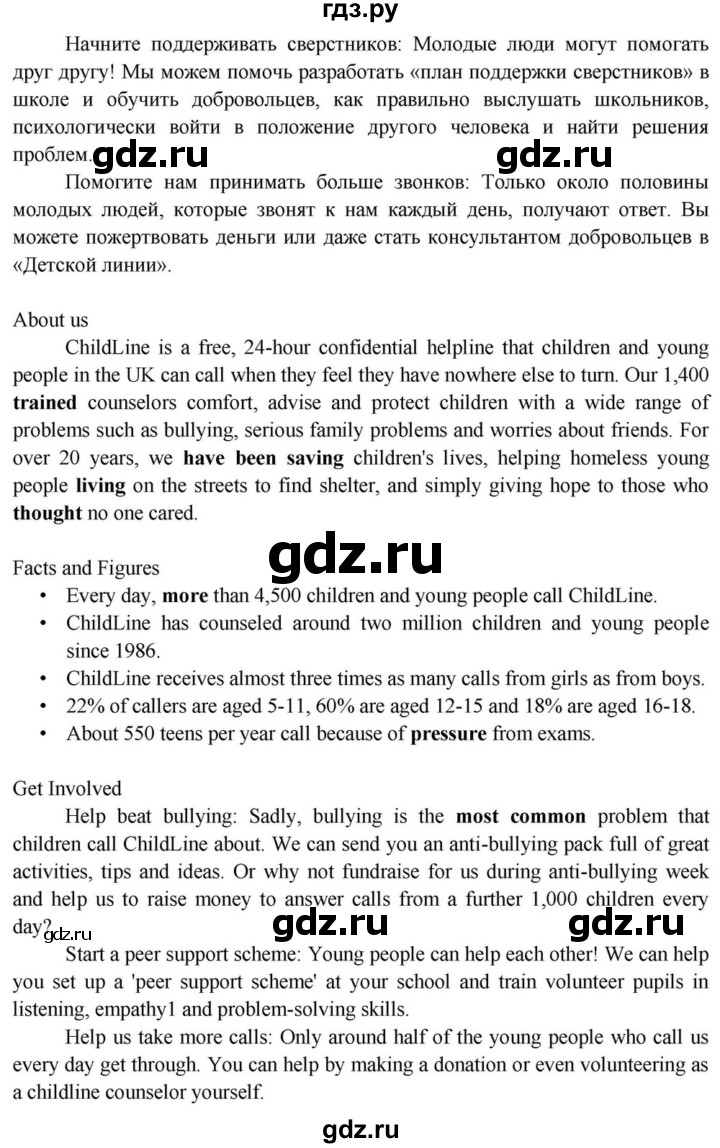
1. **trained**
2. **have been saving** *(или have saved)*
3. **living**
4. **thought**
5. **more**
6. **pressure**
7. **most common**
8. **listening**
9. **donation**
---
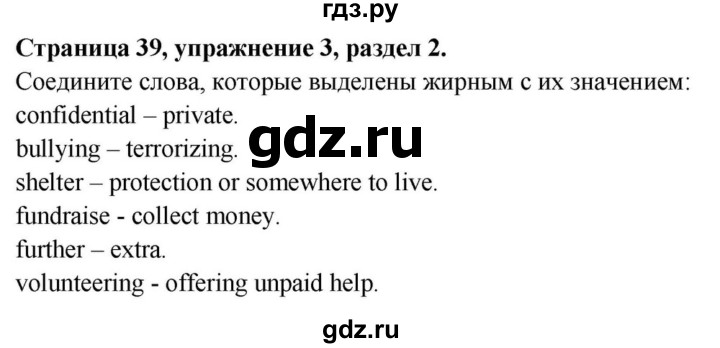
### Exercise 3
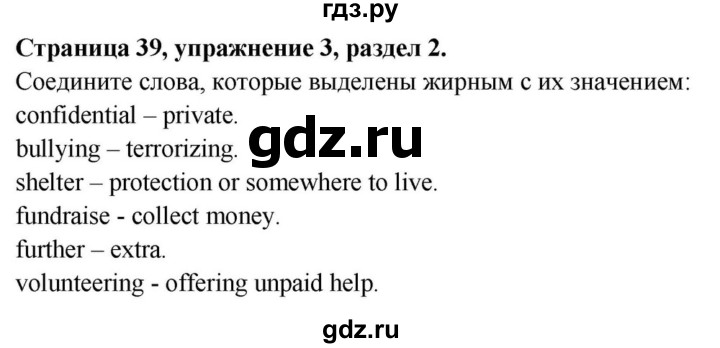
* **extra** — *further*
* **private** — *confidential*
* **terrorising** — *bullying*
* **protection/somewhere to live** — *shelter*
* **collect money** — *fundraise*
* **offering unpaid help** — *volunteering*
---
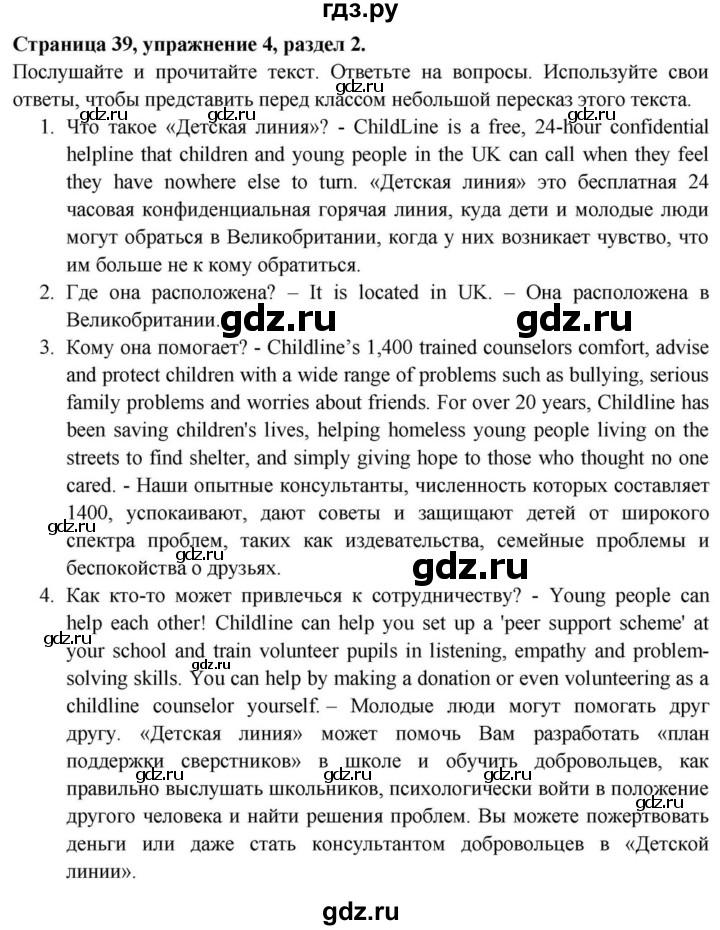
### Exercise 4
**Answers to the questions:**
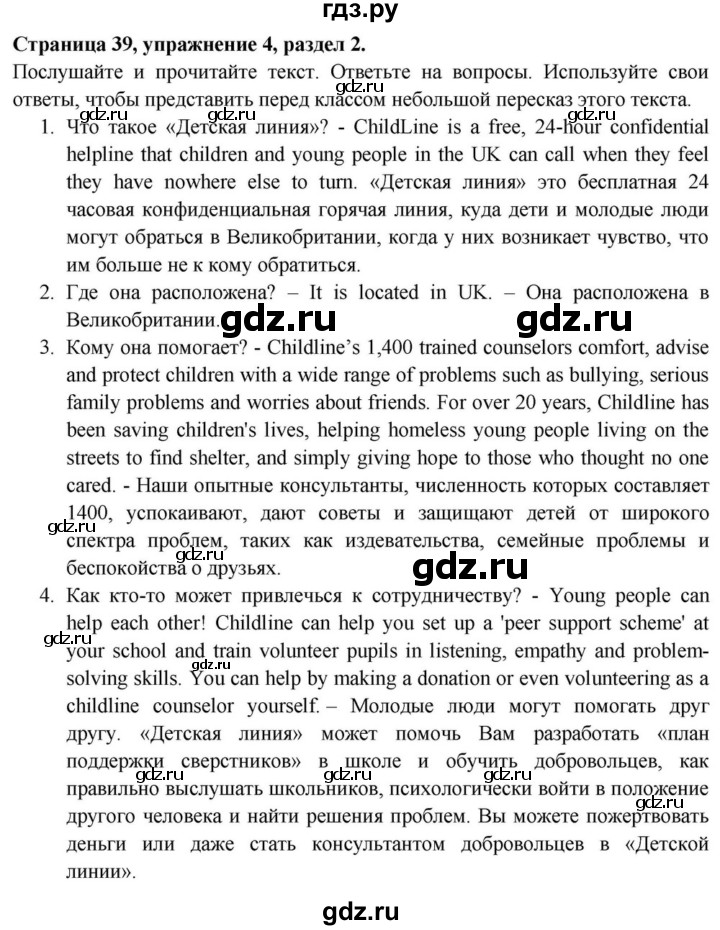
* **What is ChildLine?**
It is a free, 24-hour confidential helpline and support service for children and young people.
* **Where is it located?**
It is located in the UK.
* **Who does it help?**
It helps children and young people who face bullying, exam pressure, family problems, homelessness, or feel they have nowhere else to turn.
* **How can someone get involved?**
People can fundraise during anti-bullying week, set up peer support schemes in schools, make financial donations, or volunteer as counsellors.
**Short Summary:**
> *ChildLine is a free and confidential UK helpline that operates 24/7 to help children and teenagers with various issues, from bullying to family problems. Over the years, its trained counsellors have helped millions of young people. Anyone can get involved by fundraising, setting up peer support programmes in schools, donating money, or volunteering.*
---
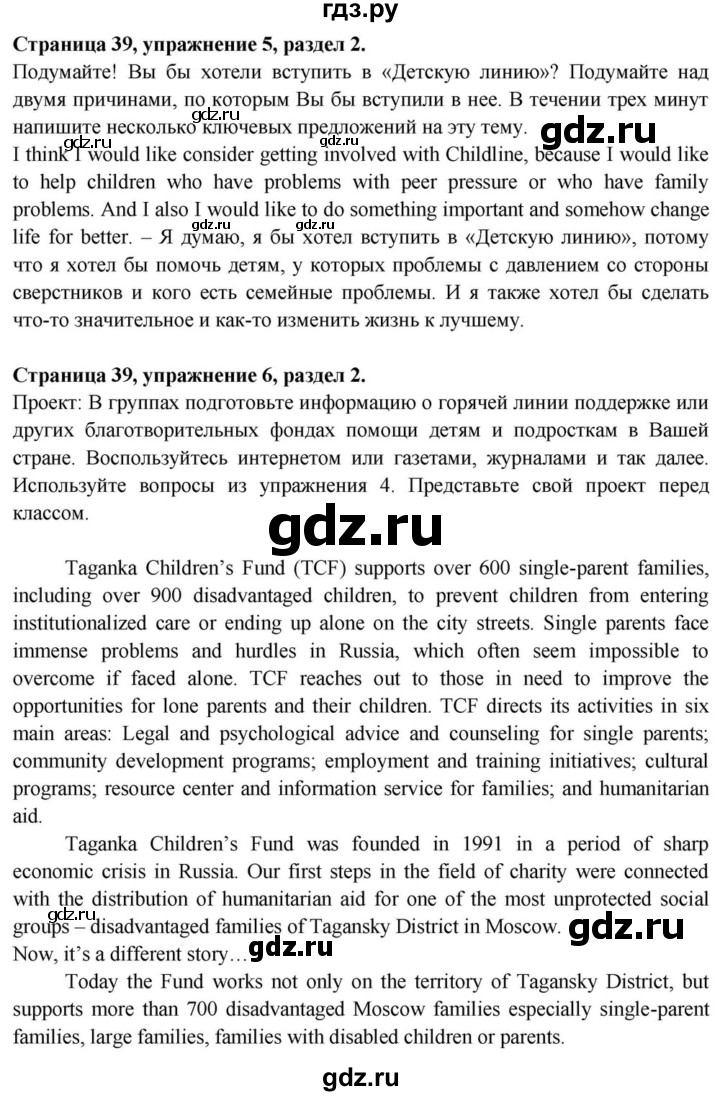
### Exercise 5 (THINK!)
> *I would definitely consider getting involved with ChildLine. Firstly, I want to help other teenagers who are suffering from bullying or stress, because no one should feel alone in difficult situations. Secondly, volunteering would allow me to develop valuable communication and empathy skills while making a real difference in people's lives.*
---
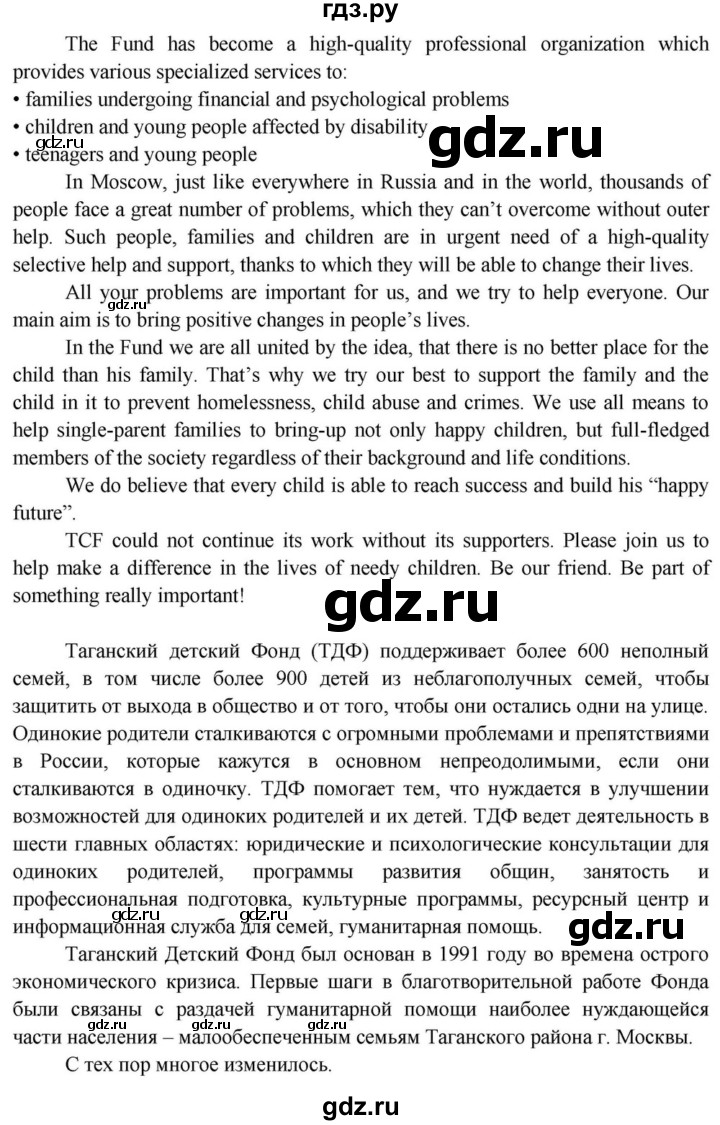
### Exercise 6 (ICT Project)
**Presentation: Children's Helpline in Russia (Детский телефон доверия)**
* **What it is:** It is a free, anonymous, and confidential psychological helpline for children, adolescents, and their parents.
* **Where it is located:** It operates across the Russian Federation (toll-free number: `8-800-2000-122`).
* **Who it helps:** It helps children and teenagers dealing with school stress, bullying, relationship issues, anxiety, or family conflicts.
* **How someone can get involved:** High school and university students can participate in social campaigns to spread awareness about the helpline, while qualified psychology specialists can apply to work as consultants.
---
### Подробное объяснение и грамматический комментарий к Exercise 2
1. **trained** — требуется причастие прошедшего времени (*Participle II*) в роли определения перед существительным: *trained counsellors* (подготовленные / обученные консультанты).
2. **have been saving / have saved** — указатель периода времени *«For over 20 years»* указывает на действие, начавшееся в прошлом и продолжающееся до сих пор (*Present Perfect Continuous / Present Perfect*).
3. **living** — причастие настоящего времени (*Participle I*), образующее причастный оборот: *homeless young people living on the streets* (бездомные молодые люди, живущие на улицах).
4. **thought** — сказуемое в придаточном предложении. Поскольку в предложении используется согласование в прошедшем времени (*cared*), форма глагола *think* ставится в *Past Simple* (*thought*).
5. **more** — сравнительная степень прилагательного/наречия перед союзом *than* (*more than 4,500* — более 4500).
6. **pressure** — словообразование: от глагола *press* образуется существительное *pressure* (давление, стресс).
7. **most common** — превосходная степень прилагательного (*the most common problem* — самая распространенная проблема); на превосходную степень указывает определенный артикль *the*.
8. **listening** — герундий после предлога *in* (*train in listening* — обучать навыкам слушания).
9. **donation** — словообразование: устойчивое выражение с артиклем *a*: *make a donation* (сделать пожертвование).
Спасибо за оценку!







Открой больше возможностей
Войди через VK — задавай вопросы ИИ и сохраняй ГДЗ в избранное
