


ГДЗ по английскому языку 11 класс Афанасьева Spotlight Базовый уровень страница - 37

Авторы: Афанасьева О.В., Дули Д., Михеева И.В., Оби Б., Эванс В.
Серия: Spotlight
Тип книги: Учебник
Год: 2015-2024
Рекомендуем посмотреть


 Премиум
Подробное решение страница № 37 по английскому языку Spotlight для учащихся 11 класса Spotlight Базовый уровень, авторов Афанасьева, Дули, Михеева, Оби, Эванс 2015-2024
### Ответы к заданиям на странице 37
---
#### Exercise 4
**a)**
* **Letter A:**
* **To:** a friend (Sarah).
* **Purpose:** to give advice and support to a friend facing problems with peers.
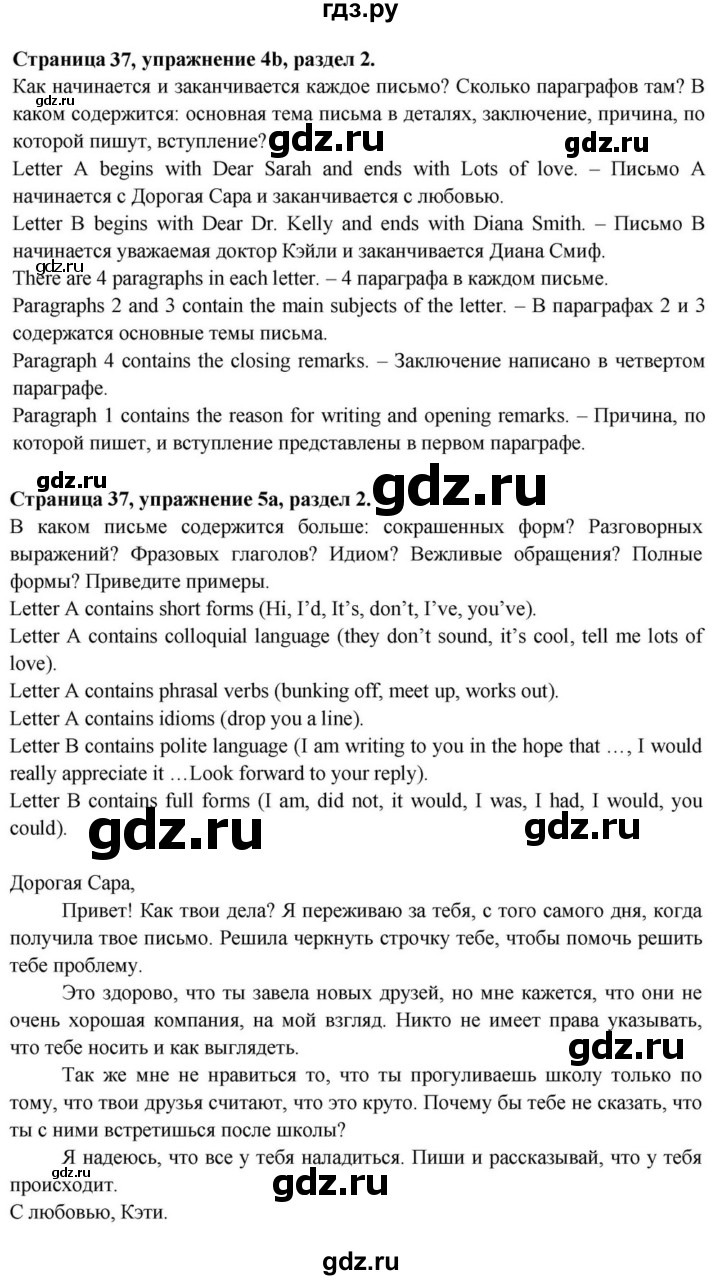
* **Style:** Informal (сокращения, разговорные выражения, фразовые глаголы), так как письмо адресовано близкому другу-ровеснику.
* **Letter B:**
* **To:** an agony aunt (Dr Kelly).
* **Purpose:** to ask for advice concerning appearance, self-confidence, and weight.
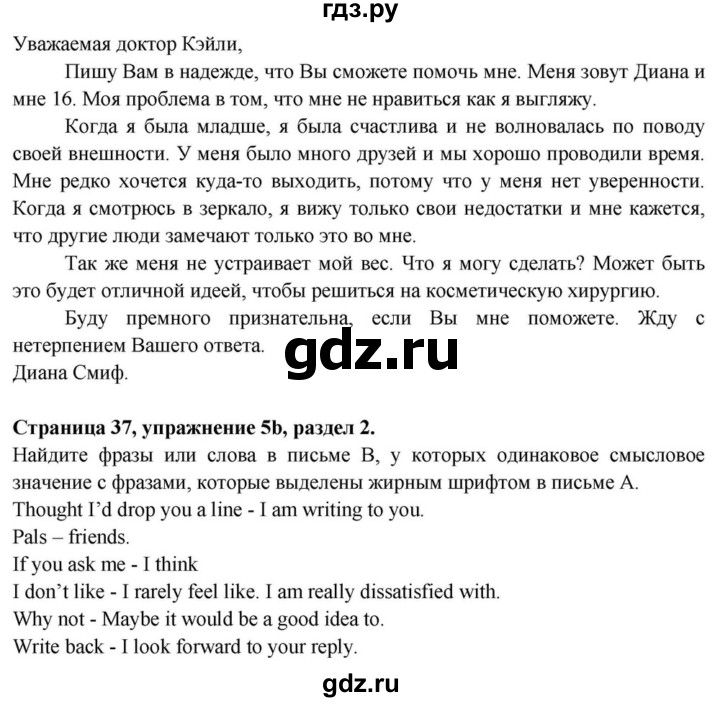
* **Style:** Semi-formal / formal (полные формы, вежливые клише), так как письмо адресовано незнакомому взрослому специалисту.
**b)**
* **Beginnings & Endings:**
* **Letter A:** begins with *«Dear Sarah,»* / ends with *«Lots of love, Katy»*.
* **Letter B:** begins with *«Dear Dr Kelly,»* / ends with *«I look forward to your reply, Diana Smith»*.
* **Number of paragraphs:** There are **4 paragraphs** in each letter.
* **Paragraph structure:**
* **Reason for writing / opening remarks:** Paragraph 1 (in both letters).
* **Main subject(s) of the letter in detail:** Paragraphs 2 and 3 (in both letters).
* **Closing remarks:** Paragraph 4 (in both letters).
---
#### Exercise 5
**a)**
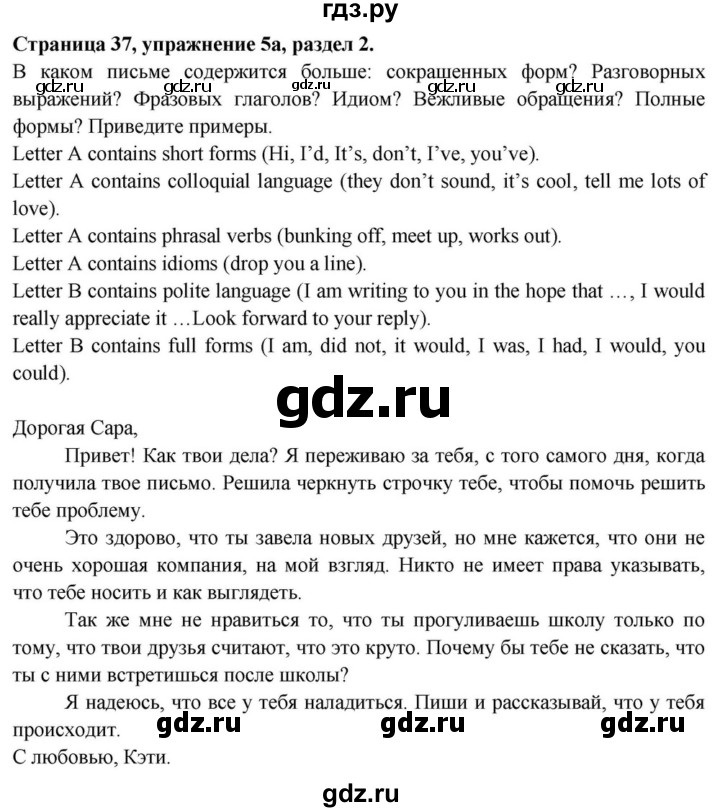
* **Short forms:** Letter A (*I’ve, don’t, it’s, you’ve*).
* **Colloquial language:** Letter A (*pals, bunking off, cool*).
* **Phrasal verbs:** Letter A (*drop you a line, help you out, bunk off, meet up, work out, write back*).
* **Idioms:** Letter A (*drop (someone) a line*).
* **Polite language:** Letter B (*in the hope that..., I would really appreciate it if you could..., I look forward to your reply*).
* **Full forms:** Letter B (*I am, did not, I would*).
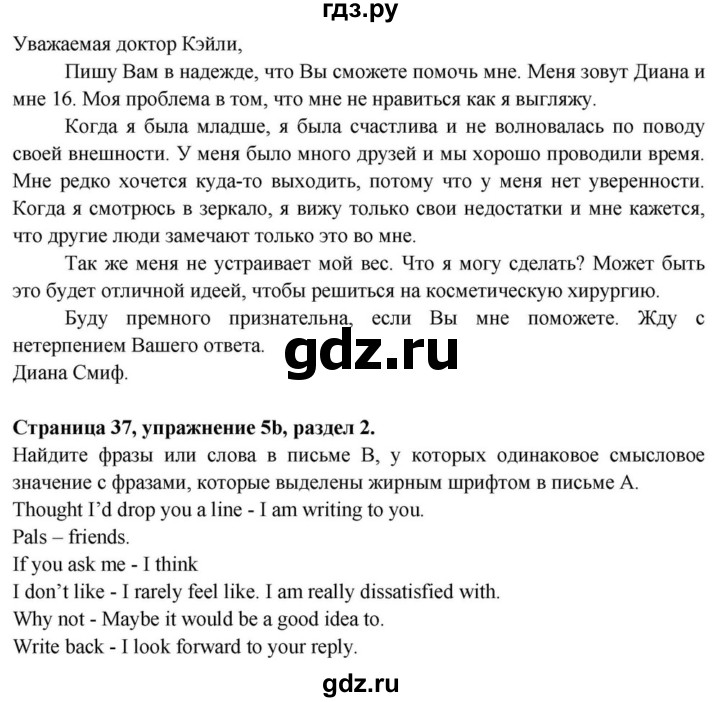
**b)**
* *drop you a line* $\rightarrow$ **am writing to you**
* *help you out* $\rightarrow$ **help me**
* *pals* $\rightarrow$ **friends**
* *the way you look and dress* $\rightarrow$ **my appearance / the way I look**
* *tell me what happens* $\rightarrow$ **reply**
---
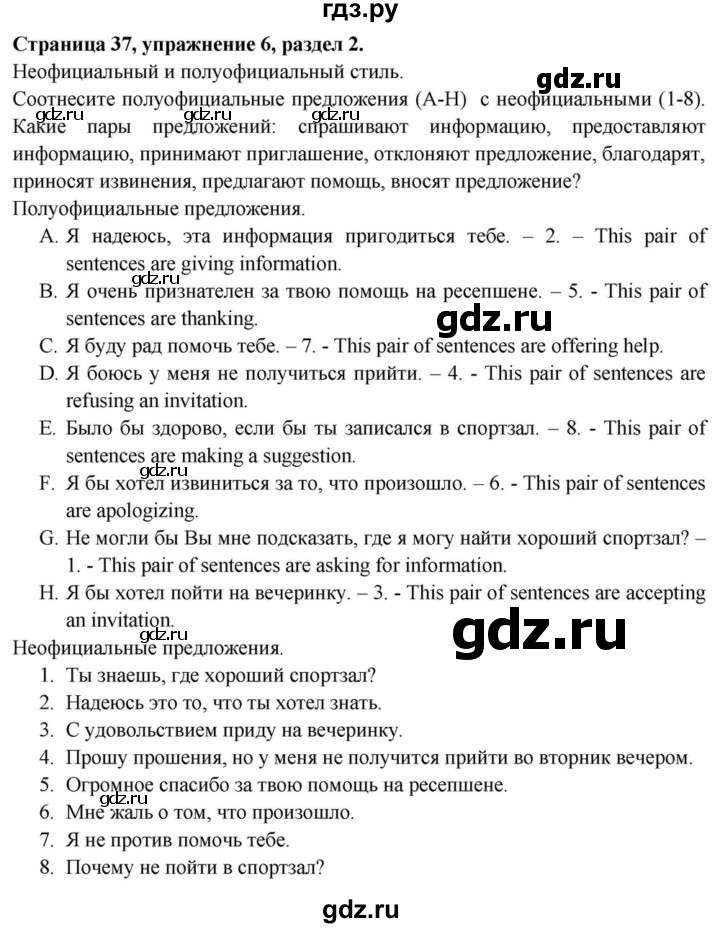
#### Exercise 6
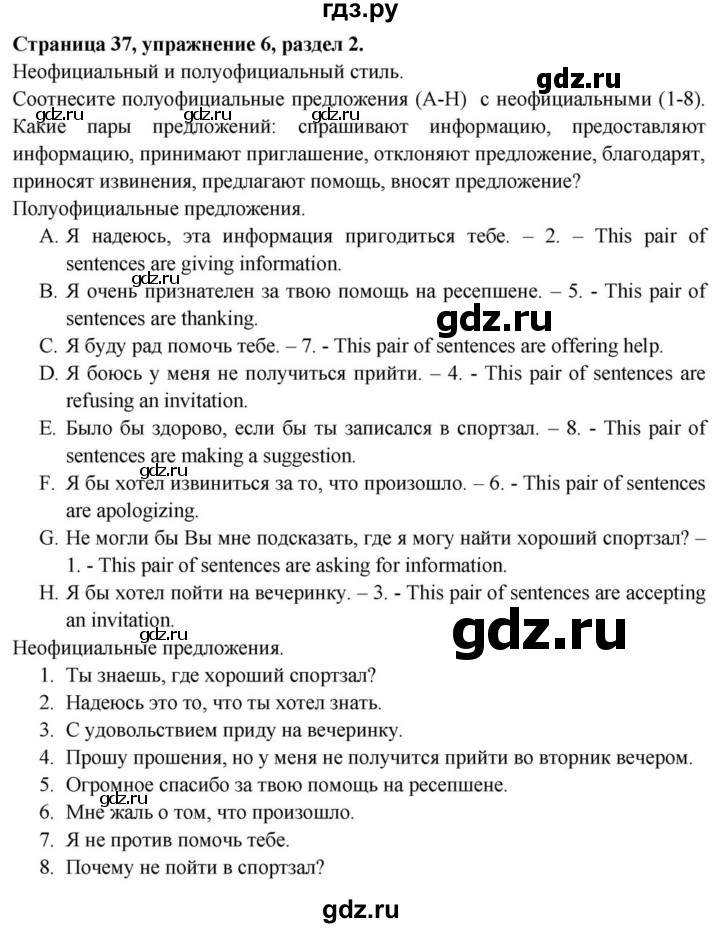
* **1 – F** (*ask for information*)
* **2 – A** (*give information*)
* **3 – G** (*accept an invitation*)
* **4 – D** (*refuse an invitation*)
* **5 – B** (*thank*)
* **6 – C** (*offer help*)
* **7 – E** (*make a suggestion*)
---
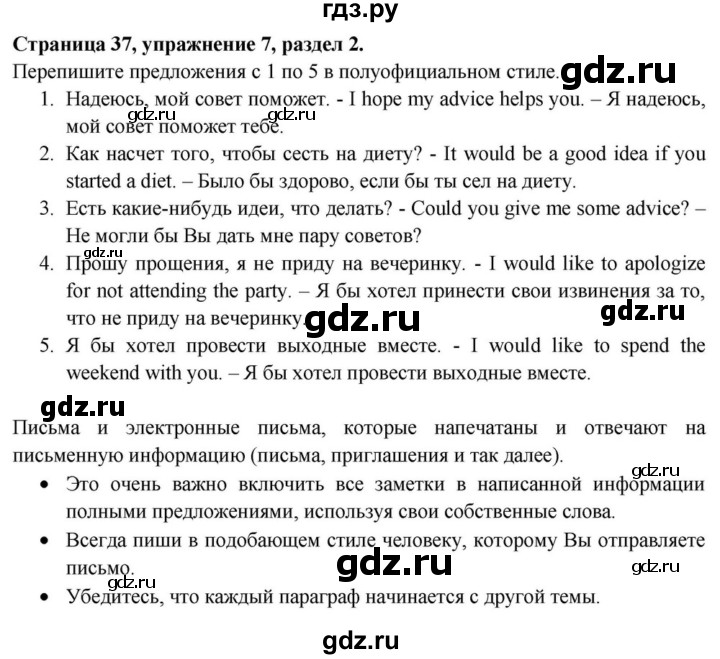
#### Exercise 7
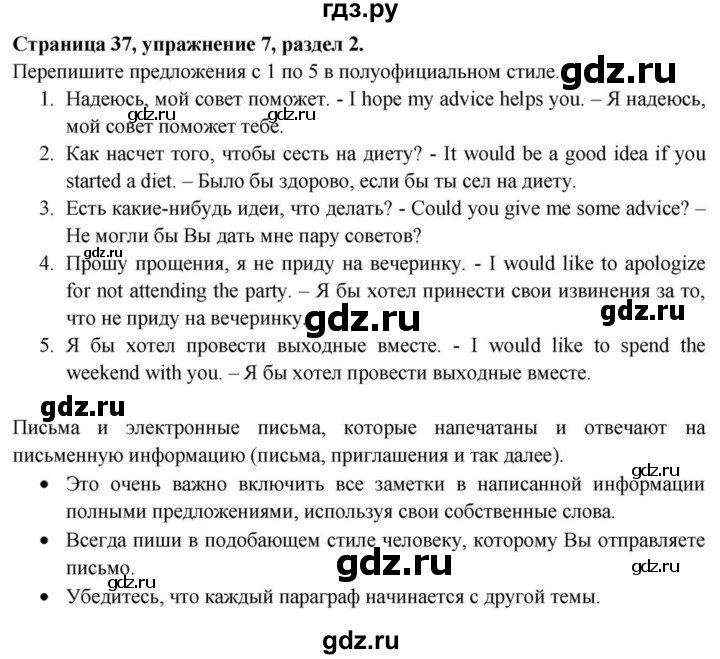
1. **Hope my advice helps.** $\rightarrow$ *I hope that my advice will be of assistance / useful to you.*
2. **How about starting a diet?** $\rightarrow$ *Perhaps you should consider starting a diet.* / *Would it be a good idea to go on a diet?*
3. **Any ideas what to do?** $\rightarrow$ *Could you please give me some advice on what I should do?*
4. **I'm sorry I didn't turn up to the party.** $\rightarrow$ *I would like to apologise for not attending the party.*
5. **I'd love to spend the weekend together.** $\rightarrow$ *I would be delighted to spend the weekend with you.*
---
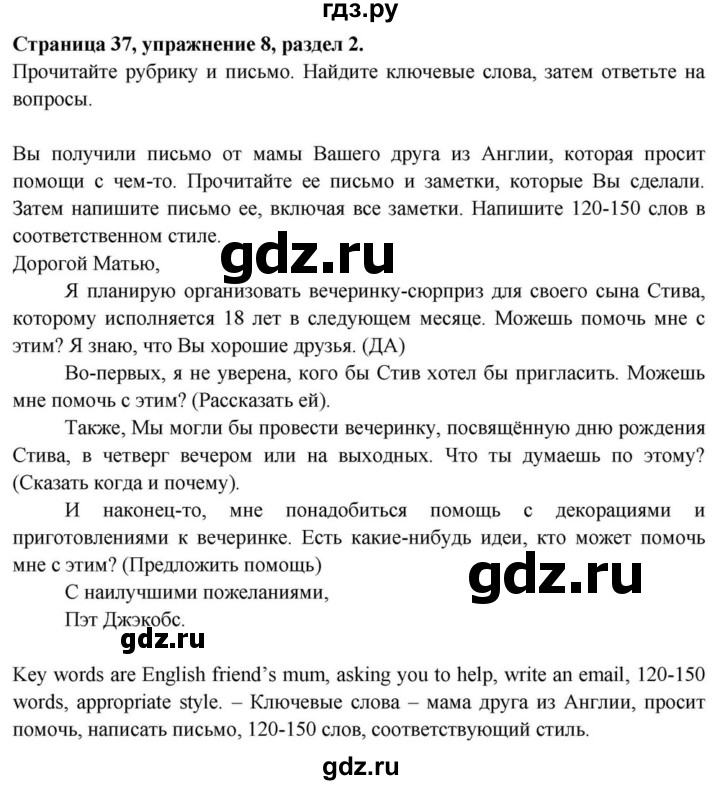
#### Exercise 8
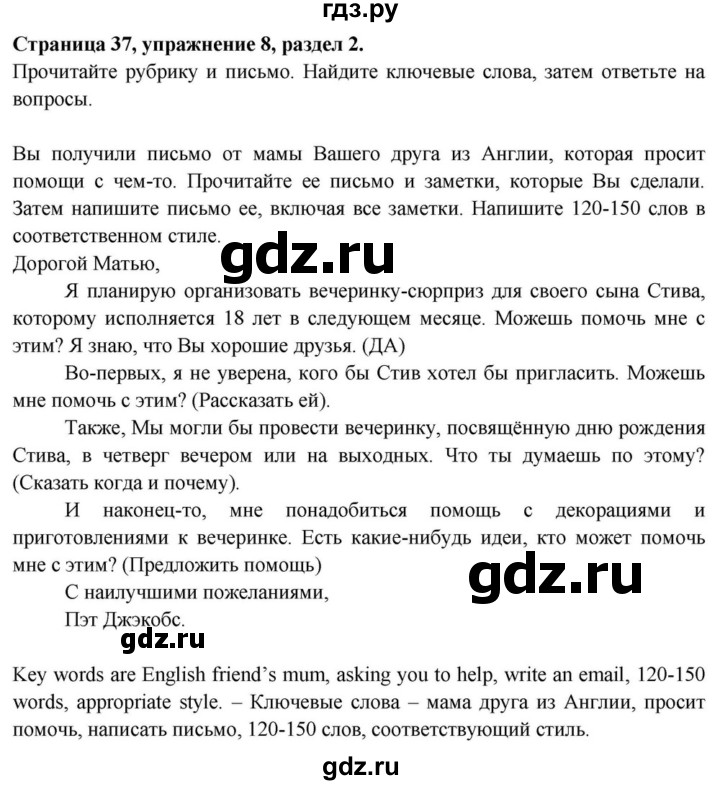
**Key words:** *English friend's mum, Mrs Jacobs, Steve's best friend, help organise surprise party, 18th birthday, Who invite, theme party, entertainment, answer questions, ask 3 questions, 100–140 words.*
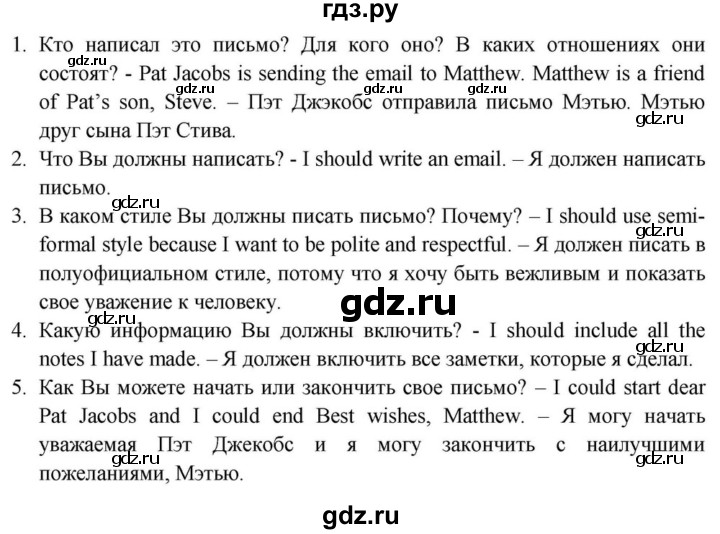
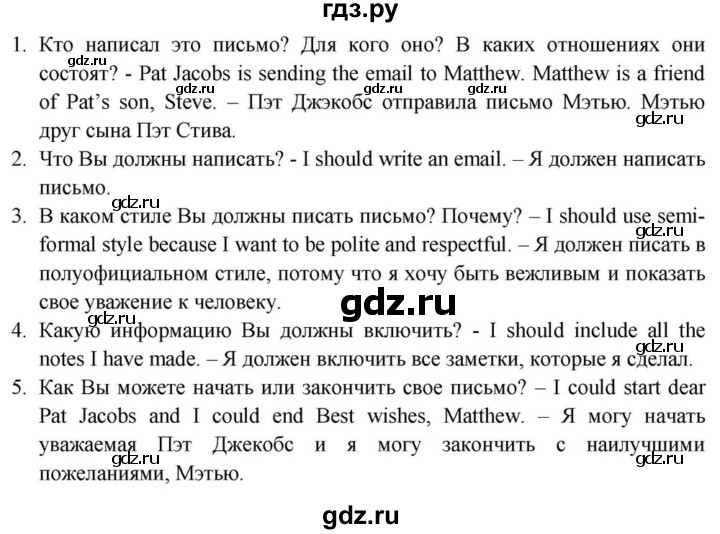
1. **Who is sending the letter? To whom? How are they related?**
Matthew is sending the letter to Mrs Jacobs. She is the mother of Matthew’s best friend, Steve.
2. **What should you write?**
A reply letter answering Mrs Jacobs' questions and asking three questions of your own about the upcoming party.
3. **What style should you use? Why?**
A semi-formal (polite and respectful) style, because Matthew is writing to an adult / his friend's mother.
4. **What information should you include?**
* Advice on who to invite (e.g., close school friends).
* An opinion about having a theme party.
* Ideas for entertainment (e.g., DJ, games).
* 3 specific questions about the party (e.g., date, venue, budget).
5. **How could you start/end your piece of writing?**
* **Start:** *Dear Mrs Jacobs,*
* **End:** *Best wishes, / Kind regards, Matthew*
---
### Пояснение к выполнению
1. **Разница между стилями (Ex. 4, 5, 6, 7):**
* **Informal (неформальный):** используется при общении с друзьями и сверстниками. Для него характерны сокращения (*I'm, don't*), сленг и разговорные фразы (*pals, cool, bunk off*), фразовые глаголы и восклицательные знаки.
* **Semi-formal / Formal (полуофициальный / официальный):** используется при обращении к взрослым, учителям или специалистам (например, *agony aunt*). В нем применяются полные формы глаголов (*I am, I would*), вежливые формулы (*I would appreciate it if...*) и развернутые предложения без просторечий.
2. **Структура письма (Ex. 4b, 8):**
* Вступительный абзац всегда обозначает причину написания письма.
* Основная часть (обычно 2–3 абзаца) подробно раскрывает суть вопроса или дает ответы на запросы собеседника.
* Заключительный абзац содержит итоговые фразы вежливости и призыв к ответу (*closing remarks*).
Спасибо за оценку!

Открой больше возможностей
Войди через VK — задавай вопросы ИИ и сохраняй ГДЗ в избранное
