


ГДЗ по английскому языку 11 класс Афанасьева Spotlight Базовый уровень страница - 40

Авторы: Афанасьева О.В., Дули Д., Михеева И.В., Оби Б., Эванс В.
Серия: Spotlight
Тип книги: Учебник
Год: 2015-2024
Рекомендуем посмотреть


 Премиум
Подробное решение страница № 40 по английскому языку Spotlight для учащихся 11 класса Spotlight Базовый уровень, авторов Афанасьева, Дули, Михеева, Оби, Эванс 2015-2024
### Итоговый ответ
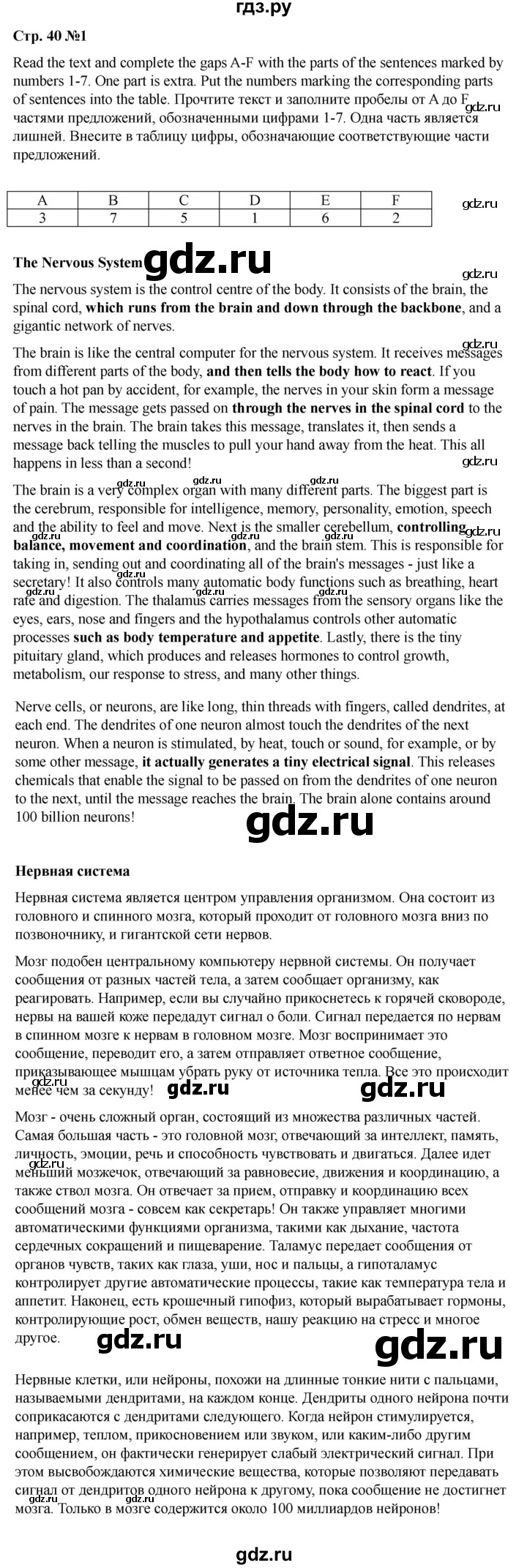
#### 1. Заполнение пропусков в тексте (RNE)
| A | B | C | D | E | F |
|---|---|---|---|---|---|
| **3** | **7** | **5** | **1** | **6** | **2** |
*Лишний фрагмент:* **4** (*a substance the brain needs to function well*).
---
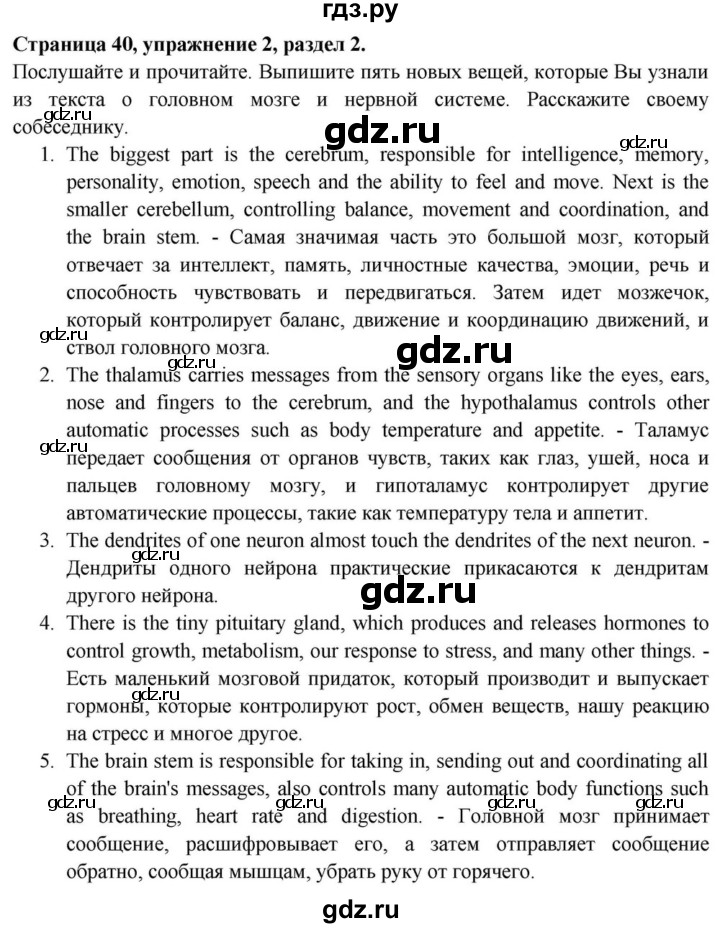
#### 2. Five new things learnt about the brain and nervous system (Пять фактов)
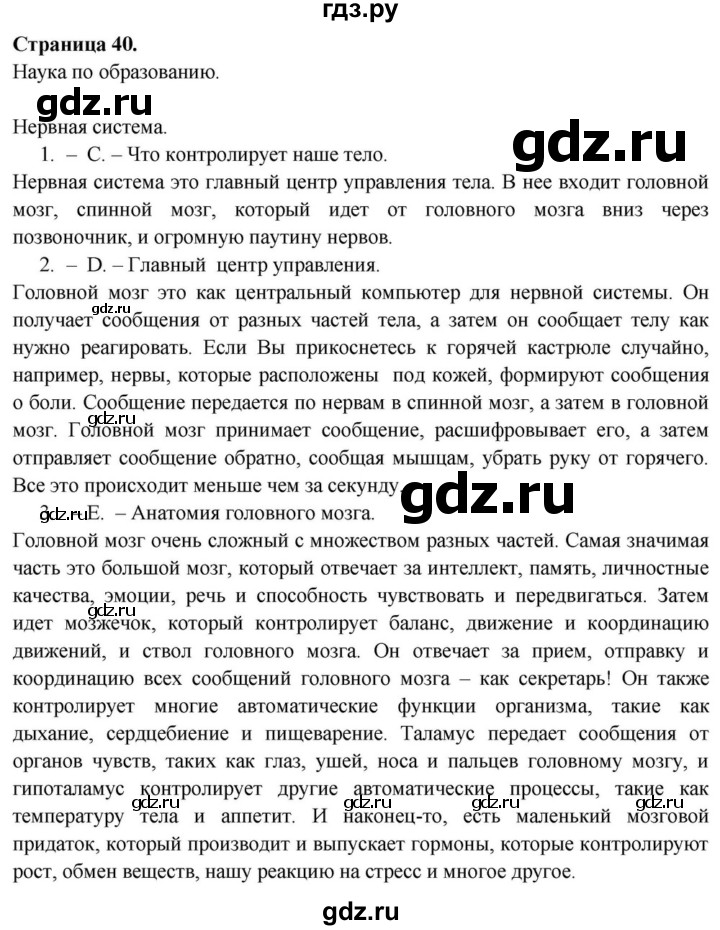
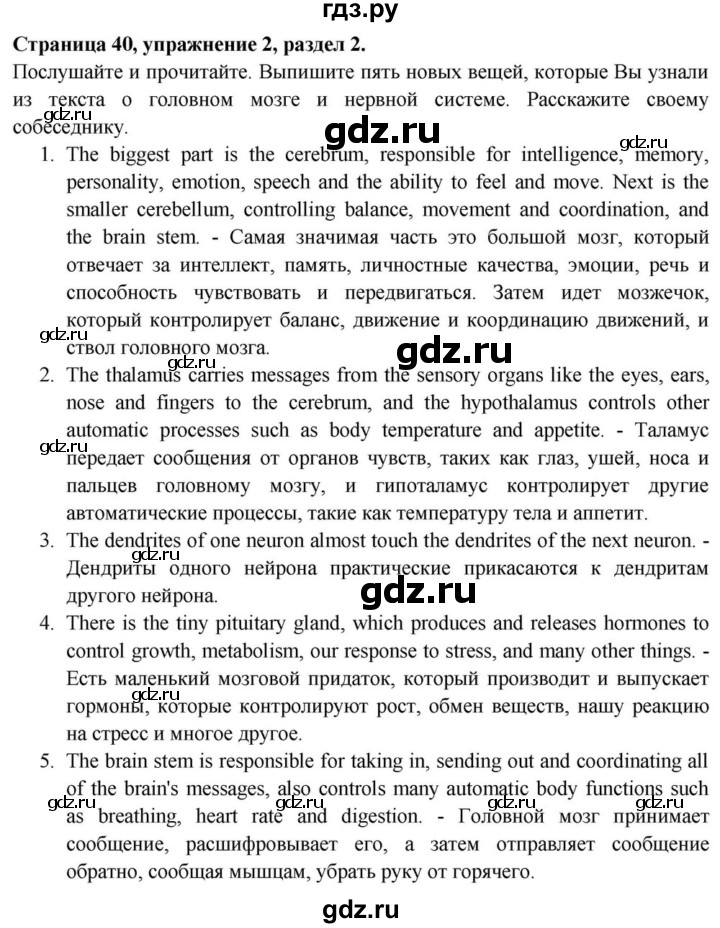
1. The brain contains around 100 billion neurons.
2. The nervous system works extremely fast: processing a pain signal and reacting to it takes less than a second.
3. The cerebellum is responsible for balance, movement, and coordination.
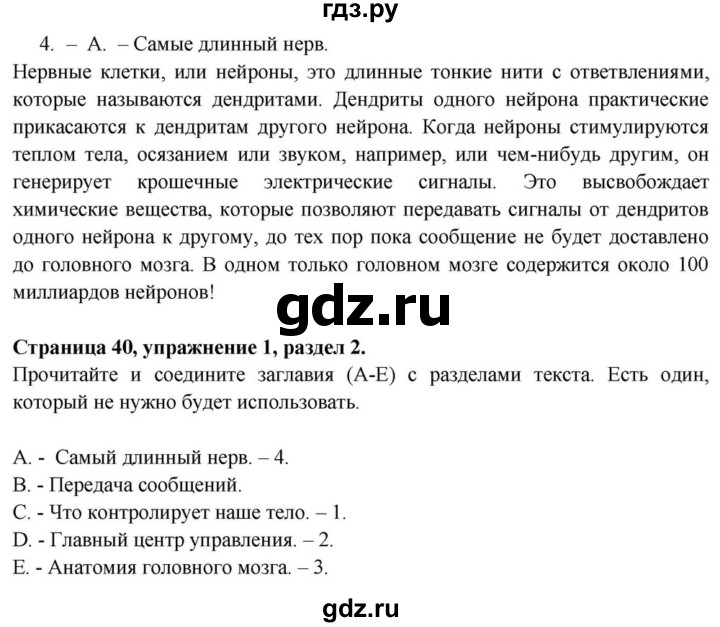
4. When a neuron is stimulated, it generates a tiny electrical signal.
5. The pituitary gland produces hormones that control growth, metabolism, and response to stress.
---
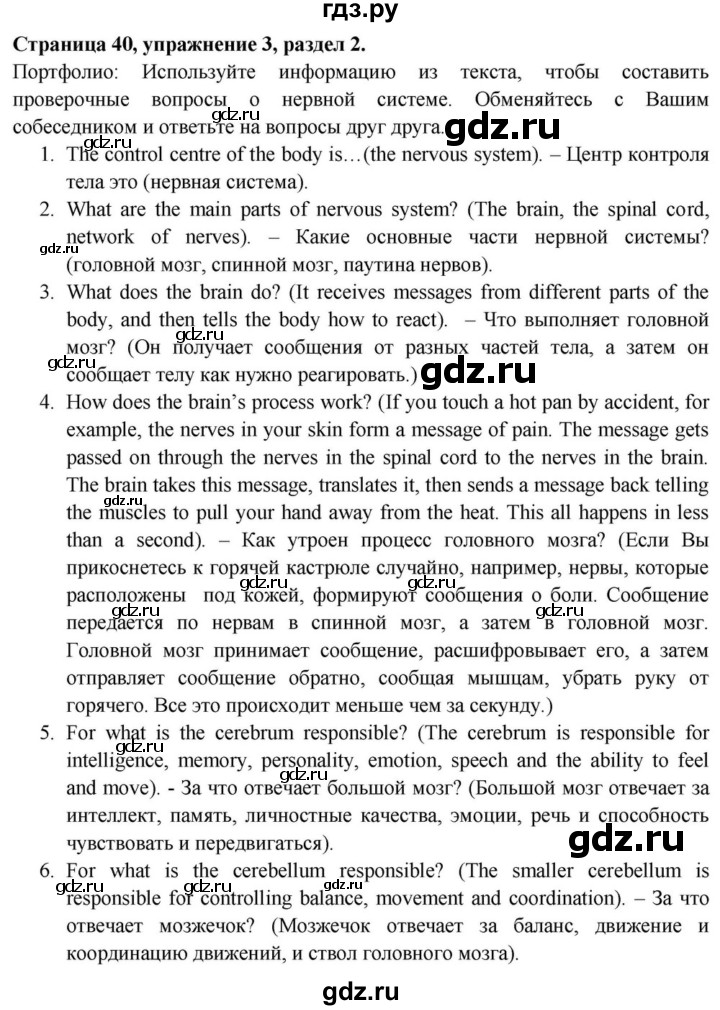
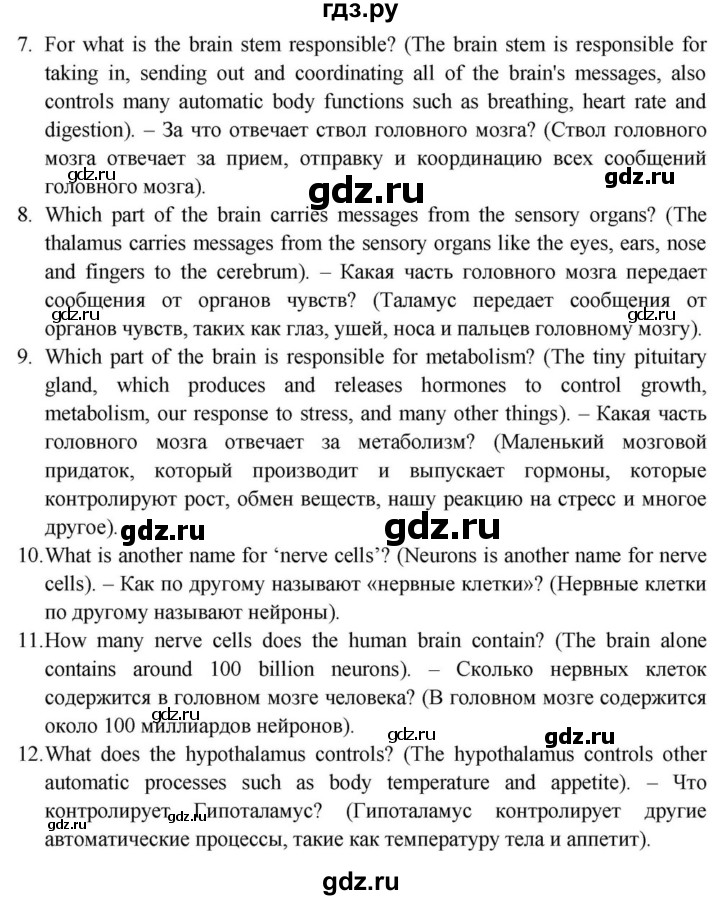
#### 3. Portfolio: Quiz about the Nervous System (Викторина)
**Questions:**
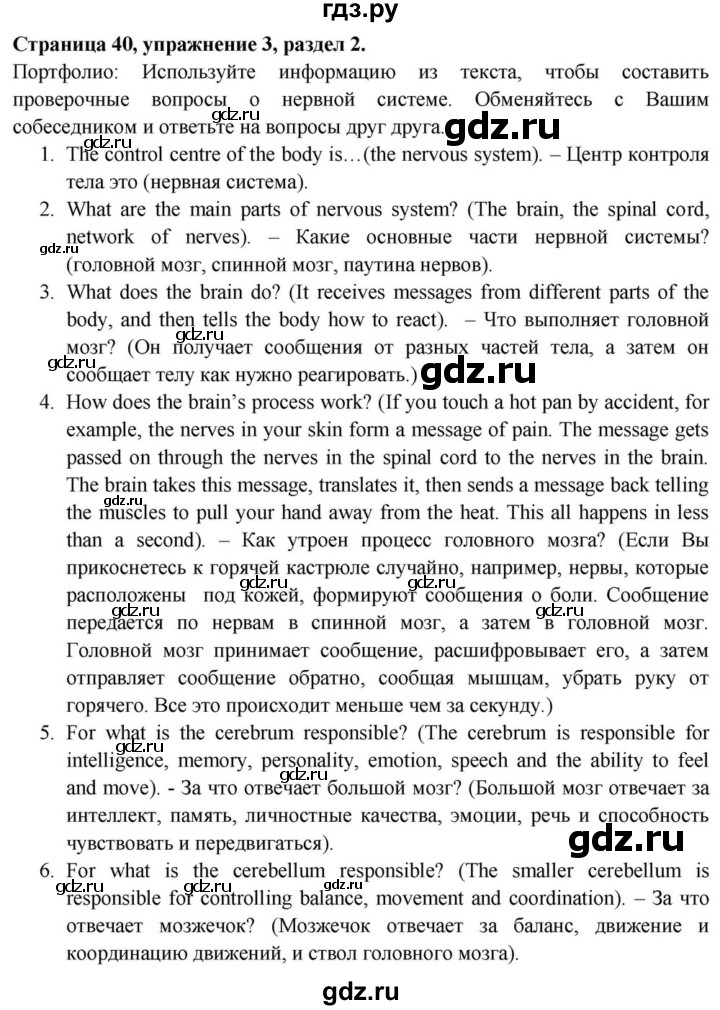
1. What are the three main components of the nervous system?
2. Which part of the brain is the largest and responsible for intelligence and memory?
3. What is the main function of the cerebellum?
4. What are dendrites?
5. Which gland controls growth and response to stress?
**Answers:**
1. The brain, the spinal cord, and nerves.
2. The cerebrum.
3. Controlling balance, movement, and coordination.
4. Long, finger-like threads at the ends of neurons that pass signals to neighboring cells.
5. The pituitary gland.
---
### Подробное объяснение и разбор задания 1
* **Пропуск A (3 — *which runs from the brain and down through the backbone*):**
Придаточное определительное предложение относится к существительному *the spinal cord* (спинной мозг) и описывает его анатомическое расположение («который идет от мозга вниз по позвоночнику»).
* **Пропуск B (7 — *and then tells the body how to react*):**
Здесь продолжается мысль о функциях мозга с помощью однородных сказуемых в Present Simple: *It receives messages... and then tells...* («Он принимает сигналы... и затем сообщает телу, как реагировать»).
* **Пропуск C (5 — *through the nerves in the spinal cord*):**
Фрагмент указывает путь передачи импульса (*passed on through... to...* — «передается через нервы в спинном мозге к нервам головного мозга»).
* **Пропуск D (1 — *controlling balance, movement and coordination*):**
Причастный оборот (*Participle I*) выступает определением к слову *cerebellum* (мозжечок) и поясняет его функцию: «контролирующий равновесие, движение и координацию».
* **Пропуск E (6 — *such as body temperature and appetite*):**
Оборот с предлогом *such as* приводит конкретные примеры автоматических процессов (*automatic processes*), контролируемых гипоталамусом: температура тела и аппетит.
* **Пропуск F (2 — *it actually generates a tiny electrical signal*):**
Предложение начинается с придаточного времени (*When a neuron is stimulated...*), поэтому в пропуск необходимо вставить грамматическую основу главного предложения (*it generates...* — «он генерирует крошечный электрический сигнал»). Слово *This* в следующем предложении указывает на это действие.
Спасибо за оценку!

Открой больше возможностей
Войди через VK — задавай вопросы ИИ и сохраняй ГДЗ в избранное
