


ГДЗ по английскому языку 11 класс Афанасьева Spotlight Базовый уровень страница - 72

Авторы: Афанасьева О.В., Дули Д., Михеева И.В., Оби Б., Эванс В.
Серия: Spotlight
Тип книги: Учебник
Год: 2015-2024
Рекомендуем посмотреть


 Премиум
Подробное решение страница № 72 по английскому языку Spotlight для учащихся 11 класса Spotlight Базовый уровень, авторов Афанасьева, Дули, Михеева, Оби, Эванс 2015-2024
### Итоговый ответ
#### Exercise 1
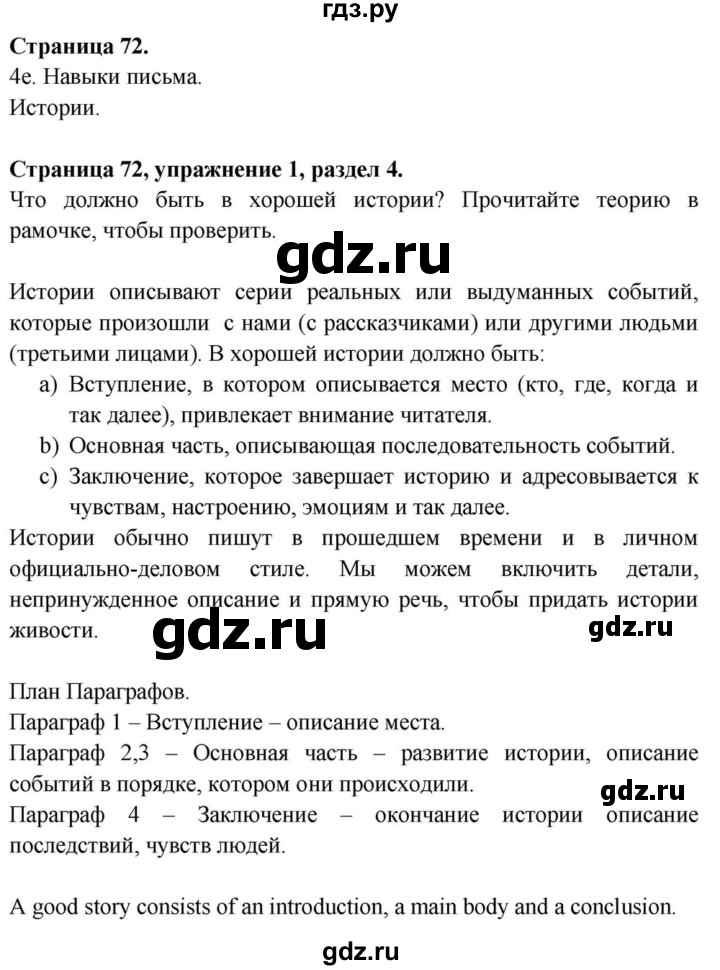
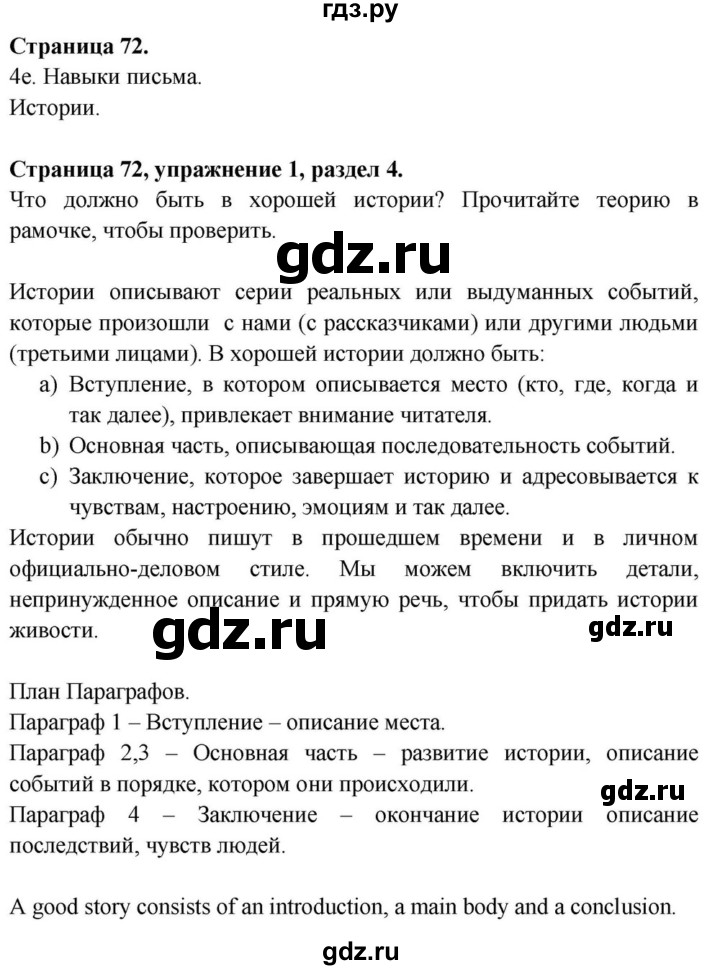
A good story consists of:
* **A beginning** (Paragraph 1) that sets the scene (identifies *who*, *where*, *when*) and captures the reader's attention.
* **A main body** (Paragraphs 2–3) that develops the plot and describes the sequence of events in chronological order, leading up to the climax event.
* **An ending** (Paragraph 4) that concludes the story, describes the consequences, and refers to the characters' moods, reactions, and feelings.
---
#### Exercise 2
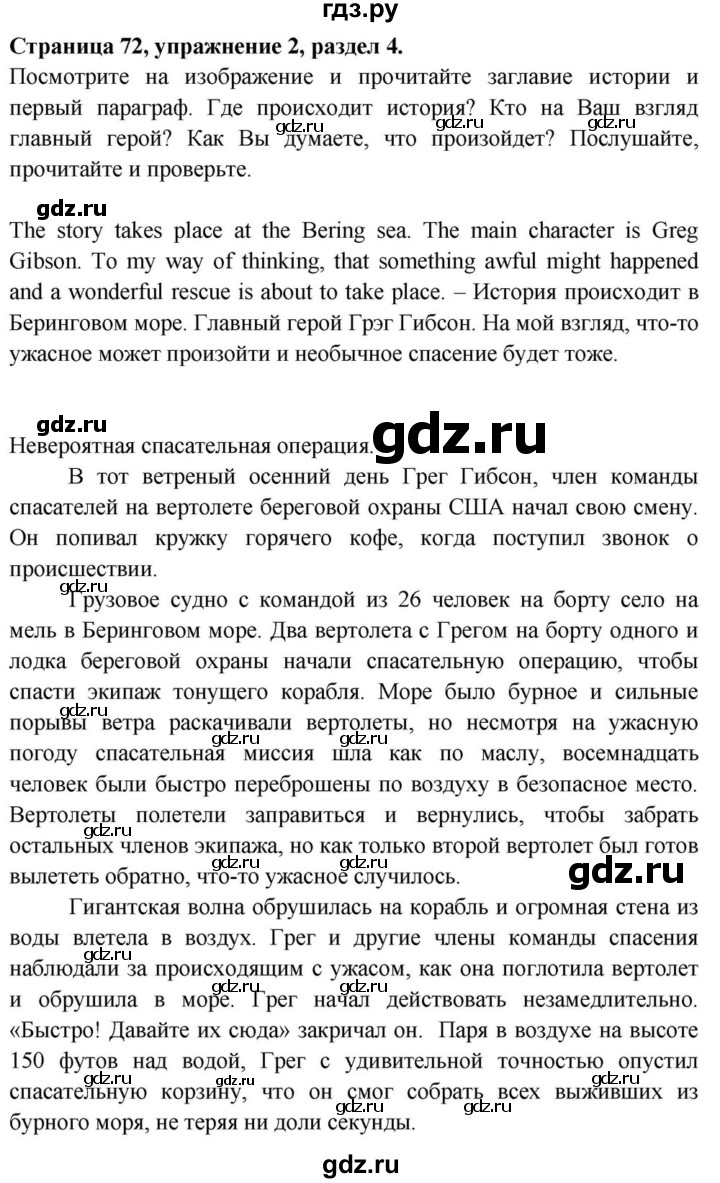
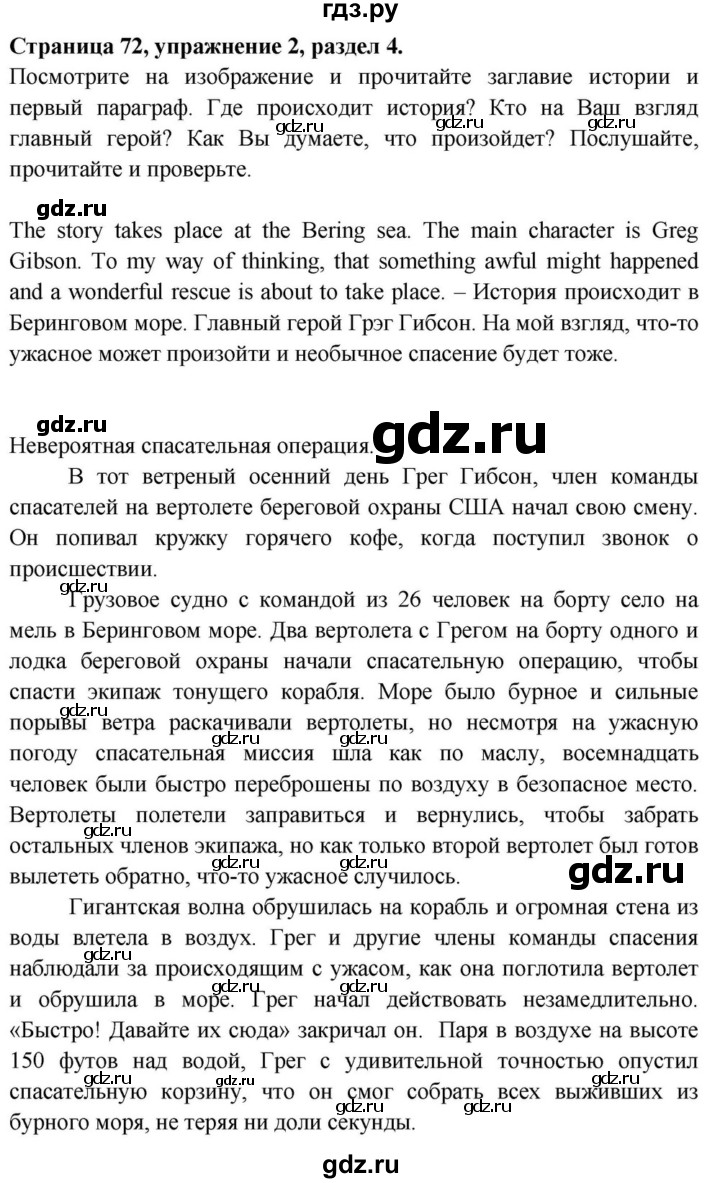
* **Where does the story take place?**
The story takes place in the Bering Sea (at a coastguard station and above the stormy sea).
* **Who is/are the main character(s)?**
The main character is Greg Gibson, a member of the US Coastguard helicopter rescue unit, and his crew.
* **What do you think might happen?**
A dangerous sea rescue operation might take place during a storm, where the rescue team has to save people from a sinking ship or a crashed helicopter.
---
#### Exercise 3a
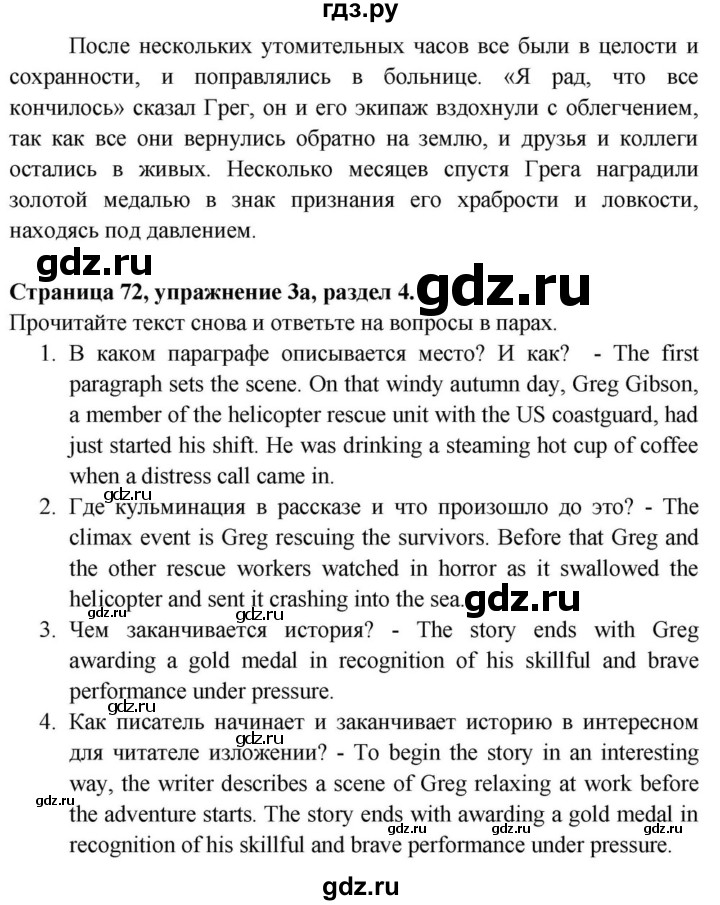
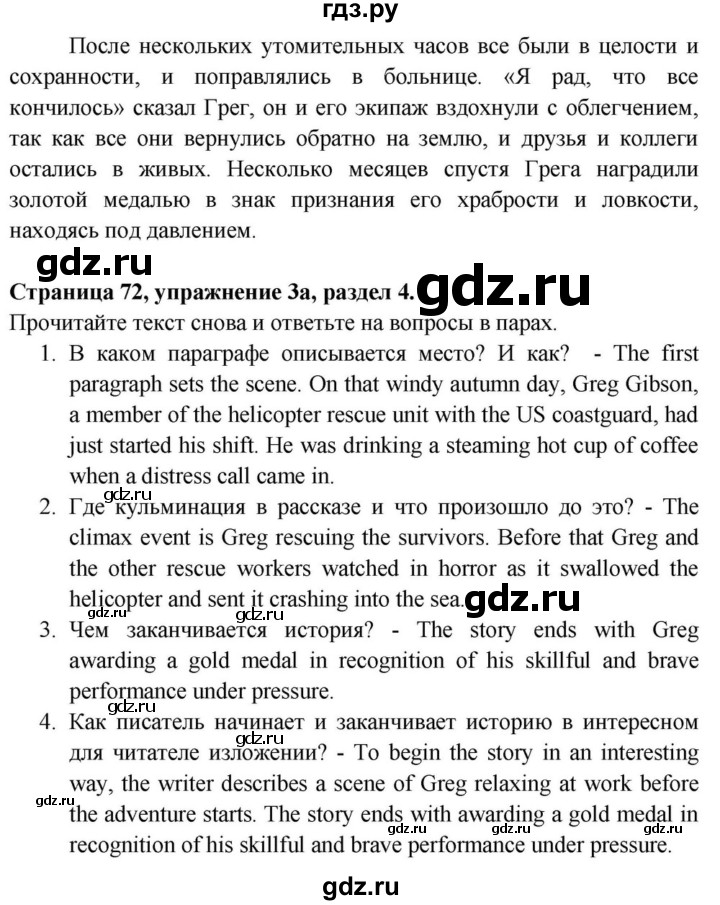
1. **Which paragraph sets the scene? How?**
* Paragraph 1 sets the scene.
* It introduces the **time** (*on that windy autumn day*), the **main character** (*Greg Gibson, US Coastguard*), and the **initial action/background** (*he had just started his shift and was drinking a hot cup of coffee when a distress call came in*).
2. **What is the climax event and what happened before it?**
* **Climax event:** A gigantic wave hit the ship, swallowed the second rescue helicopter, and sent it crashing into the sea.
* **Before it:** The crew received a distress call about a freighter that had run aground; two helicopters flew out and successfully airlifted 18 people to safety; the helicopters refuelled and returned for the remaining crew.
3. **How does the story end?**
* Greg lowers the rescue basket and saves all the survivors. Everyone is safe and recovering in hospital. Later, Greg is awarded a gold medal for his bravery.
4. **How does the writer begin/end the story in an interesting way?**
* **Beginning:** The writer uses descriptive atmospheric details (*windy autumn day, steaming hot cup of coffee*) and creates immediate suspense with an unexpected event (*a distress call came in*).
* **Ending:** The writer uses direct speech (*“I'm glad that's over,” Greg said*), describes the characters' feelings of relief, and mentions the long-term positive outcome (receiving a medal).
---
#### Exercise 3b
* **Past Simple:**
* *Examples:* *came in, was, ran, rocked, refuelled, hit, sent, leapt, yelled, lowered, said, was awarded*.
* *Usage:* Used to describe completed actions, events happening one after another, or states at a specific time in the past.
* **Past Continuous:**
* *Examples:* *was drinking (a steaming hot cup of coffee), was going (like clockwork), (chopper) was ready*.
* *Usage:* Used to describe an action that was in progress at a particular moment in the past, or to set the background scene when an interrupting event occurred.
* **Past Perfect:**
* *Examples:* *had just started (his shift), had run aground*.
* *Usage:* Used to describe an action that happened *before* another past action or past time frame.
---
### Пояснения и разбор заданий
1. **Структура рассказа (Ex. 1):** В английском сочинении-повествовании (*narrative*) обязательно соблюдается четырехчастная структура по абзацам: введение (экспозиция), две части развития сюжета с кульминацией и заключение с описанием чувств и последствий.
2. **Анализ текста (Ex. 3a):**
* *Climax (кульминация)* — точка наивысшего напряжения в рассказе, когда ситуация становится критической (падение вертолета в море).
* Приемы вовлечения читателя: сенсорные детали (погода, звуки), прямая речь (*direct speech*) и показ эмоций персонажей (*relieved, watched in horror*).
3. **Грамматические времена (Ex. 3b):**
* **Past Continuous + Past Simple:** классическая связка для рассказа — фоновое действие прерывается внезапным кратким событием (*He was drinking coffee when a distress call came in*).
* **Past Perfect:** необходим, чтобы показать предшествование (*had run aground* — корабль сел на мель до того, как началась спасательная операция).
Спасибо за оценку!



Открой больше возможностей
Войди через VK — задавай вопросы ИИ и сохраняй ГДЗ в избранное
