


ГДЗ по английскому языку 11 класс Афанасьева Spotlight Базовый уровень страница - 79

Авторы: Афанасьева О.В., Дули Д., Михеева И.В., Оби Б., Эванс В.
Серия: Spotlight
Тип книги: Учебник
Год: 2015-2024
Рекомендуем посмотреть


 Премиум
Подробное решение страница № 79 по английскому языку Spotlight для учащихся 11 класса Spotlight Базовый уровень, авторов Афанасьева, Дули, Михеева, Оби, Эванс 2015-2024
### Ответ к заданиям (Spotlight 11, стр. 79)
---
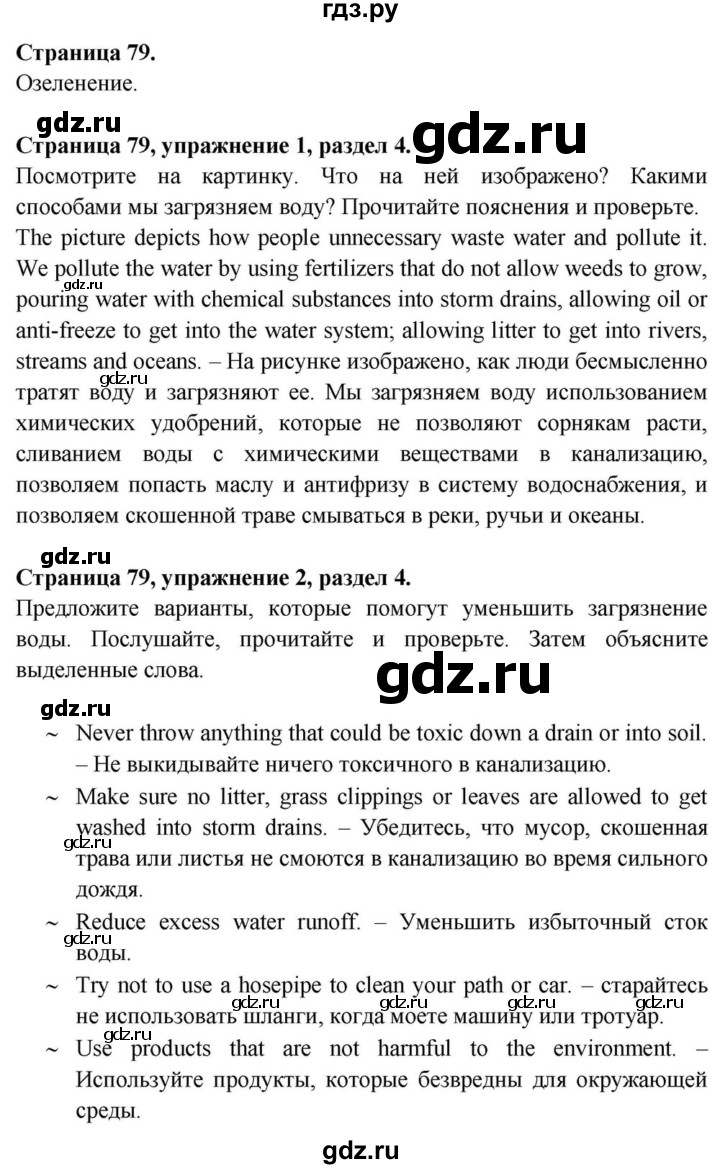
#### 1. Look at the picture. What does it show? In what different ways do we pollute our water? Read the labels and check.
* **What the picture shows:**
The picture shows how everyday human activities around our homes and streets pollute water sources (rivers, lakes, and streams).
* **Ways we pollute our water (based on labels):**
1. **Fertilisers:** Excess water washes fertilisers into rivers, causing weed overgrowth which uses up oxygen.
2. **Grass clippings & leaves:** Decay in water and take oxygen away from fish and other organisms.
3. **Litter:** Can entangle aquatic wildlife or be swallowed by mistake as food.
4. **Pet waste:** Spreads harmful bacteria and diseases to animals and humans.
5. **Toxic substances & car pollution:** Oil, antifreeze, and exhaust residues wash into water and kill aquatic life.
6. **Soaps & detergents:** Chemicals from washing cars or paths wash into storm drains and pollute water bodies.
---
#### 2. Suggest ways that we can minimise water pollution. Listen, read and check. Then, explain the words in bold.
* **Ways to minimise water pollution (from the text):**
* Never pour toxic chemicals down the drain or directly onto the soil.
* Keep litter, leaves, and grass clippings out of storm drains.
* Always clean up after your pet (dog waste).
* Reduce runoff water: make sure sprinklers water only the lawn/garden, sweep paths instead of hosing them, and use a bucket instead of a hosepipe when washing a car (or go to a commercial car wash).
* Use eco-friendly alternatives (e.g., compost instead of chemical fertilisers).
* **Words in bold and their definitions:**
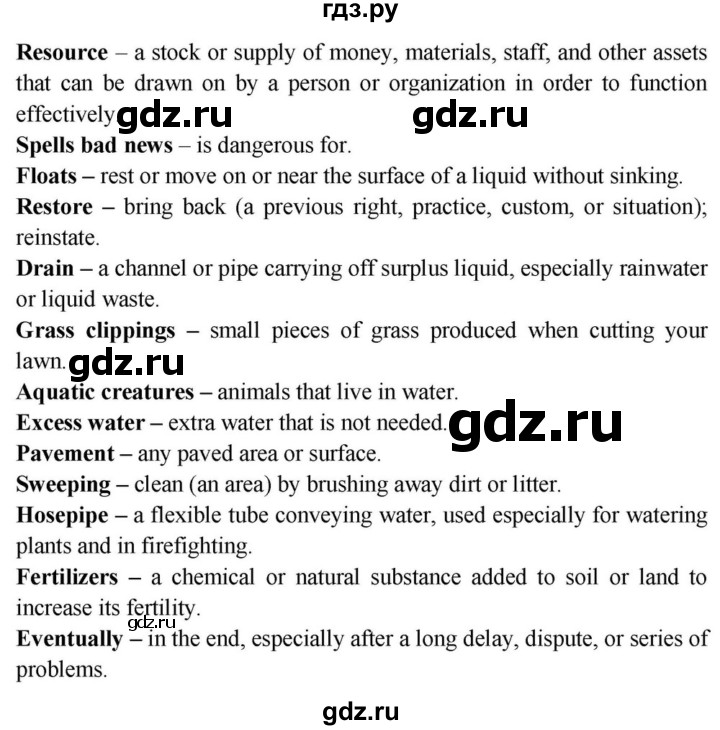
* **dump** — to get rid of waste or unwanted substances in an irresponsible way (*выбрасывать, сбрасывать отходы*).
* **spells bad news** — means that trouble, harm, or negative consequences will follow (*предвещает беду / плохие новости*).
* **waterways** — rivers, streams, canals, or lakes through which water flows (*водные пути, водотоки*).
* **drain** — a pipe or channel that carries waste water away from sinks, bathtubs, or toilets (*слив, канализация*).
* **storm drains** — large street drains designed to drain excess rain and ground water from paved surfaces (*ливневая канализация, водостоки*).
* **runoff** — water that flows across the land surface rather than soaking into the ground (*поверхностный сток вод*).
* **sprinkler** — a device used to spray water over lawns and plants (*дождеватель, разбрызгиватель для полива*).
* **dispose of** — to throw away or eliminate something in a proper way (*утилизировать, избавляться от чего-либо*).
---
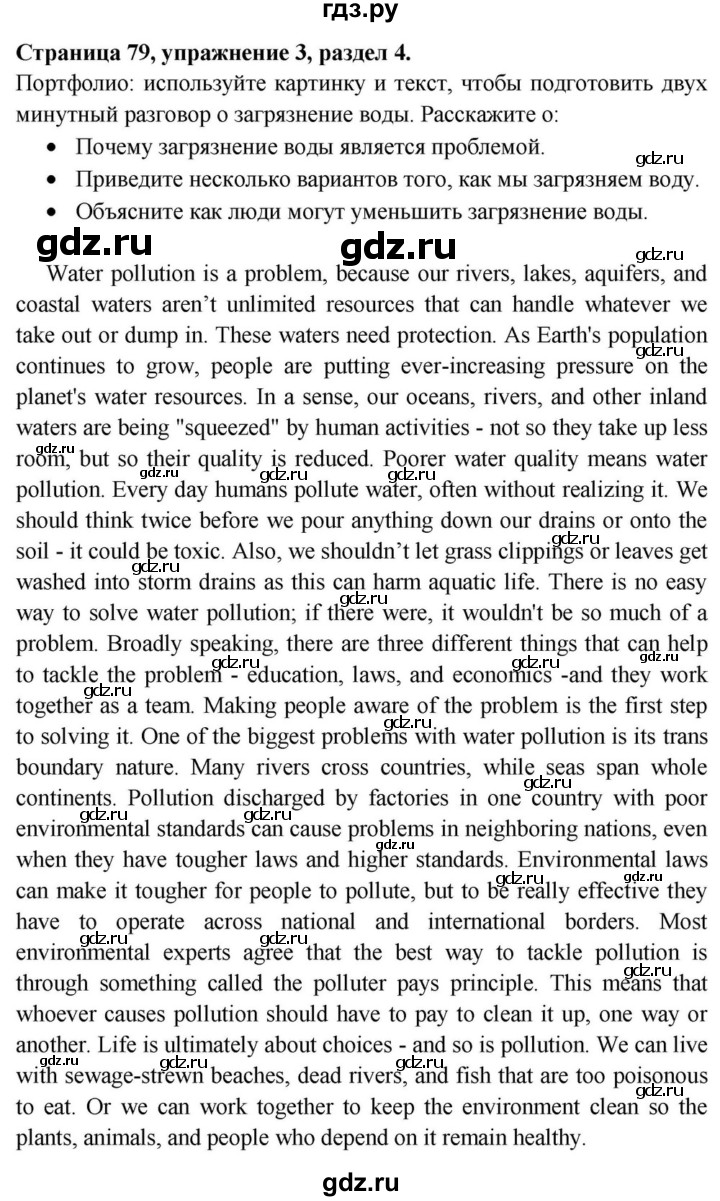
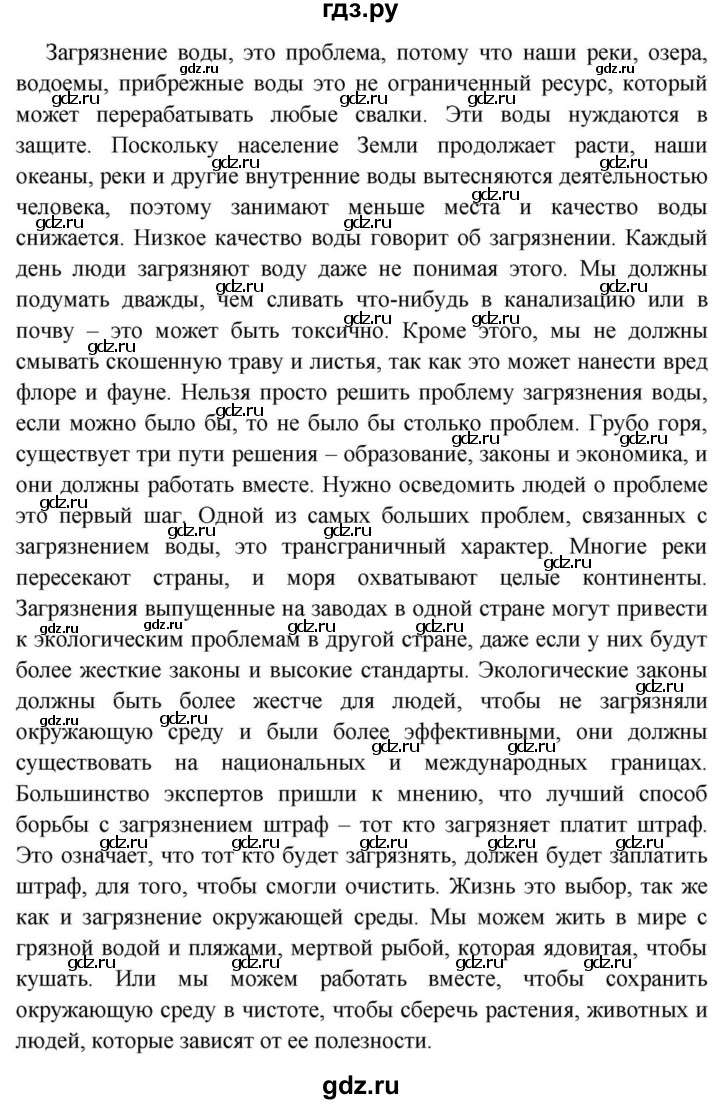
#### 3. Portfolio: A two-minute talk about water pollution
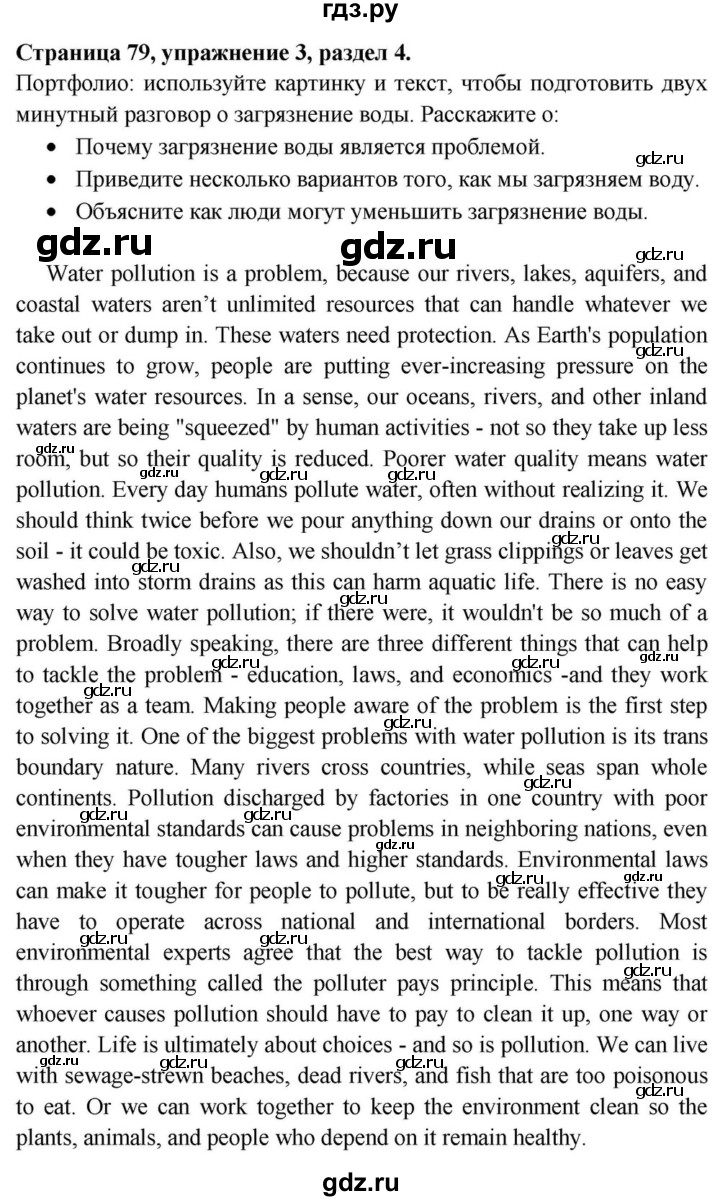
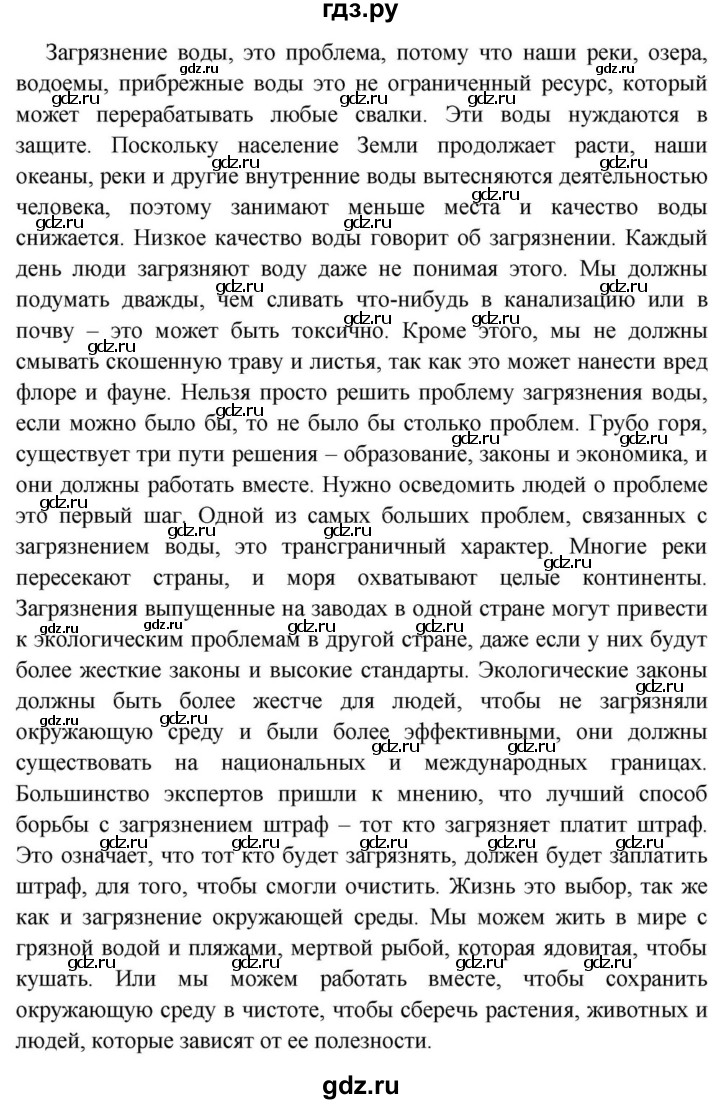
> "Hello everyone! Today, I would like to talk to you about a crucial environmental issue — water pollution.
>
> Clean water is our planet's most valuable resource, yet millions of tons of waste enter waterways daily. Water pollution is a huge problem because it destroys aquatic ecosystems, deprives fish of oxygen, and threatens human health when contaminated water enters our drinking supply or the seas we swim in.
>
> You might be surprised to know that pollution often begins in our own backyards. For instance, garden fertilisers and decaying leaves absorb oxygen from water, which suffocates marine life. Litter entangles wildlife, and toxic car fluids like oil or antifreeze poison aquatic animals. Even washing your car on the driveway washes chemical soaps straight into storm drains.
>
> Fortunately, every one of us can help:
> * First, never pour chemicals, paints, or toxic liquids onto the ground or down the drain.
> * Second, sweep your driveways instead of using a hose, and clean up after your pets.
> * Finally, switch to organic compost instead of synthetic fertilisers.
>
> Remember, whatever touches the ground can end up in our water. Thank you for your attention!"
---
#### 4. THINK! Do you agree with the statement? Discuss.
* **Sample Answer:**
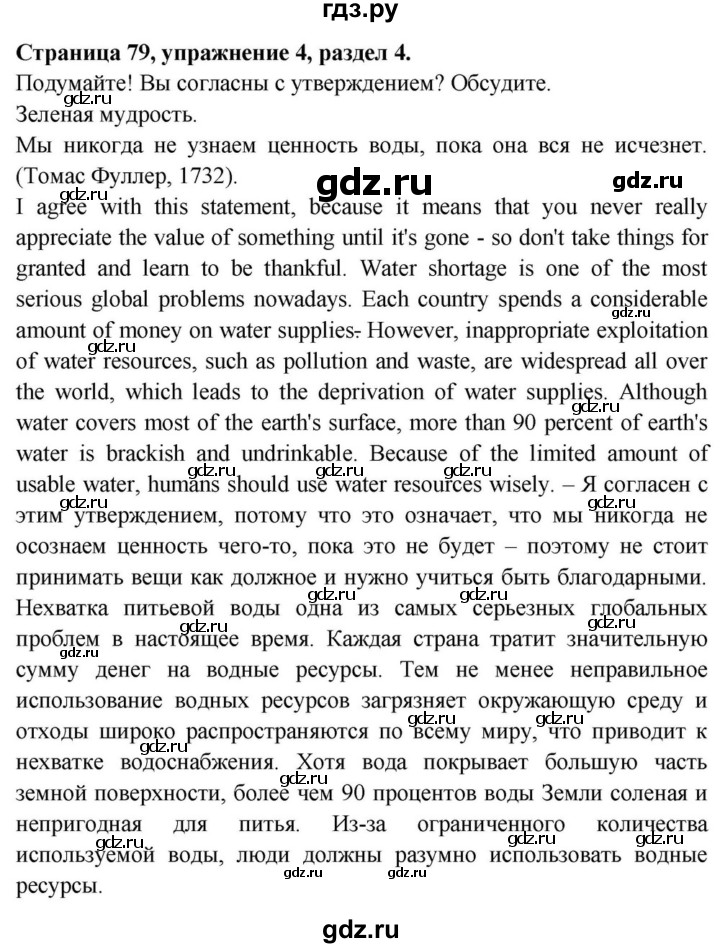
> I completely agree with the statement: *"Anything that gets onto the ground can eventually end up in a river, lake or stream!"*
> When it rains, surface runoff easily carries rubbish, motor oil, animal waste, and garden chemicals straight into local storm drains. Because storm drains do not filter water before emptying into nature, our everyday negligence directly poisons local waterways. Therefore, preventing waste from touching the ground is the most effective way to protect our water resources.
---
### Пояснения к выполнению заданий
1. **Задание 1:** Требуется описать общую идею инфографики и перечислить конкретные источники загрязнения, упомянутые в подписях к картинке (удобрения, скошенная трава, мусор, отходы животных, автохимия, моющие средства).
2. **Задание 2:** Текст предлагает практические советы для повседневной жизни. Выделенная лексика относится к теме экологии и утилизации бытовых отходов (*dump, waterways, runoff, dispose of* и др.).
3. **Задание 3 (Монологическое высказывание):** Ответ построен в формате презентации с логическим делением на три обязательных пункта плана:
* важность проблемы (*why water pollution is a problem*);
* примеры путей загрязнения (*examples of ways*);
* конкретные решения для слушателей (*how to reduce*).
4. **Задание 4 (Дискуссия/Мнение):** Формулируется собственная позиция с опорой на природный цикл сточных вод (осадки смывают всё с поверхности земли в водоёмы).
Спасибо за оценку!






Открой больше возможностей
Войди через VK — задавай вопросы ИИ и сохраняй ГДЗ в избранное
