


ГДЗ по английскому языку 11 класс Афанасьева Spotlight Базовый уровень страница - 78

Авторы: Афанасьева О.В., Дули Д., Михеева И.В., Оби Б., Эванс В.
Серия: Spotlight
Тип книги: Учебник
Год: 2015-2024
Рекомендуем посмотреть


 Премиум
Подробное решение страница № 78 по английскому языку Spotlight для учащихся 11 класса Spotlight Базовый уровень, авторов Афанасьева, Дули, Михеева, Оби, Эванс 2015-2024
### Ответы ко всем заданиям (Spotlight 11, стр. 78)
---
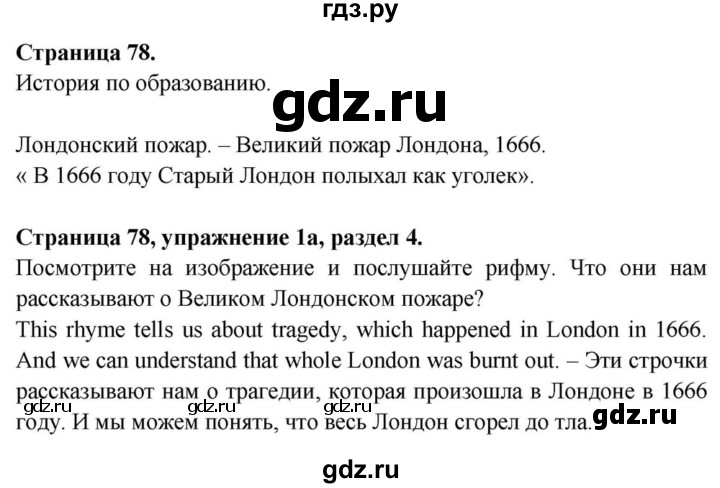
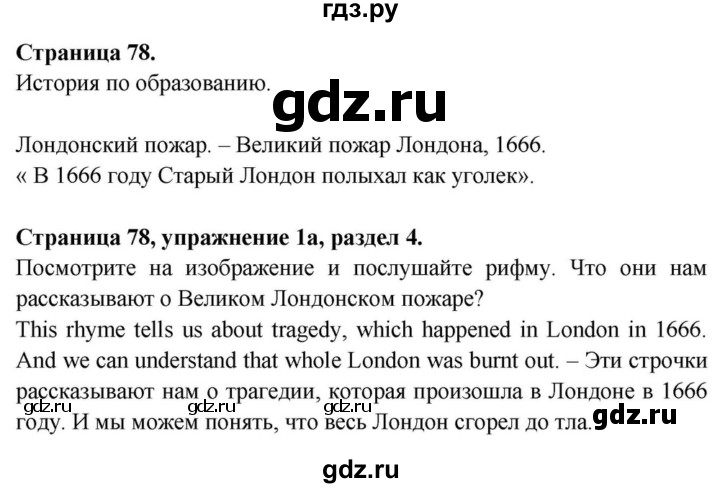
#### 1 a) What do the picture and rhyme tell us about the Great Fire of London?
* **Ответ:**
They tell us that a devastating fire took place in London in 1666. The rhyme emphasizes that the city was made of wood and burned very easily and quickly, just like dry, rotten sticks.
* **Перевод:**
Они говорят нам о том, что в 1666 году в Лондоне произошёл разрушительный пожар. Рифмовка подчёркивает, что город был деревянным и сгорел очень легко и быстро, словно сухие гнилые ветки.
---
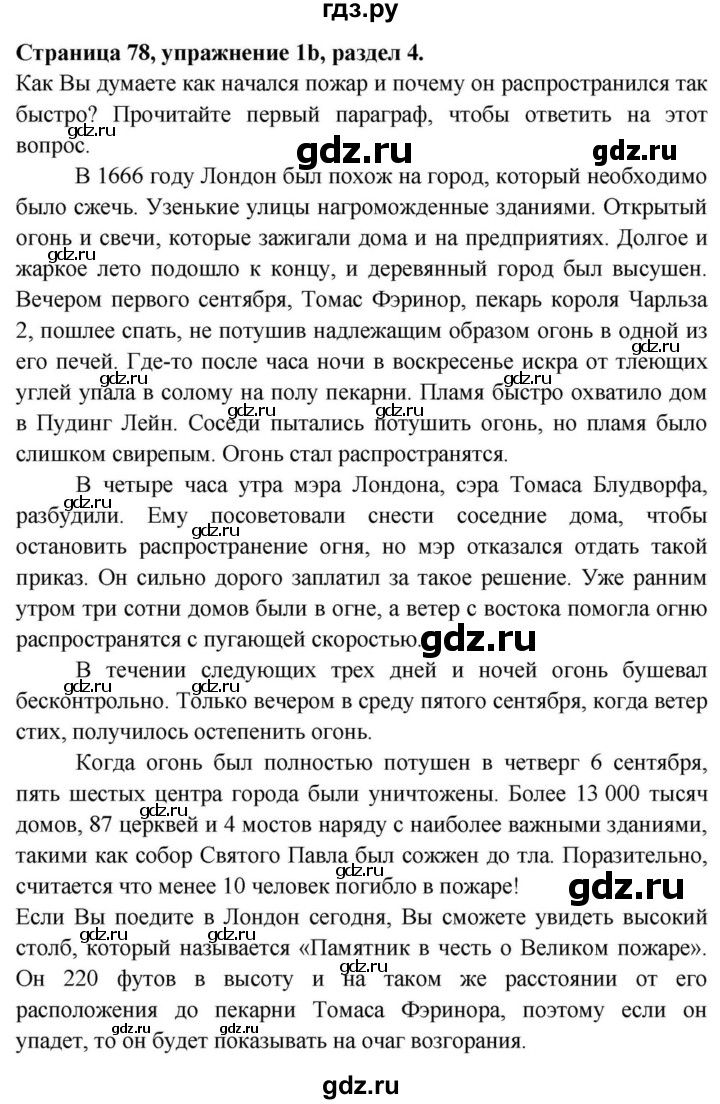
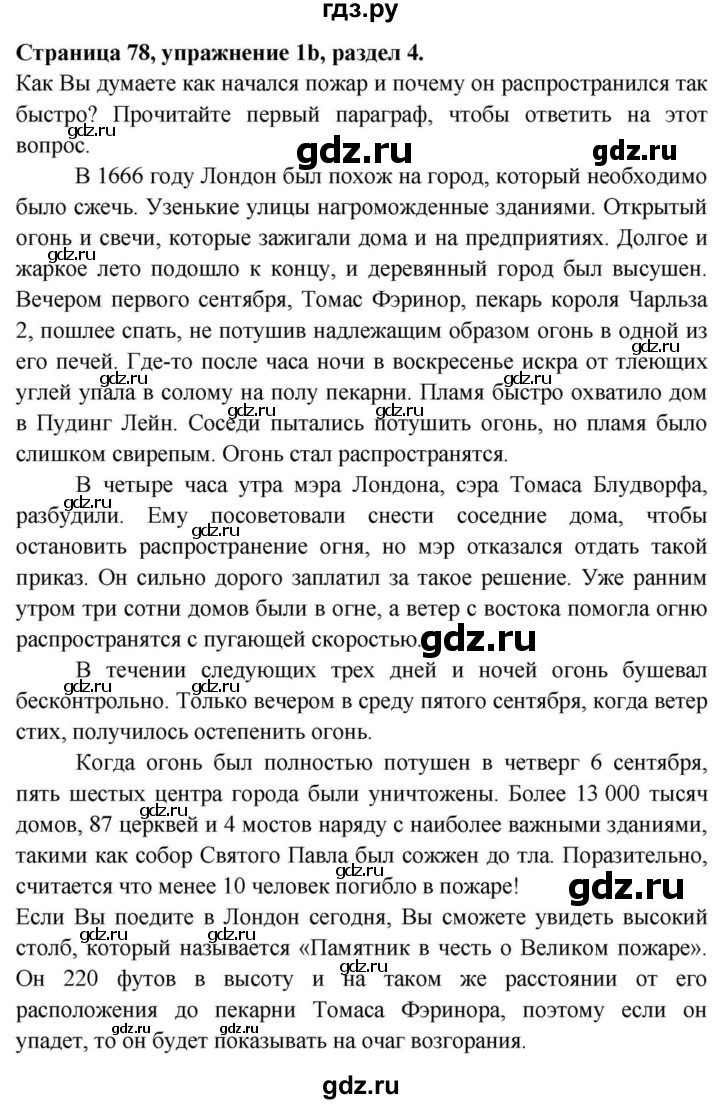
#### 1 b) How did the fire start and why did it spread so quickly?
* **Ответ:**
The fire started in the bakery of Thomas Farynor on Pudding Lane because he didn't properly put out the fire in his oven, and a spark ignited some straw on the floor. It spread so quickly because London had narrow streets overcrowded with wooden buildings that were bone dry after a hot summer, and there was a strong wind blowing from the east.
* **Перевод:**
Пожар начался в пекарне Томаса Фэринора на Пудинг-лейн из-за того, что он не потушил как следует огонь в печи, и искра подожгла солому на полу. Огонь распространился так быстро, потому что улицы Лондона были узкими и загромождёнными деревянными постройками, которые были совершенно сухими после жаркого лета, а также дул сильный восточный ветер.
---
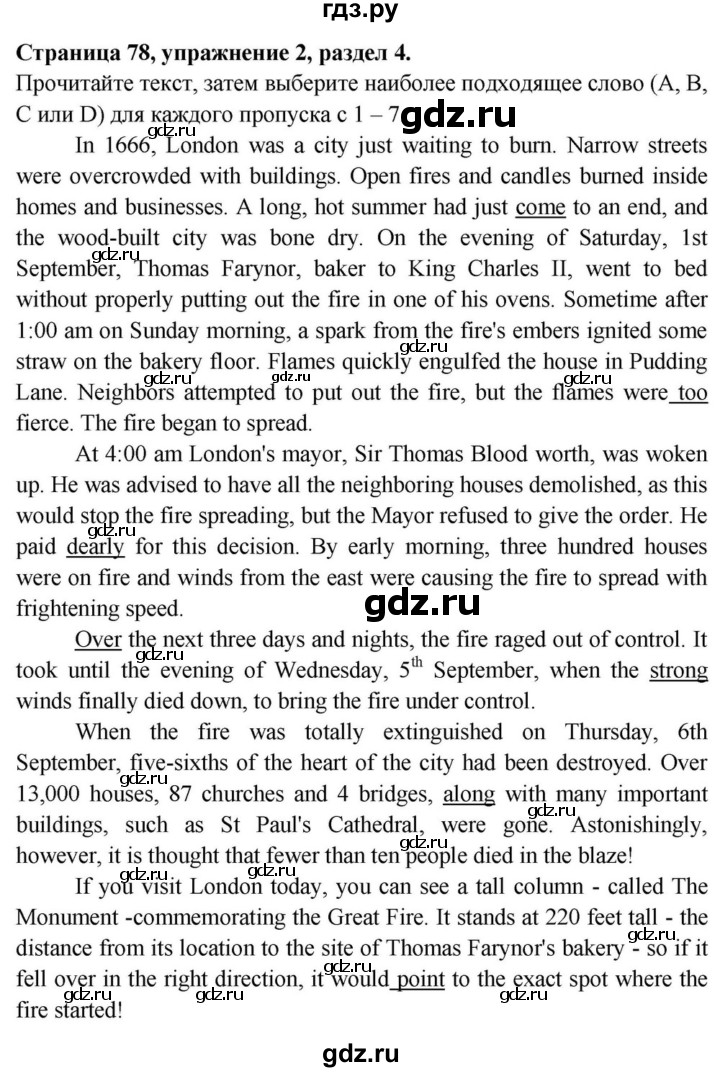
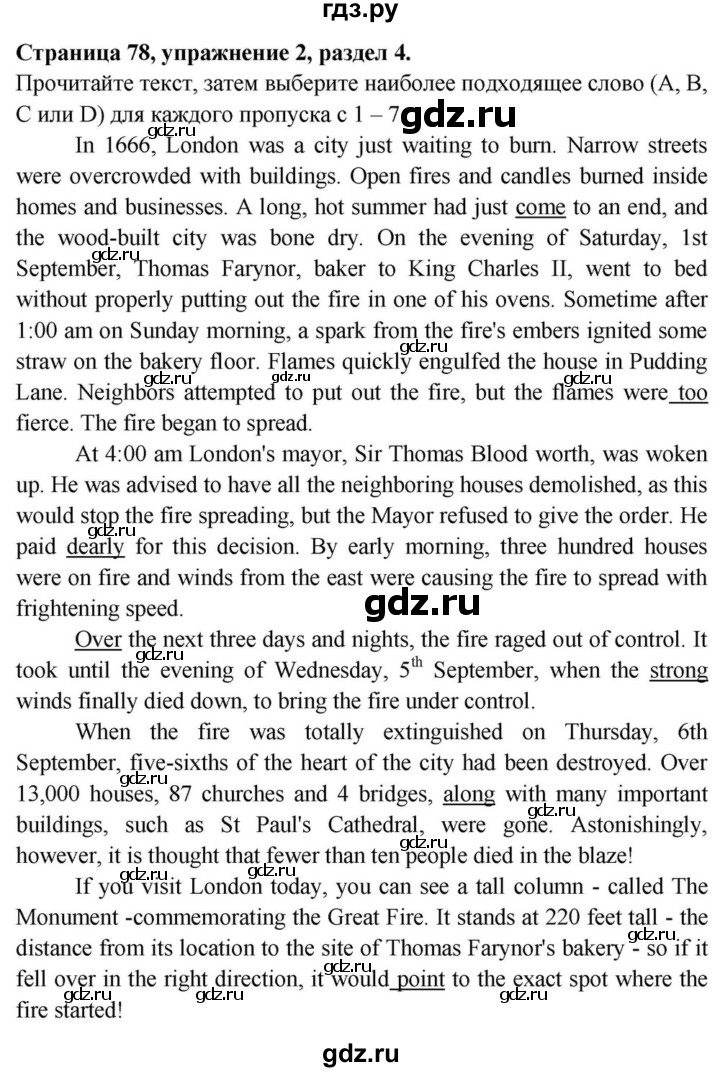
#### 2. Choose the best word for each gap (1–7)
1. **1 — come** (*had just come to an end*)
2. **2 — too** (*were too fierce*)
3. **4 — dearly** (*paid dearly for this decision*)
4. **3 — Over** (*Over the next three days*)
5. **3 — strong** (*strong winds*)
6. **4 — along** (*along with*)
7. **3 — point** (*point to the exact spot*)
---
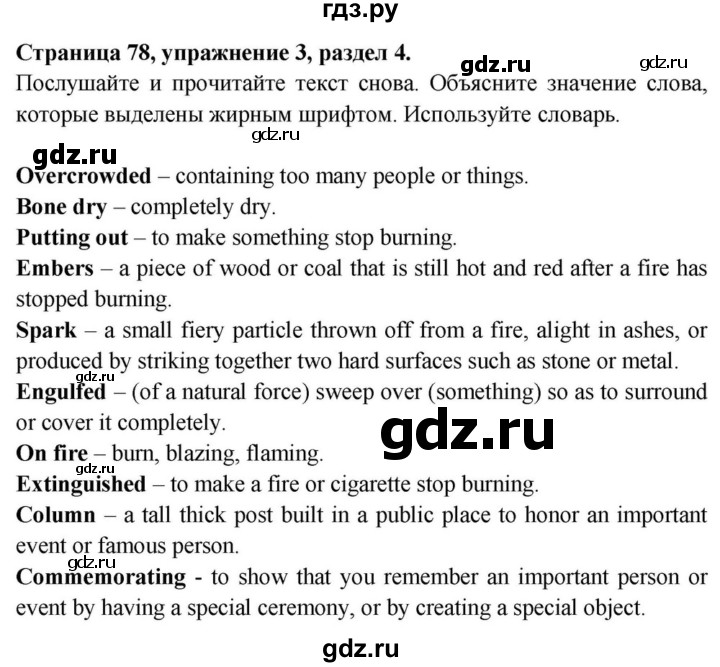
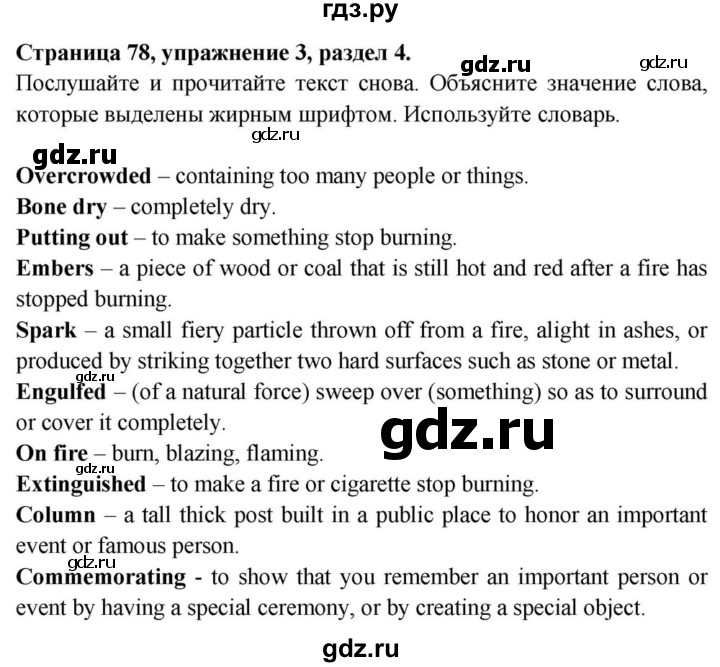
#### 3. Explain the meaning of the words in bold
* **overcrowded** — containing too many people or things (*переполненный*).
* **bone dry** — completely dry, with no moisture at all (*абсолютно сухой, сухой как кость*).
* **embers** — small pieces of glowing coal or wood in a dying fire (*тлеющие угли*).
* **ignited** — caught fire or caused something to start burning (*воспламенился, загорелся*).
* **engulfed** — completely covered or surrounded something, especially by flames or water (*полностью охватило, поглотило*).
* **demolished** — completely destroyed or pulled down a building (*снесённый, разрушенный*).
* **died down** — became gradually weaker, less strong or quiet (*утих, ослаб*).
* **extinguished** — put out a fire so that it stops burning (*потушенный*).
* **blaze** — a very large, strong and dangerous fire (*сильное пламя, пожарище*).
* **commemorating** — honouring the memory of an important event or person (*увековечивающий, в память о...*).
---
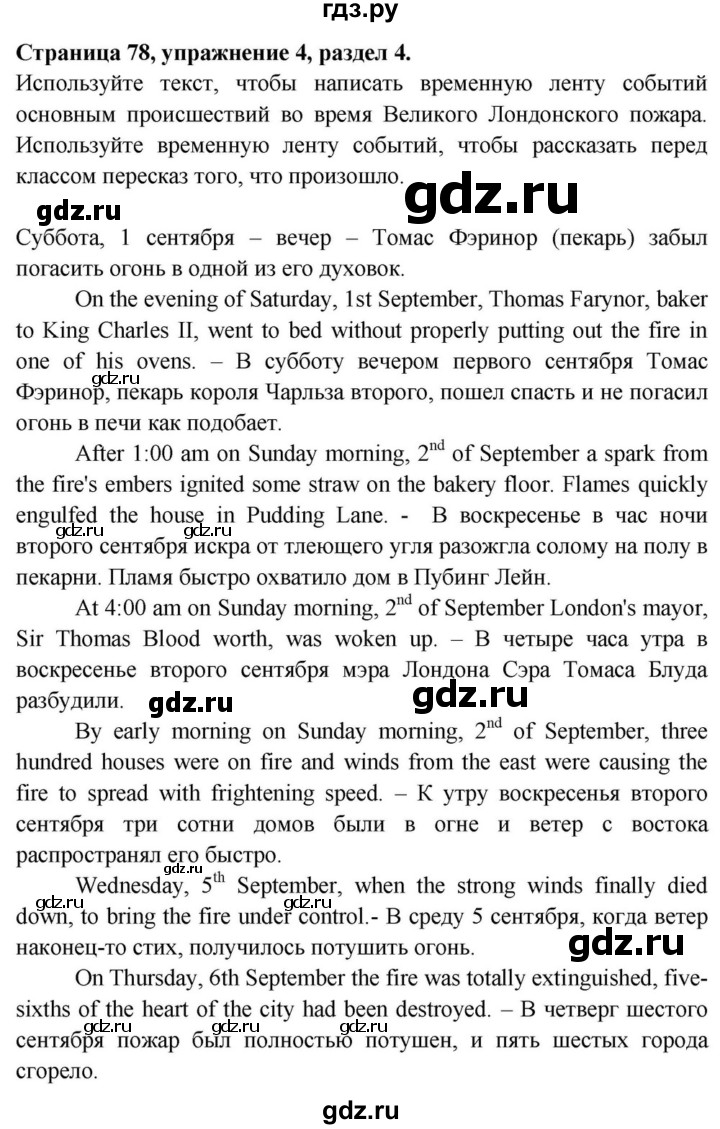
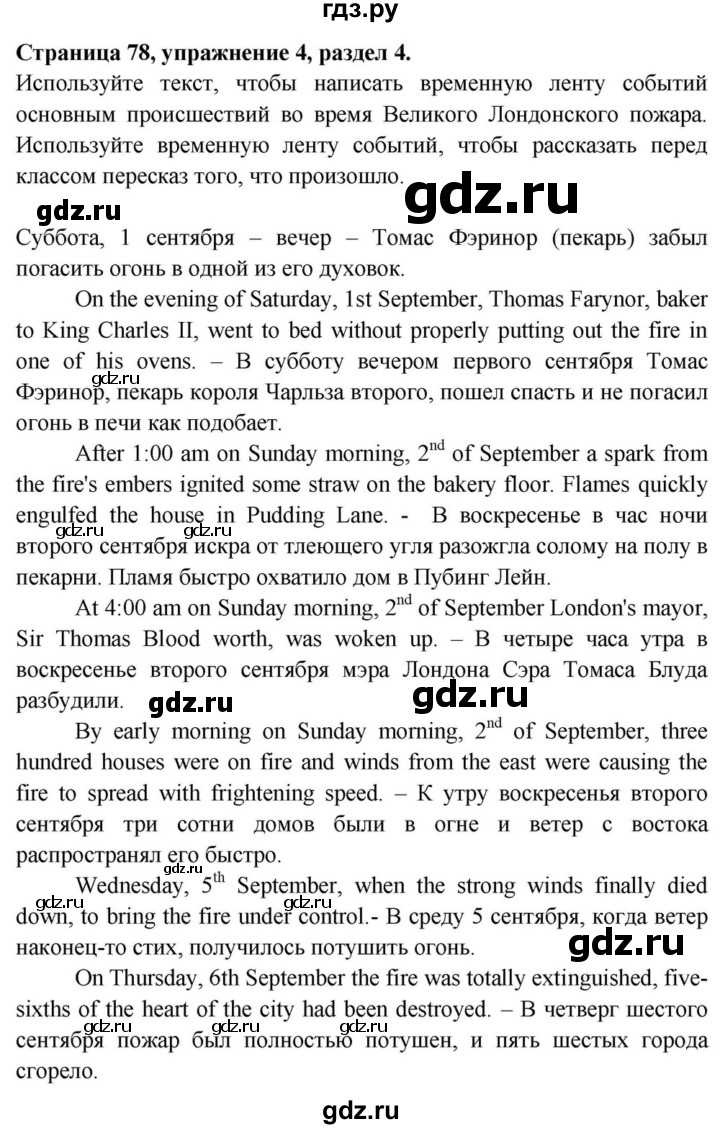
#### 4. Timeline & Summary of the Great Fire of London
**Timeline (Хронология событий):**
* **Saturday, 1st September (evening):** Thomas Farynor, the royal baker, went to bed without properly putting out the fire in one of his ovens.
* **Sunday, 2nd September (after 1:00 am):** A spark from the oven ignited straw on the floor; flames quickly engulfed the bakery on Pudding Lane.
* **Sunday, 2nd September (4:00 am):** London's Mayor, Sir Thomas Bloodworth, was woken up but refused to order the demolition of nearby houses to stop the fire.
* **Sunday, 2nd September (morning):** 300 houses were on fire; strong east winds helped the flames spread rapidly.
* **Sunday – Wednesday, 2nd–5th September:** The fire raged completely out of control across the city for three days and nights.
* **Wednesday, 5th September (evening):** The strong winds finally died down, and the fire was brought under control.
* **Thursday, 6th September:** The fire was totally extinguished. Five-sixths of the city center was destroyed.
**Summary for the class (Краткий пересказ):**
> On the night of 1st September 1666, a spark in a baker's oven started a fire in Pudding Lane. Because of dry wooden houses and strong winds, the fire quickly raged out of control for three days. Even though the mayor refused to demolish houses at first, the fire was finally put out on 6th September when the wind died down. It destroyed over 13,000 houses and 87 churches, but fewer than ten people died.
---
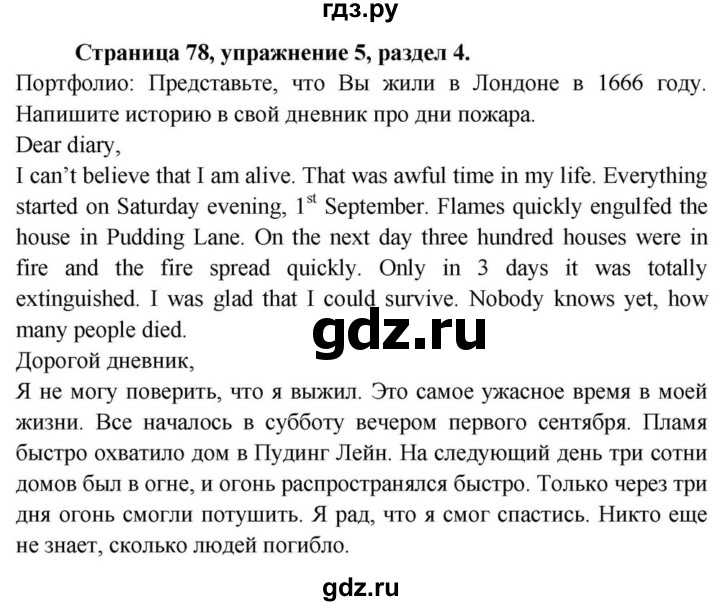
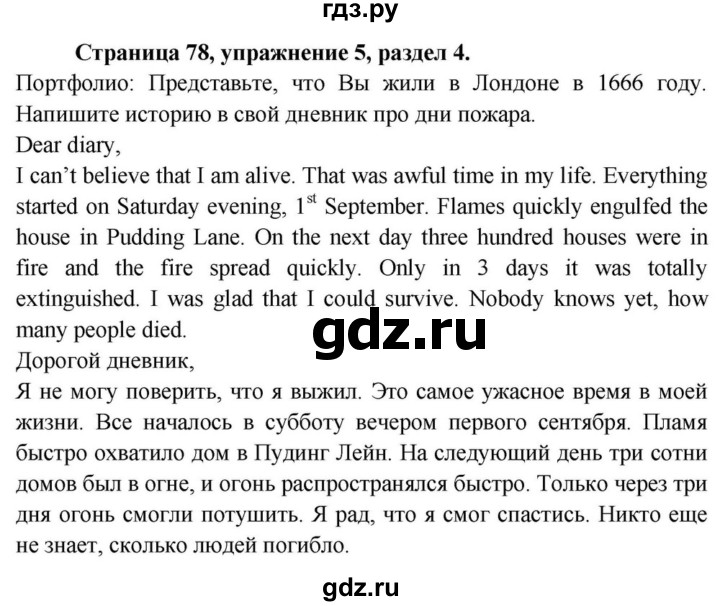
#### 5. Portfolio: Diary entries from 1666
**Sunday, 2nd September 1666**
> I woke up early this morning to thick black smoke and shouting in the street. People were running towards the River Thames with carts full of their possessions. They say a bakery on Pudding Lane caught fire during the night. The wooden houses are burning like dry paper, and the wind is blowing the sparks everywhere! We must pack our most valuable things.
**Tuesday, 4th September 1666**
> The fire is still raging uncontrollably. The air is so hot it feels difficult to breathe, and the sky is completely orange even at midnight. Today I saw St Paul's Cathedral catch fire and collapse. London is in total chaos; thousands of people are camping in open fields outside the city walls.
**Thursday, 6th September 1666**
> The wind has finally died down, and the fire has been put out. Most of our beautiful city is gone — just piles of black ash and stones where houses and churches used to stand. We have lost our home, but thank God, our whole family is alive and safe.
---
### Подробное объяснение к грамматике и лексике (Задание 2)
1. **come** — устойчивое выражение *to come to an end* («подойти к концу / закончиться»).
2. **too** — конструкция *too + прилагательное* (*too fierce* — «слишком свирепый/неистовый»), выражающая чрезмерную степень признака.
3. **dearly** — устойчивая идиоматическая коллокация *to pay dearly for something* («дорого заплатить за что-либо / поплатиться»).
4. **Over** — предлог *over* используется для обозначения периода времени, на протяжении которого длится действие (*over the next three days* — «в течение следующих трех дней»).
5. **strong** — устойчивое сочетание с погодными явлениями: о ветре в английском языке говорят *strong wind* («сильный ветер»).
6. **along** — фразовый предлог *along with* означает «вместе с / наряду с».
7. **point** — глагол *to point to / at* означает «указывать на что-либо» (*would point to the exact spot* — «указывал бы точно на то место»).
Спасибо за оценку!

Открой больше возможностей
Войди через VK — задавай вопросы ИИ и сохраняй ГДЗ в избранное
