


ГДЗ по английскому языку 11 класс Афанасьева Spotlight Базовый уровень страница - 95

Авторы: Афанасьева О.В., Дули Д., Михеева И.В., Оби Б., Эванс В.
Серия: Spotlight
Тип книги: Учебник
Год: 2015-2024
Рекомендуем посмотреть


 Премиум
Подробное решение страница № 95 по английскому языку Spotlight для учащихся 11 класса Spotlight Базовый уровень, авторов Афанасьева, Дули, Михеева, Оби, Эванс 2015-2024
### Итоговый ответ
#### Exercise 1
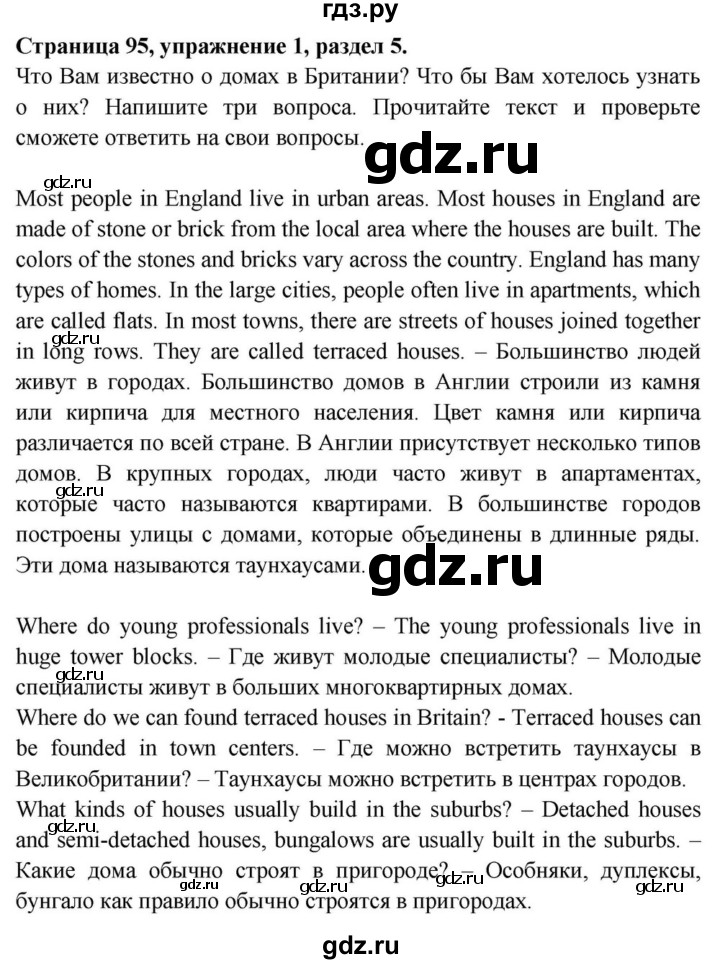
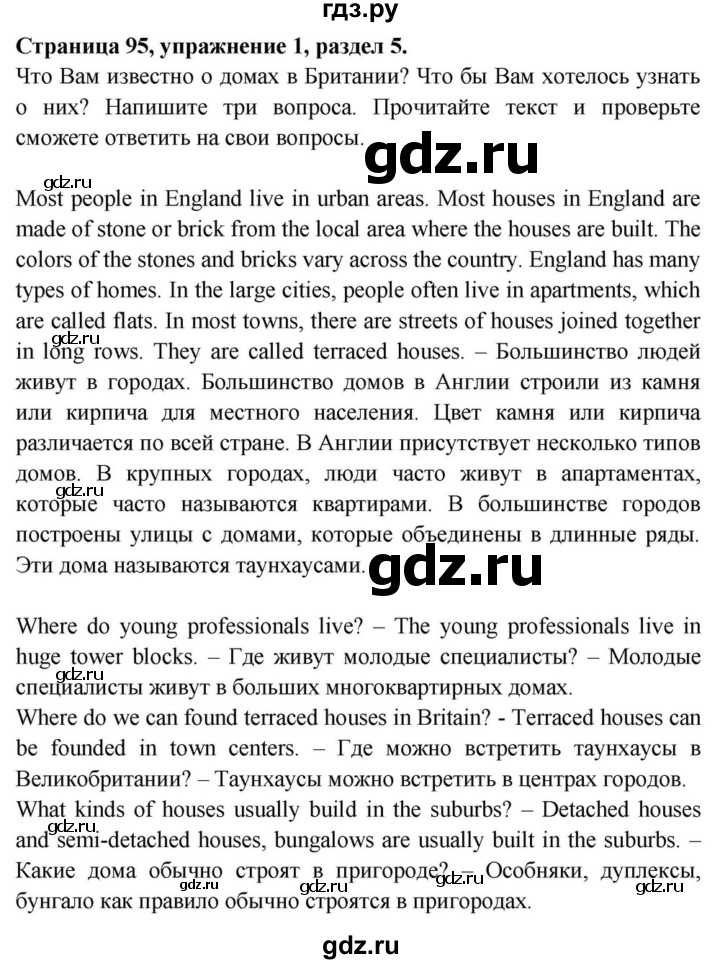
**Пример трёх вопросов перед чтением:**
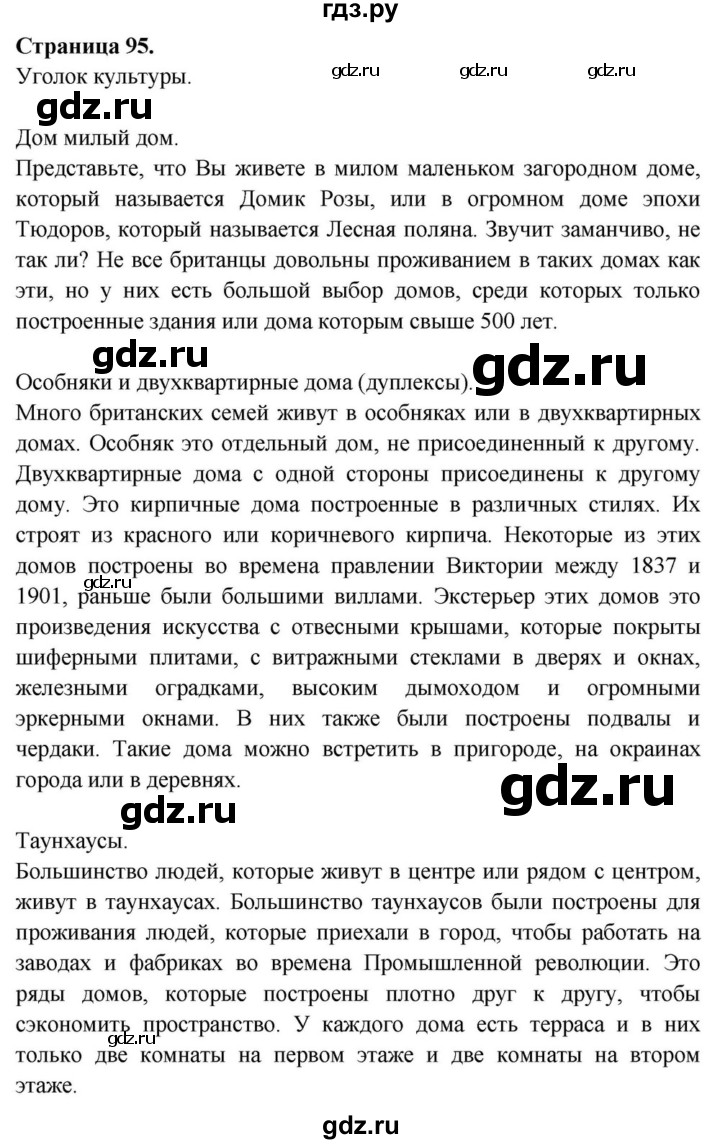
1. What are the most common types of houses in Great Britain?
2. Why were terraced houses originally built?
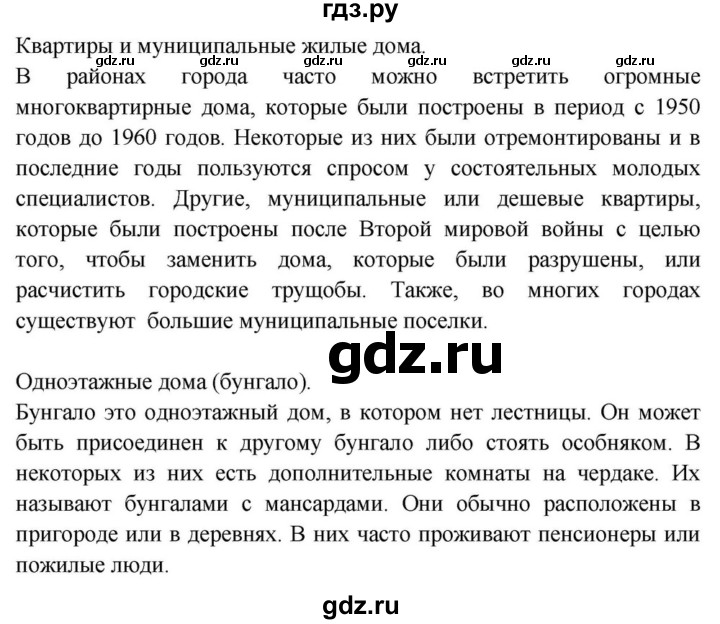
3. Who usually prefers to live in bungalows?
**Ответы на основе текста:**
1. Detached, semi-detached, terraced houses, flats, and bungalows.
2. They were built for people who came to work in factories and mills during the Industrial Revolution.
3. Retired or elderly people often live in bungalows.
---
#### Exercise 2a: Word Formation (Словообразование)
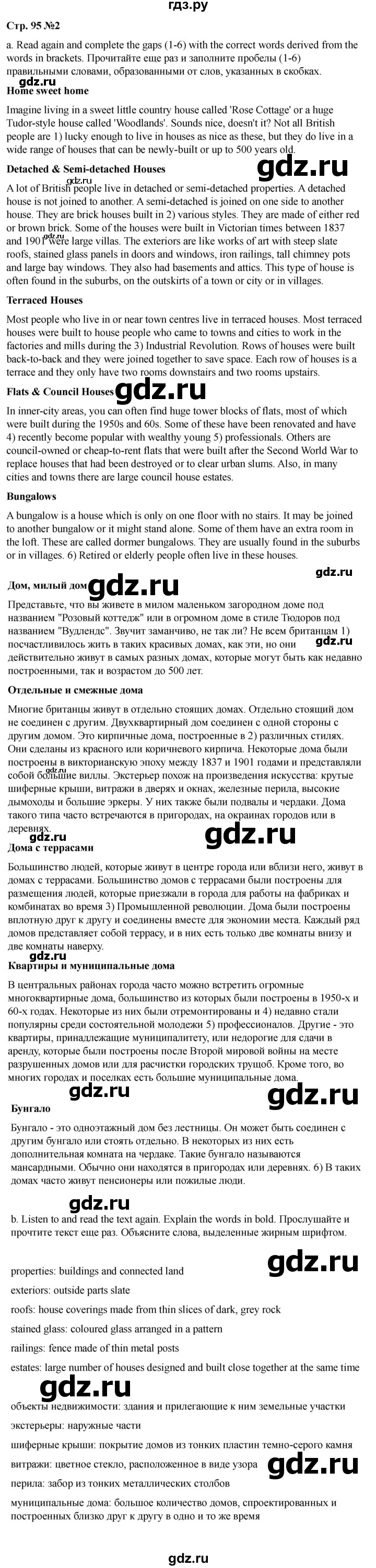
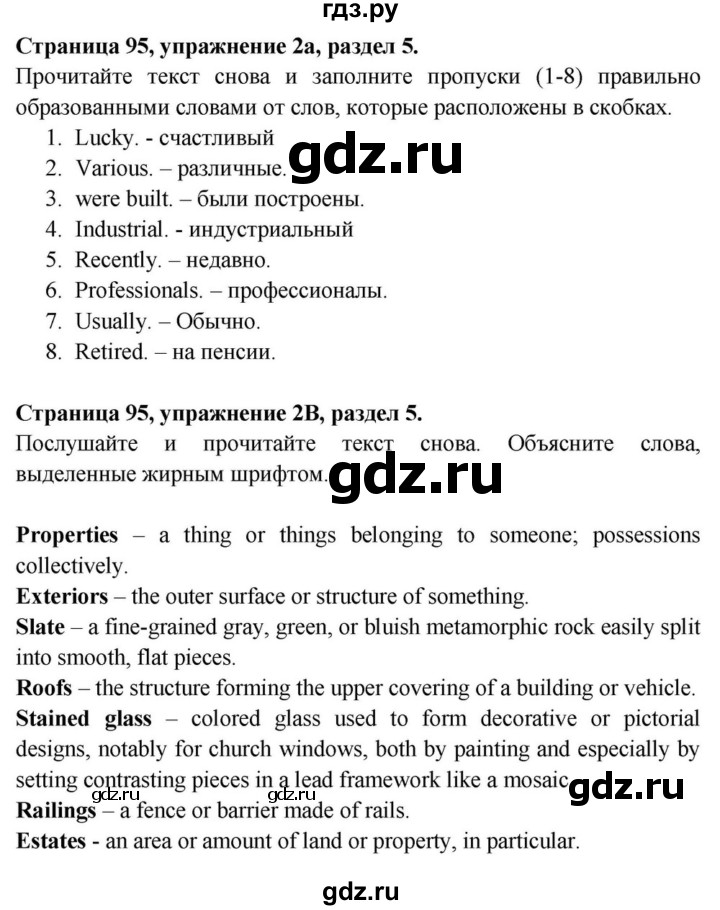
1. **lucky**
2. **various**
3. **Industrial**
4. **recently**
5. **professionals**
6. **Retired**
---
#### Exercise 2b: Explaining words in bold (Объяснение понятий)
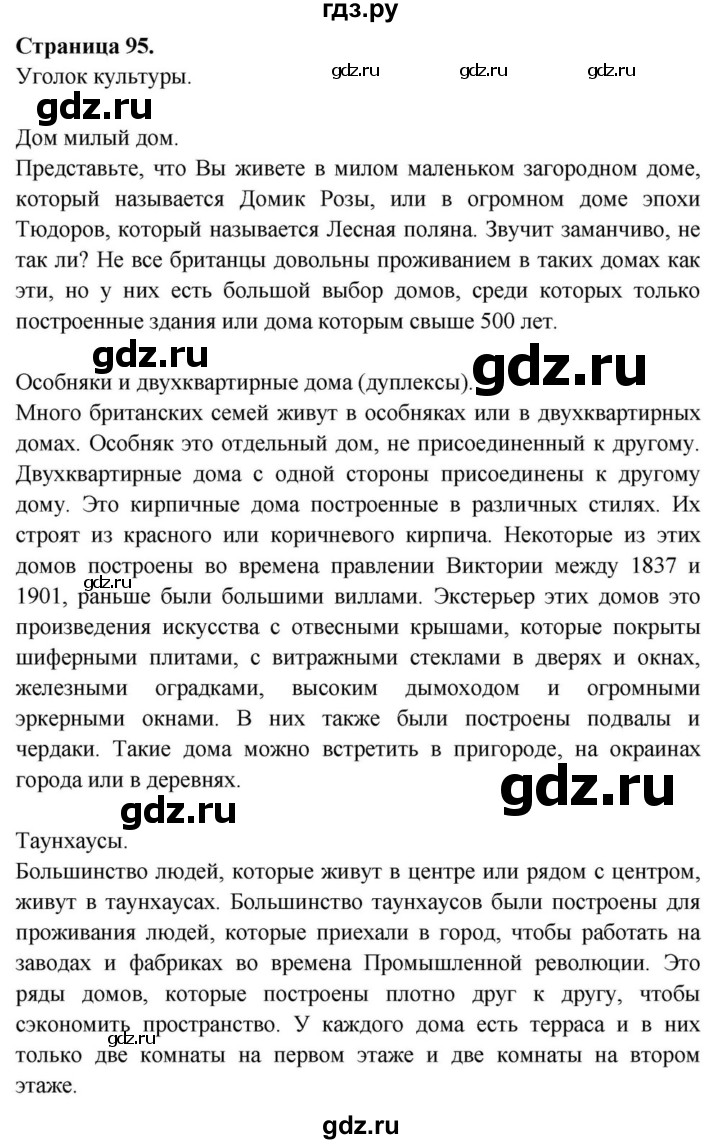
* **detached house** — a house that stands alone and is not joined to any other building *(отдельно стоящий дом / особняк)*.
* **semi-detached house** — a house joined to one other house on one side *(дом на две семьи с общей стеной)*.
* **slate roofs** — roofs made of thin, flat, grey stone tiles called slate *(крыши из сланцевой плитки)*.
* **stained glass** — coloured glass used to form decorative pictures or patterns *(витражное стекло)*.
* **iron railings** — fences or barriers made of metal bars *(железные перила / решётки / ограда)*.
* **chimney pots** — clay tubes placed on top of chimneys to carry smoke away from fireplaces *(печные трубы / дымоходы)*.
* **bay windows** — windows that project outward from the main wall of a building *(эркерные, выступающие окна)*.
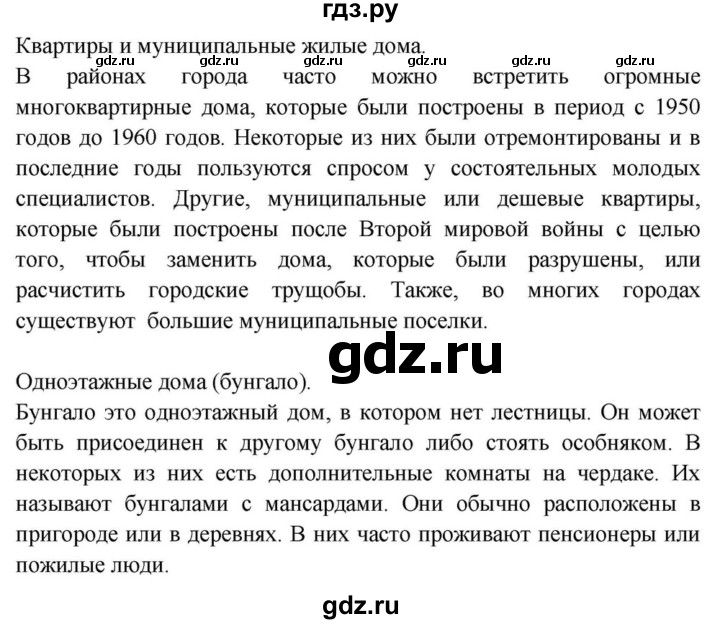
* **terraced houses** — a continuous row of identical houses joined side by side *(дома рядовой застройки / таунхаусы)*.
* **flats** — sets of rooms for living in, usually on one floor of a large building *(квартиры)*.
* **council-owned** — owned and rented out by the local government / municipality *(муниципальное жильё)*.
* **slums** — very poor, crowded, and run-down areas in a city *(трущобы)*.
* **council house estates** — large residential developments of public housing built by local authorities *(жилые массивы муниципального жилья)*.
* **bungalow** — a house built on one single floor with no stairs *(бунгало, одноэтажный дом)*.
* **loft** — an attic or open space directly under the roof of a house *(чердак, мансарда)*.
---
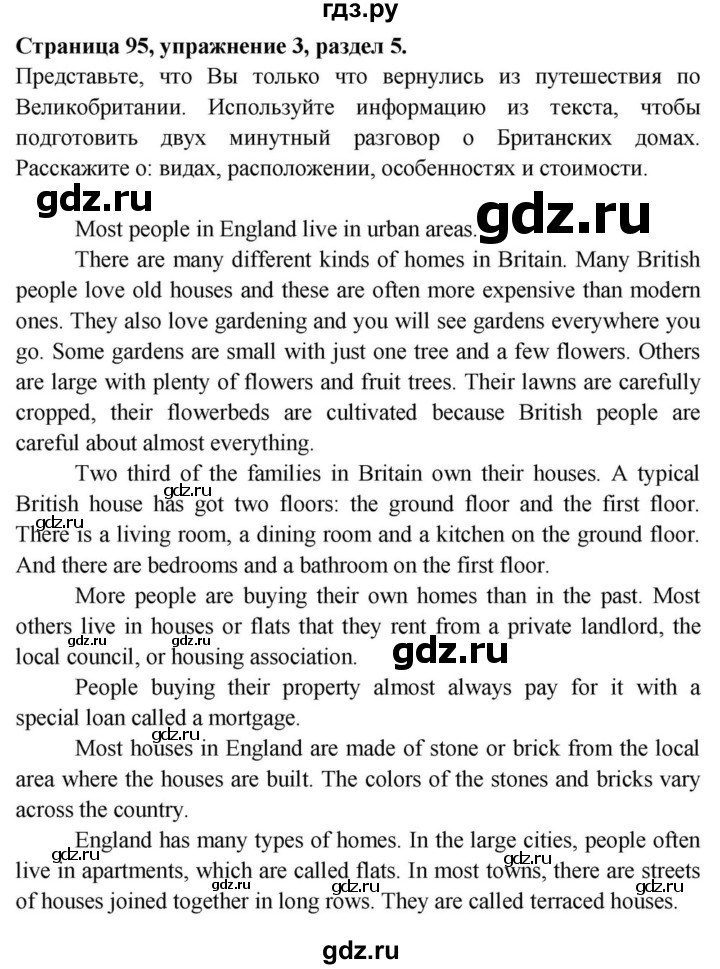
#### Exercise 3: Two-minute talk about British houses
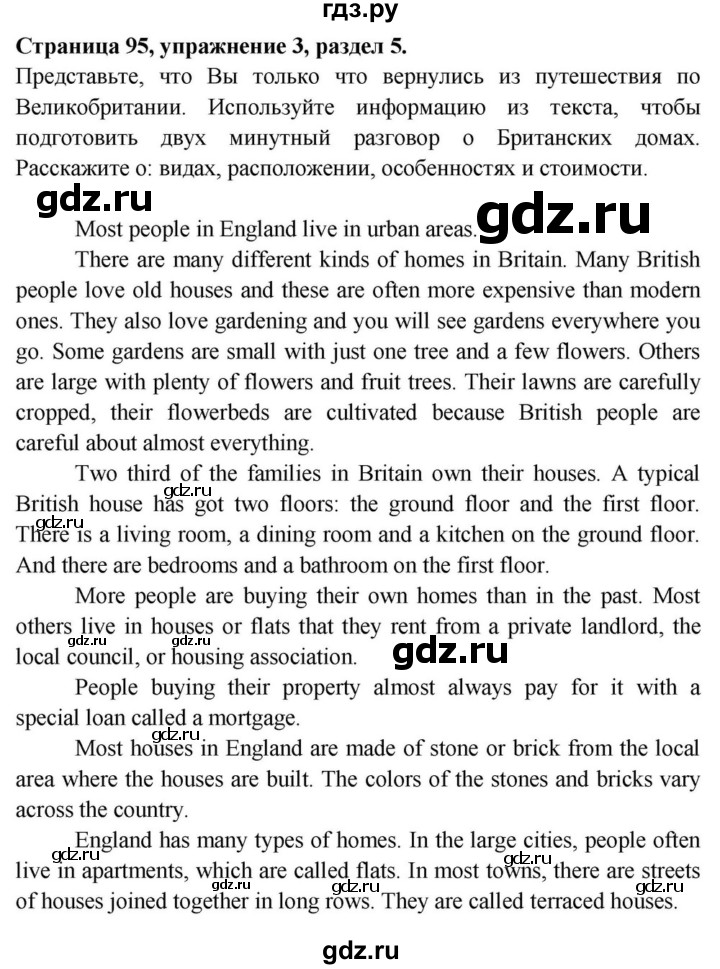
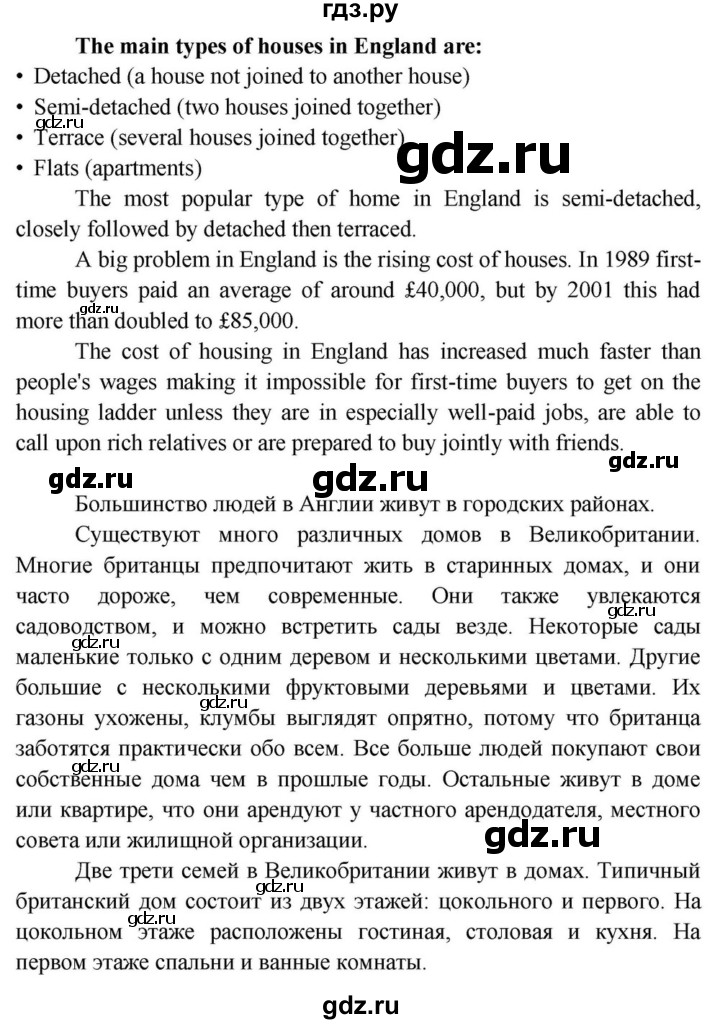
"I have just returned from my trip to Great Britain, and I was really fascinated by the variety of British architecture!
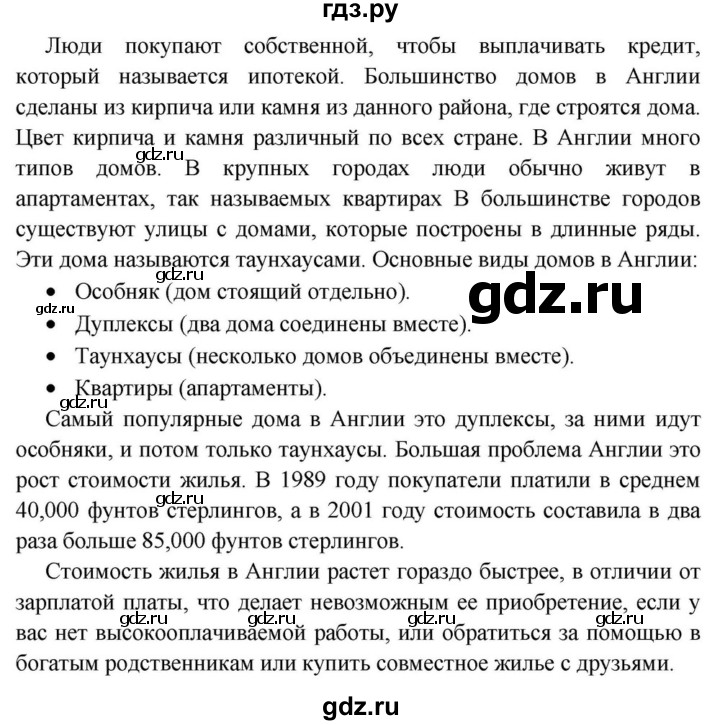
There are several main types of houses. In the suburbs and countryside, you can see a lot of detached and semi-detached houses. Detached houses stand completely alone, while semi-detached ones share a wall with a neighbour. Many of them were built during the Victorian era with distinctive red or brown bricks, steep slate roofs, tall chimney pots, and lovely bay windows.
In town centres and inner-city areas, terraced houses are the most popular. These are long rows of connected houses that were originally built for factory workers during the Industrial Revolution to save space. They usually have two rooms downstairs and two upstairs.
In city centres, there are also many high-rise tower blocks of flats. Some have been renovated into luxury apartments for young professionals, while others are affordable council housing.
Finally, in suburban and rural areas, you often see bungalows — single-storey houses without stairs, which are very popular among elderly and retired people.
Prices vary greatly: detached houses and renovated modern flats in city centres are the most expensive, while terraced houses and council flats are much more affordable."
---
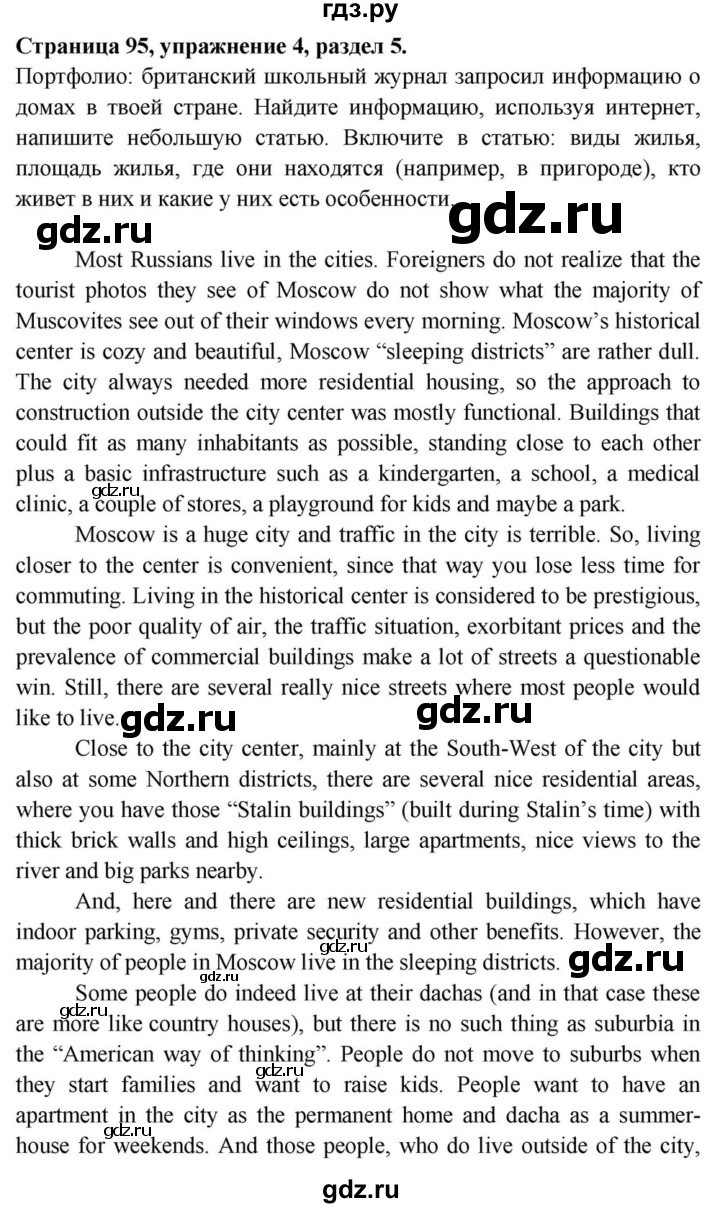
#### Exercise 4: ICT Portfolio (Article for a British School Magazine)
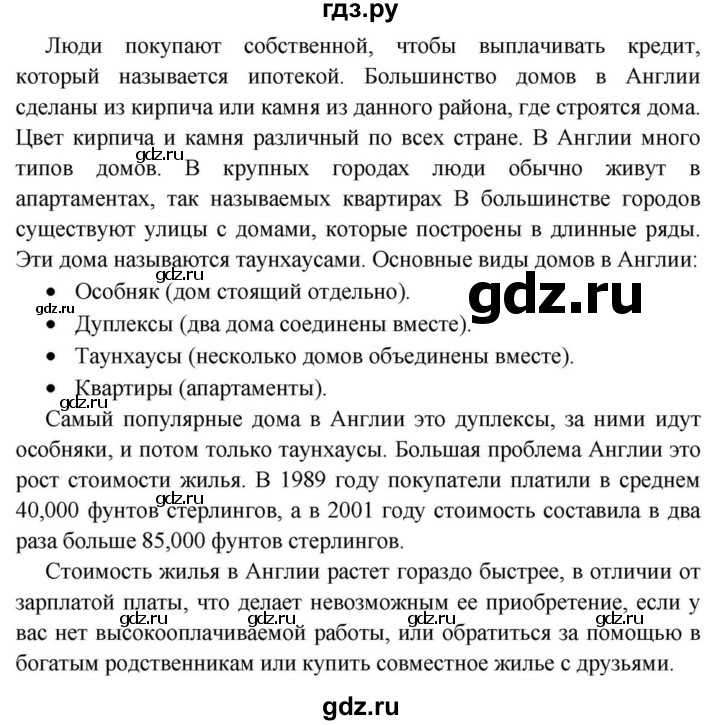
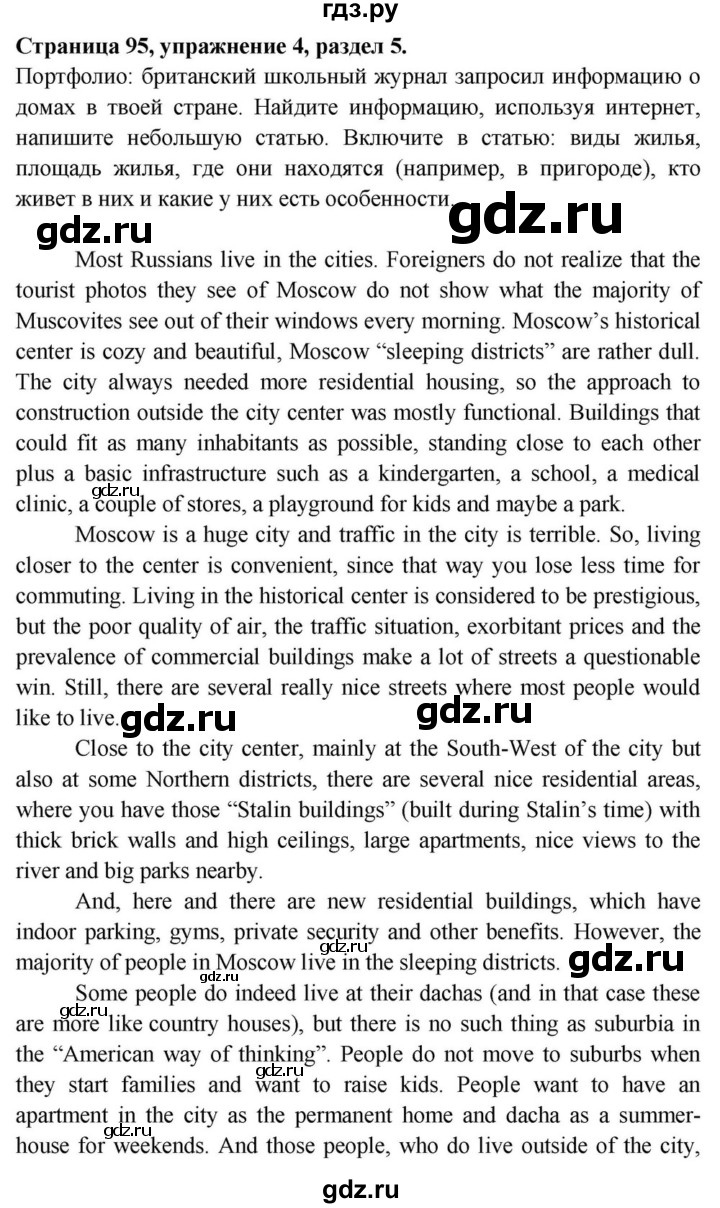
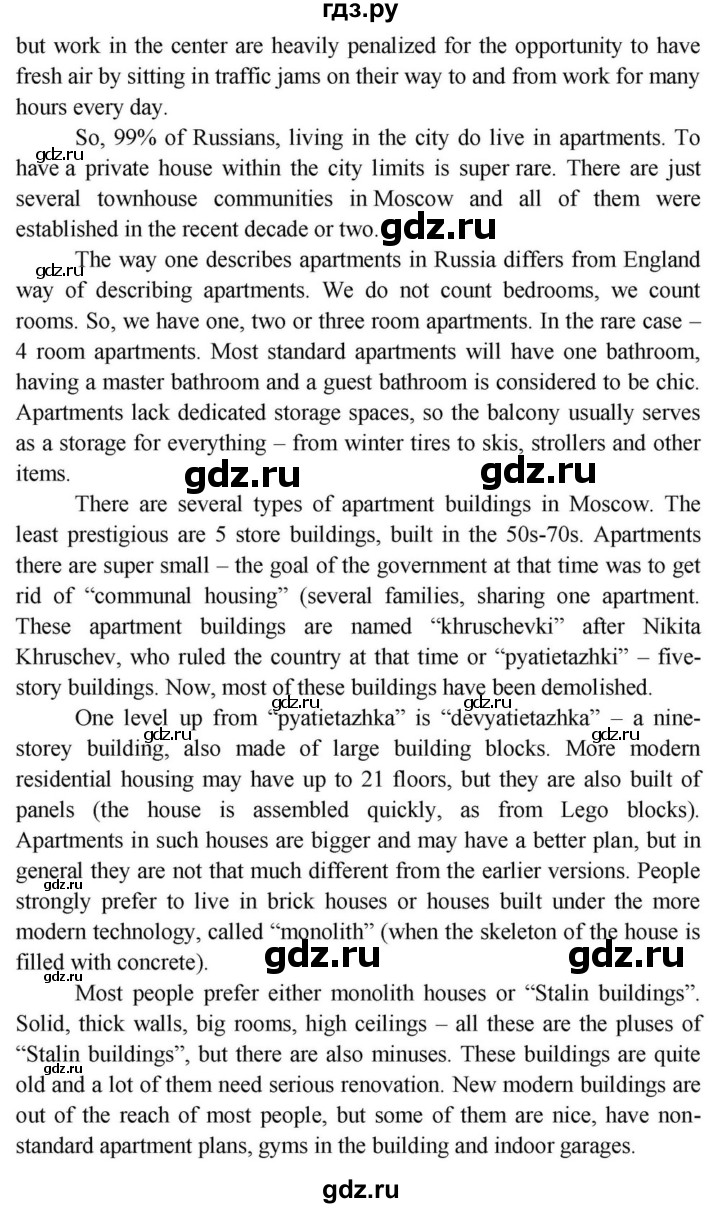
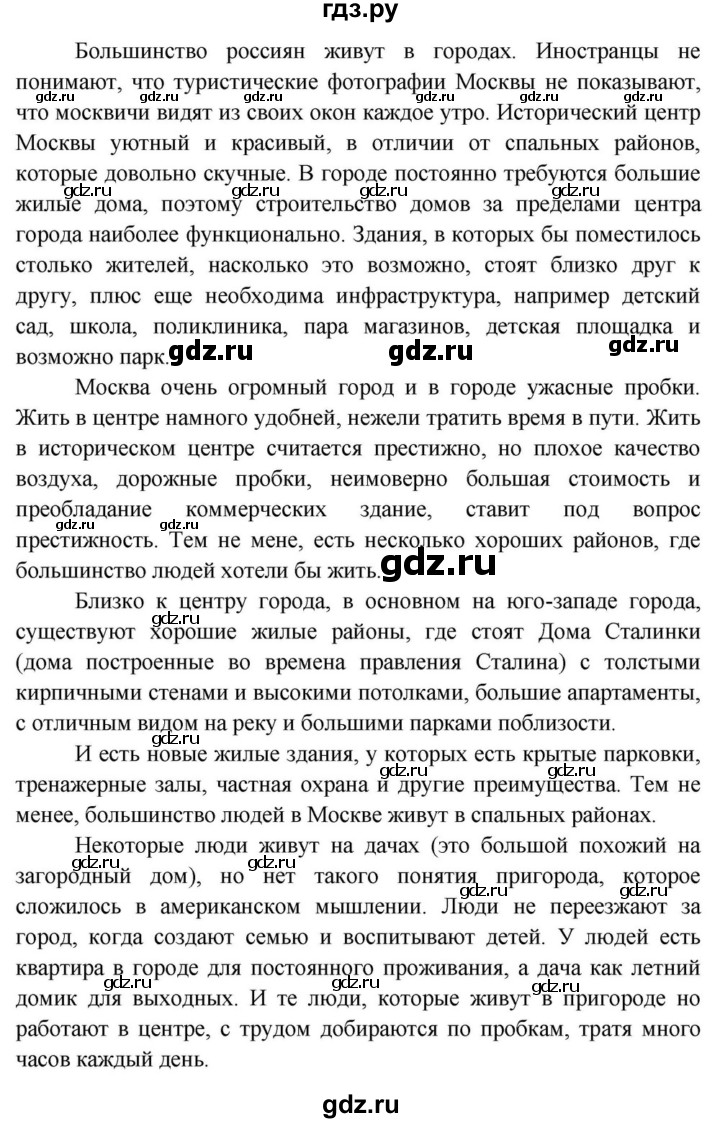
**Homes in Russia: From High-Rises to Cosy Dachas**
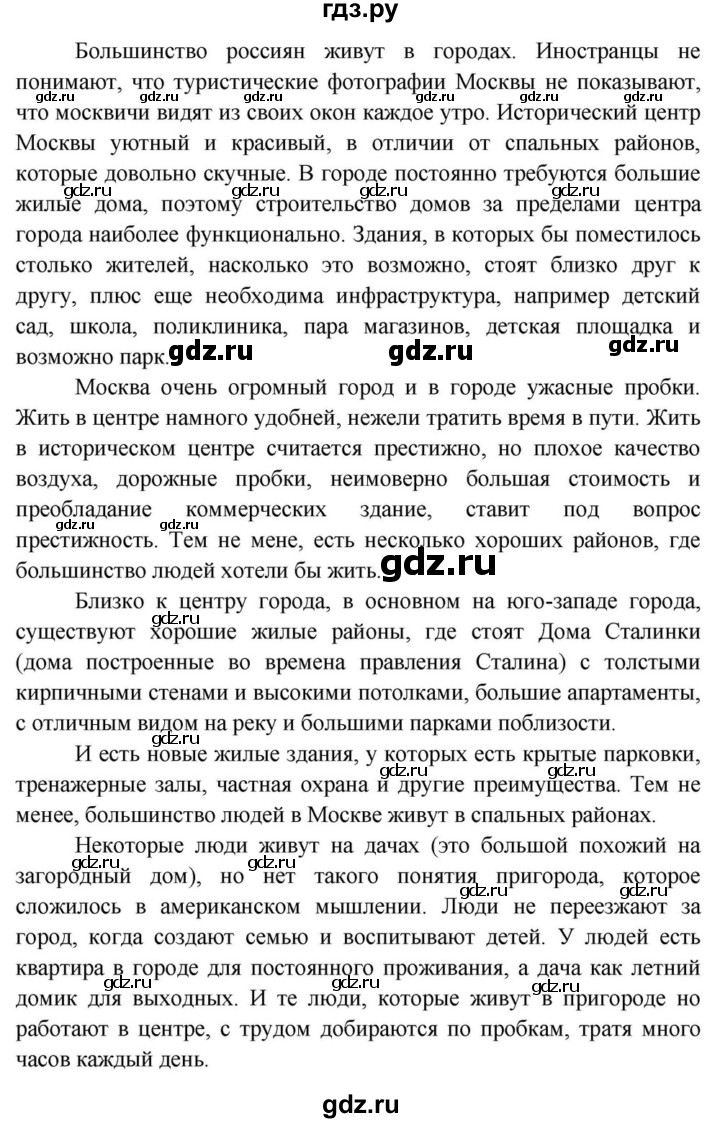
In Russia, the types of housing largely depend on whether people live in large cities or rural areas.
**Multi-Storey Blocks of Flats**
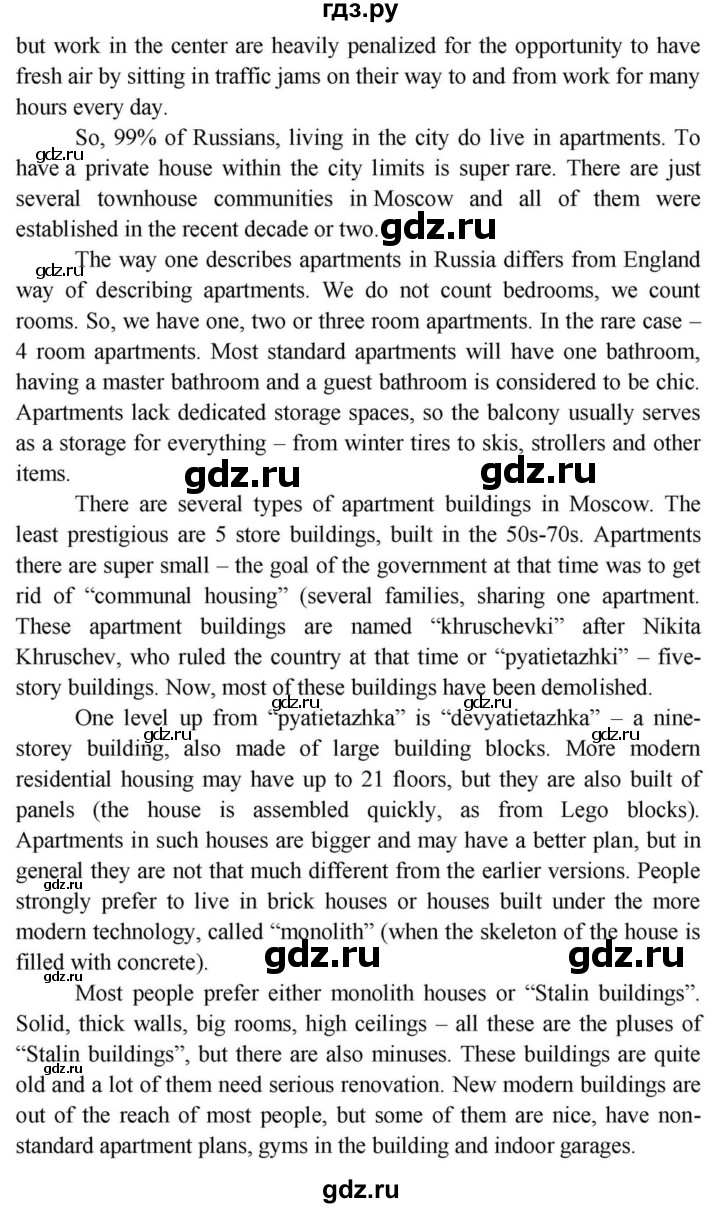
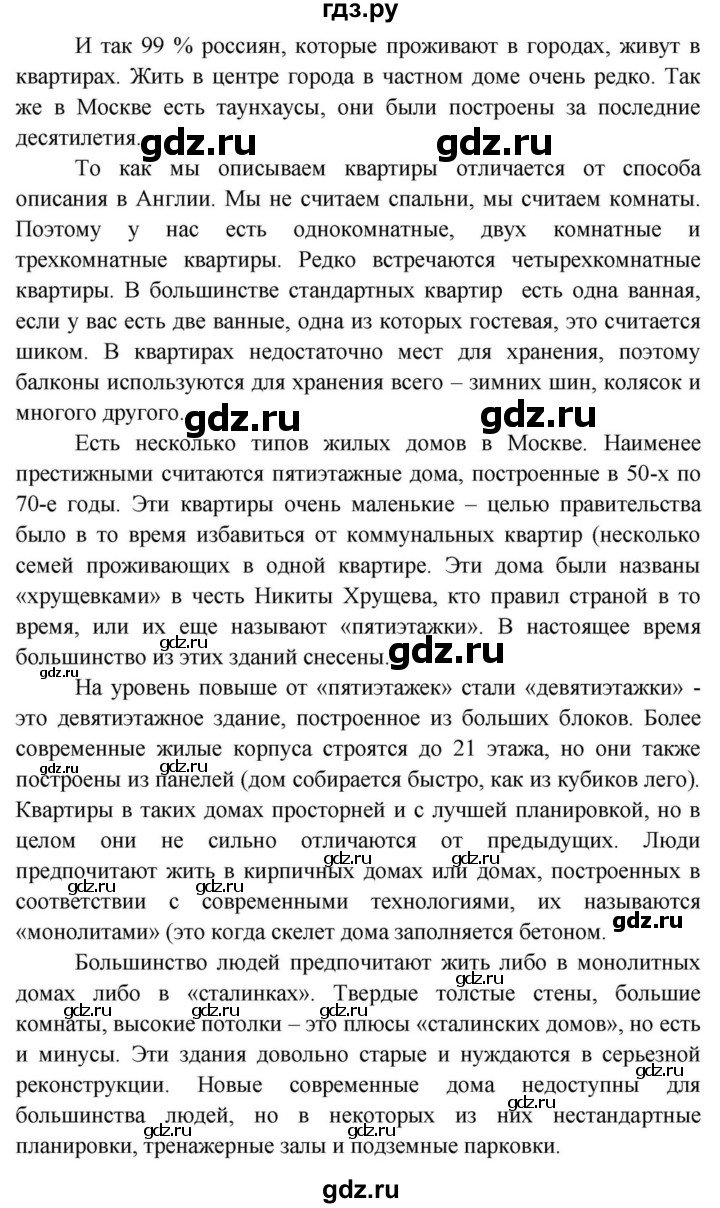
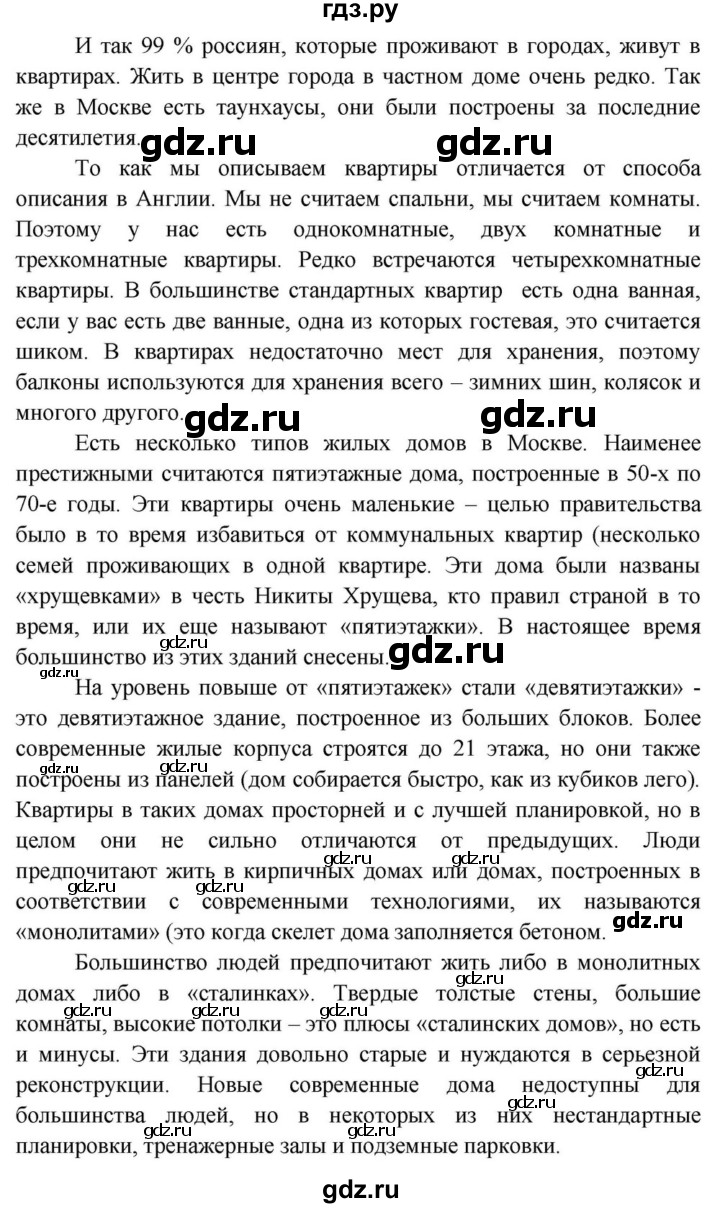
The vast majority of urban residents live in flats located in multi-storey apartment blocks. In large cities like Moscow and Saint Petersburg, these buildings can be modern skyscrapers with 20–30 floors or older Soviet-era 5-to-9-storey blocks. Flats usually range from compact one-room studios to spacious three- or four-room family apartments. Most blocks have central heating, balconies, and lifts.
**Detached Houses and Cottages**
Outside large cities and in suburban areas, detached private houses are becoming increasingly popular with middle-class families. They are typically built of brick, aerated concrete, or timber, having two or three floors, a private garage, and a garden.
**Dachas (Country Houses)**
A unique feature of Russian housing culture is the *dacha* — a seasonal country house used during spring and summer. They range from small wooden cabins with vegetable plots to luxurious all-year cottages with traditional Russian banyas (saunas).
---
### Разбор и объяснение
#### Грамматические правила для задания 2a:
1. **LUCK $\rightarrow$ lucky**: после глагола-связки *are* и перед *enough* требуется имя прилагательное (*Are lucky enough* — «достаточно удачливы / везёт»).
2. **VARY $\rightarrow$ various**: определяем существительное *styles*, поэтому образуем прилагательное с помощью суффикса *-ous* (*various styles* — «различные стили»).
3. **INDUSTRY $\rightarrow$ Industrial**: устойчивое историческое название эпохи — *the Industrial Revolution* («Промышленная революция»), образуется с суффиксом *-al* и пишется с заглавной буквы.
4. **RECENT $\rightarrow$ recently**: наречие образа действия/времени образуется с помощью суффикса *-ly* и стоит между вспомогательным (*have*) и смысловым (*become*) глаголами.
5. **PROFESSION $\rightarrow$ professionals**: определяющее слово *young* и контекст группы людей во множественном числе требуют существительного, обозначающего людей/профессию во множественном числе (*young professionals* — «молодые специалисты/профессионалы»).
6. **RETIRE $\rightarrow$ Retired**: причастие прошедшего времени (*retired*), выступающее в роли прилагательного («вышедшие на пенсию / пенсионеры»), согласуется с *elderly people*.
Спасибо за оценку!


Открой больше возможностей
Войди через VK — задавай вопросы ИИ и сохраняй ГДЗ в избранное
