


ГДЗ по английскому языку 11 класс Афанасьева Spotlight Базовый уровень страница - 97

Авторы: Афанасьева О.В., Дули Д., Михеева И.В., Оби Б., Эванс В.
Серия: Spotlight
Тип книги: Учебник
Год: 2015-2024
Рекомендуем посмотреть


 Премиум
Подробное решение страница № 97 по английскому языку Spotlight для учащихся 11 класса Spotlight Базовый уровень, авторов Афанасьева, Дули, Михеева, Оби, Эванс 2015-2024
### Exercise 1
**Answer:**
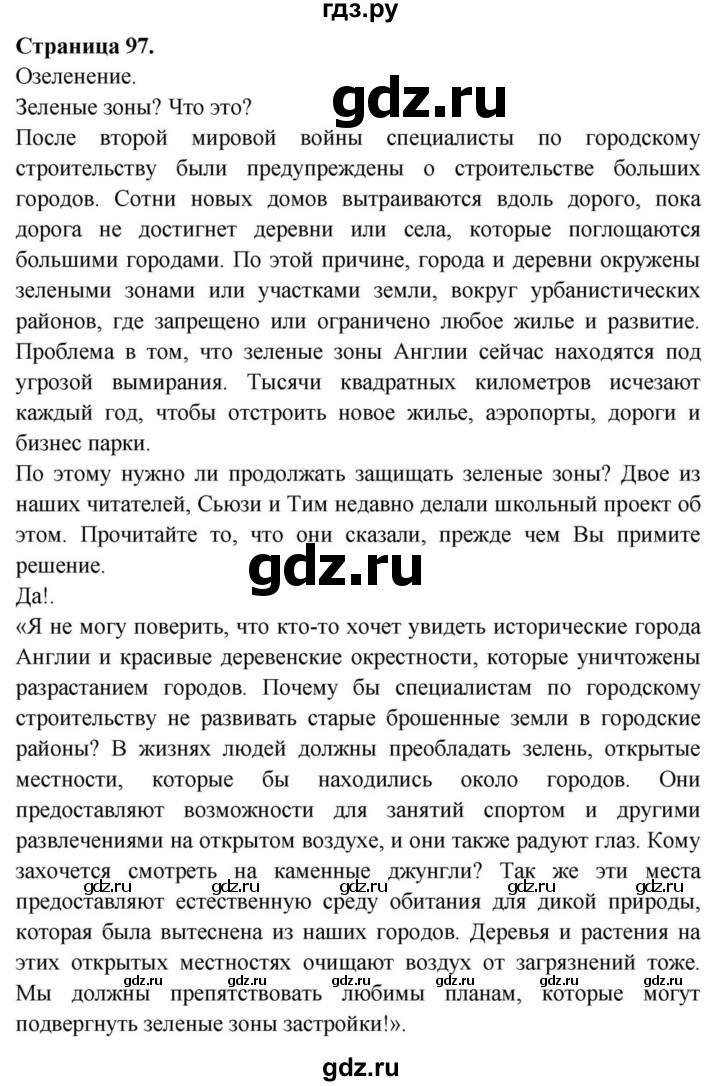
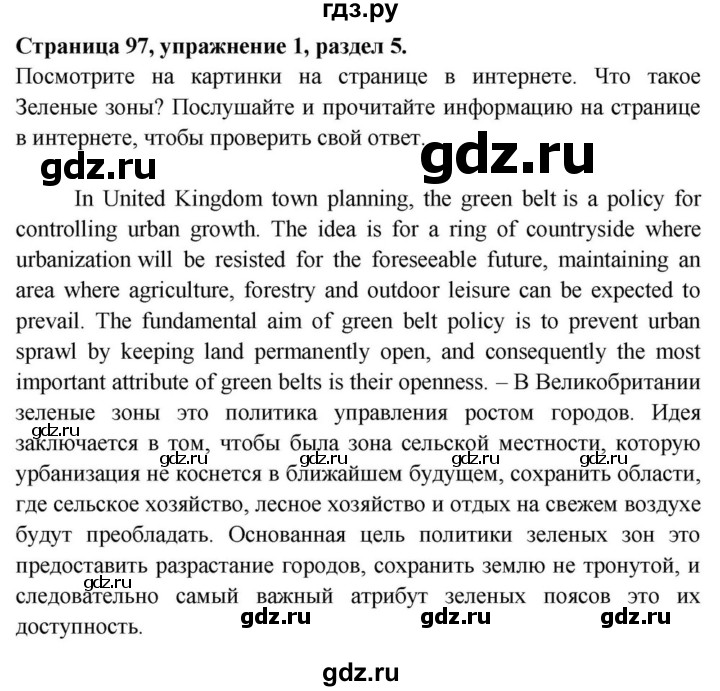
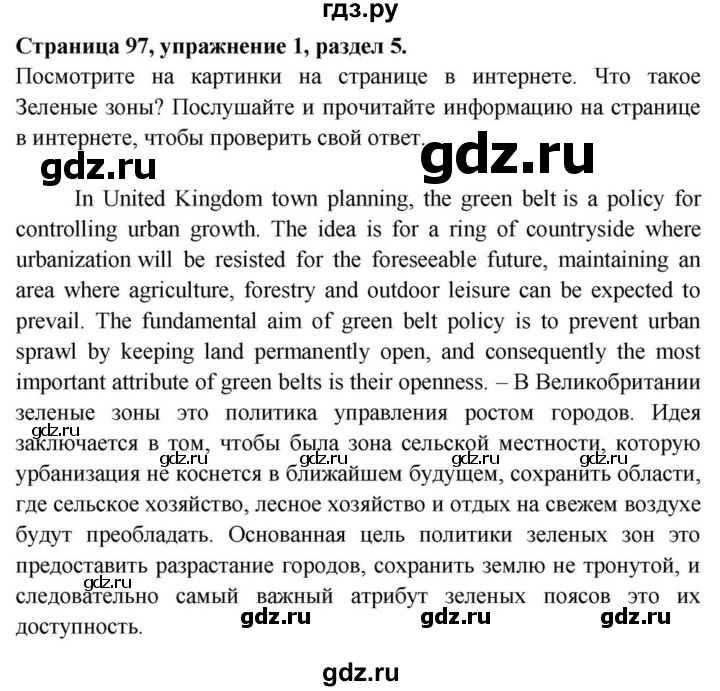
A green belt is a zone of open, protected land around a town or city where building and urban development are forbidden or strictly limited to prevent cities from spreading too far.
---
### Exercise 2
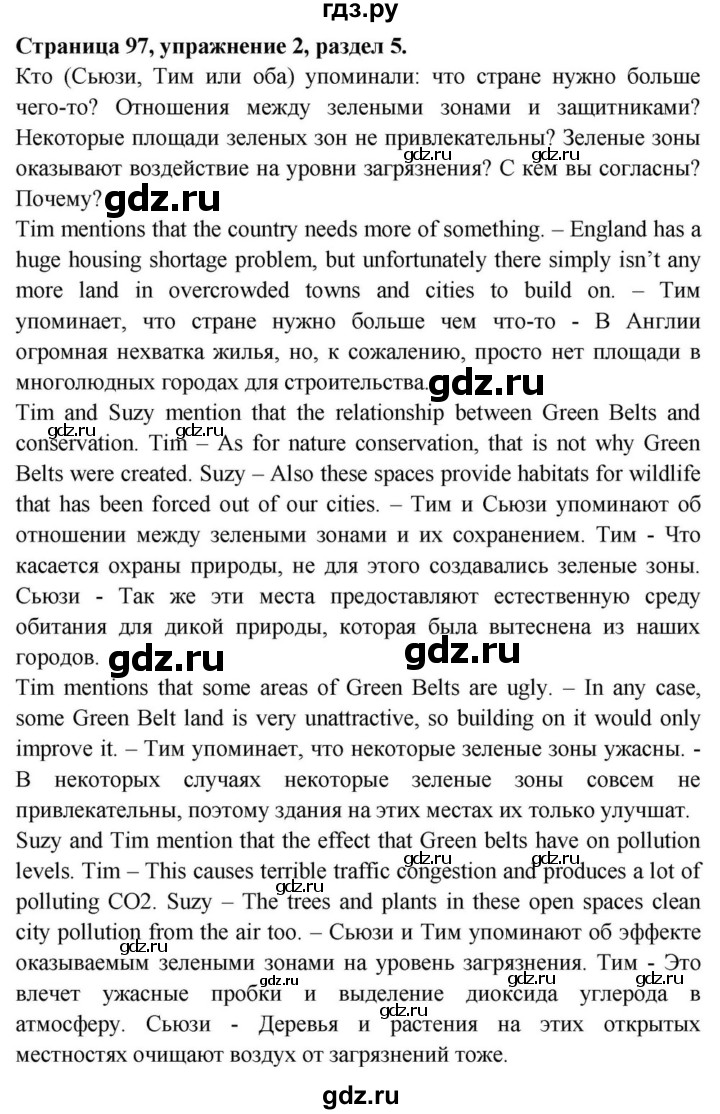
**1. Who mentions:**
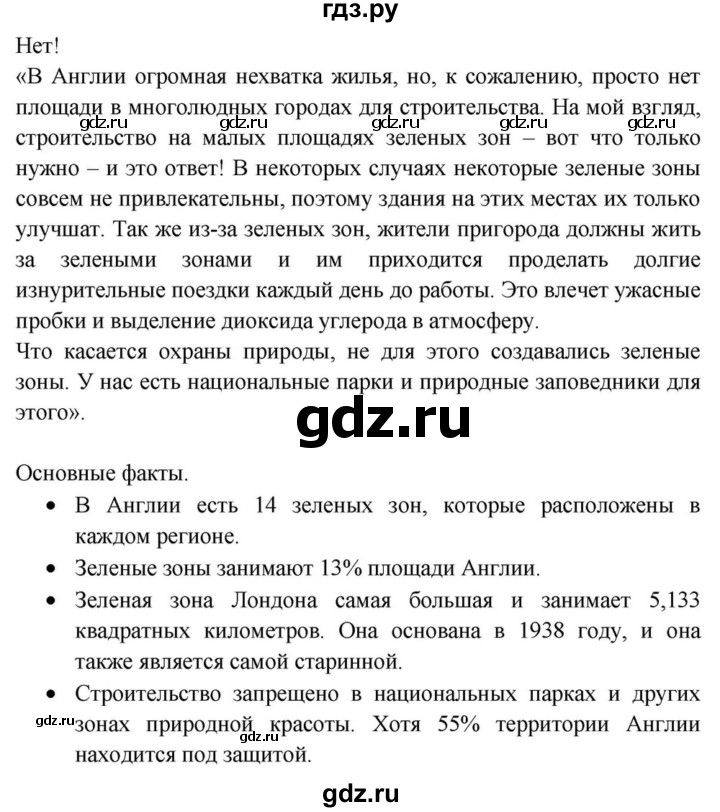
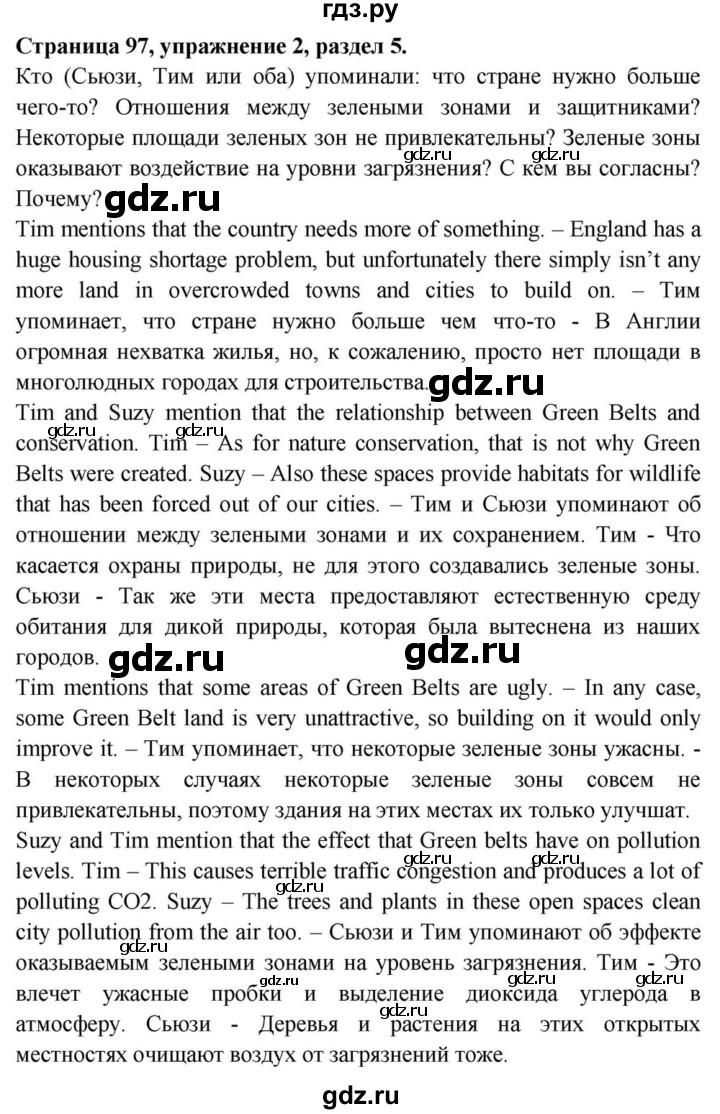
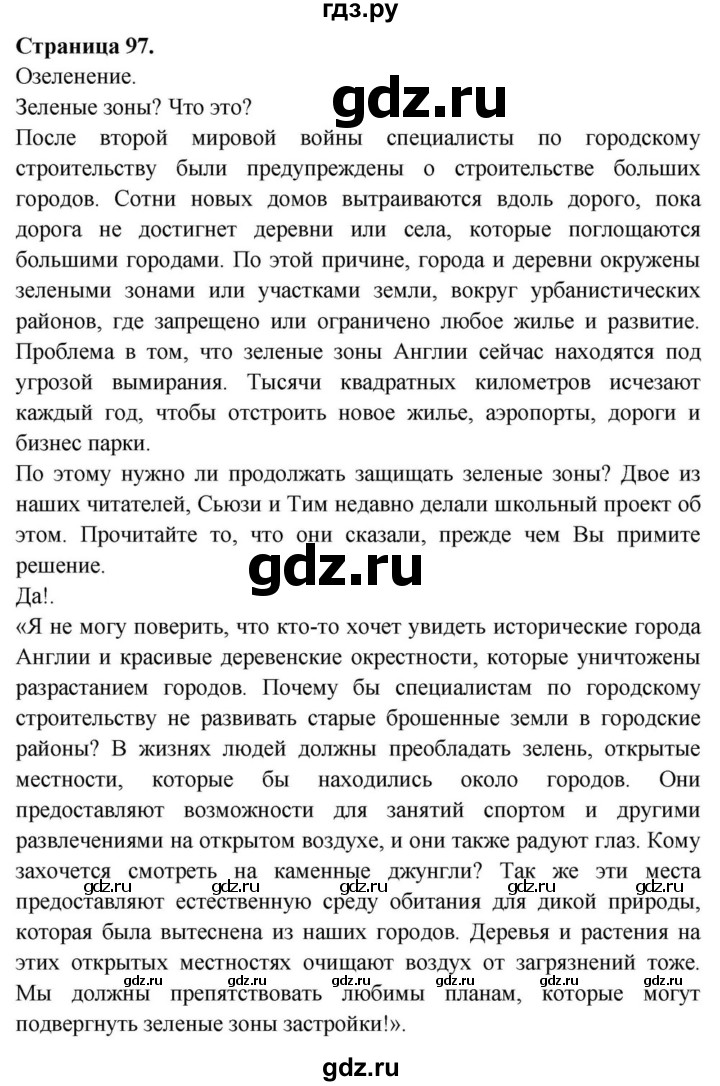
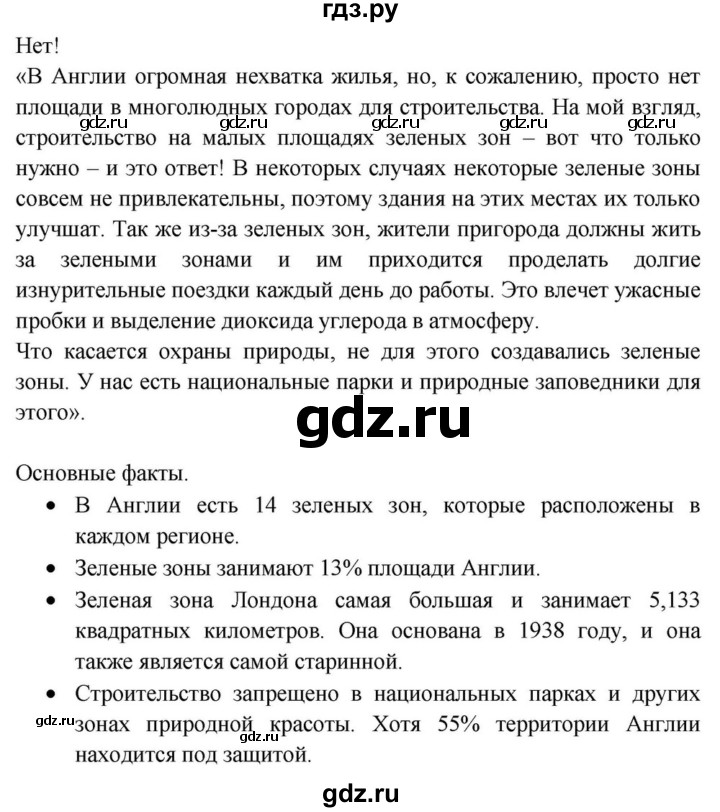
1. that the country needs more of something? — **Tim** *(he mentions that England has a huge housing shortage problem)*
2. the relationship between green belts and conservation? — **Both** *(Suzy mentions wildlife habitats; Tim mentions nature reserves and national parks)*
3. that some areas of green belts are ugly? — **Tim** *(he says that some green belt land is very unattractive)*
4. the effect that green belts have on pollution levels? — **Both** *(Suzy says plants clean city air; Tim says commuters travelling around green belts create traffic and CO₂ pollution)*
**2. Personal opinion (sample answer):**
*I agree more with Suzy because green spaces are vital for people's physical and mental health, as well as for wildlife. Instead of destroying nature, developers should redevelop abandoned urban zones.*
---
### Exercise 3
#### 1. Match the highlighted words with their definitions:
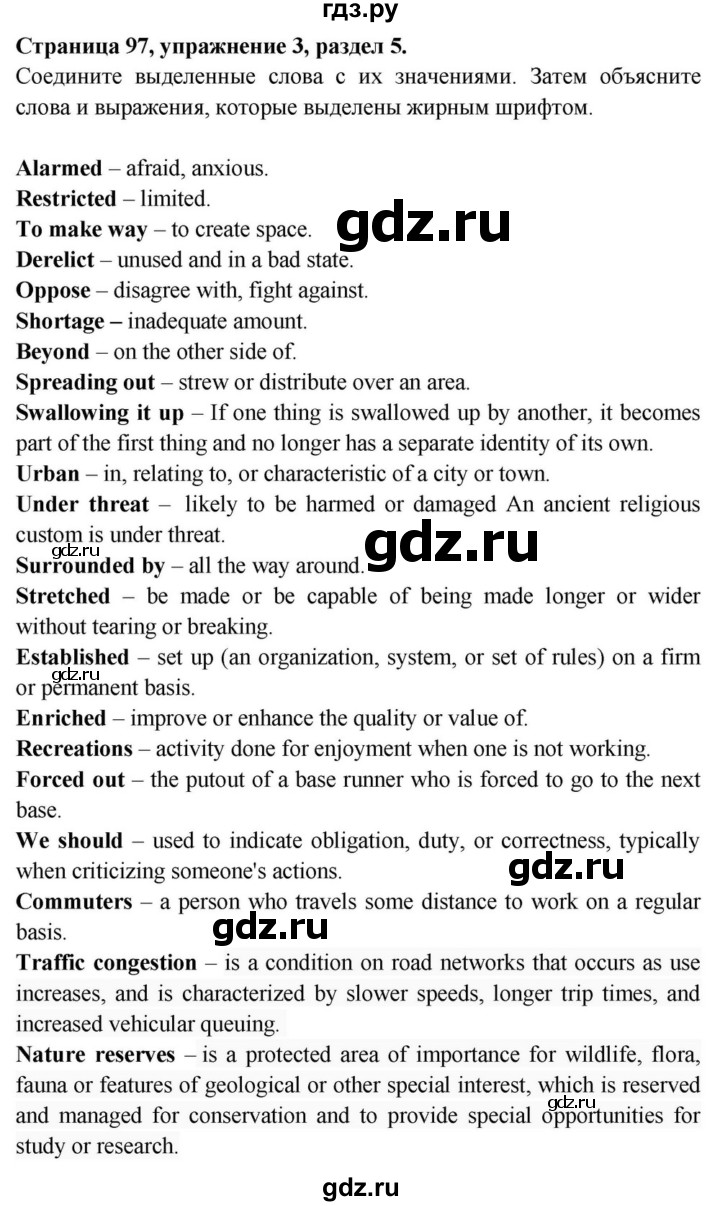
* **afraid/anxious** — *alarmed* (встревоженный, напуганный)
* **limited** — *restricted* (ограниченный)
* **to create space** — *make way for* (уступить место, освободить пространство)
* **unused & in a bad state** — *derelict* (заброшенный, в полуразрушенном состоянии)
* **disagree with/fight against** — *oppose* (выступать против, противиться)
* **inadequate amount** — *shortage* (нехватка, дефицит)
* **on the other side of** — *beyond* (за пределами, по ту сторону)
#### 2. Explain the words/phrases in bold:
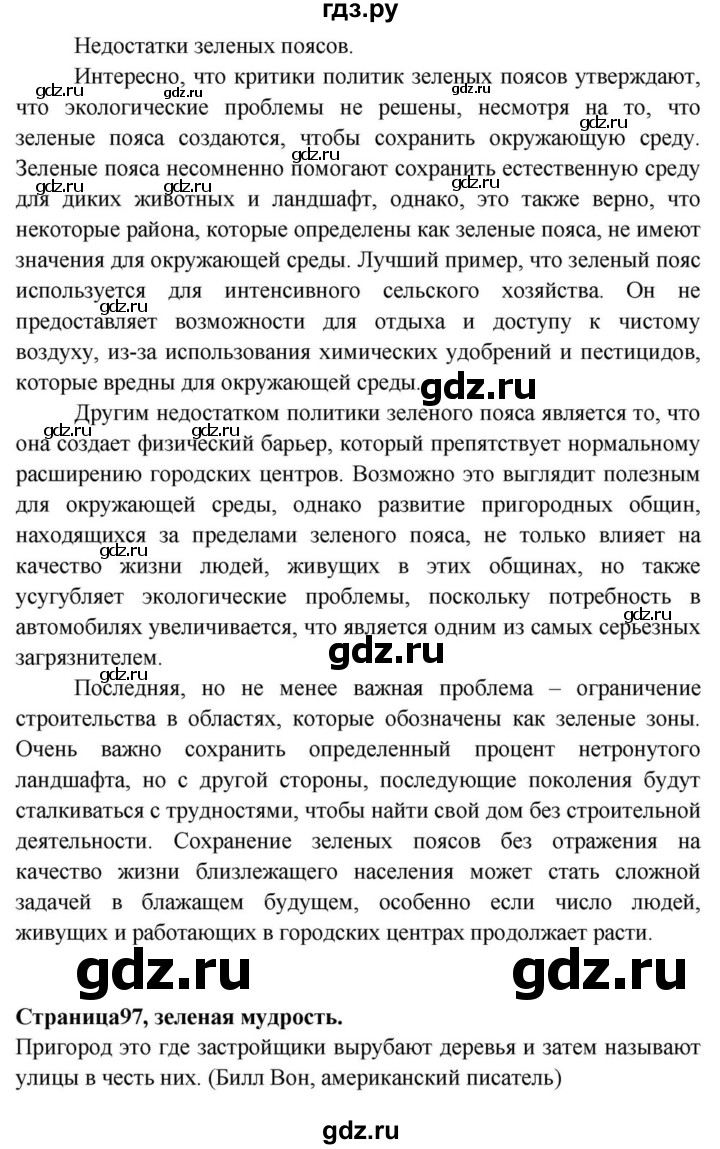
* **urban sprawl** — the uncontrolled expansion of urban areas into surrounding countryside and towns *(разрастание городов)*.
* **concrete jungle** — an unpleasant, overcrowded city area with a lot of large, modern concrete buildings and very few or no trees/green spaces *(«каменные/бетонные джунгли»)*.
* **commuters** — people who travel a relatively long distance to work on a daily basis *(маятниковые мигранты / люди, ежедневно ездящие на работу из пригорода в город)*.
* **traffic congestion** — a situation when roads are blocked with large amounts of vehicles, causing traffic jams *(дорожные заторы, пробки)*.
---
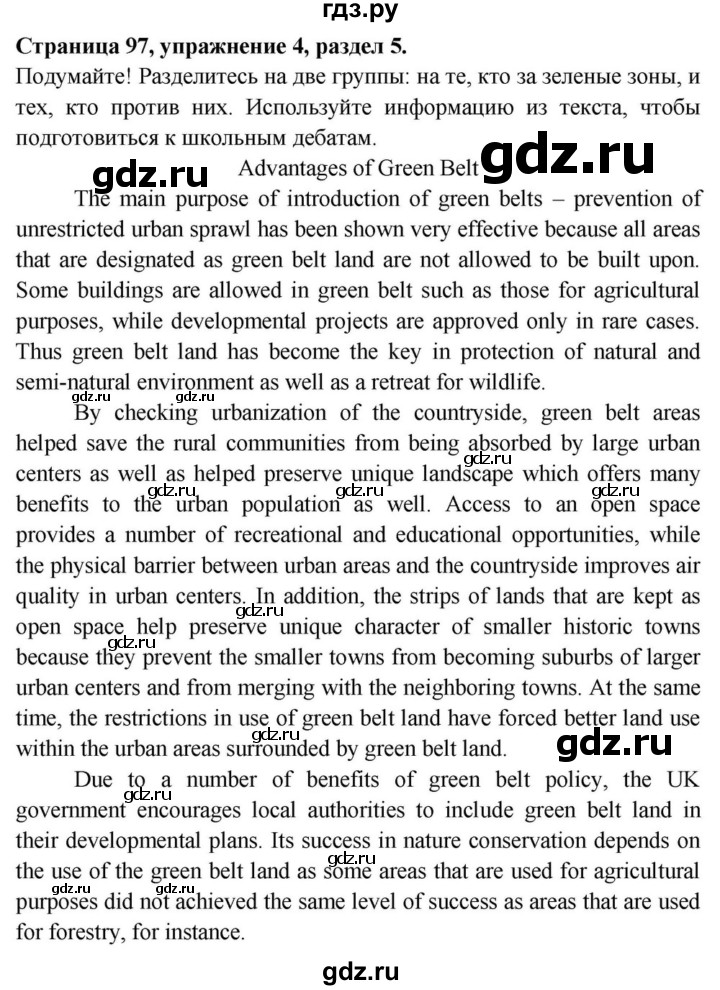
### Exercise 4 (Debate Preparation)
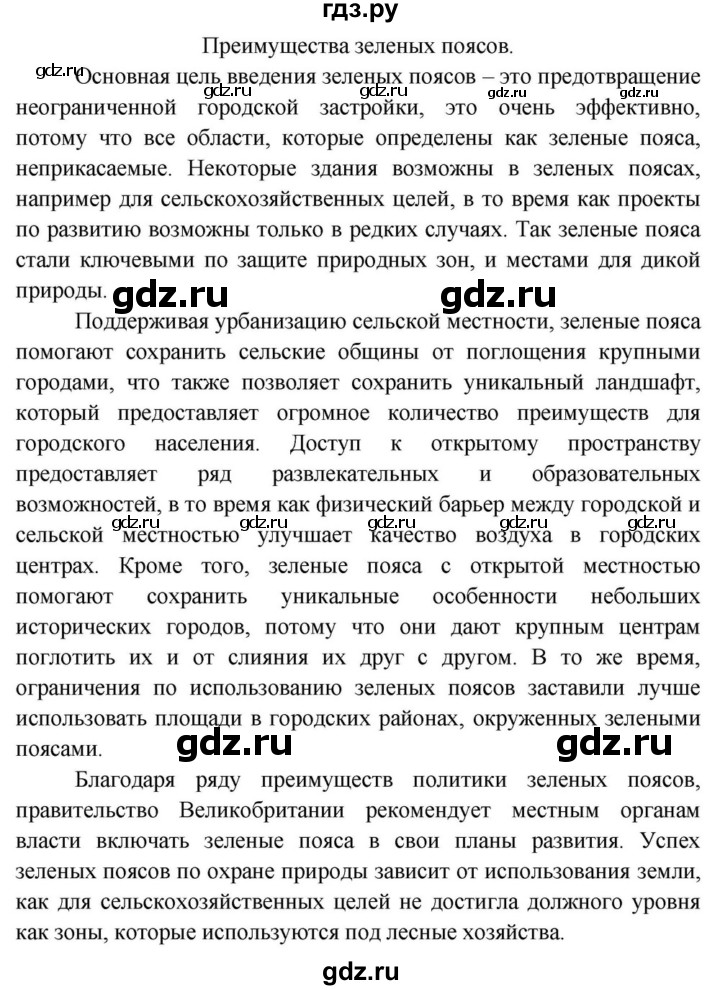
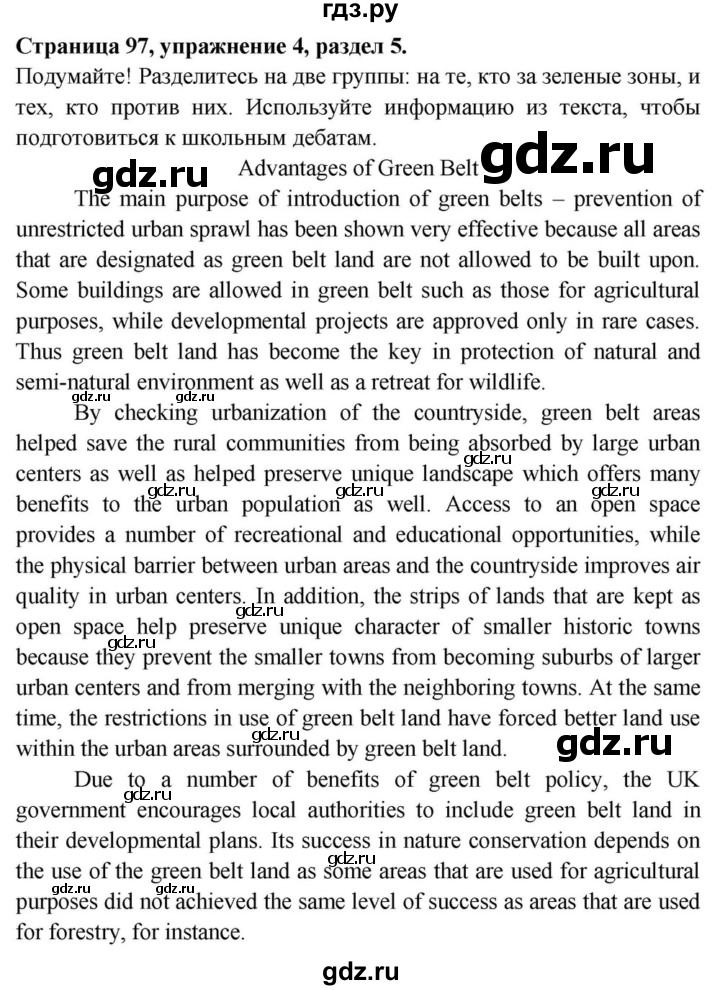
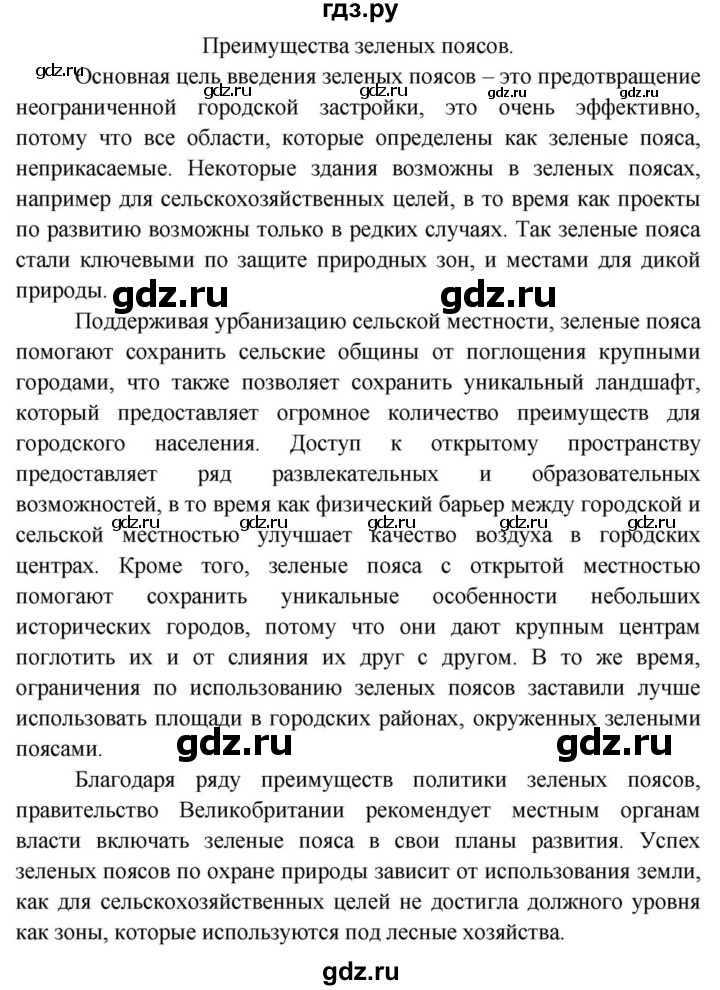
#### **Arguments FOR protecting green belts (Suzy’s team):**
* **Preserving heritage and landscape:** They protect historic towns and the countryside from being swallowed by cities.
* **Health and recreation:** Green spaces offer areas for sports, walks, and relaxation, improving residents' quality of life.
* **Ecology and biodiversity:** They provide essential habitats for plants and animals displaced from cities.
* **Air purification:** Trees and greenery filter and absorb urban air pollution.
* **Alternative solution:** Builders should regenerate derelict, abandoned urban brownfields instead of greenfields.
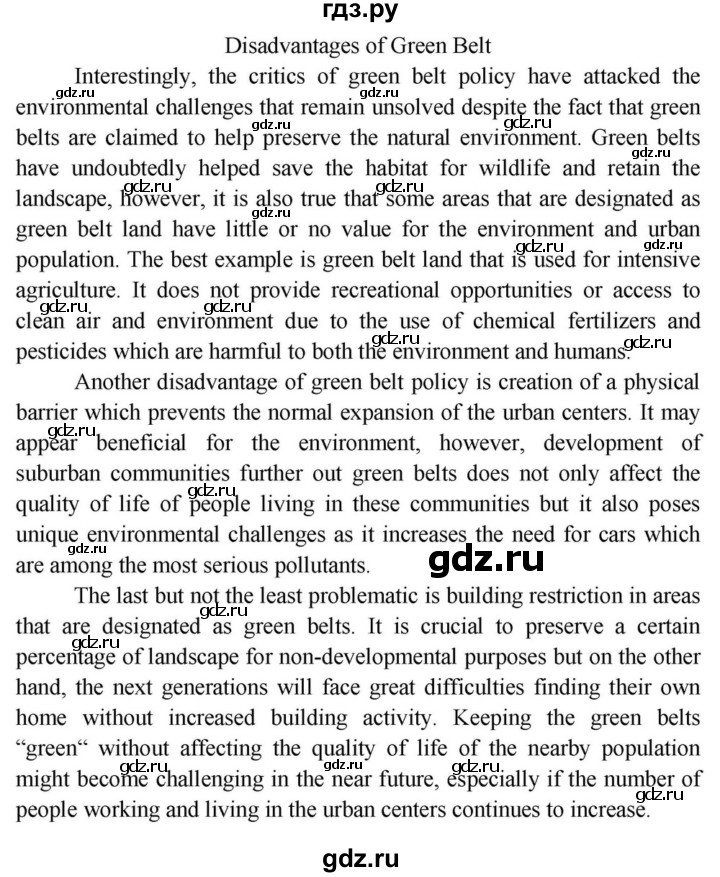
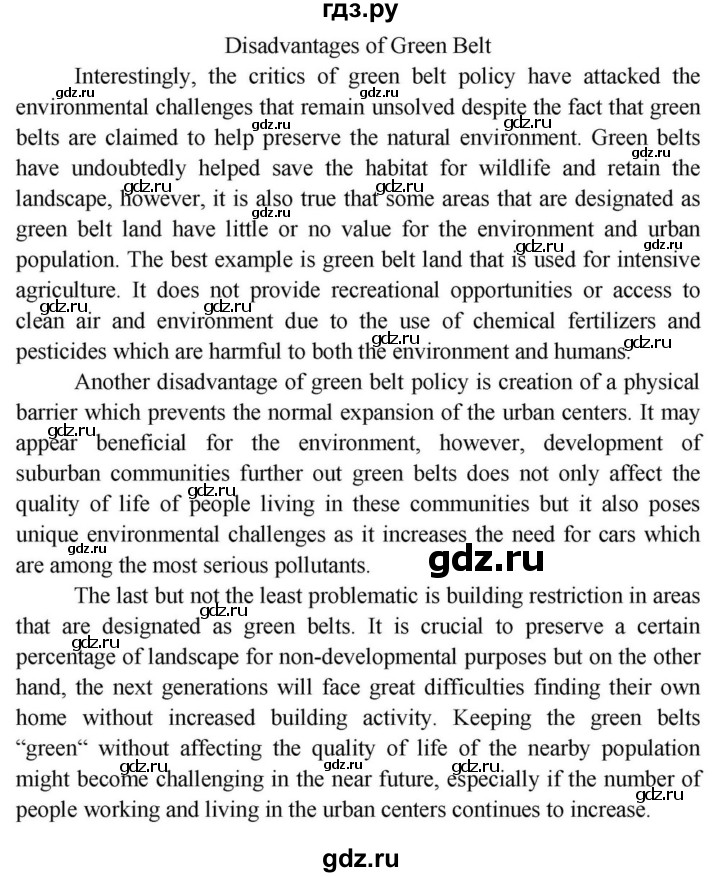
#### **Arguments AGAINST green belts (Tim’s team):**
* **Housing shortage:** The population is growing, and there is not enough land inside crowded cities to build affordable homes.
* **Low impact:** Building on just a tiny fraction of green belt land is enough to solve the housing crisis.
* **Aesthetic improvement:** Certain green belt areas are degraded and unattractive; developing them would make them cleaner and more useful.
* **Transport and emissions:** Forcing people to live beyond green belts creates long daily commutes, extreme traffic jams, and excessive $\text{CO}_2$ emissions.
* **Alternative conservation:** Dedicated national parks and nature reserves already fulfill the function of protecting nature.
---
### Подробное объяснение и подсказки
1. **Exercise 2:**
* Тим упоминает нехватку жилья (*«England has a huge housing shortage problem»*).
* Оба автора затрагивают тему экологии и охраны природы (*conservation*): Сьюзи говорит о среде обитания диких животных (*habitats for wildlife*), а Тим — о заповедниках (*national parks and nature reserves*).
* Тим прямо называет некоторые участки непривлекательными (*«some green belt land is very unattractive»*).
* Оба автора связывают «зелёные пояса» с загрязнением: Сьюзи — положительно (*«clean city pollution from the air»*), Тим — отрицательно из-за выбросов от выхлопных газов (*«produces a lot of polluting CO₂»*).
2. **Exercise 3:**
* **Phrasal idioms / Collocations:** Обратите внимание на идиому *concrete jungle* (образное выражение, обозначающее город без зелени, где кругом один бетон) и термин *urban sprawl* (явление, при котором город стихийно «расползается» во все стороны).
Спасибо за оценку!


Открой больше возможностей
Войди через VK — задавай вопросы ИИ и сохраняй ГДЗ в избранное
