


ГДЗ по английскому языку 11 класс Афанасьева Spotlight Базовый уровень страница - 109

Авторы: Афанасьева О.В., Дули Д., Михеева И.В., Оби Б., Эванс В.
Серия: Spotlight
Тип книги: Учебник
Год: 2015-2024
Рекомендуем посмотреть


 Премиум
Подробное решение страница № 109 по английскому языку Spotlight для учащихся 11 класса Spotlight Базовый уровень, авторов Афанасьева, Дули, Михеева, Оби, Эванс 2015-2024
Вот готовые решения ко всем заданиям со страницы 109 учебника **Spotlight 11 (Module 6, Literature — White Fang)**.
---
### **Итоговые ответы**
#### **Exercise 4 a**
1. The dog **barked** to get attention whenever he wanted something.
2. They ran very fast over the rocky hill and tried not to **stumble** and fall.
3. The bear **growled** in a threatening way when it saw the people approaching.
4. When the man stopped running, he was **panting** from exhaustion.
5. When the two strangers were introduced, they **shook** hands politely.
6. The woman saw a shadow and **screamed** with fear.
---
#### **Exercise 4 b**
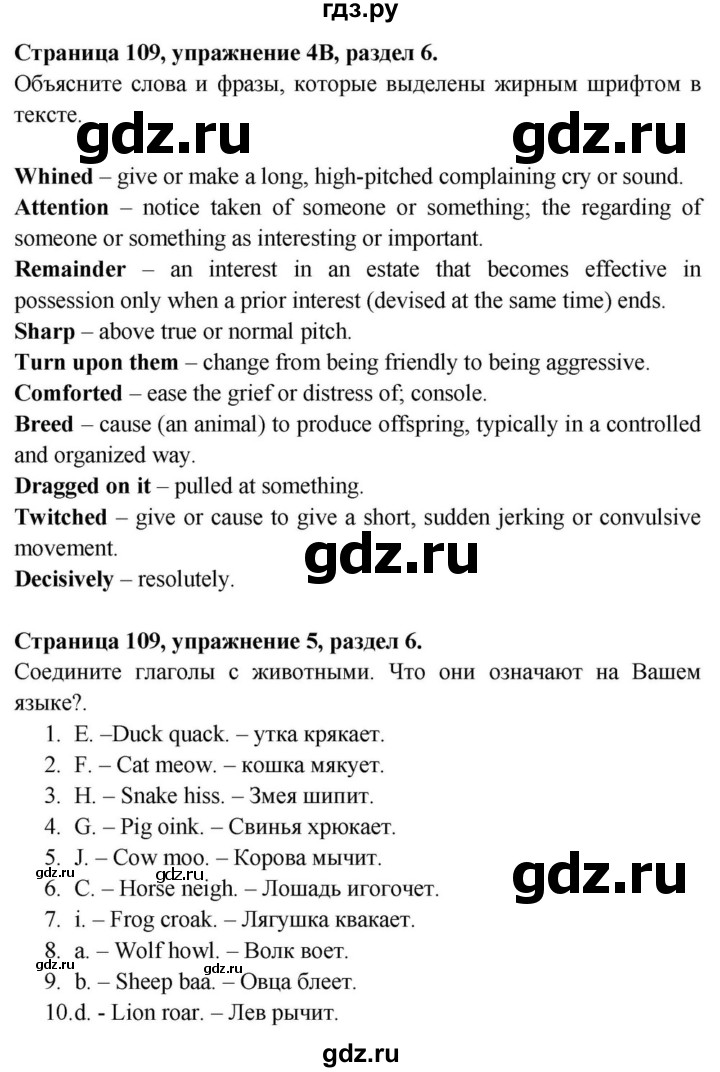
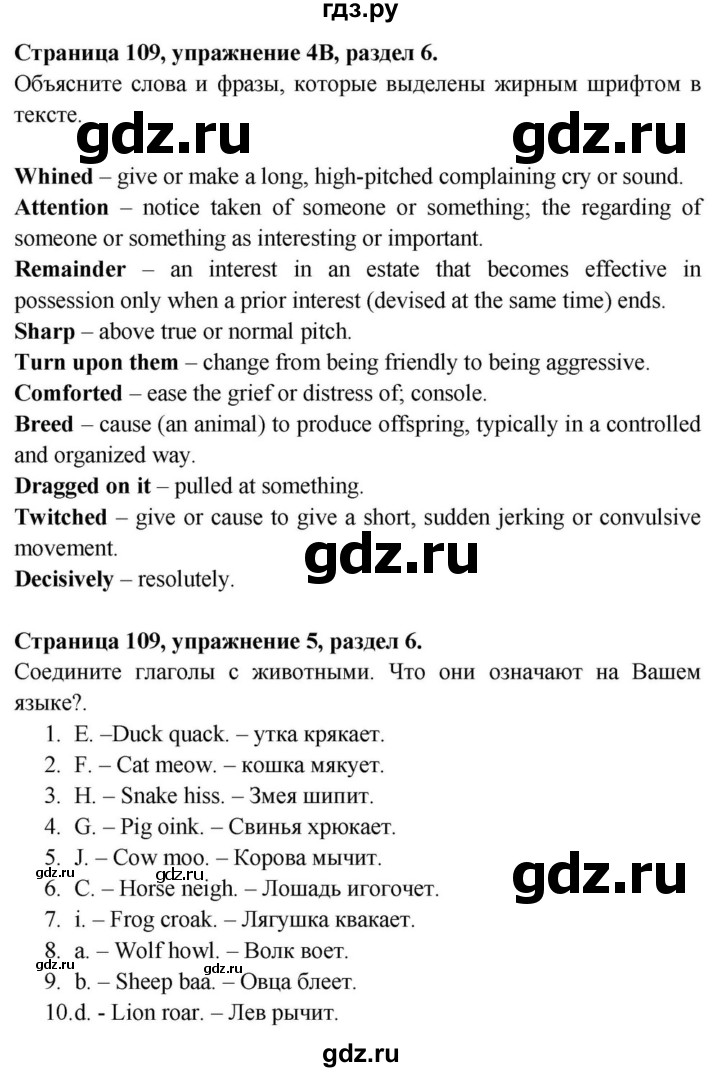
* **remainder** — the rest of something (*остаток, оставшаяся часть*).
* **sharp** — sudden, clear, and loud (*резкий, отрывистый*).
* **relaxing** — resting, becoming less stiff or anxious (*расслабляющийся, отдыхающий*).
* **apprehensively** — with fear, anxiety, or worry about the future (*с опаской, с тревогой*).
* **turn upon them** — attack someone suddenly (*наброситься, напасть на кого-то*).
* **comforted them** — made them feel better and less worried (*утешил(а), успокоил(а) их*).
* **absence** — the state of being away (*отсутствие*).
* **breed** — a specific type or variety of an animal (*порода*).
* **dragged on it** — pulled something with effort (*тянул, дергал за что-то*).
* **warm climate** — weather conditions typical of a warm region (*тёплый климат*).
* **decisively** — quickly, confidently, and without hesitation (*решительно*).
---
#### **Exercise 5**
1 — **e** (quack — duck / *крякать*)
2 — **f** (meow — cat / *мяукать*)
3 — **h** (hiss — snake / *шипеть*)
4 — **g** (oink — pig / *хрюкать*)
5 — **j** (moo — cow / *мычать*)
6 — **c** (neigh — horse / *ржать*)
7 — **i** (croak — frog / *квакать*)
8 — **a** (howl — wolf / *выть*)
9 — **b** (baa — sheep / *блеять*)
10 — **d** (roar — lion / *рычать*)
---
#### **Exercise 6**
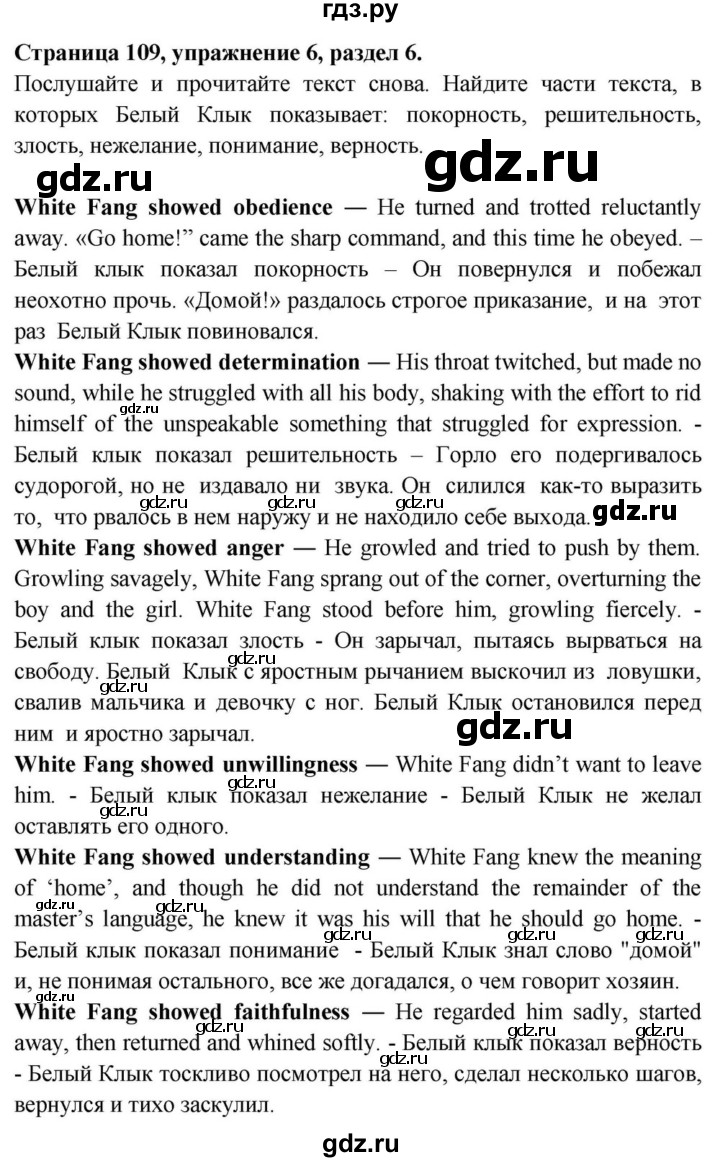
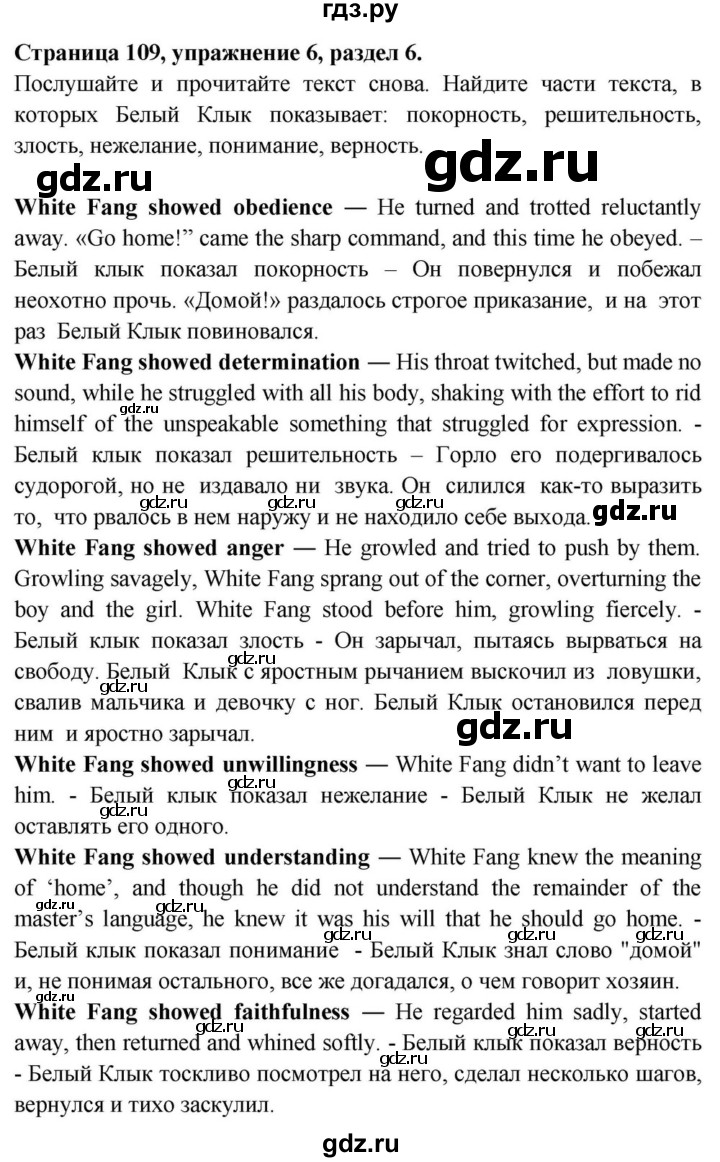
* **Obedience (*послушание*):** When the master told him to go home, White Fang turned and trotted away even though he didn't want to.
* **Determination (*решимость*):** He was determined to alert the family about Weedon's accident, grabbing the woman's dress and trying desperately to bark.
* **Anger (*злость/гнев*):** He growled when the children tried to corner and pet him against his will.
* **Unwillingness (*нежелание*):** He trotted away *reluctantly* and stopped, undecided, not wanting to leave his master alone.
* **Understanding (*понимание*):** White Fang knew the meaning of "home" and realized that his master was in trouble and needed help.
* **Faithfulness (*преданность*):** He did not abandon his injured master; instead, he ran to the house to bring help and then guided the people back to Weedon.
---
#### **Exercise 7**
* **Explanation:** This phrase means that White Fang had a strong, deep emotional urge to communicate something crucial (a human-like message), but as an animal, he lacked the physical ability to speak human words.
* **Examples from text:** White Fang’s throat twitched without making a sound at first, and he trembled with the intense effort until he finally managed to burst into a loud, desperate bark.
---
#### **Exercise 8**
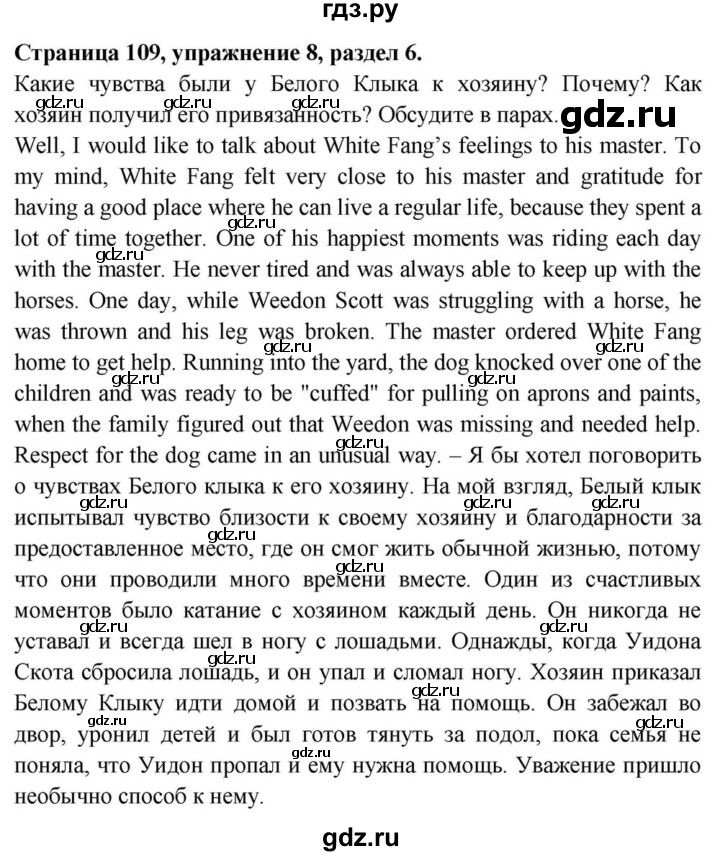
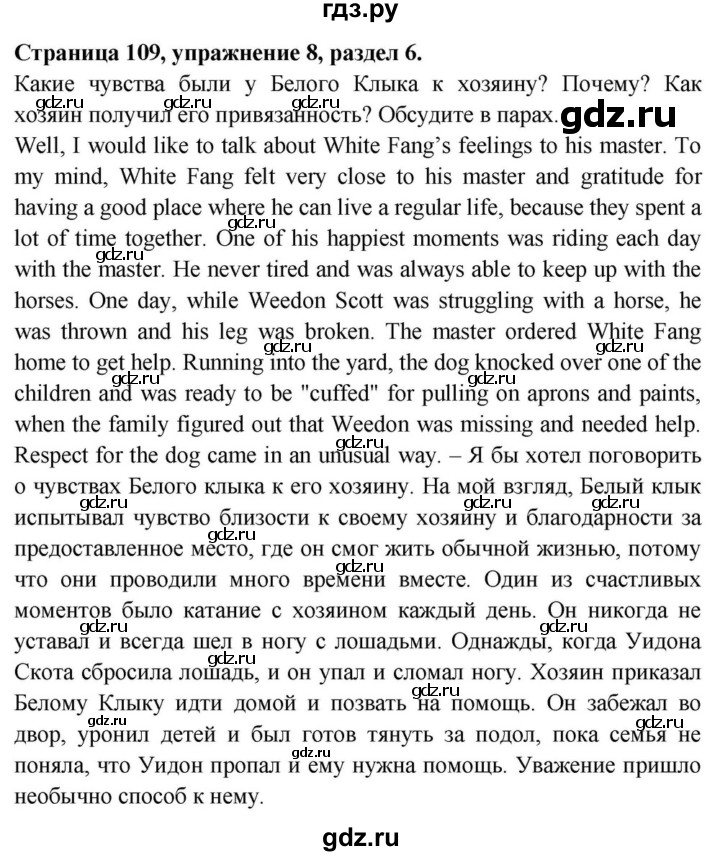
White Fang felt deep love, respect, and absolute loyalty toward Weedon Scott. Originally wild and abused by cruel owners like Beauty Smith, White Fang learned to trust humans again because Weedon treated him with patience, kindness, respect, and gentle affection rather than violence.
---
#### **Exercise 9 (THINK!)**
* **Human qualities:** Loyalty, empathy, intelligence, sense of duty, and love.
* **How they affect him:** These qualities make him rise above his wild, animal instincts. Instead of acting purely as an aggressive predator, he learns to restrain himself, cares for humans, and becomes a dedicated protector of his master's family.
---
#### **Exercise 10 (THINK!)**
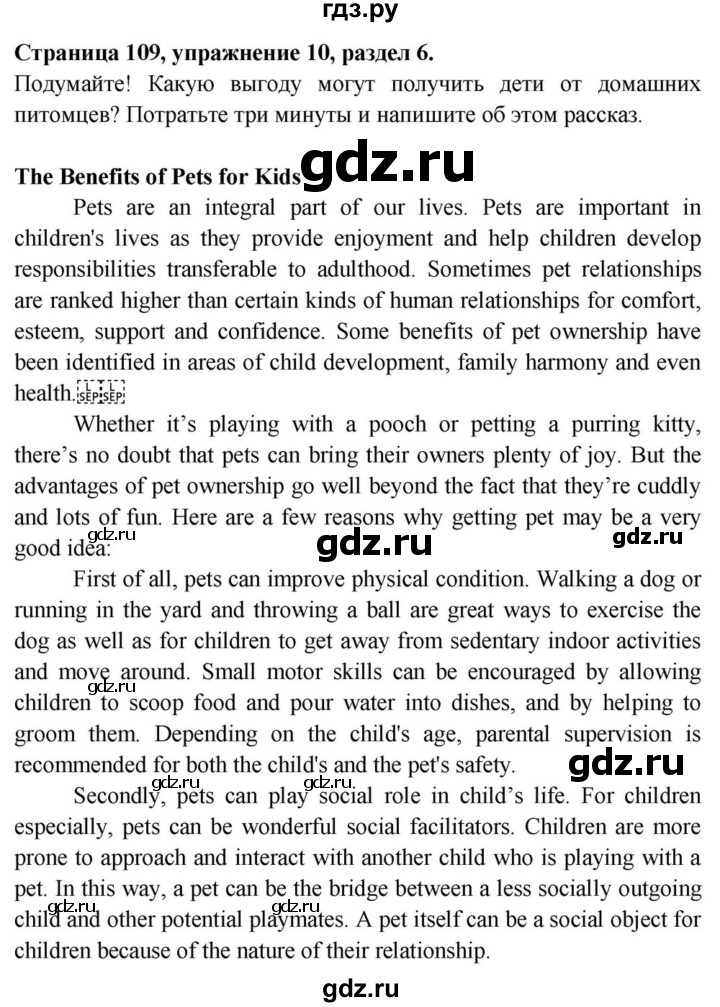
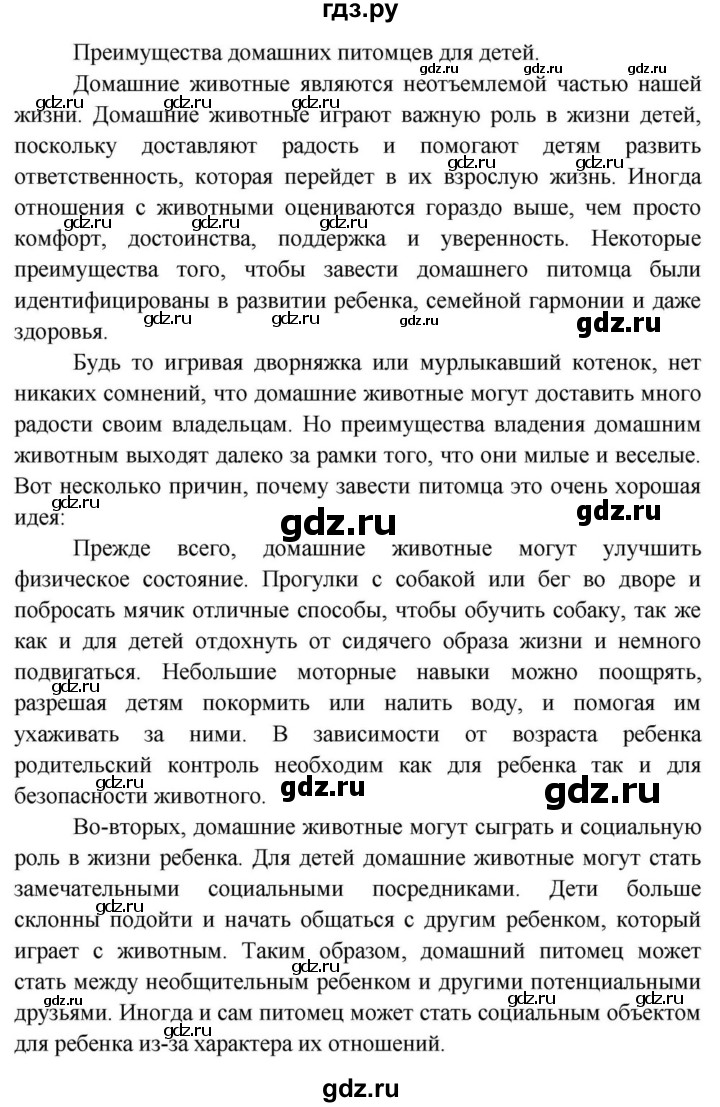
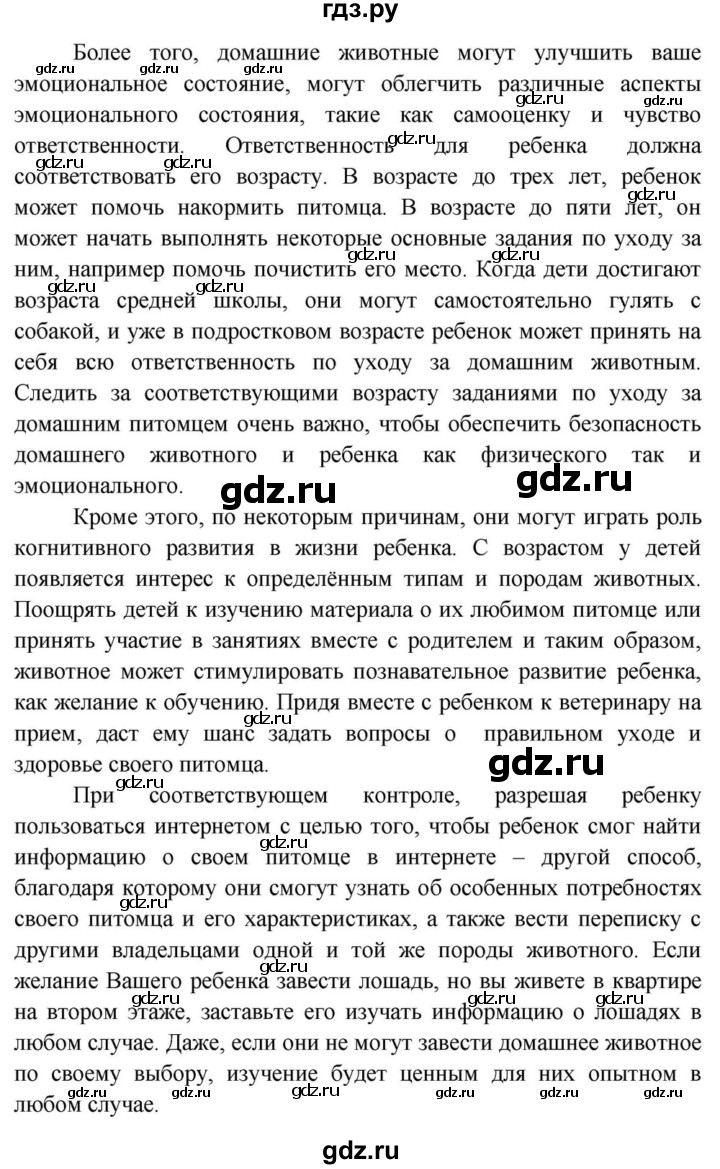
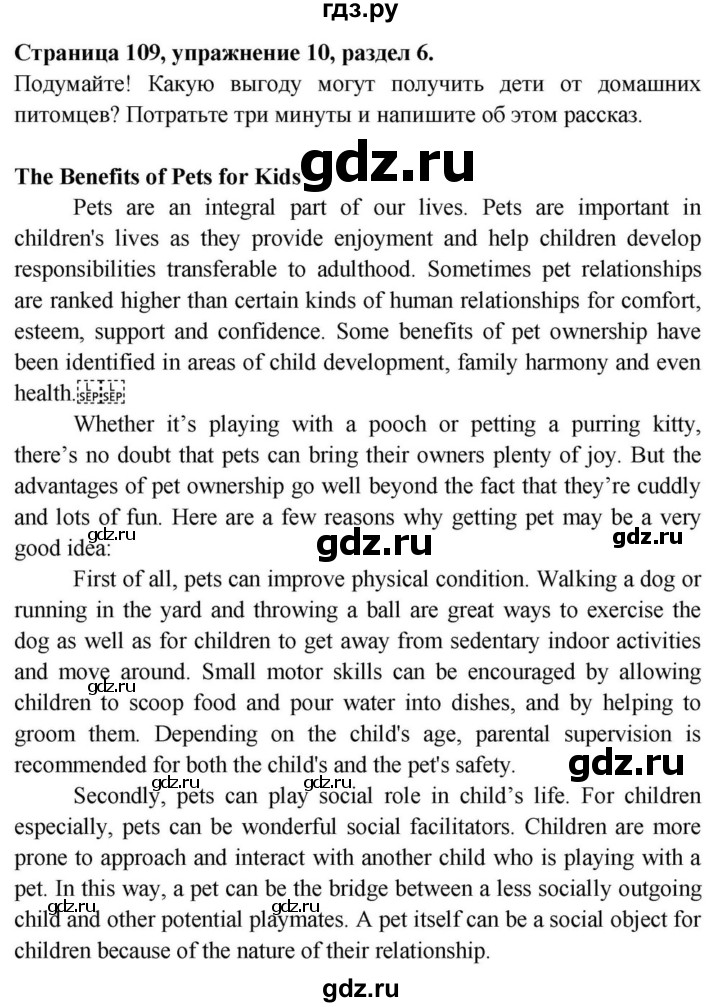
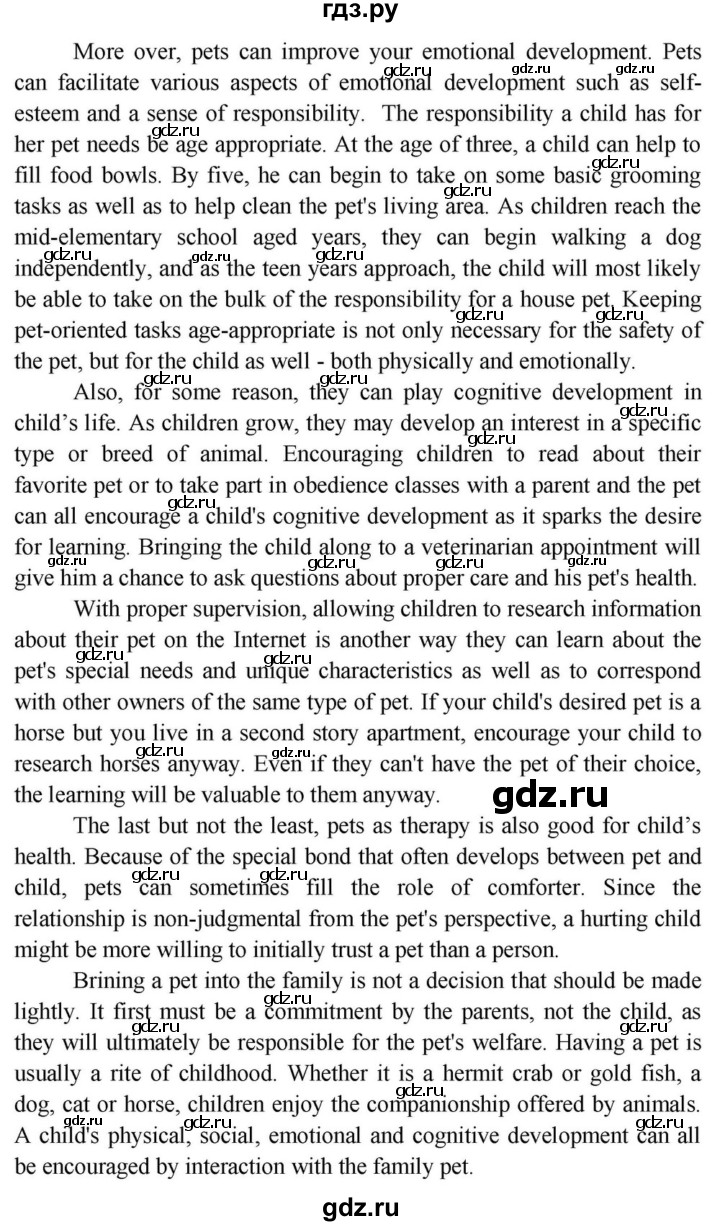
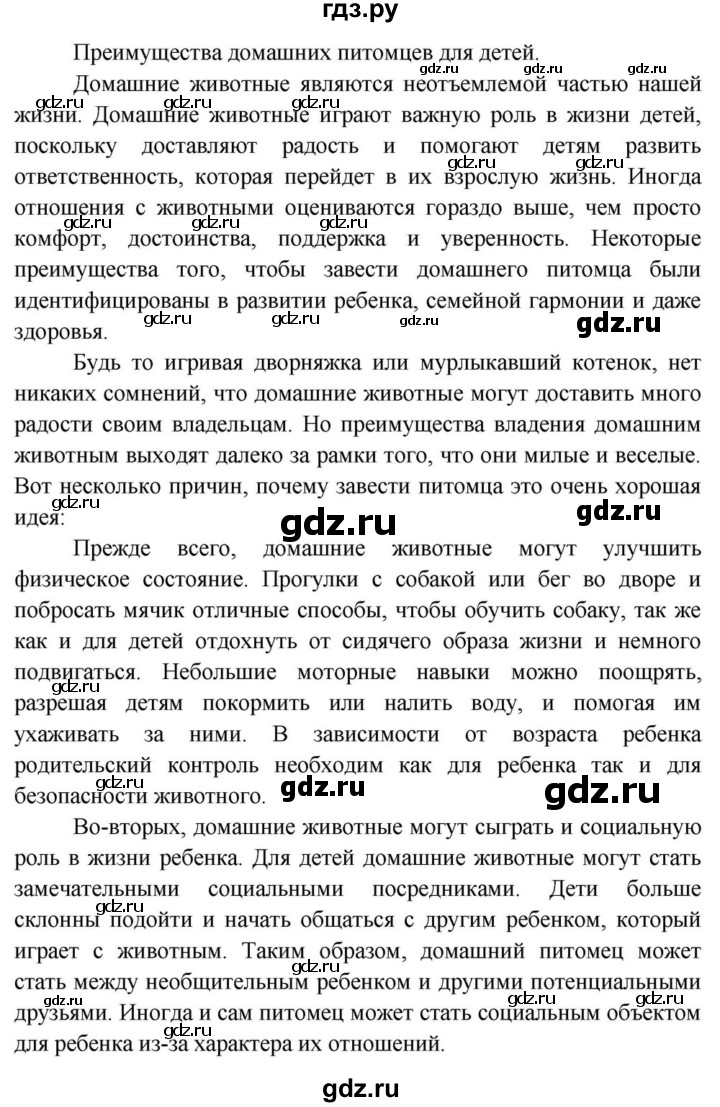
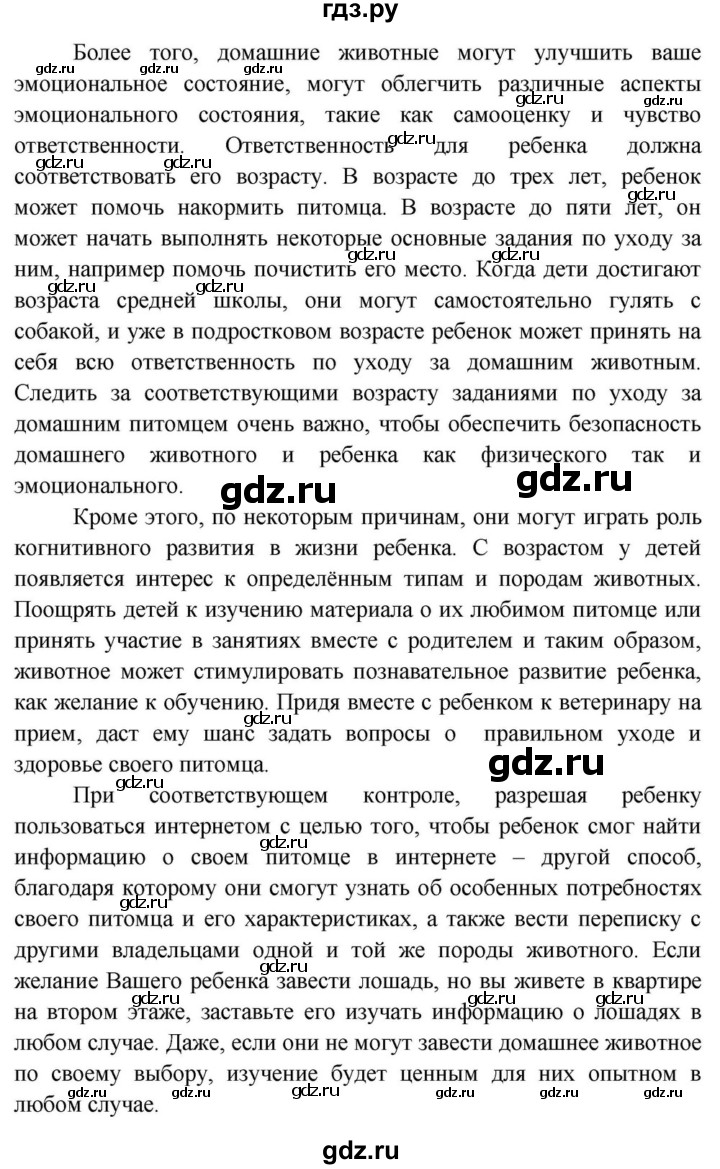
Having a pet brings many benefits to children. First, it teaches them responsibility, empathy, and patience, as they learn to feed, groom, and care for another living being. Second, pets provide unconditional love and companionship, which helps reduce stress and loneliness. Finally, active pets like dogs encourage children to spend more time outdoors and stay healthy.
---
### **Пояснения к выполнению заданий**
1. **Ex. 4 a:** Для правильного заполнения пропусков необходимо учитывать временные формы глаголов в контексте:
* *barked* (Past Simple) — регулярное действие в прошлом;
* *stumble* (инфинитив после частицы *to*);
* *growled* (Past Simple) — однократное действие в прошлом;
* *panting* (Past Continuous: *was panting*) — процесс;
* *shook* (Past Simple от неправильного глагола *shake*);
* *screamed* (Past Simple).
2. **Ex. 5:** Сопоставляются звуки, издаваемые животными (звукоподражательные глаголы). В русском языке для каждого из них существует устойчивый эквивалент.
3. **Ex. 6–7:** Задания направлены на глубокое понимание характера Белого Клыка в кульминационный момент отрывка, когда он преодолевает свою волчью природу и впервые лает («говорит»), чтобы спасти хозяина.
Спасибо за оценку!








Открой больше возможностей
Войди через VK — задавай вопросы ИИ и сохраняй ГДЗ в избранное
