


ГДЗ по английскому языку 11 класс Афанасьева Spotlight Базовый уровень страница - 129

Авторы: Афанасьева О.В., Дули Д., Михеева И.В., Оби Б., Эванс В.
Серия: Spotlight
Тип книги: Учебник
Год: 2015-2024
Рекомендуем посмотреть


 Премиум
Подробное решение страница № 129 по английскому языку Spotlight для учащихся 11 класса Spotlight Базовый уровень, авторов Афанасьева, Дули, Михеева, Оби, Эванс 2015-2024
### Итоговый ответ
#### Exercise 3
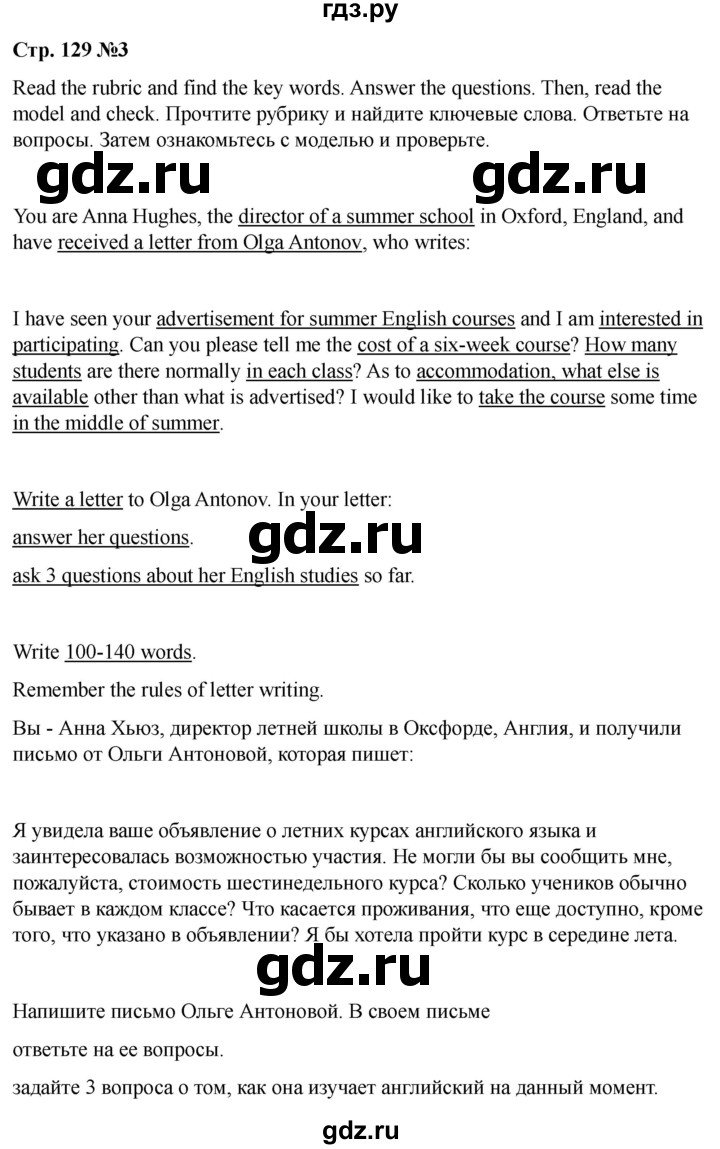
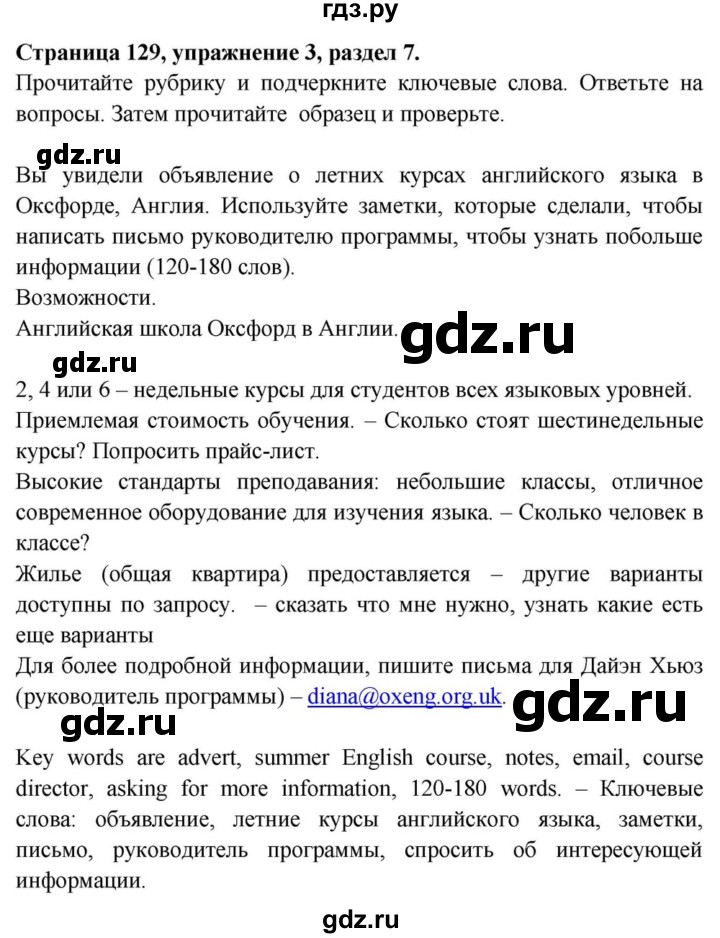
**Key words (Ключевые слова в задании):** *Anna Hughes, director, summer school in Oxford, letter from Olga Antonov, cost of a six-week course, how many students in each class, accommodation, middle of summer, answer her questions, ask 3 questions about her English studies, 100-140 words.*
**Ответы на вопросы:**
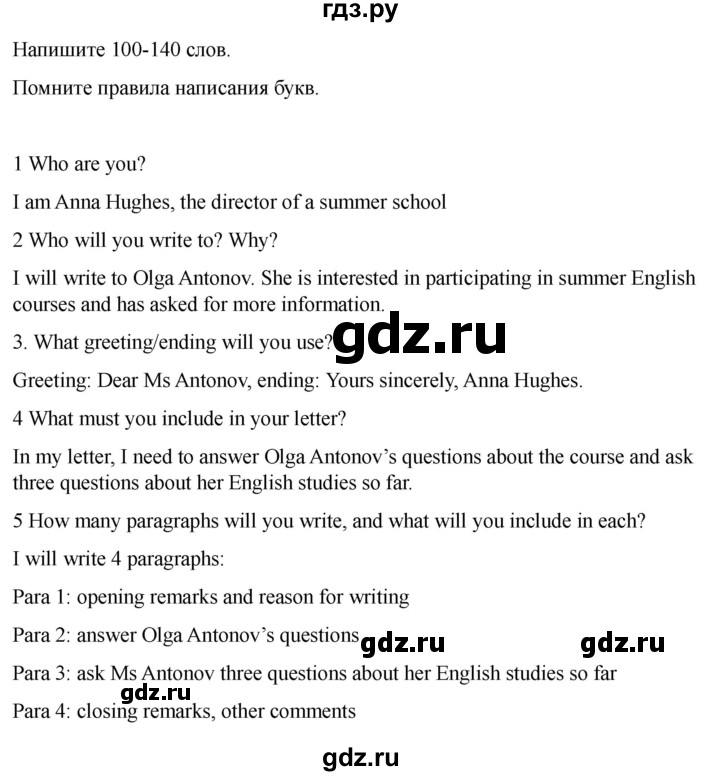
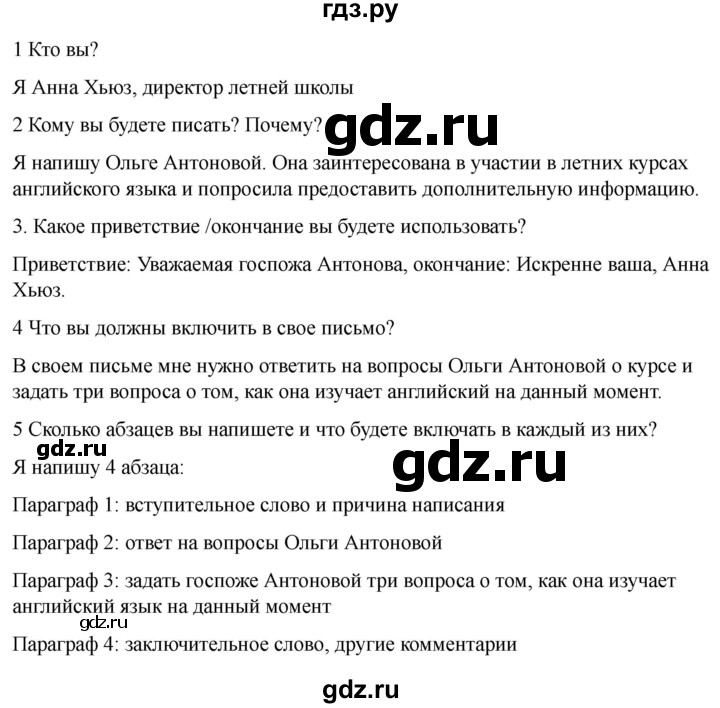
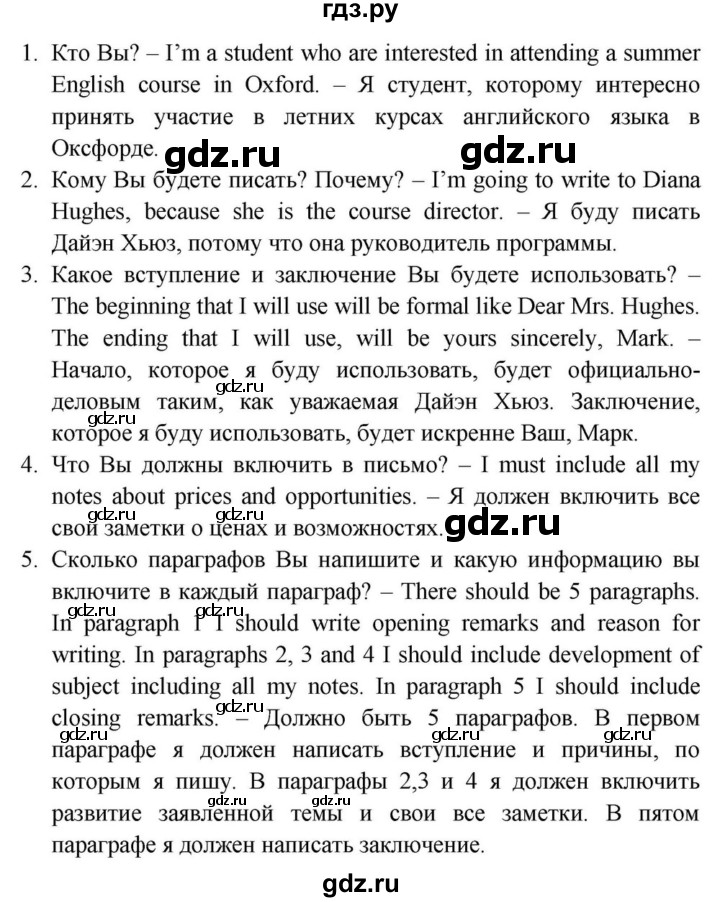
1. **Who are you?** — You are Anna Hughes, the director of a summer school in Oxford, England.
2. **Who will you write to? Why?** — To Olga Antonov, to reply to her letter and give her information about the summer English courses.
3. **What greeting/ending will you use?** — Greeting: *Dear Ms Antonov,*; Ending: *Yours sincerely, Anna Hughes*.
4. **What must you include in your letter?** — Answers to Olga’s questions (cost of a 6-week course, number of students per class, accommodation options) and 3 questions about her English studies so far.
5. **How many paragraphs will you write, and what will you include in each?**
* **Paragraph 1:** Reason for writing (responding to her inquiry).
* **Paragraph 2:** Answers to Olga's questions (cost, class size, accommodation).
* **Paragraph 3:** 3 questions regarding Olga's English studies.
* **Paragraph 4:** Closing remarks (polite offer of further help and expectation of a reply).
---
#### Exercise 4
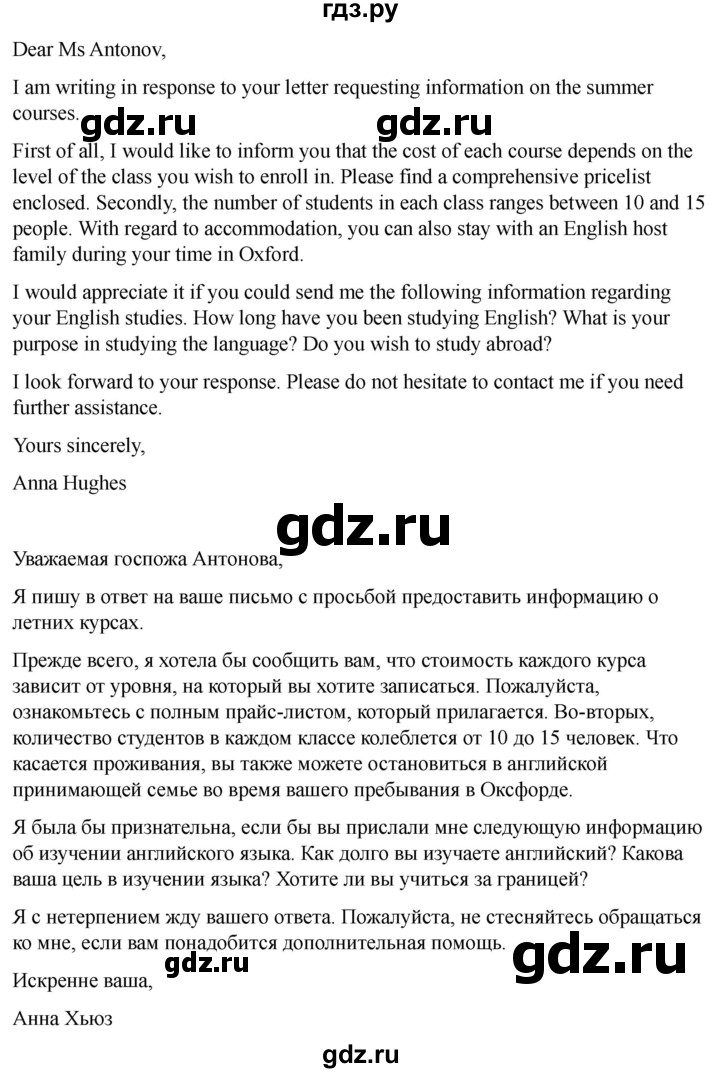
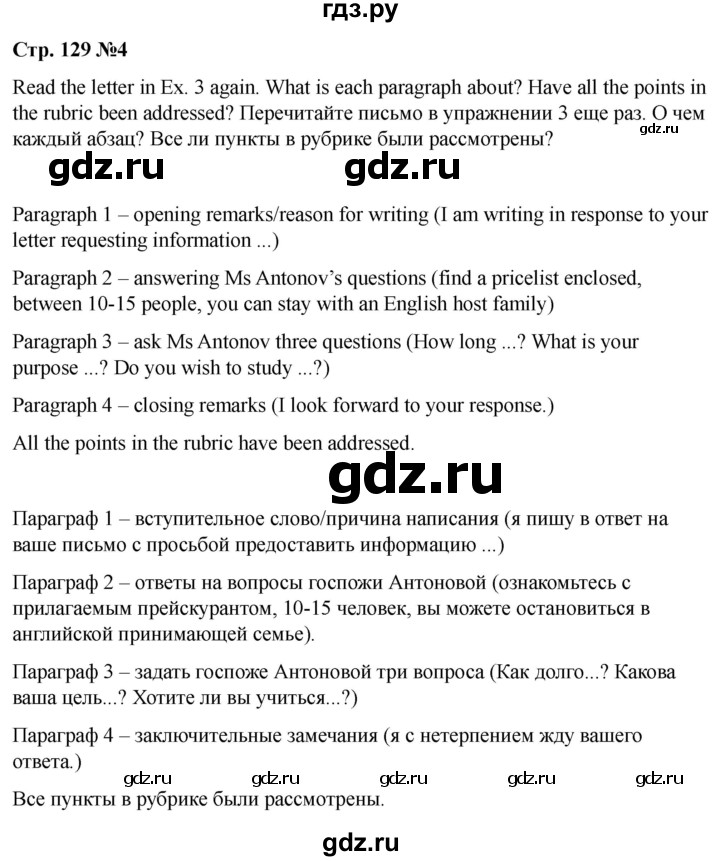
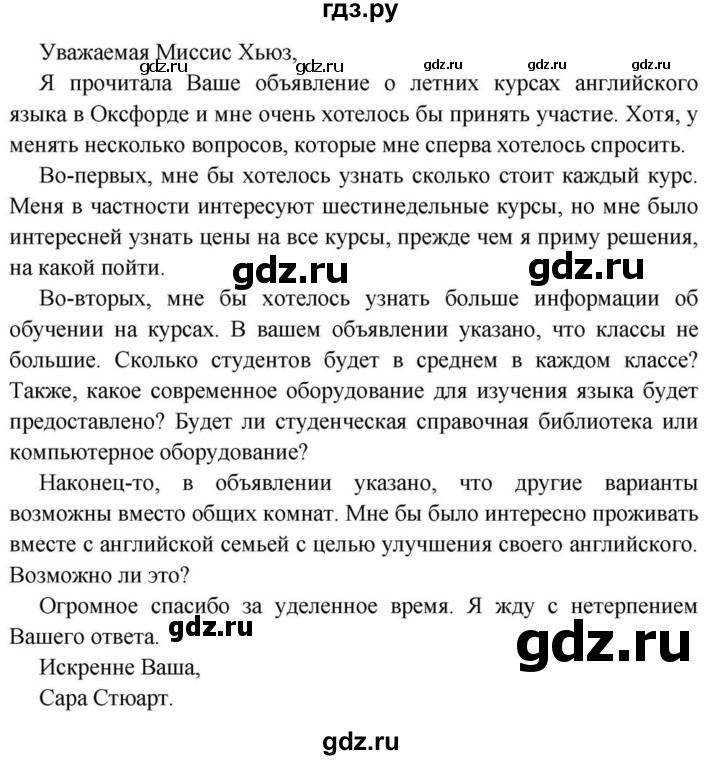
* **Paragraph 1:** Reason for writing (stating that the letter is a response to the request for information).
* **Paragraph 2:** Answers to Olga's questions regarding course fees, class sizes, and alternative accommodation (host family).
* **Paragraph 3:** Three questions about Olga's previous English studies (duration of study, purpose, desire to study abroad).
* **Paragraph 4:** Closing remarks / polite sign-off.
* **Have all the points in the rubric been addressed?** — Yes, all the points have been addressed in full.
---
#### Exercise 5
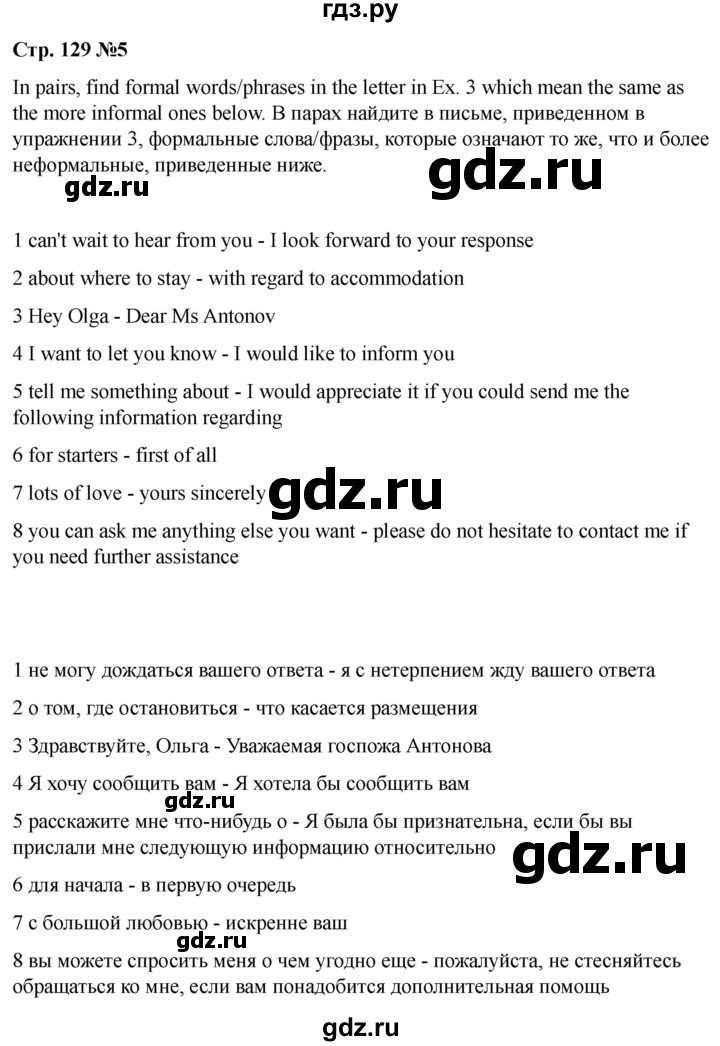
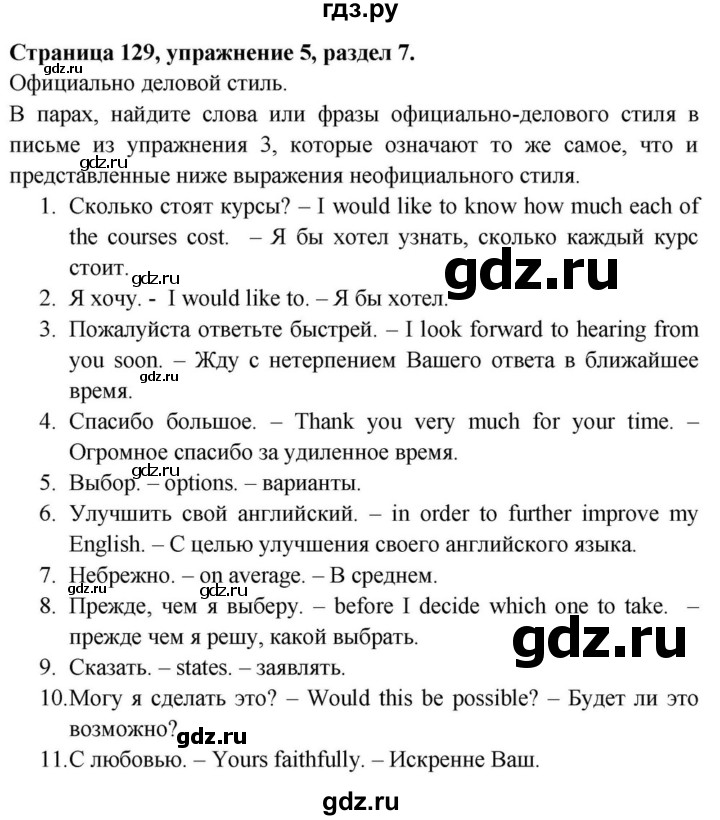
1. **can't wait to hear from you** — *I look forward to your response*
2. **about where to stay** — *With regard to accommodation*
3. **Hey Olga** — *Dear Ms Antonov*
4. **I want to let you know** — *I would like to inform you*
5. **tell me something about** — *send me the following information regarding*
6. **for starters** — *First of all*
7. **lots of love** — *Yours sincerely*
8. **you can ask me anything else you want** — *Please do not hesitate to contact me if you need further assistance*
---
#### Exercise 6
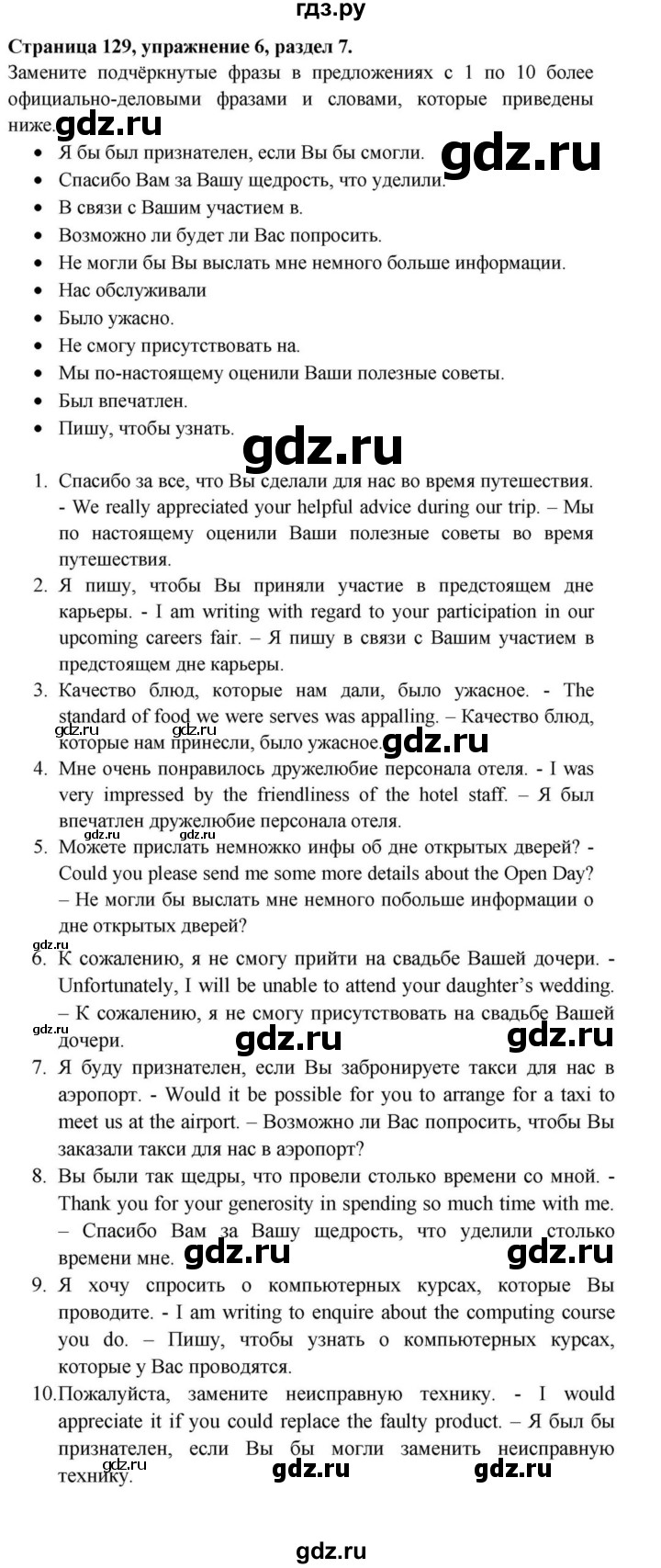
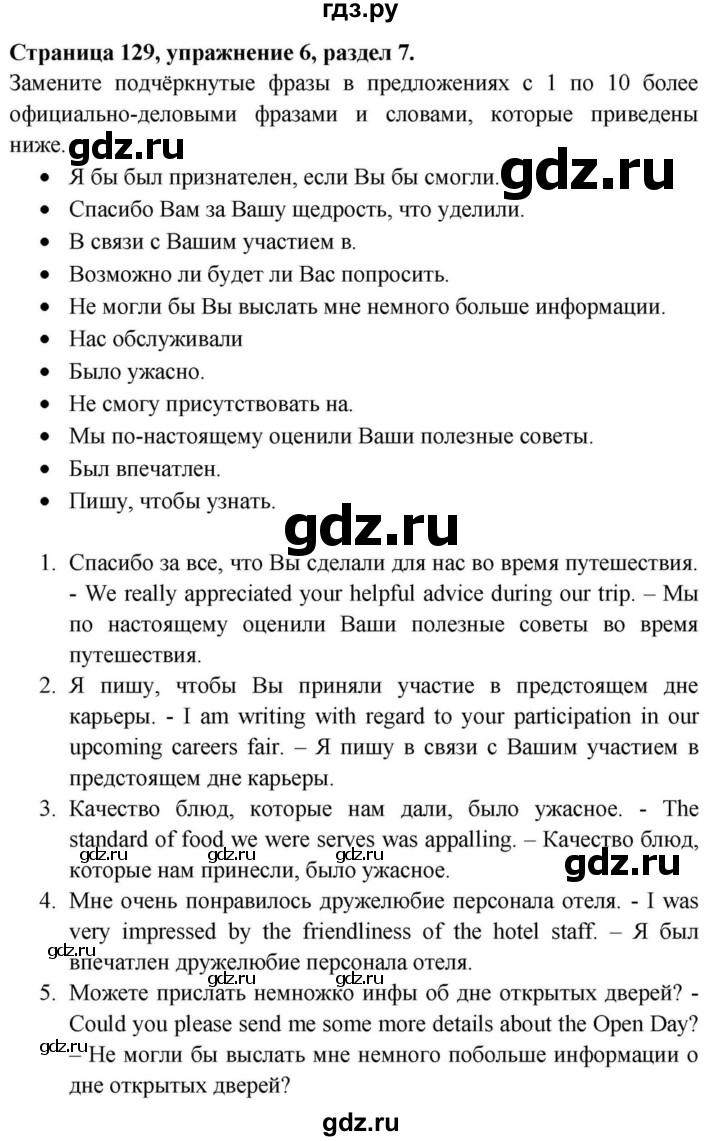
1. **We really appreciated your helpful advice** during our trip.
2. I am writing **with regard to your participation in** our upcoming careers fair.
3. The standard of food **we were served was appalling**.
4. I **was very impressed by** the friendliness of the hotel staff.
5. **Could you please send me some more details** about the Open Day?
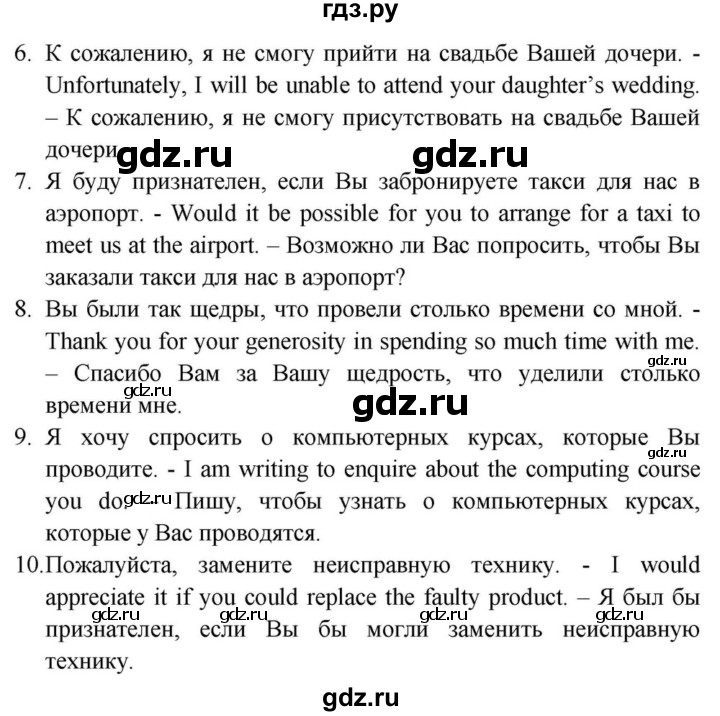
6. Unfortunately, I **will be unable to attend** your daughter's wedding.
7. **Would it be possible for you to arrange for** a taxi to meet us at the airport?
8. **Thank you for your generosity in spending** so much time with me.
9. I **am writing to inquire** about the computing course you offer.
10. **I would be grateful if you could** replace the faulty product.
---
### Пояснение к выполнению
1. **Exercise 3 & 4 (Анализ задания и структуры официального письма):**
* Поскольку автор письма — директор школы, а адресат — потенциальный студент, письмо пишется в **официальном стиле (formal style)**.
* При обращении по фамилии (*Dear Ms Antonov*) в официальном британском английском в конце письма используется подпись *Yours sincerely*.
* Деление на абзацы логично отражает структуру делового ответа: вступление $\rightarrow$ предоставление запрошенной информации $\rightarrow$ встречные вопросы $\rightarrow$ заключительные вежливые фразы.
2. **Exercise 5 & 6 (Официальный и разговорный стили):**
* В официальной переписке избегают сленга, сокращений и разговорных фраз, заменяя их устойчивыми клише делового этикета:
* Вместо разговорного *horrible* используется экспрессивное формальное прилагательное *appalling* (ужасный, отталкивающий).
* Конструкция *I would be grateful if you could...* выражает вежливую официальную просьбу.
* Оборот *with regard to...* переводится как «относительно / касательно чего-либо» и служит стандартной связкой при переходе к теме.
Спасибо за оценку!


Открой больше возможностей
Войди через VK — задавай вопросы ИИ и сохраняй ГДЗ в избранное
