


ГДЗ по английскому языку 11 класс Афанасьева Spotlight Базовый уровень страница - 132

Авторы: Афанасьева О.В., Дули Д., Михеева И.В., Оби Б., Эванс В.
Серия: Spotlight
Тип книги: Учебник
Год: 2015-2024
Рекомендуем посмотреть


 Премиум
Подробное решение страница № 132 по английскому языку Spotlight для учащихся 11 класса Spotlight Базовый уровень, авторов Афанасьева, Дули, Михеева, Оби, Эванс 2015-2024
### Ответ к заданиям (Spotlight 11, стр. 132)
---
#### Exercise 1
**Answer:**
Small actions can change the world when many people join in. If one person does something positive (like picking up litter, planting a tree, or helping an elderly neighbor) and millions of others do the same, these small efforts add up to create a massive positive change for society and the planet.
---
#### Exercise 2a
**Answers to the questions:**
1. **What does Jacob do?**
Jacob volunteers at a retirement home for a few hours each week. He sits and chats with the residents, reads to them, and tells them jokes.
2. **Why does he do it?**
He does it because he wants to give something back to the community, make the elderly people happy, and he values their wisdom and advice.
3. **What does he feel that he achieves?**
He feels that he makes a difference by bringing joy to the residents (seeing their faces light up). He also gains valuable life advice from them and feels that he is helping make the world a better place.
---
#### Exercise 2b (Vocabulary in bold)
* **retirement home** — a place where elderly people live and receive care (*дом престарелых*).
* **chat** — to have an informal, friendly conversation (*болтать, дружески беседовать*).
* **look forward to** — to feel happy and excited about something that is going to happen (*с нетерпением ждать чего-либо*).
* **light up** — (about someone's face/eyes) to show sudden happiness, pleasure, or excitement (*озариться радостью, засиять*).
* **elderly** — polite word for old people (*пожилые люди*).
* **wise** — having or showing experience, knowledge, and good judgment (*мудрый*).
---
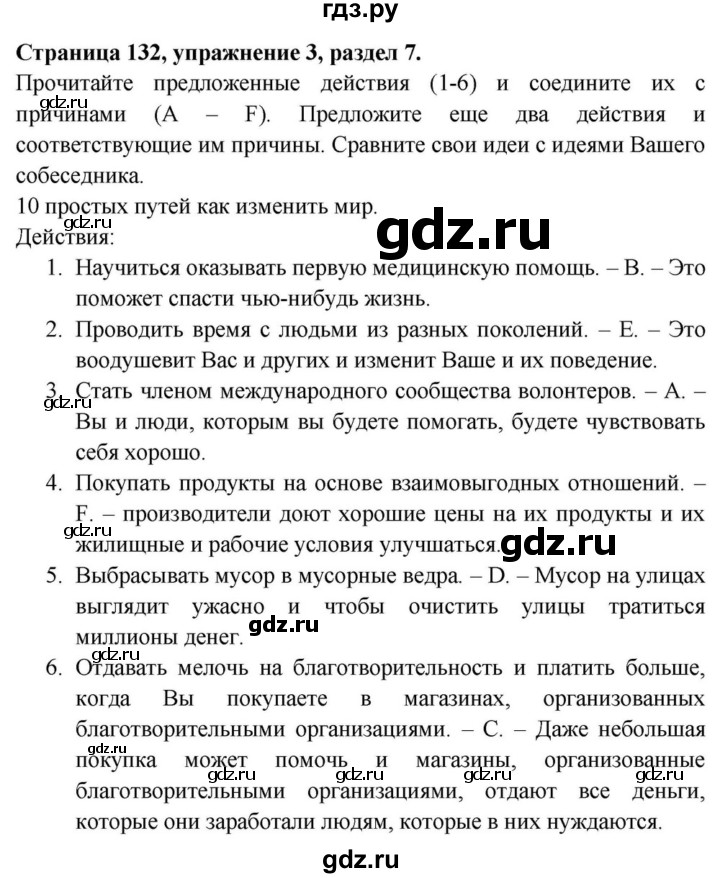
#### Exercise 3
**Matching Actions (1–6) with Reasons (A–F):**
*(Стандартное сопоставление по учебнику Spotlight 11, Module 8)*
* **1 – D** (donate old clothes/books — help people who are less fortunate)
* **2 – F** (volunteer at an animal shelter — care for abandoned and mistreated pets)
* **3 – A** (plant trees or flowers — improve the local environment and make it greener)
* **4 – C** (learn first aid — be able to save a life in an emergency)
* **5 – B** (visit a retirement home — cheer up elderly people who might feel lonely)
* **6 – E** (start recycling waste — reduce the amount of rubbish in landfills)
**Two additional actions and reasons:**
* **Action 7:** Organize a neighbourhood clean-up day.
**Reason G:** To keep local parks and streets clean and safe for everyone.
* **Action 8:** Donate non-perishable food to a local food bank.
**Reason H:** To support families in need and reduce hunger in the community.
---
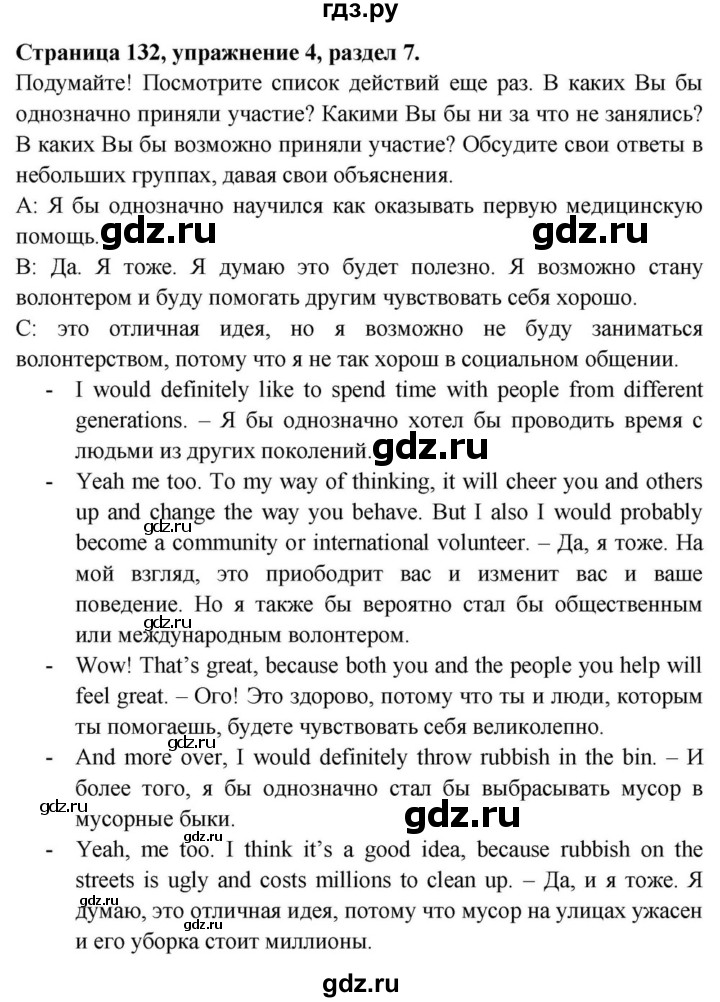
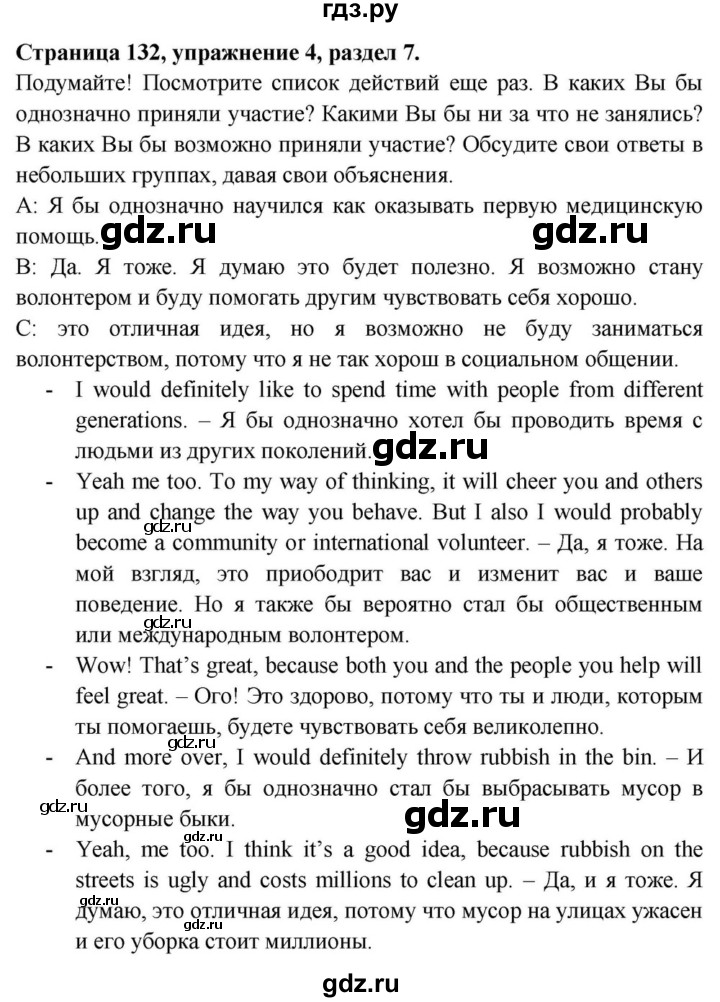
#### Exercise 4 (Discussion / Mini-dialogue)
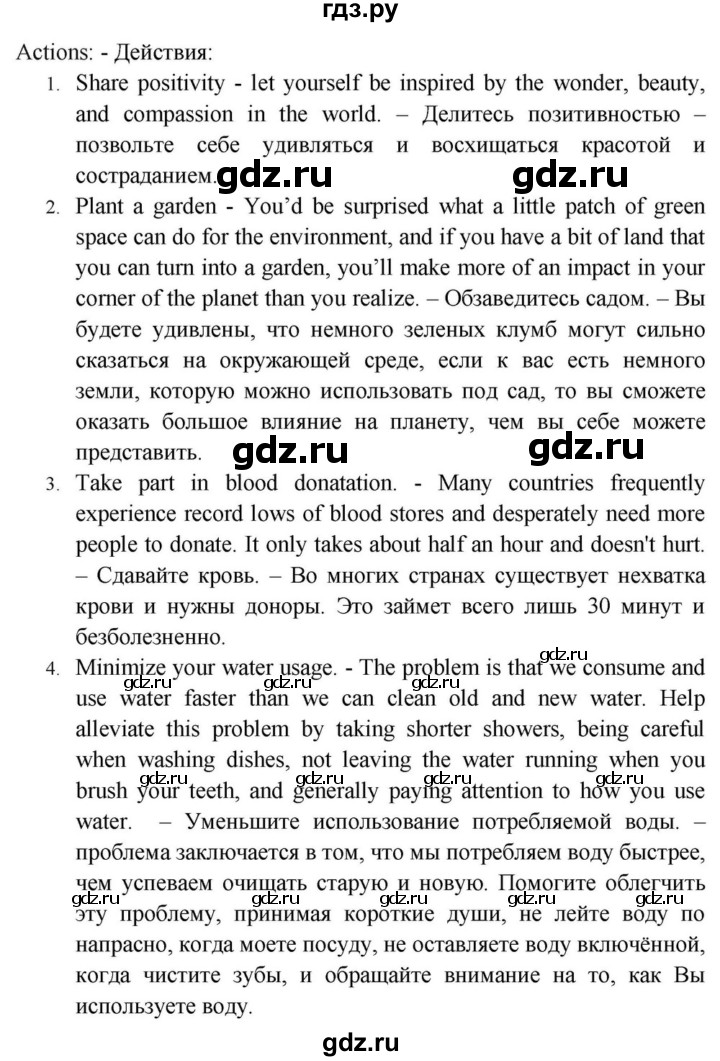
* **Definitely do:**
*I would definitely learn first aid because it gives you practical skills that can literally save someone's life in an emergency.*
* **Possibly do:**
*I would possibly volunteer at an animal shelter or plant trees because I care about animals and nature, though it depends on my school schedule.*
* **Definitely / Probably not do:**
*I would probably not organize a large-scale charity event right now, because it takes too much management experience and free time, which I lack before exams.*
---
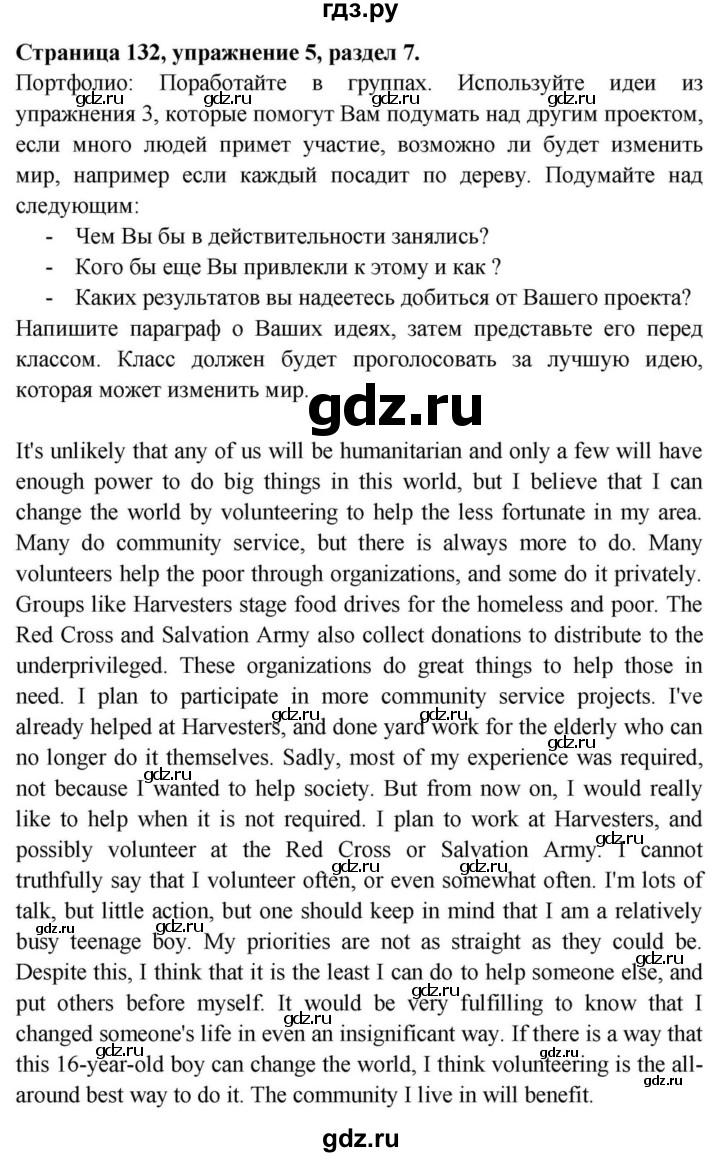
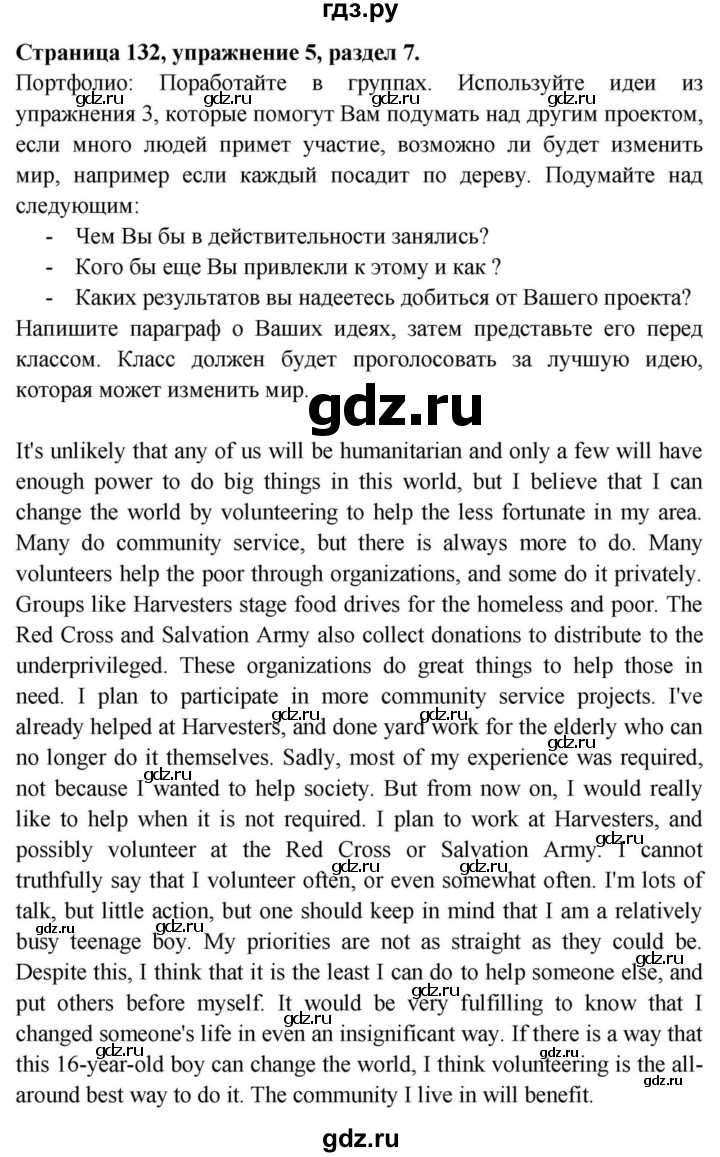
#### Exercise 5 (Portfolio: Group Project)
**Title: "Every Bottle Counts" — Plastic Recycling Initiative**
> **Project Description:**
> Our project is called "Every Bottle Counts". We want to reduce plastic waste in our town.
>
> **1. What exactly would we do?**
> We would place separate collection bins for plastic bottles in our school and local parks, and organize a monthly collection drive where students and locals can bring plastic for recycling.
>
> **2. Who else would we get involved and how?**
> We would involve our classmates, teachers, and local youth centres through social media campaigns, informative posters, and school assemblies explaining how plastic harms the environment.
>
> **3. What results would we hope for?**
> We hope to collect several tons of plastic each year, keep our public areas cleaner, and raise awareness among teenagers about sustainable living habits.
---
### Пояснения и разбор
1. **Exercise 1:** Задание направлено на понимание математической формулы добра («1 человек + 1 маленькое действие × много людей = изменения в мире»). Ответ строится вокруг идеи кумулятивного эффекта (*cumulative effect*).
2. **Exercise 2a & 2b:** Ответы извлекаются напрямую из короткого текста (*Case Study*). Фразы в рамке объясняются синонимами на английском языке с переводом на русский для лучшего усвоения контекста.
3. **Exercise 3 & 4:** Развивают навыки аргументации и выражения личного мнения при помощи модальных структур (*I would definitely / possibly / probably not + V*).
4. **Exercise 5:** Проект оформлен строго по трем пунктам плана задания: конкретные действия (*What*), участники и каналы привлечения (*Who & How*), а также ожидаемые результаты (*Results*). Текст составлен с использованием лексики модуля (экология, гражданская активность, волонтерство).
Спасибо за оценку!












Открой больше возможностей
Войди через VK — задавай вопросы ИИ и сохраняй ГДЗ в избранное
