


ГДЗ по английскому языку 11 класс Афанасьева Spotlight Базовый уровень страница - 185

Авторы: Афанасьева О.В., Дули Д., Михеева И.В., Оби Б., Эванс В.
Серия: Spotlight
Тип книги: Учебник
Год: 2015-2024
Рекомендуем посмотреть


 Премиум
Подробное решение страница № 185 по английскому языку Spotlight для учащихся 11 класса Spotlight Базовый уровень, авторов Афанасьева, Дули, Михеева, Оби, Эванс 2015-2024
### Итоговые ответы
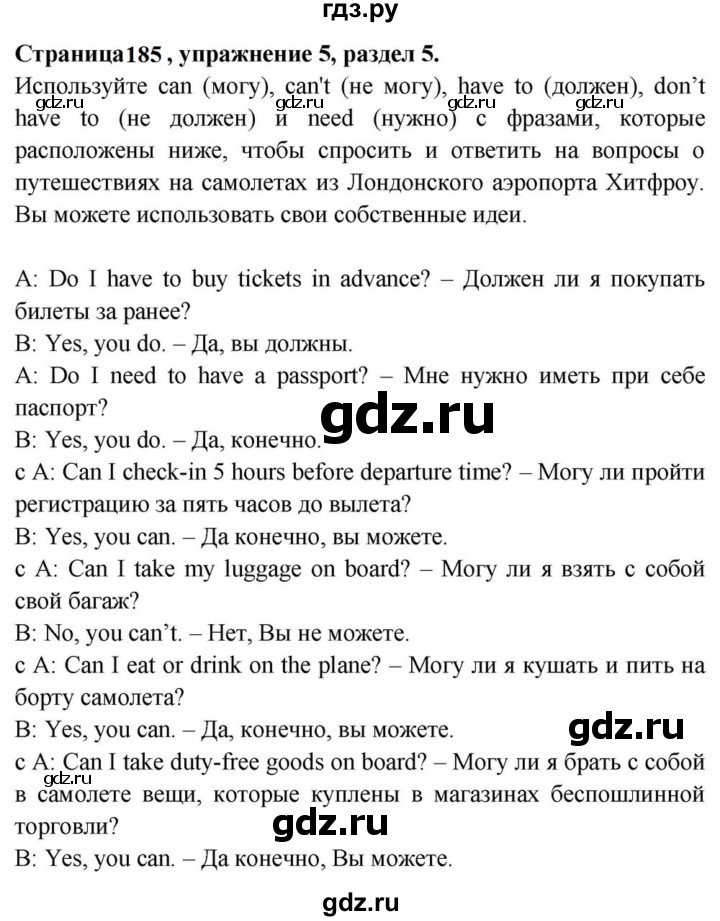
#### **Exercise 5**
Примеры вопросов и ответов о правилах перелёта:
1. **A:** Do I have to have a passport?
**B:** Yes, you do. / Yes, you must have a valid passport.
2. **A:** Do I need to check-in 5 hours before departure time?
**B:** No, you don’t have to. Checking in 2–3 hours in advance is usually enough.
3. **A:** Can I take all my luggage on board?
**B:** No, you can’t. You can only take hand luggage on board; heavy bags have to be checked in.
4. **A:** Can I eat or drink on the plane?
**B:** Yes, you can. Food and drinks are provided or you can bring your own snacks.
5. **A:** Can I take duty-free goods on board?
**B:** Yes, you can, as long as they are kept in special sealed bags.
---
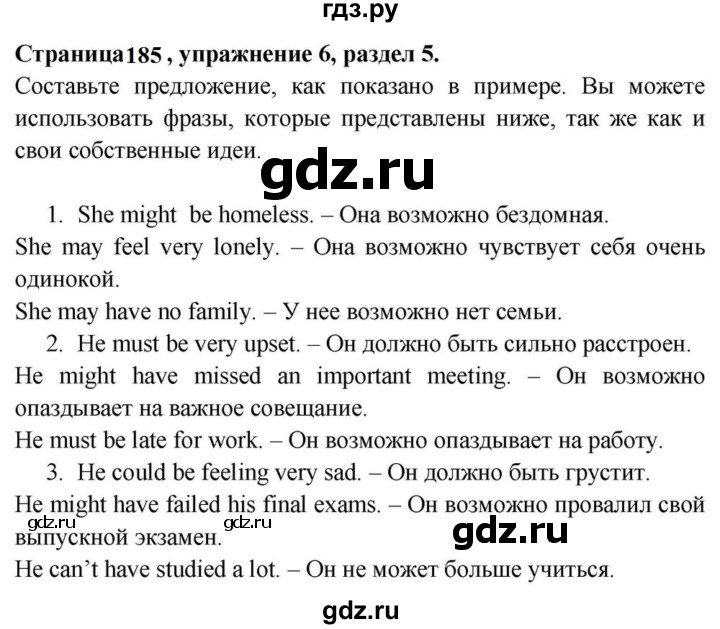
#### **Exercise 6**
*Примерные предложения выражения вероятности и предположения:*
* **Item 2:**
* He **might be** very upset.
* He **could have missed** an important meeting.
* He **may be** late for work.
* **Item 3:**
* He **must feel** very sad.
* He **might have failed** his final exams.
* He **should study** a lot more next time.
---
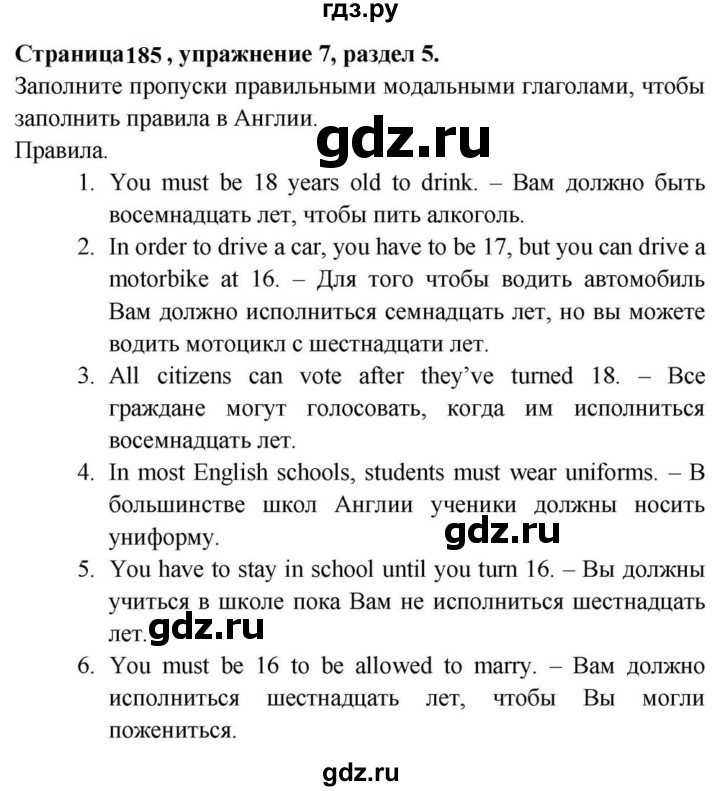
#### **Exercise 7**
1. You **must / have to** be 18 years old to drink.
2. In order to drive a car, you **have** to be 17, but you **can** drive a motorbike at 16.
3. All citizens **can** vote after they've turned 18.
4. In most English schools, students **have to / must** wear uniforms.
5. You **have** to stay in school until you turn 16.
6. You **must / have to** be 16 to be allowed to marry *(with parental consent)*.
---
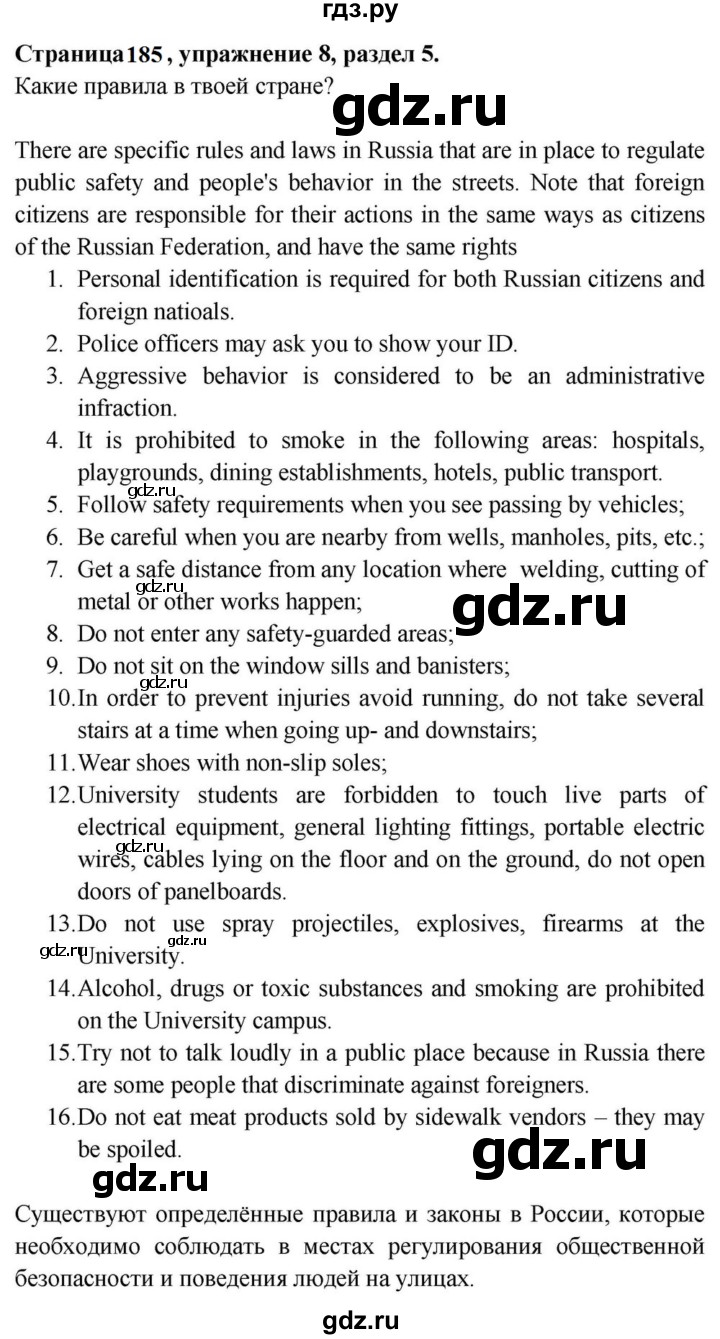
#### **Exercise 8**
*Rules in Russia (Примеры правил в России):*
1. You **can** vote once you reach the age of 18.
2. You **have to** be 18 to get a full driving licence.
3. You **mustn't** smoke in public indoor spaces and near transport stations.
4. All citizens **must** have a passport when they turn 14.
5. You **don't have to** serve in the army if you are a full-time university student.
---
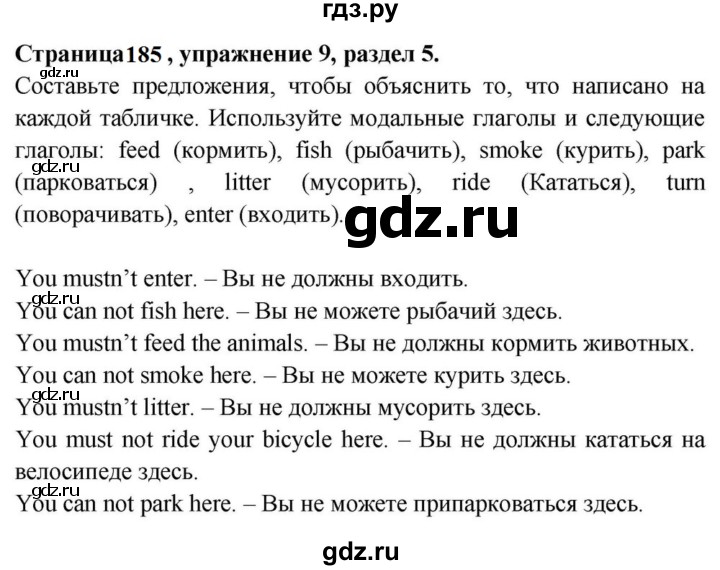
#### **Exercise 9**
1. **DO NOT ENTER:** You **mustn't / can't enter** this area.
2. **[No smoking]:** You **mustn't / can't smoke** here.
3. **FISHING IS PROHIBITED:** You **can't / mustn't fish** in this river/lake.
4. **Do not feed the animals:** You **mustn't feed** the animals.
5. **NO LITTER Penalty £100:** You **mustn't litter** here or you will have to pay a £100 fine.
6. **[No parking]:** You **can't / mustn't park** your car here.
7. **[No cycling]:** You **mustn't / can't ride** a bicycle here.
---
### Подробное объяснение и грамматический комментарий
1. **Exercise 5 (Вопросы и ответы с модальными глаголами):**
* Для вопросов об обязательствах и правилах используется конструкция **Do I have to...?** или **Do I need to...?**
* Для вопросов о разрешении используется **Can I...?**
* Краткие ответы строятся с помощью вспомогательных глаголов: *Yes, you do / No, you don't / Yes, you can / No, you can't*.
2. **Exercise 6 (Модальные глаголы вероятности):**
* **may / might / could + Infinitive** используются для предположений о настоящем с оттенком неуверенности (*возможно*).
* **may / might / could + Perfect Infinitive (have + V3)** выражают предположение о действии в прошлом (*возможно, опоздал/не сдал*).
* **must** используется для выражения логической уверенности (*должно быть, он очень расстроен*).
3. **Exercise 7 (Законы и правила):**
* В пунктах 2 и 5 перед инфинитивом стоит частица **to**, что указывает на форму глагола **have to** (*have to be*, *have to stay*).
* **must / have to** выражают закон, строгое правило или обязательство.
* **can** выражает законное право или разрешение (*citizens can vote*).
4. **Exercise 9 (Дорожные и информационные знаки):**
* Запрещающие таблички и надписи (*Prohibited, Do not, No...*) выражаются через модальные глаголы категорического запрета: **mustn't** (строго запрещено) или **can't** (нельзя / нет разрешения).
Спасибо за оценку!


Открой больше возможностей
Войди через VK — задавай вопросы ИИ и сохраняй ГДЗ в избранное
