


ГДЗ по английскому языку 11 класс Афанасьева Spotlight Базовый уровень страница - 53

Авторы: Афанасьева О.В., Дули Д., Михеева И.В., Оби Б., Эванс В.
Серия: Spotlight
Тип книги: Учебник
Год: 2015-2024
Рекомендуем посмотреть


 Премиум
Подробное решение страница № 53 по английскому языку Spotlight для учащихся 11 класса Spotlight Базовый уровень, авторов Афанасьева, Дули, Михеева, Оби, Эванс 2015-2024
### Итоговый ответ
---
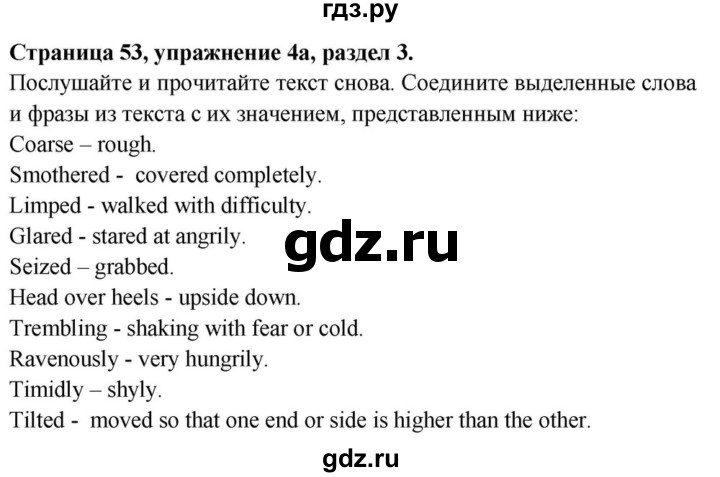
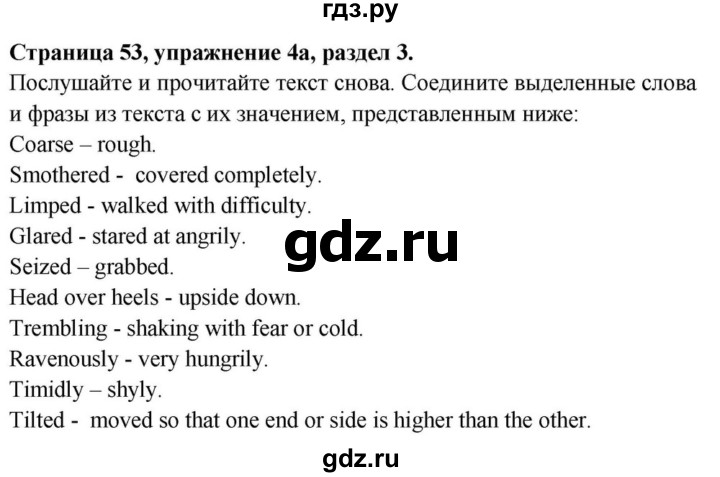
#### **4 a. Match the highlighted words/phrases with their meanings**
* **covered completely** — *smothered*
* **grabbed** — *seized*
* **walked with difficulty** — *limped*
* **shyly** — *timidly*
* **shaking with fear or cold** — *trembling* (или *shivered*)
* **very hungrily** — *ravenously*
* **moved so that one end/side is higher than the other** — *tilted*
* **upside down** — *head over heels*
* **stared at angrily** — *glared*
* **rough** — *coarse*
---
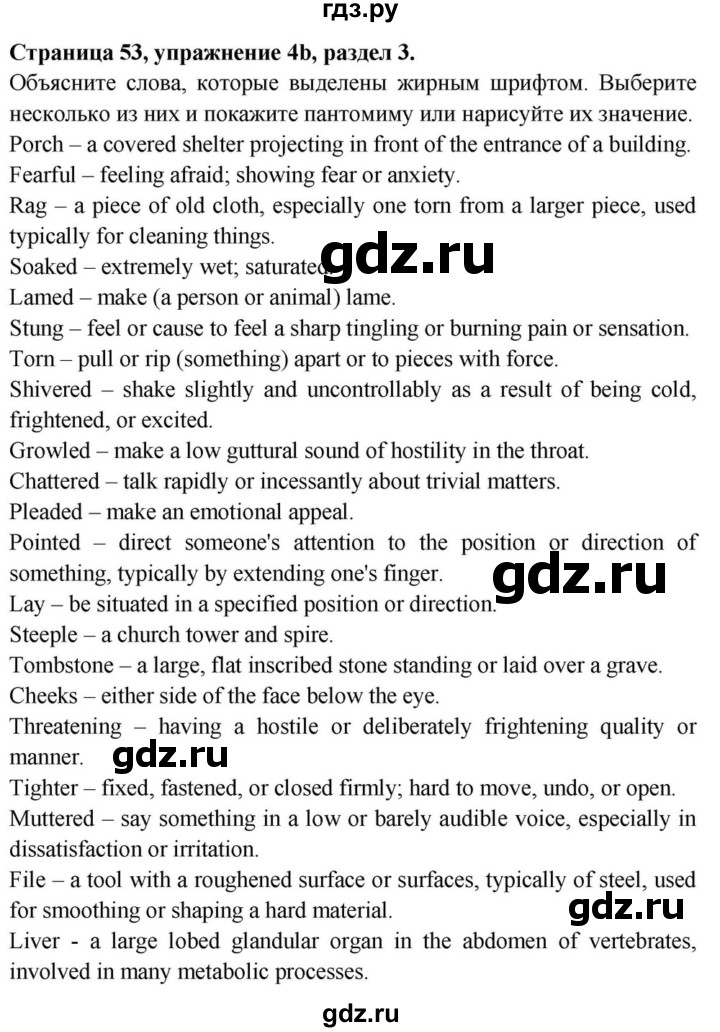
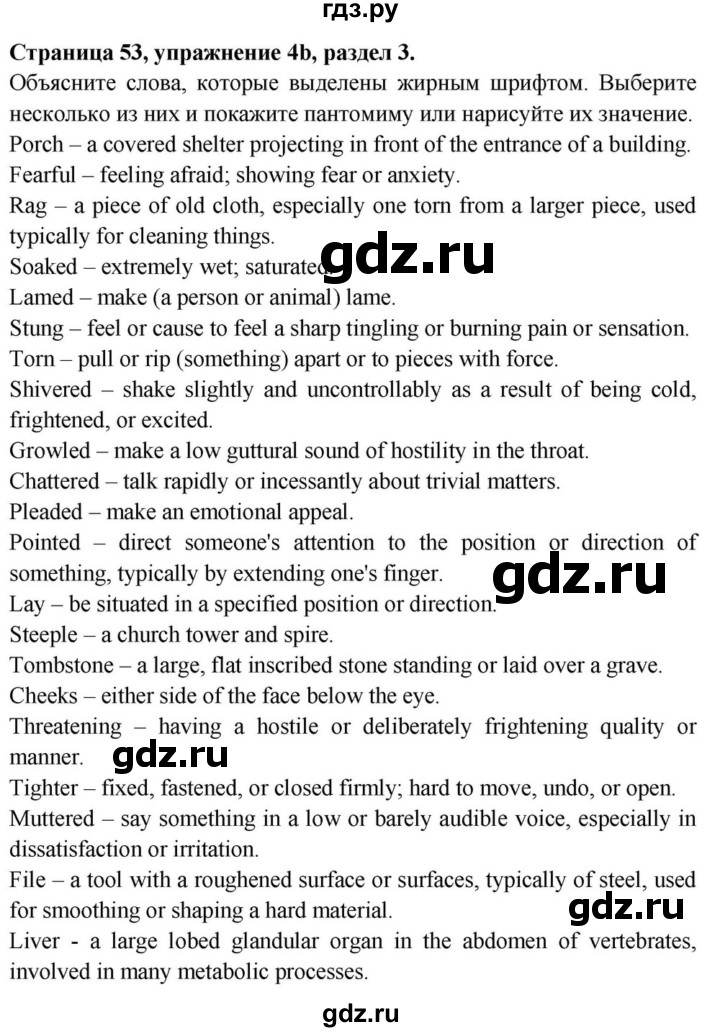
#### **4 b. Explain the words in bold**
* **fearful** — causing fear, frightening, scary (страшный, пугающий).
* **coarse** — rough in texture, not fine or smooth (грубый, жесткий).
* **rag** — an old, torn piece of cloth (тряпка, лохмотья).
* **soaked** — completely wet through (промокший насквозь).
* **smothered** — heavily covered in something (покрытый толстым слоем).
* **lamed** — injured so that walking is difficult or painful (захромавший, искалеченный).
* **stung** — hurt by a prickly plant (nettle) or insect (ужаленный).
* **torn** — ripped apart by something sharp, like thorns (изодранный, порванный).
* **limped** — walked unevenly because of an injured leg/foot (хромал).
* **shivered** — shook slightly because of cold or fear (дрожал от холода/страха).
* **glared** — looked at someone in a fierce, angry way (свирепо смотрел).
* **growled** — made a low, harsh, threatening sound (рычал, говорил утробным голосом).
* **chattered** — (of teeth) knocked together repeatedly from cold or fright (стучали [о зубах]).
* **seized** — took hold of suddenly and forcefully (схватил).
* **pleaded** — begged earnestly in desperation (умолял).
* **pointed** — showed direction with a finger (указал).
* **lay** — was situated/located (лежала, располагалась).
* **head over heels** — turning over completely, upside down (вверх тормашками, кубарем).
* **steeple** — a high, pointed tower on the roof of a church (шпиль, колокольня церкви).
* **tombstone** — a large flat stone placed over a grave (надгробный камень, плита).
* **trembling** — shaking involuntarily with fear (дрожащий).
* **ravenously** — with extreme hunger, greedily (жадно, с волчьим аппетитом).
---
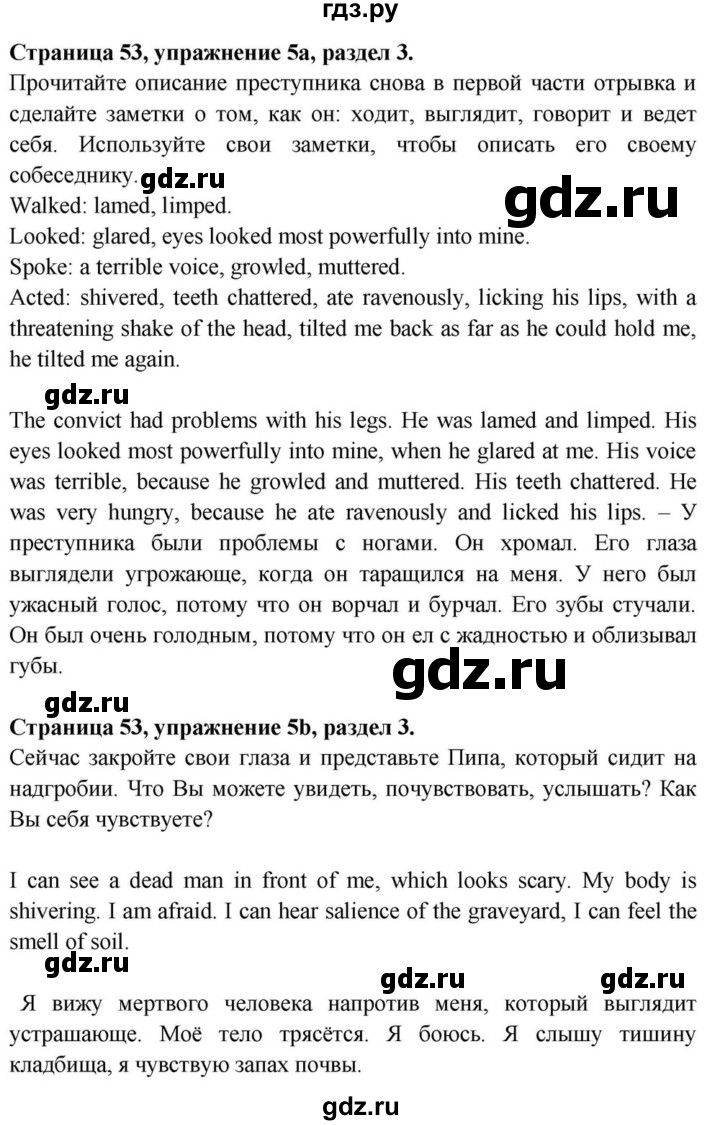
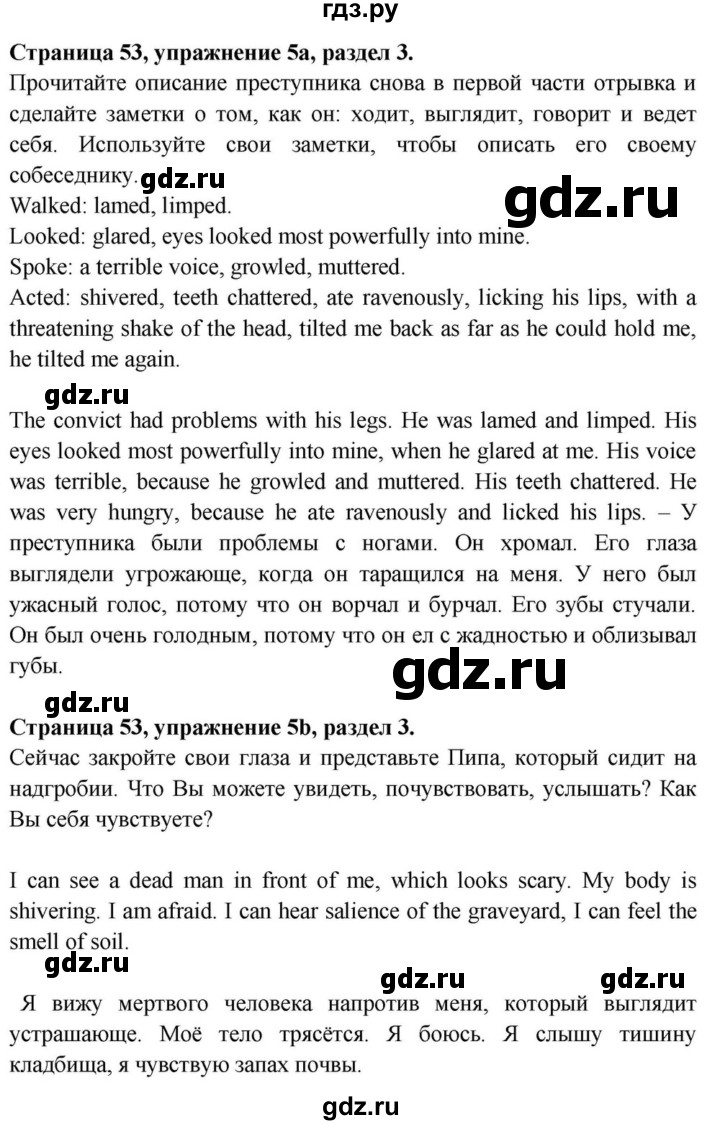
#### **5 a. Notes & Description of the Convict**
* **Notes:**
* **Walked:** *limped, dragged a heavy iron chain on his leg.*
* **Looked:** *fearful, dressed in coarse grey clothes, broken shoes, old rag tied round his head, soaked in water, smothered in mud, scratched and cut.*
* **Spoke:** *growling, threatening voice, chattering teeth, using rough dialect/slang.*
* **Acted:** *aggressive, violent (jumped out, seized Pip by the chin, tilted him over, turned him upside down, ate bread ravenously).*
* **Sample Description:**
*The convict was a terrifying and desperate man. He wore coarse grey clothes with an iron shackle on his leg, broken shoes, and a rag around his head. He was soaked with water, covered in mud, and had cuts and scratches all over. He limped and shivered with cold. His voice was rough and growling, and his actions were violent and threatening: he seized Pip, turned him upside down, and demanded food and a file.*
---
#### **5 b. Pip’s Feelings and Senses on the Tombstone**
* **I can see:** *the dark, misty marshes, cold gravestones, the tall church steeple, and the terrifying, dirty face of the convict glaring down at me.*
* **I can smell:** *the damp earth, wet mud, rotting grass, and the foul stench of the convict’s soaked rags.*
* **I can hear:** *the howling winter wind, the clinking of the convict’s heavy iron chain, the chattering of teeth, and his harsh, growling voice.*
* **I can touch:** *the freezing, rough surface of the stone grave and the strong, painful grip of the convict’s hands on my shoulders.*
* **I feel:** *absolutely terrified, helpless, dizzy, and frozen to the bone.*
---
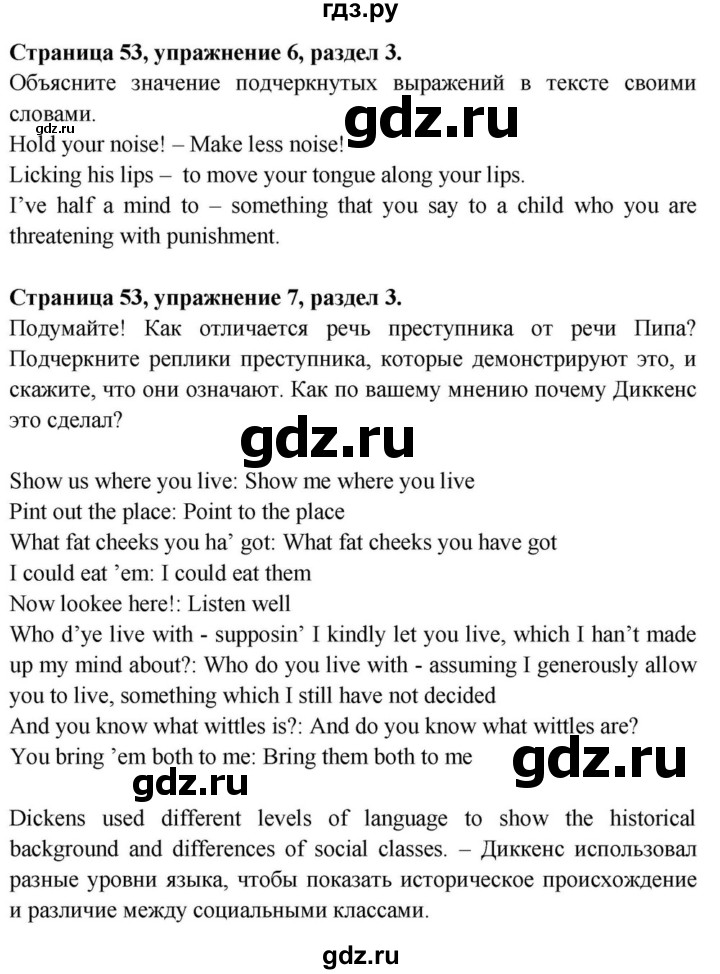
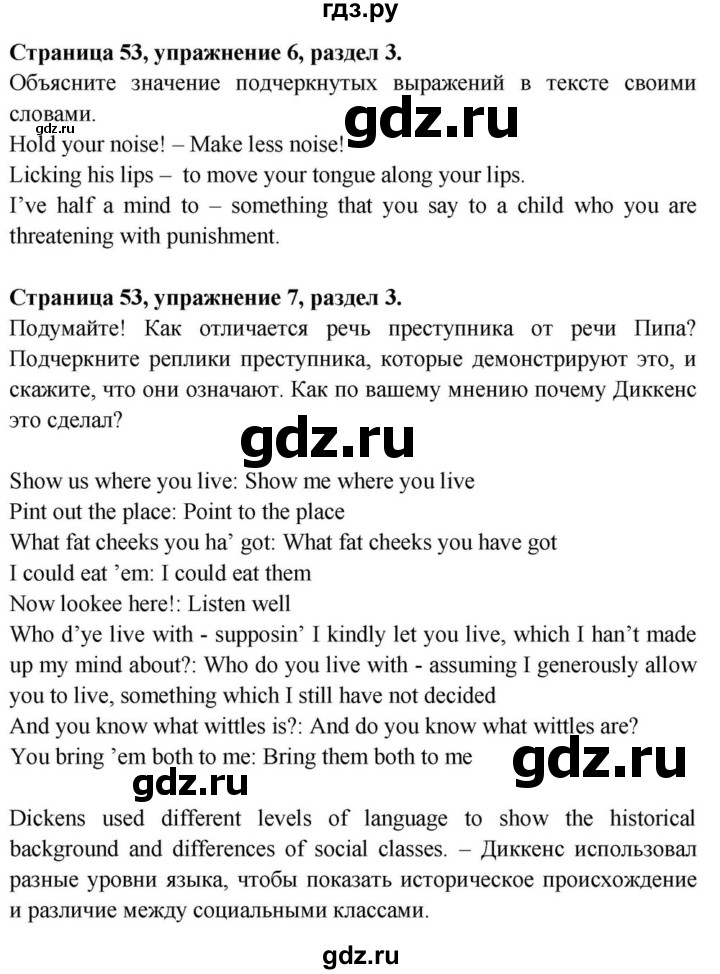
#### **6. Explain the underlined sections in your own words**
1. **"the church came to itself"** — *Everything stopped spinning before Pip's eyes; he regained his orientation after being flipped upside down.*
2. **"I've half a mind to"** — *I am seriously considering doing it / I am almost ready to do it.*
3. **"late of this parish"** — *Formerly living in this local community/area, but now deceased and buried there.*
4. **"han't made up my mind"** — *I haven't decided yet.*
---
#### **7. THINK! The Convict’s vs. Pip’s Speech**
* **Differences & Examples:**
* **The convict** uses informal 19th-century working-class/Cockney slang, non-standard grammar, and elisions:
* *"ha' got"* = *have got*
* *"'em"* = *them*
* *"lookee here"* = *look here*
* *"d'ye"* = *do you*
* *"suppos'n'"* = *supposing*
* *"han't"* = *haven't*
* *"wittles"* = *victuals (food)*
* **Pip** speaks very politely, standardly, and timidly (*"There, sir!"*, *"Mrs Joe Gargery – wife of Joe Gargery, the blacksmith, sir"*).
* **Why Dickens did this:**
*Charles Dickens used non-standard spelling and dialect to reflect the convict's poor social background, lack of formal education, and rough criminal lifestyle, contrasting him sharply with the innocent, polite, and well-behaved young Pip.*
---
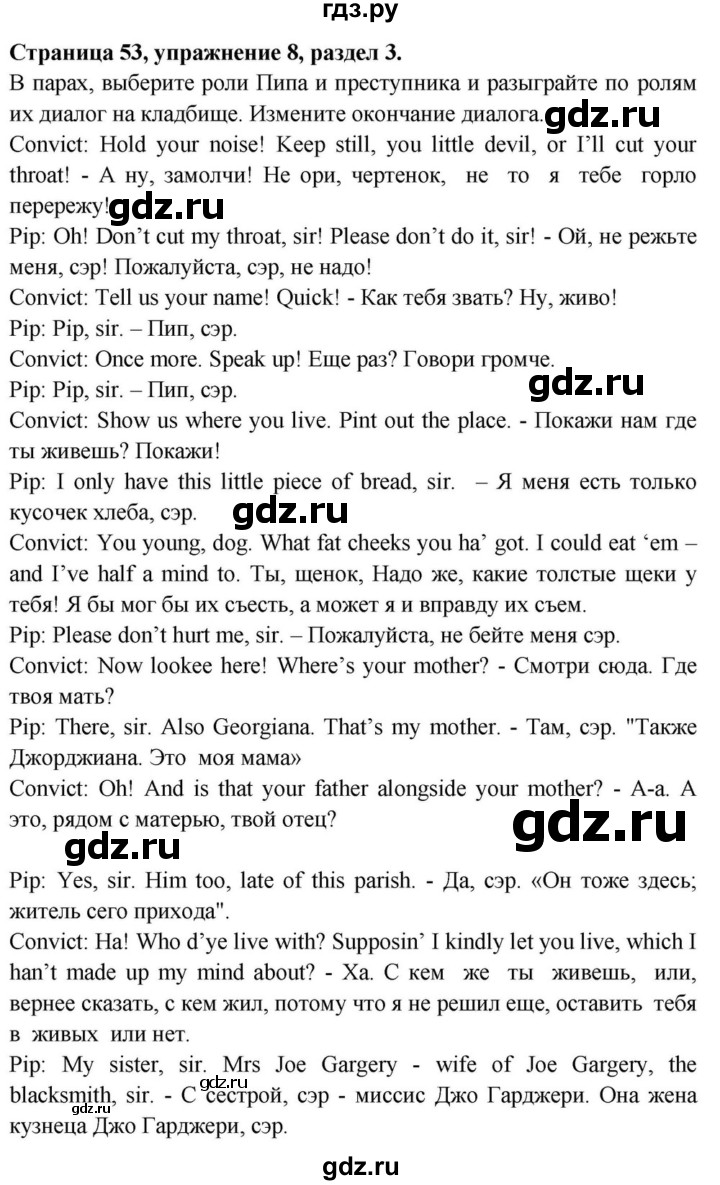
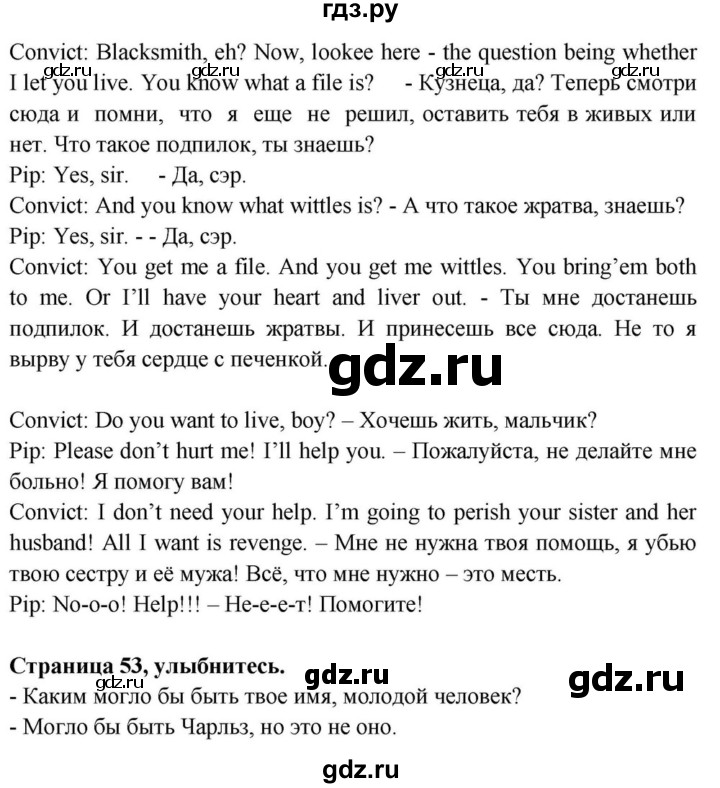
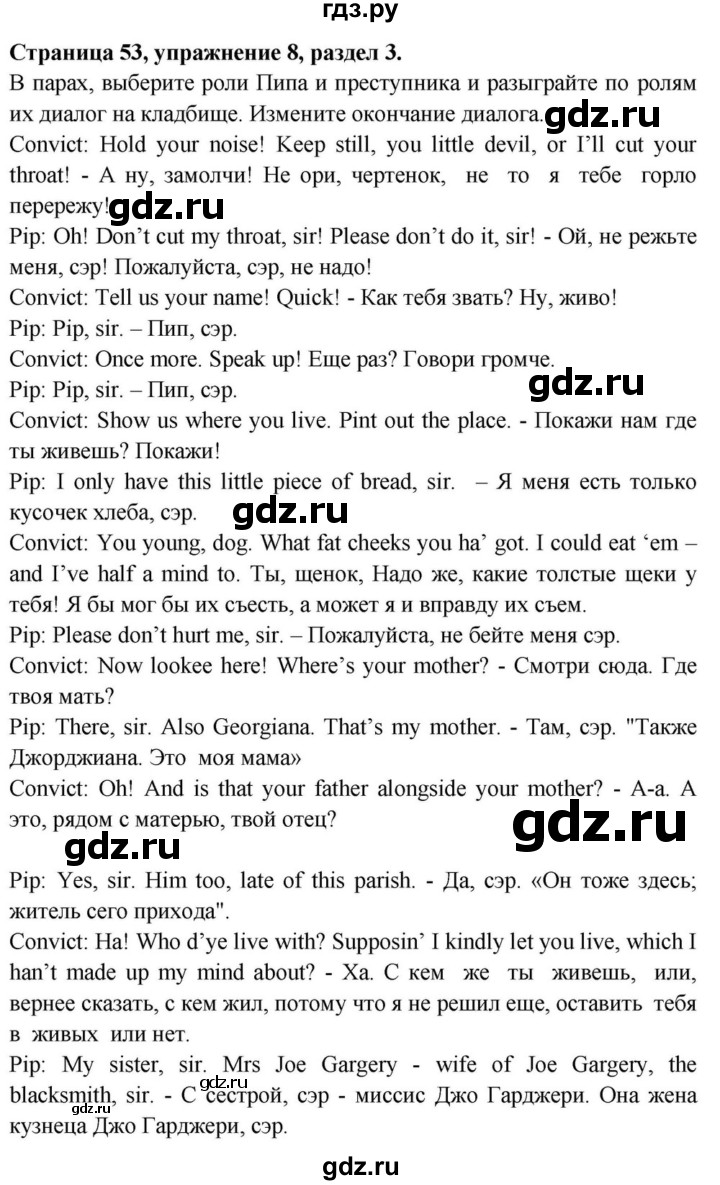
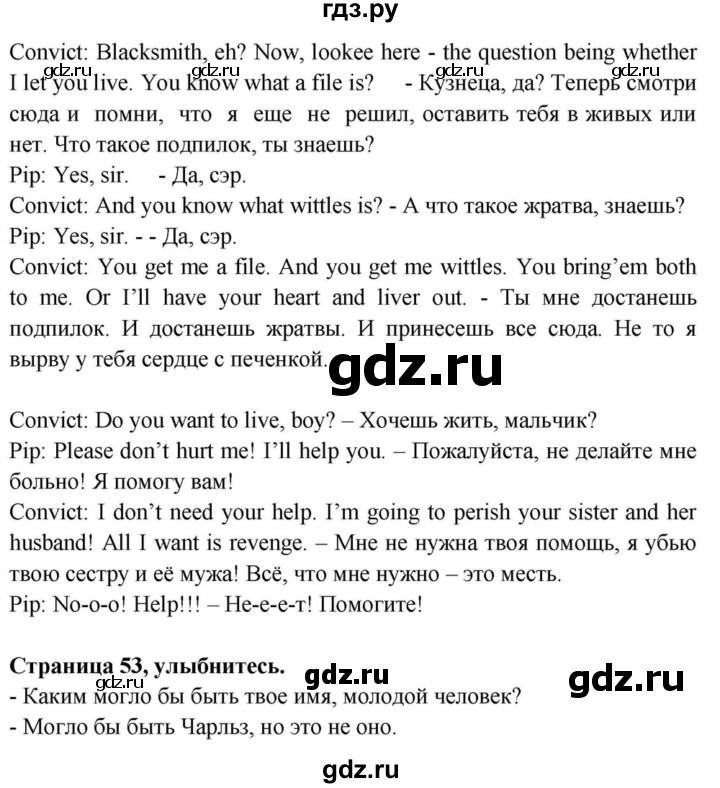
#### **8. Roleplay Dialogue (Graveyard scene with an alternative ending)**
**Convict:** *(shivering, glaring)* What might your name be, young man?
**Pip:** *(stammering)* Pip, sir.
**Convict:** Show us where you live, Pip! Point out the place!
**Pip:** *(pointing into the mist)* Over there, sir, with my sister and her husband, Joe the blacksmith.
**Convict:** A blacksmith, eh? Listen carefully, boy! You bring me a file to cut this iron off my leg, and bring me some wittles, or I’ll have your heart and liver out!
**Pip:** *(smiling softly instead of trembling)* You don't need to threaten me, sir. I can see you are freezing and starving. My brother-in-law Joe is a kind man. You don't have to hide in the cold. Come home with me, and we will give you warm food and help you freely.
**Convict:** *(staring in disbelief, softening his voice)* You... you would do that for an escaped wretch like me, boy? God bless you, young Pip. Lead the way.
---
### Пояснение к выполнению заданий
1. **Задание 4 (a, b):** Направлено на обогащение лексического запаса через контекст романа Чарльза Диккенса «Большие надежды» (*Great Expectations*). При объяснении значений слов в задании 4b подбираются близкие синонимы и краткие словарные дефиниции на английском языке.
2. **Задание 5 (a, b):** Развивает навыки структурирования текста (заметки о внешности, речи и поведении персонажа) и образного мышления (описание ощущений через 5 органов чувств: зрение, обоняние, слух, осязание, внутреннее состояние).
3. **Задание 6:** Проверяет понимание идиоматических и устаревших выражений викторианской эпохи:
* *to come to oneself* — прийти в себя / вернуться в привычное положение;
* *to have half a mind to do sth* — подумывать о том, чтобы сделать что-то;
* *late of...* — устойчивая надгробная формулировка для обозначения «покойный житель такого-то прихода»;
* *make up one's mind* — принять решение.
4. **Задание 7:** Анализирует стилистические приемы Диккенса (фонетическая передача акцента и просторечий персонажей из низших слоев общества).
5. **Задание 8:** Творческий диалог, в котором предложено альтернативное доброе завершение сцены вместо атмосферы страха и угроз.
Спасибо за оценку!

Открой больше возможностей
Войди через VK — задавай вопросы ИИ и сохраняй ГДЗ в избранное
