


ГДЗ по английскому языку 11 класс Афанасьева Spotlight Базовый уровень страница - 56

Авторы: Афанасьева О.В., Дули Д., Михеева И.В., Оби Б., Эванс В.
Серия: Spotlight
Тип книги: Учебник
Год: 2015-2024
Рекомендуем посмотреть


 Премиум
Подробное решение страница № 56 по английскому языку Spotlight для учащихся 11 класса Spotlight Базовый уровень, авторов Афанасьева, Дули, Михеева, Оби, Эванс 2015-2024
### Итоговый ответ
---
### Ex. 6 (p. 56)
#### a) Identification of Paragraphs and Techniques
* **Paragraph A — Conclusion (заключение)**
* **Techniques:** подведение итогов и повторное выражение мнения (*All things considered, I strongly believe...*), использование пословицы/крылатого выражения (*As the saying goes, the apple doesn't fall far from the tree*).
* **Paragraph B — Introduction (введение)**
* **Techniques:** прямое обращение к читателю с вопросом (*When was the last time you did something...?*), использование цитаты известного человека (*As Marshall McLuhan said, “...”*).
* **Paragraph C — Conclusion (заключение)**
* **Techniques:** подведение итогов и подтверждение позиции (*To sum up, whilst... I believe...*), использование риторического вопроса в конце (*After all, don't they represent the next generation of adults?*).
* **Technique in the model essay (Ex. 2):**
* Введение: прямое обращение к читателю / риторический вопрос.
* Заключение: обобщение аргументов и риторический вопрос.
---
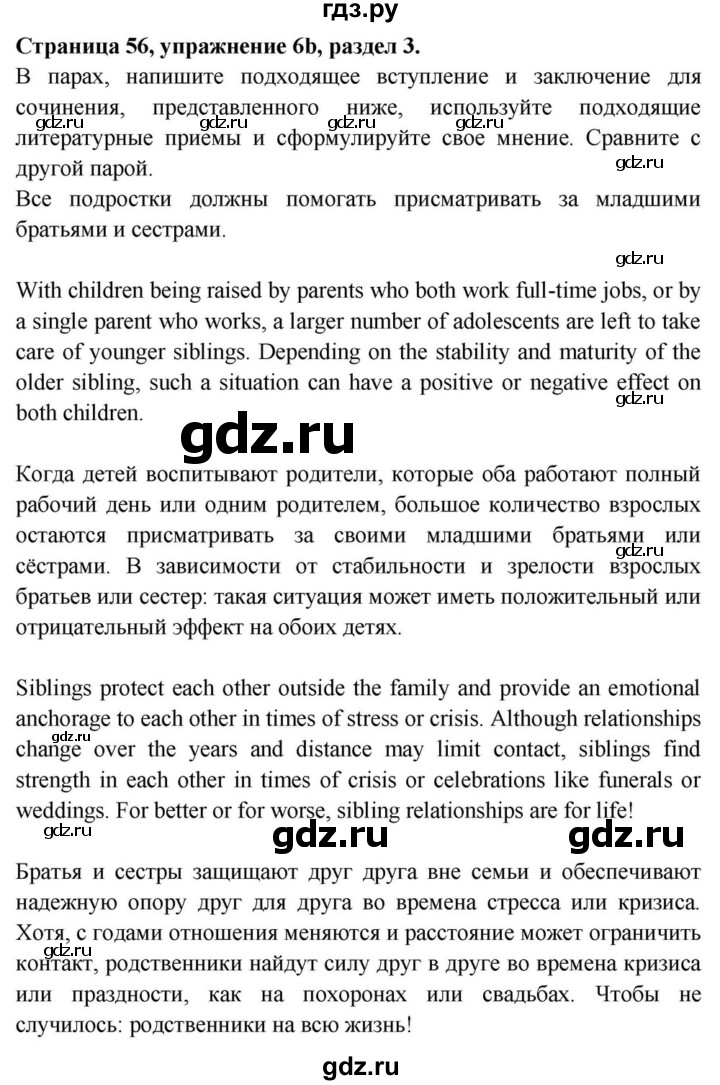
#### b) Introduction and Conclusion for the topic: *“All teenagers should help to look after younger siblings”*
* **Introduction:**
> Have you ever had to babysit a younger brother or sister while your parents were away? In my opinion, helping to take care of younger siblings is an essential part of family life that teaches teenagers valuable life lessons.
* **Conclusion:**
> All in all, I tend to believe that looking after younger brothers and sisters brings families closer together and builds maturity. After all, isn't caring for our loved ones the best preparation for adulthood?
---
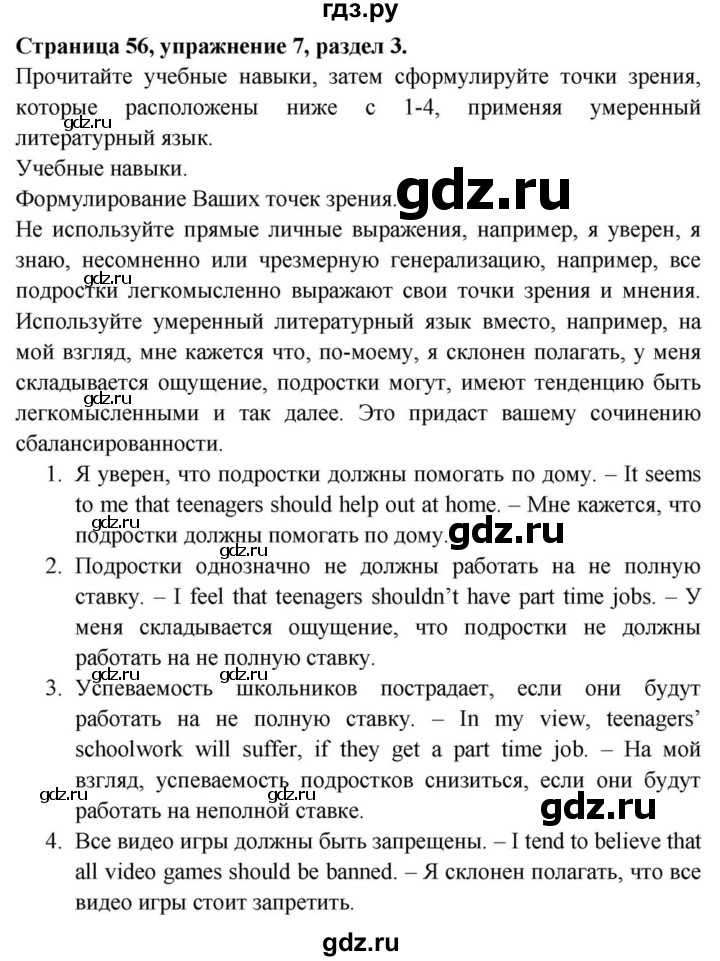
### Ex. 7 (p. 56)
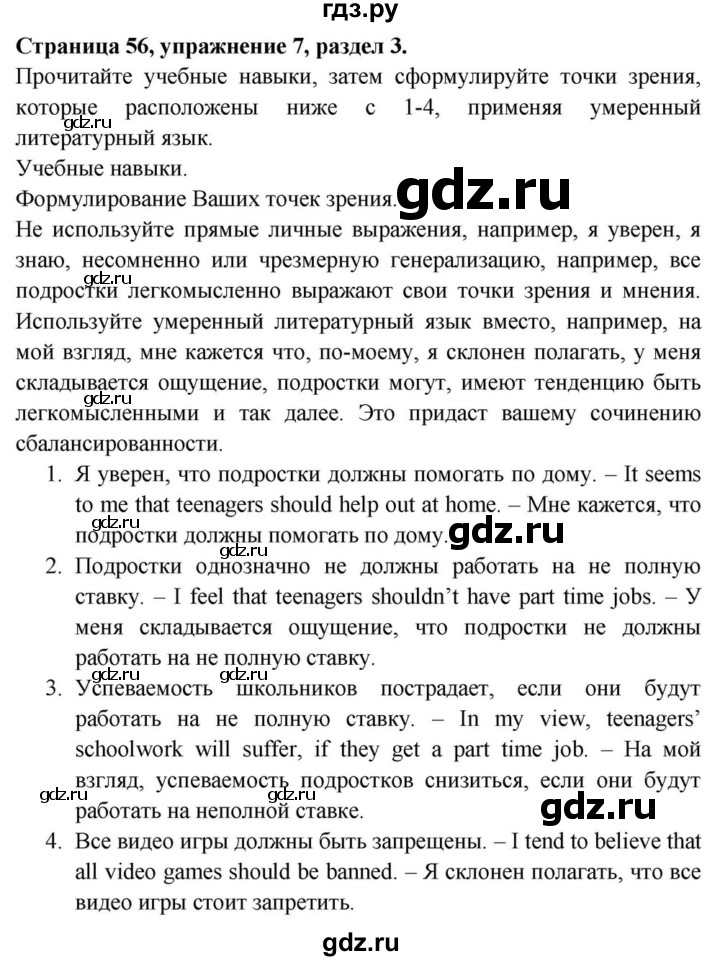
1. **In my view,** teenagers **could benefit from** helping out at home. *(или: It seems to me that teens ought to help out at home.)*
2. **I tend to believe that** teenagers **might be better off without** part-time jobs. *(или: In my opinion, having a part-time job may not always be a good idea for teenagers.)*
3. Teenagers' schoolwork **may have a tendency to suffer** if they get a part-time job. *(или: It is possible that teens' school performance could suffer if they work.)*
4. **It seems to me that certain violent** video games **ought to be** restricted. *(или: I feel that playing some video games can be harmful and should perhaps be controlled.)*
---
### Ex. 8 (p. 56)
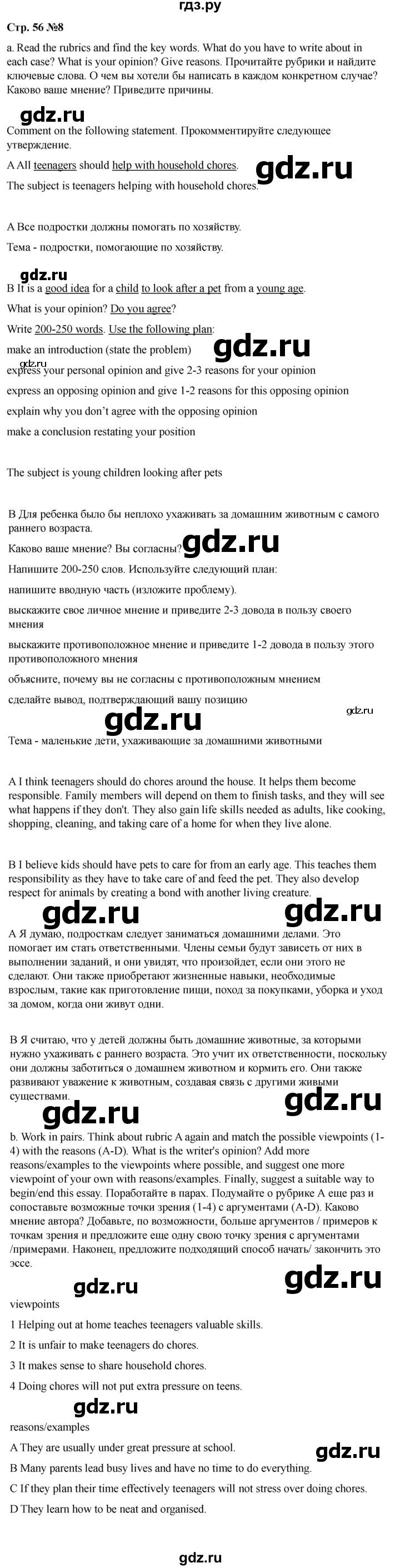
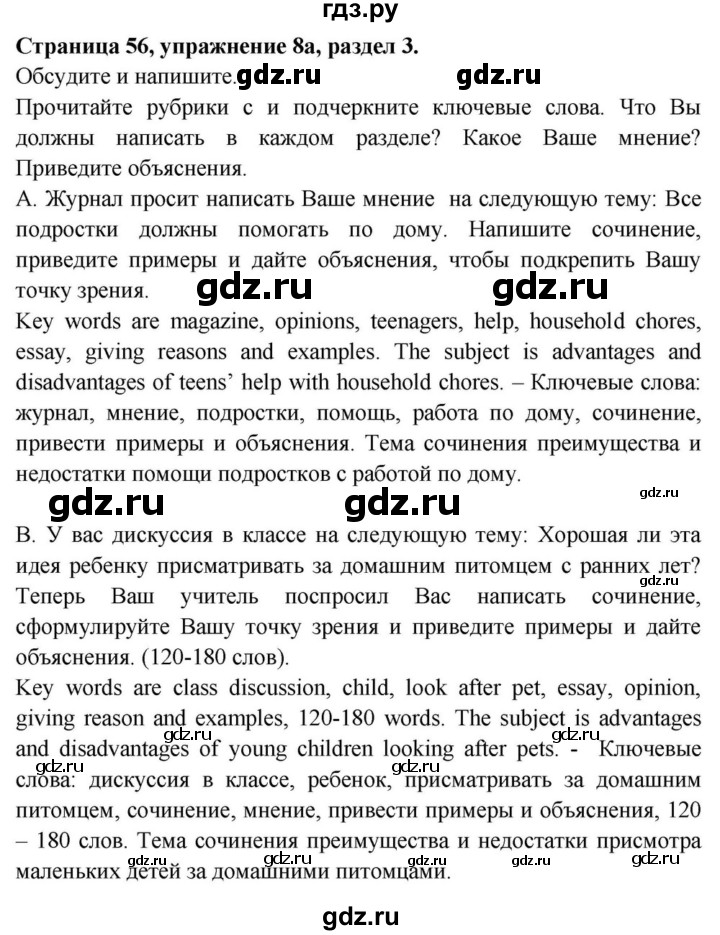
#### a) Analysis of Rubrics
* **Rubric A:** *“All teenagers should help with household chores.”*
* **Key words:** *teenagers, help, household chores, your opinion, agree/disagree*.
* **Topic:** Должны ли все подростки выполнять работу по дому.
* **Sample Opinion & Reasons:** I agree. It teaches essential life skills, promotes independence, and helps busy parents.
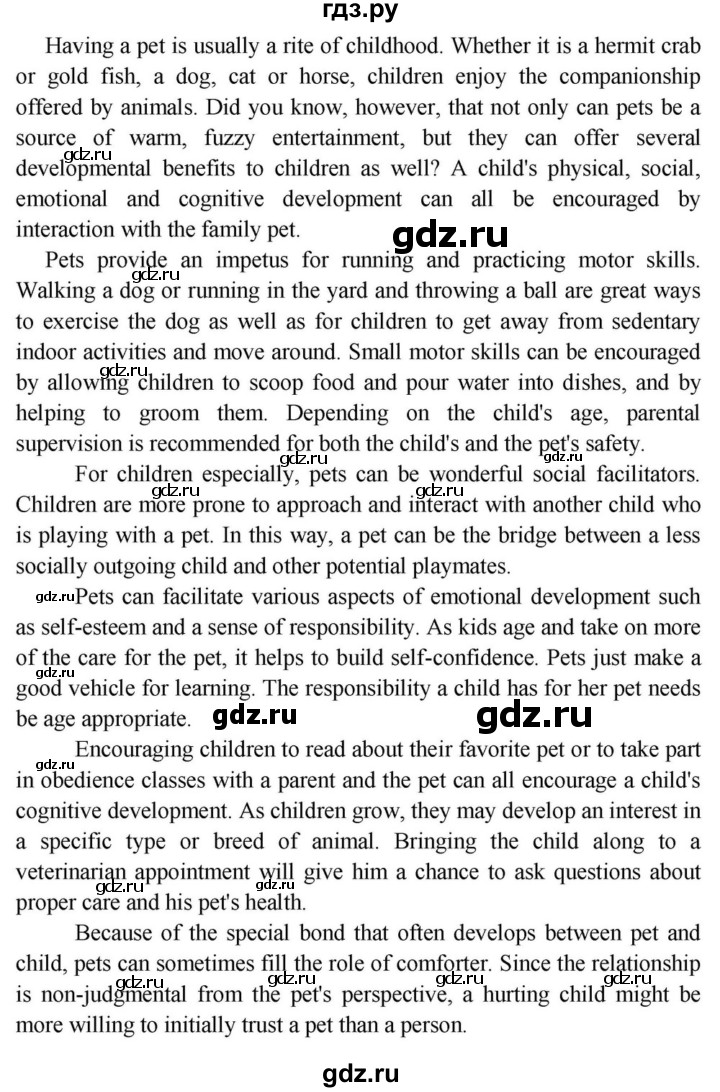
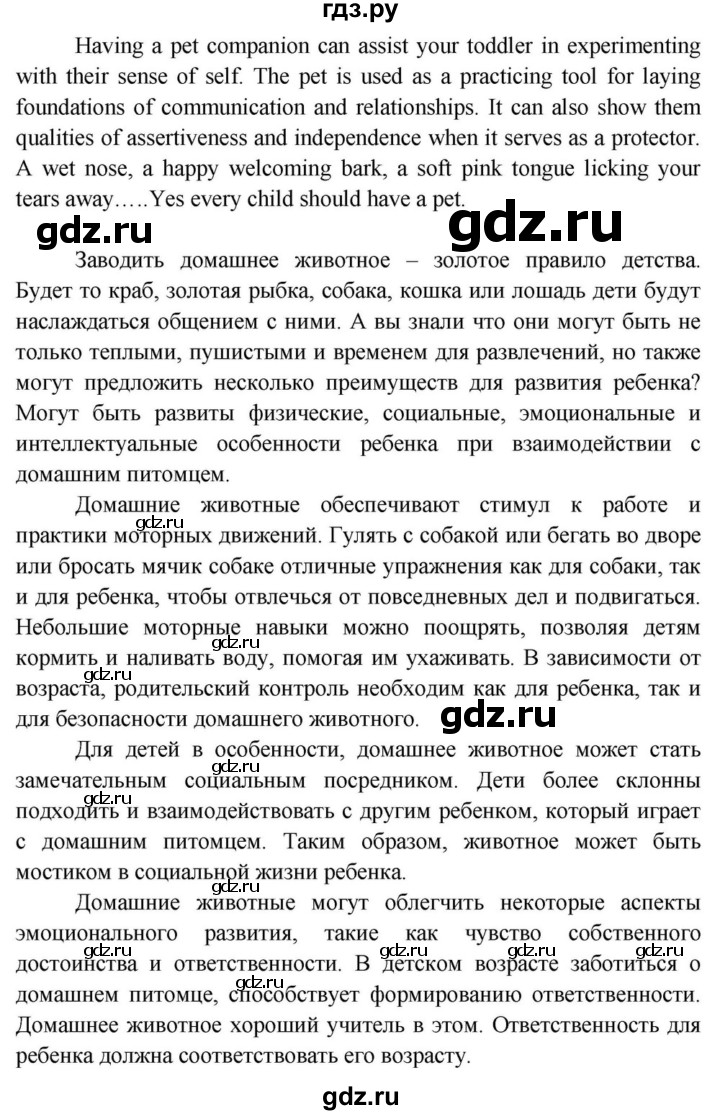
* **Rubric B:** *“It is a good idea for a child to look after a pet from a young age.”*
* **Key words:** *good idea, child, look after a pet, young age, your opinion*.
* **Topic:** Полезно ли детям с раннего возраста ухаживать за домашними питомцами.
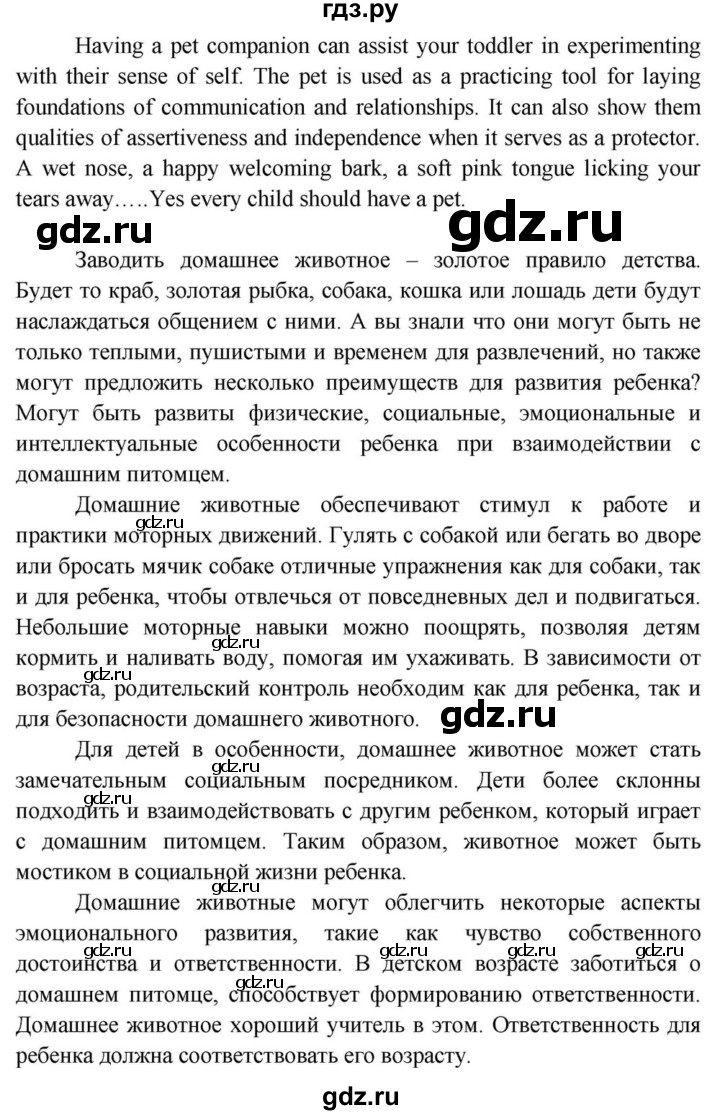
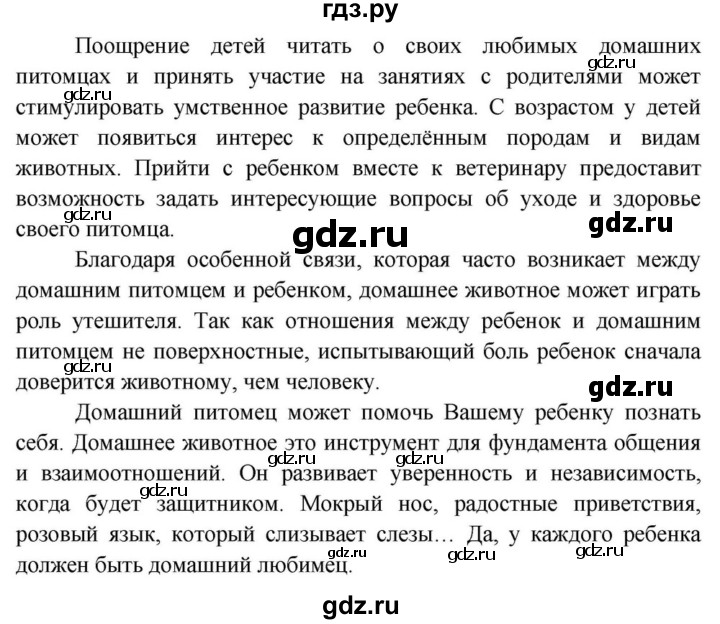
* **Sample Opinion & Reasons:** I agree. It fosters empathy, teaches responsibility, and provides emotional support and companionship.
---
#### b) Matching Viewpoints with Reasons (Rubric A)
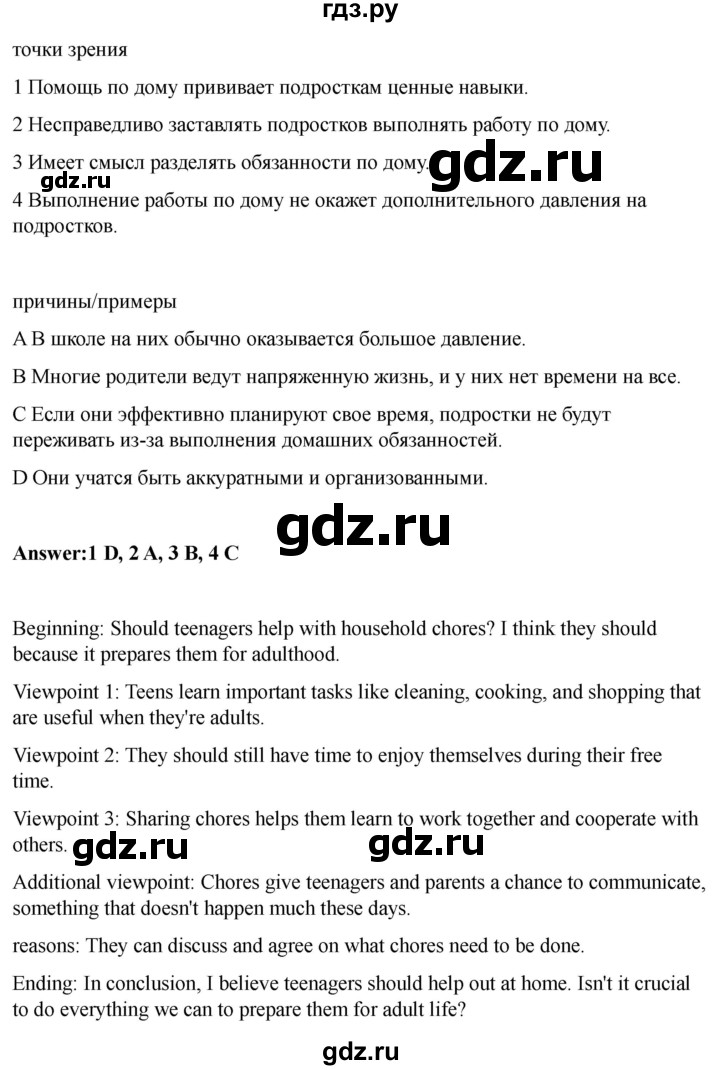
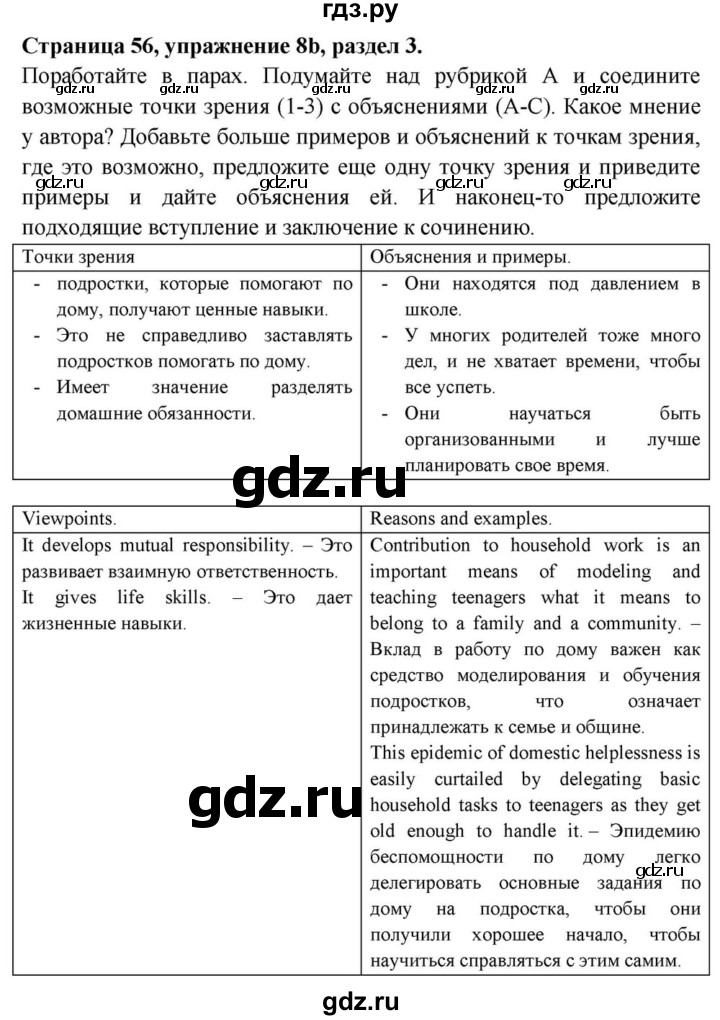
* **1 — D** (*Helping out at home teaches teenagers valuable skills.* — *They learn how to be neat and organised.*)
* **2 — A** (*It is unfair to make teenagers do chores.* — *They are usually under great pressure at school.*)
* **3 — B** (*It makes sense to share household chores.* — *Many parents lead busy lives and have no time to do everything.*)
* **4 — C** (*Doing chores will not put extra pressure on teens.* — *If they plan their time effectively teenagers will not stress over doing chores.*)
* **Writer’s opinion:** The writer agrees that teenagers should help with household chores (viewpoints 1, 3, and counter-argument 4 support this).
* **Additional viewpoint & reasons:**
* *Viewpoint:* Doing chores fosters a strong sense of family cooperation.
* *Reason/Example:* When family members clean or cook together, they spend quality time and appreciate each other’s efforts.
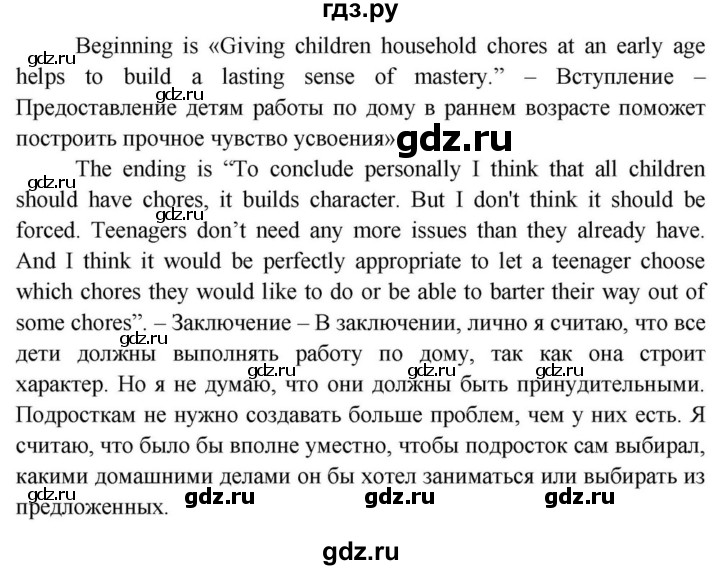
* **Way to begin/end:**
* *Beginning:* Start with a question addressing the reader about their family duties.
* *Ending:* Summarise main points and finish with a proverb (e.g., *“Many hands make light work”*).
---
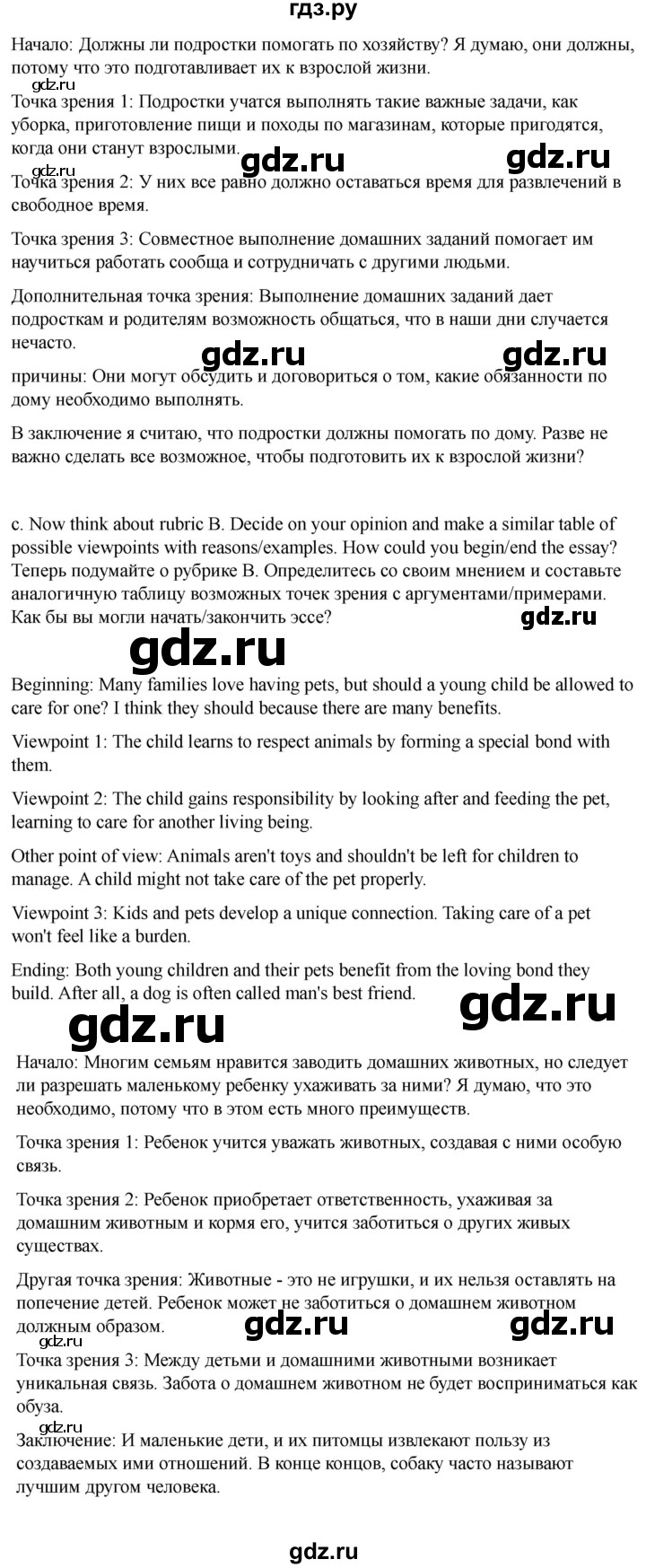
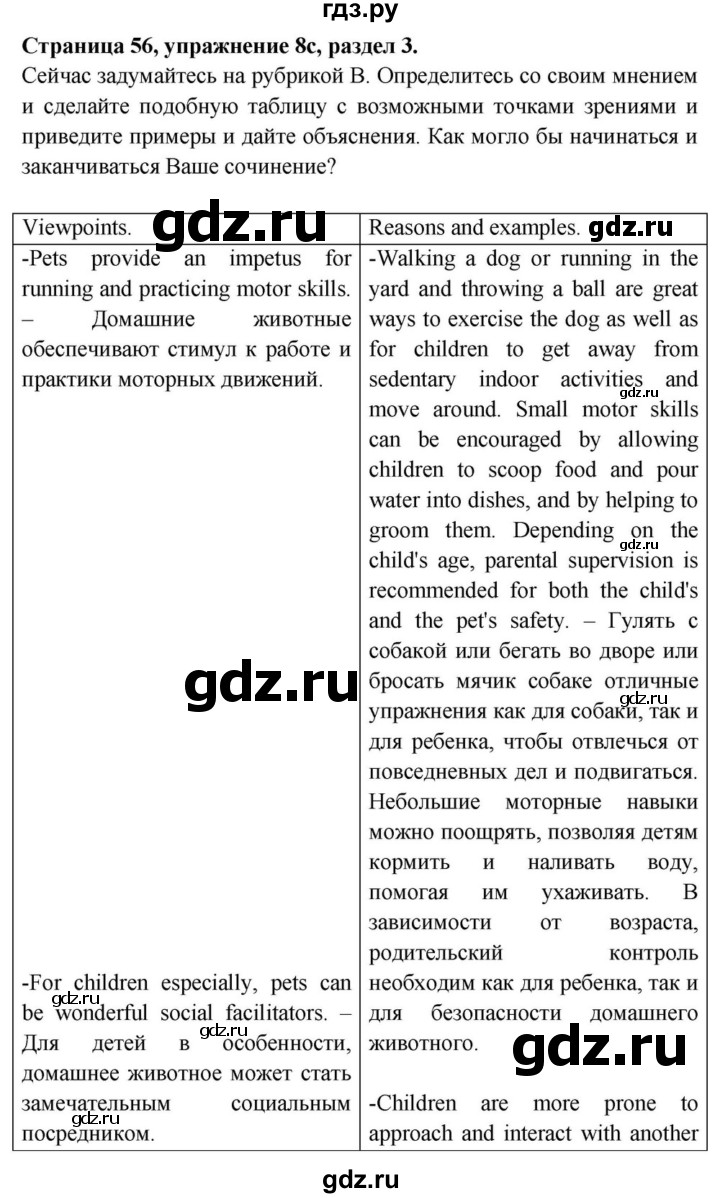
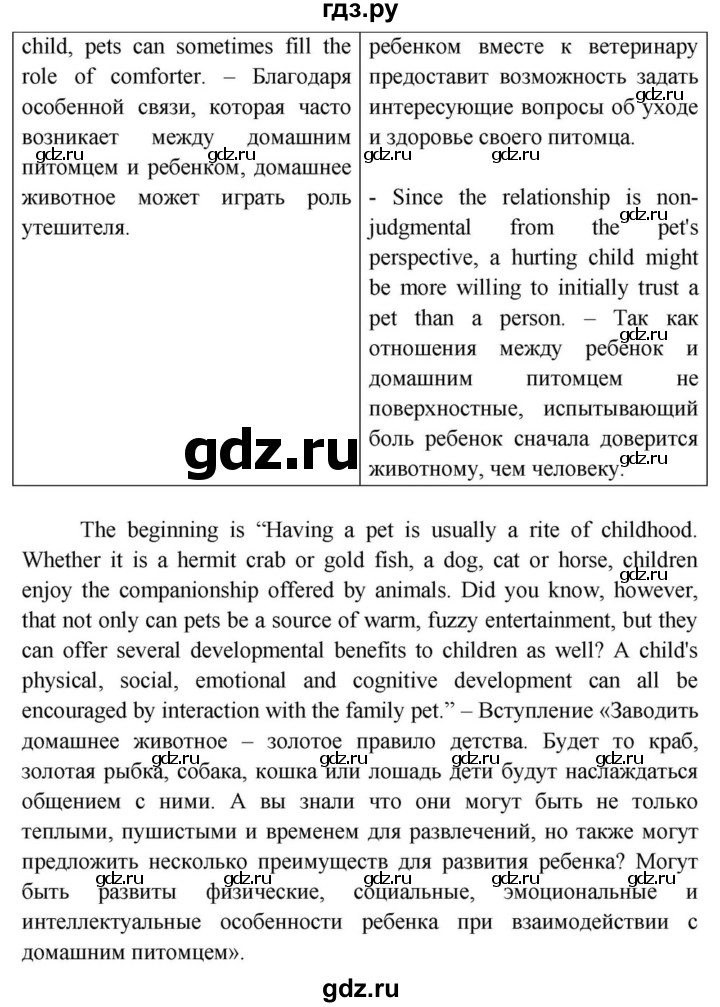
#### c) Table of Viewpoints and Reasons (Rubric B)
| Viewpoints | Reasons / Examples |
| :--- | :--- |
| **1. Caring for a pet teaches children responsibility.** (My opinion) | A child learns to feed, groom, and walk an animal daily on a set schedule. |
| **2. Pets help develop empathy and compassion.** (My opinion) | Children learn to understand non-verbal cues and care for another living creature's needs. |
| **3. Young children are too immature to look after pets safely.** (Opposing viewpoint) | They may forget daily duties, leaving all the hard work to their parents, or accidentally harm the pet. |
| **4. Parental guidance ensures safe and shared responsibility.** (Counter-argument) | Parents can supervise simple age-appropriate tasks, turning pet care into a safe learning experience. |
* **Beginning:** Ask a question: *“Can owning a pet actually shape a child’s character for the better?”*
* **Ending:** Conclude with a strong summary and a saying or rhetorical question: *“After all, isn't learning kindness the greatest lesson of childhood?”*
---
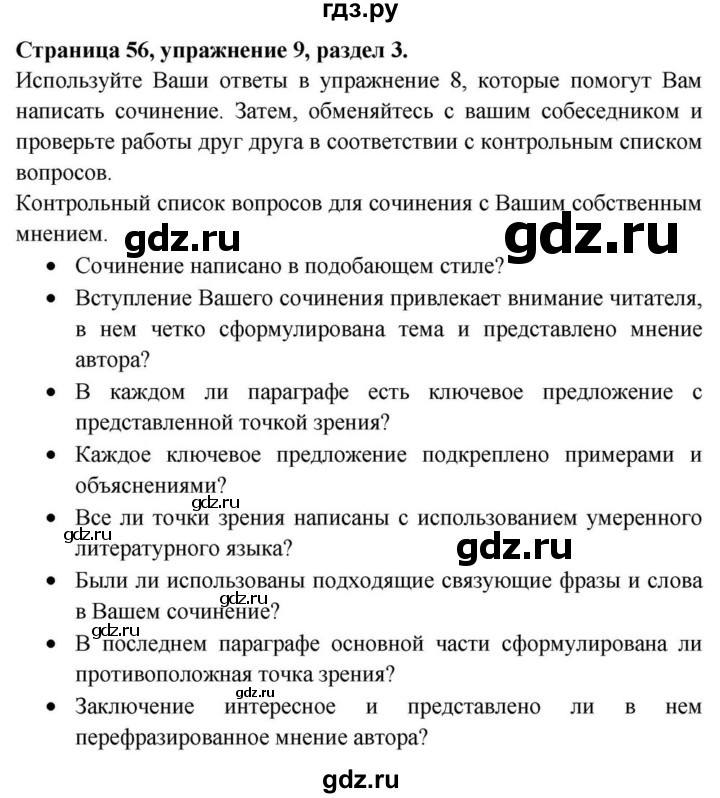
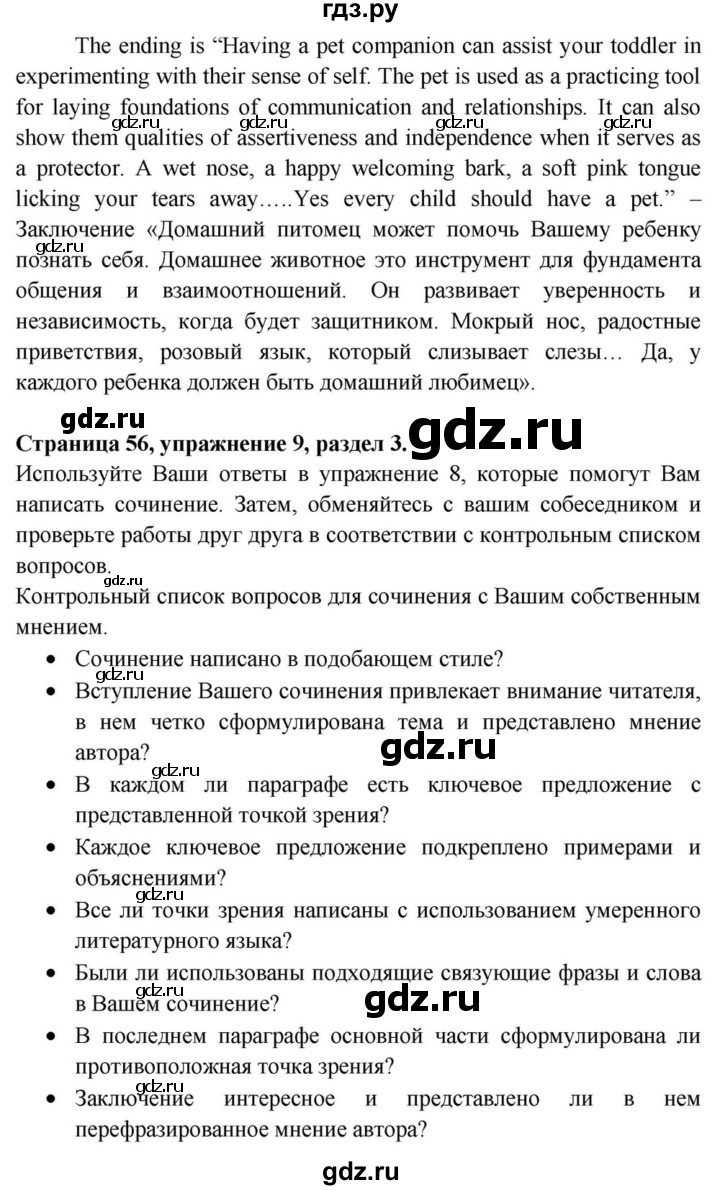
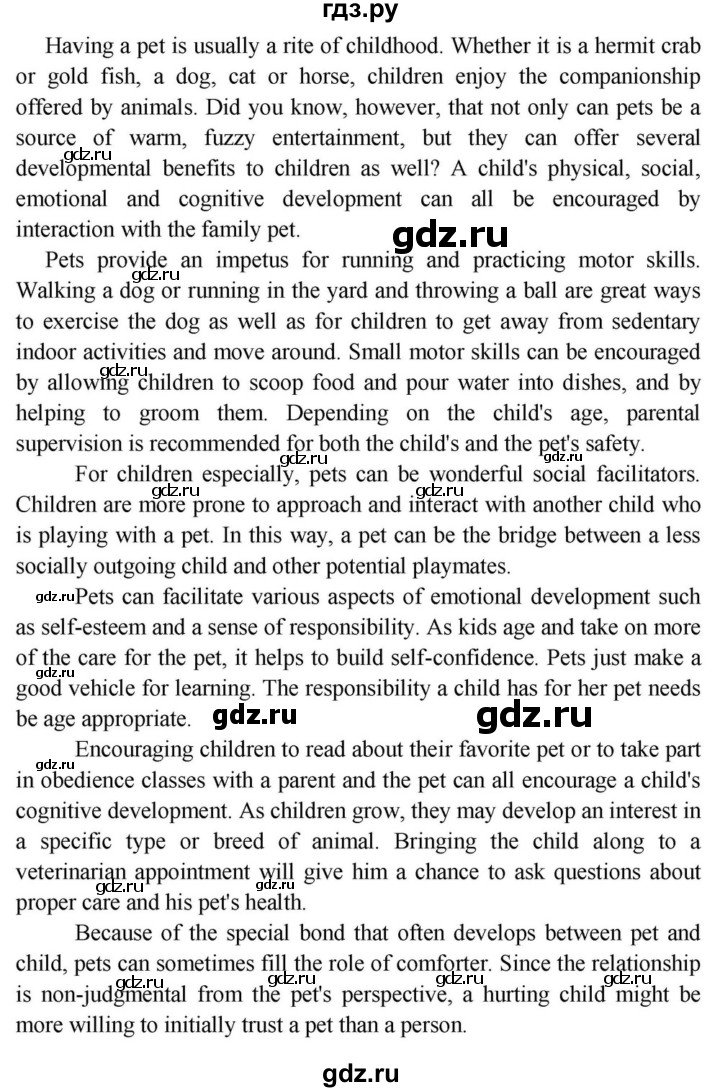
### Ex. 9 (p. 56)
#### Model Essay (Topic A: Household Chores)
> **All teenagers should help with household chores**
>
> How often do you help your parents around the house? While some people believe that adolescents should focus entirely on their studies, I firmly believe that doing household chores is an essential part of growing up.
>
> In the first place, helping out at home teaches teenagers valuable life skills. By doing laundry, washing dishes, and cooking simple meals, young people learn how to be neat, organised, and independent. These practical abilities will undoubtedly benefit them when they leave home for university and start living on their own.
>
> Furthermore, it makes sense to share household duties among all family members. Nowadays, most parents work long hours and have little time to manage every domestic task alone. When teenagers assist with everyday duties, it lightens the family workload and creates a supportive atmosphere.
>
> On the other hand, some people argue that it is unfair to make teenagers do housework because they are already under immense pressure at school. They claim that excessive chores can cause unnecessary stress and take away vital study time.
>
> Nevertheless, doing chores does not need to be overwhelming. If teenagers learn to manage their time effectively, spending just fifteen to twenty minutes a day on light tasks will not interfere with their academic success.
>
> In conclusion, I strongly believe that doing household chores is beneficial for teenagers. It not only prepares them for independent adulthood but also helps maintain a harmonious home. As the saying goes, many hands make light work.
>
> *(248 words)*
---
### Пояснение к выполнению заданий
1. **Введение и заключение (Ex. 6):**
* В **Opinion Essay** введение должно привлекать внимание (вопрос к читателю, цитата) и знакомить с темой.
* Заключение обязательно подводит итог всему сказанному (фразы *To sum up, All in all, All things considered*), перефразирует мнение автора и может содержать пословицу или риторический вопрос.
2. **Мягкий язык / Mild language (Ex. 7):**
* В академических и экзаменационных эссе избегают категоричных фраз (*I am sure, All people, always, never*).
* Вместо них используются вводные конструкции (*It seems to me, In my view, I tend to believe*) и модальные глаголы (*can, may, could*), что делает аргументацию более взвешенной и убедительной.
3. **Структура эссе (Ex. 8–9):**
* **Paragraph 1:** Введение (ввод в тему + тезис/личное мнение).
* **Paragraph 2:** Первый и второй аргументы в пользу своего мнения с примерами.
* **Paragraph 3:** Дополнительный аргумент в пользу своего мнения.
* **Paragraph 4:** Противоположное мнение + объяснение, почему автор с ним не согласен (контраргумент).
* **Paragraph 5:** Заключение (пересказ своего мнения другими словами + итоговая мысль).
Спасибо за оценку!




Открой больше возможностей
Войди через VK — задавай вопросы ИИ и сохраняй ГДЗ в избранное
