


ГДЗ по английскому языку 11 класс Афанасьева Spotlight Базовый уровень страница - 58

Авторы: Афанасьева О.В., Дули Д., Михеева И.В., Оби Б., Эванс В.
Серия: Spotlight
Тип книги: Учебник
Год: 2015-2024
Рекомендуем посмотреть


 Премиум
Подробное решение страница № 58 по английскому языку Spotlight для учащихся 11 класса Spotlight Базовый уровень, авторов Афанасьева, Дули, Михеева, Оби, Эванс 2015-2024
### Итоговый ответ
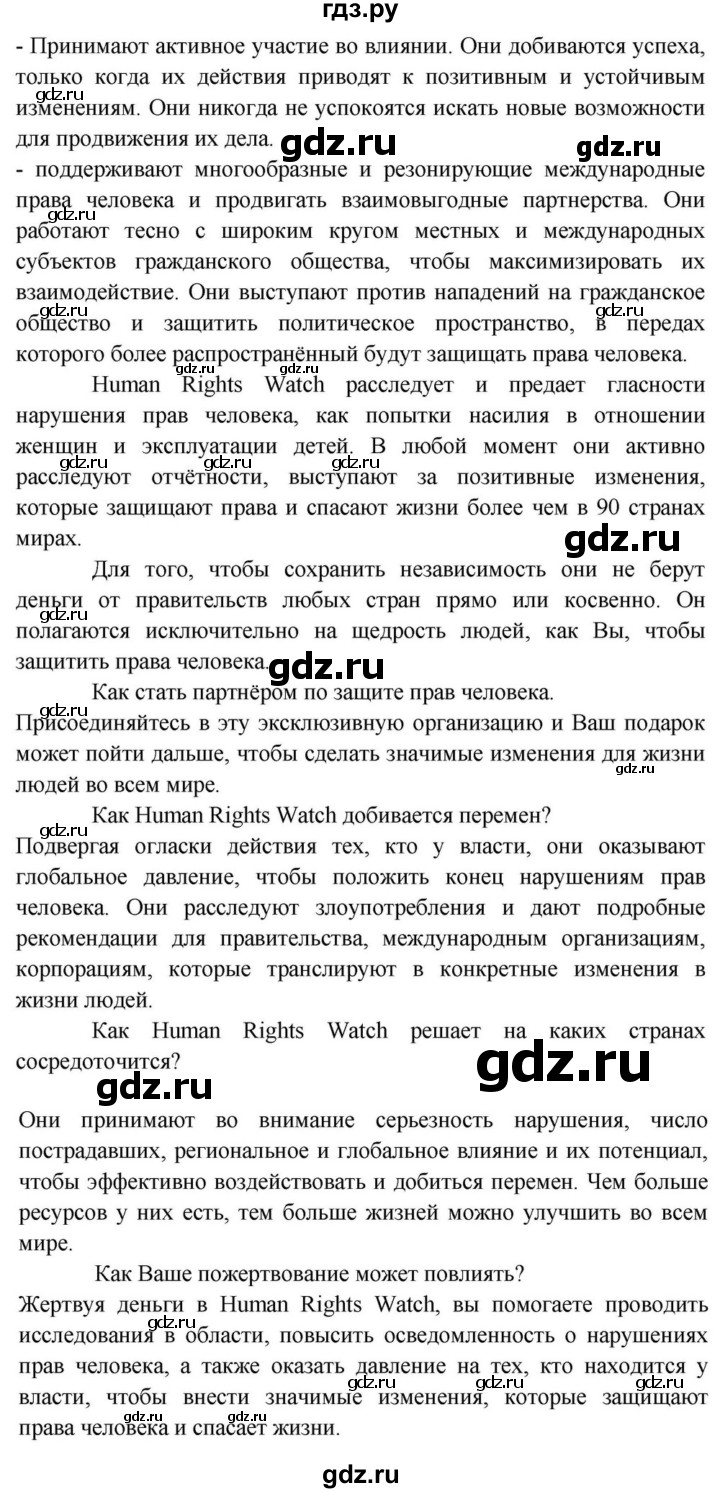
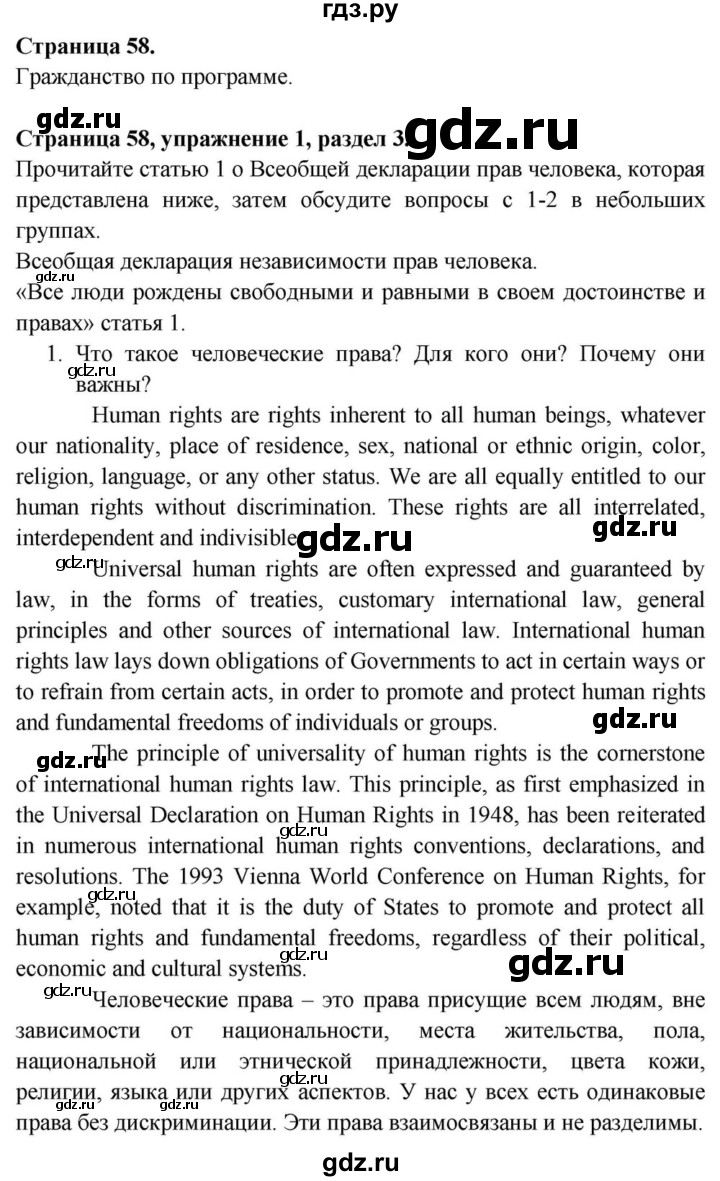
#### 1. Questions Discussion
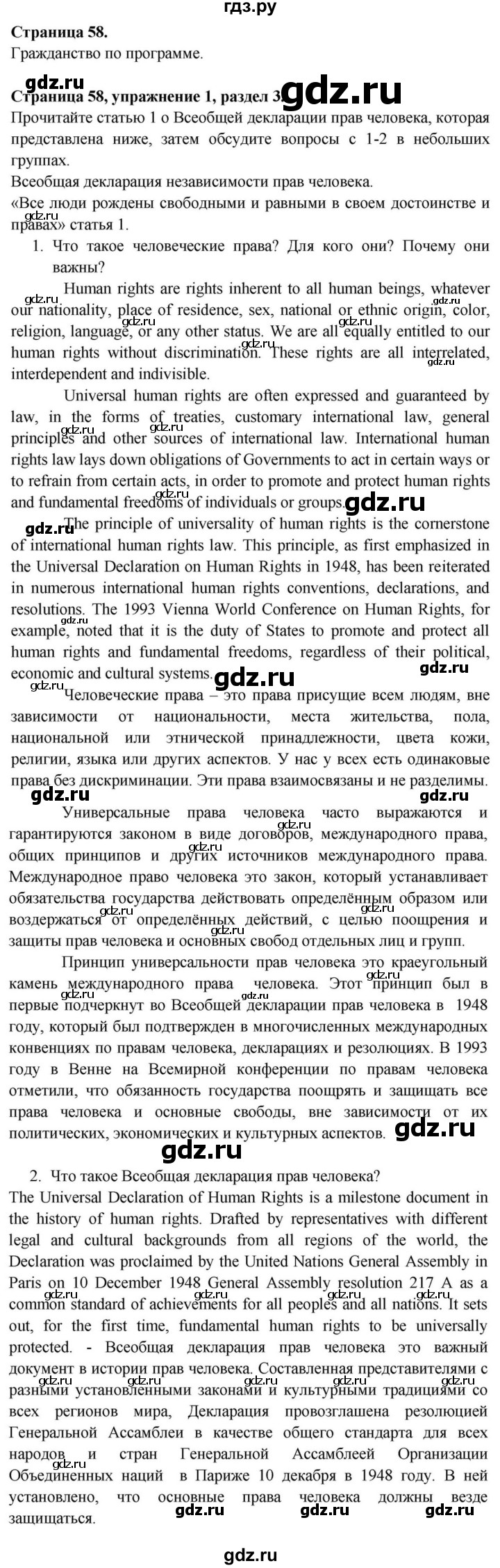
1. **What are human rights? Who are they for? Why are they important?**
Human rights are basic rights and freedoms that belong to every person in the world from birth. They are for everyone, regardless of nationality, race, gender, religion, or social status. They are important because they protect people from unfair treatment, guarantee dignity, equality, and safe living conditions.
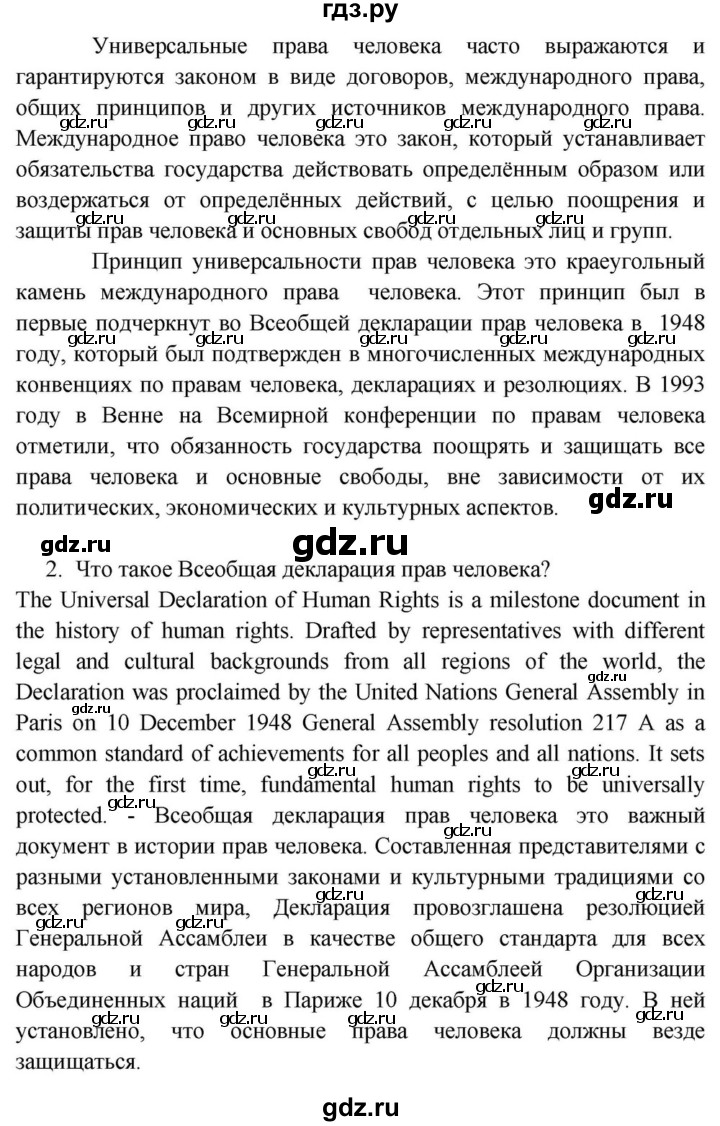
2. **What is The Declaration of Human Rights?**
The Universal Declaration of Human Rights (UDHR) is an international document adopted by the United Nations (UN) in 1948. It consists of 30 articles that outline the fundamental human rights and freedoms that should be universally protected.
---
#### 2. Reading Task
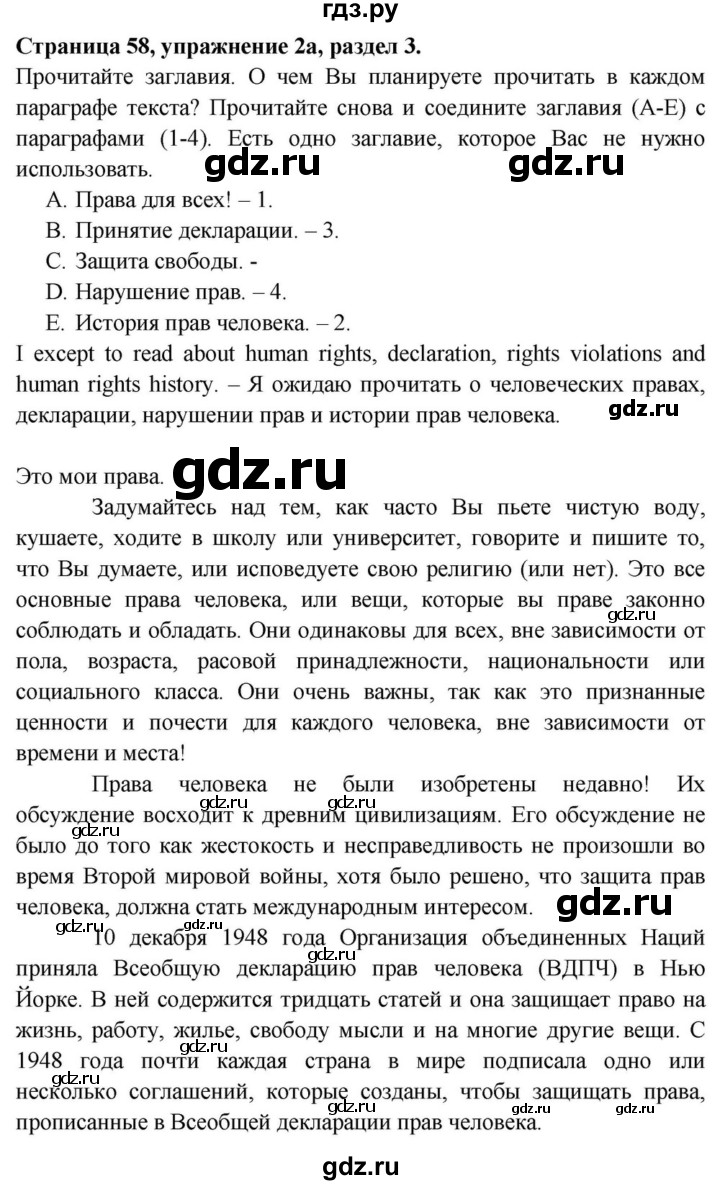
**a) Gap-filling:**
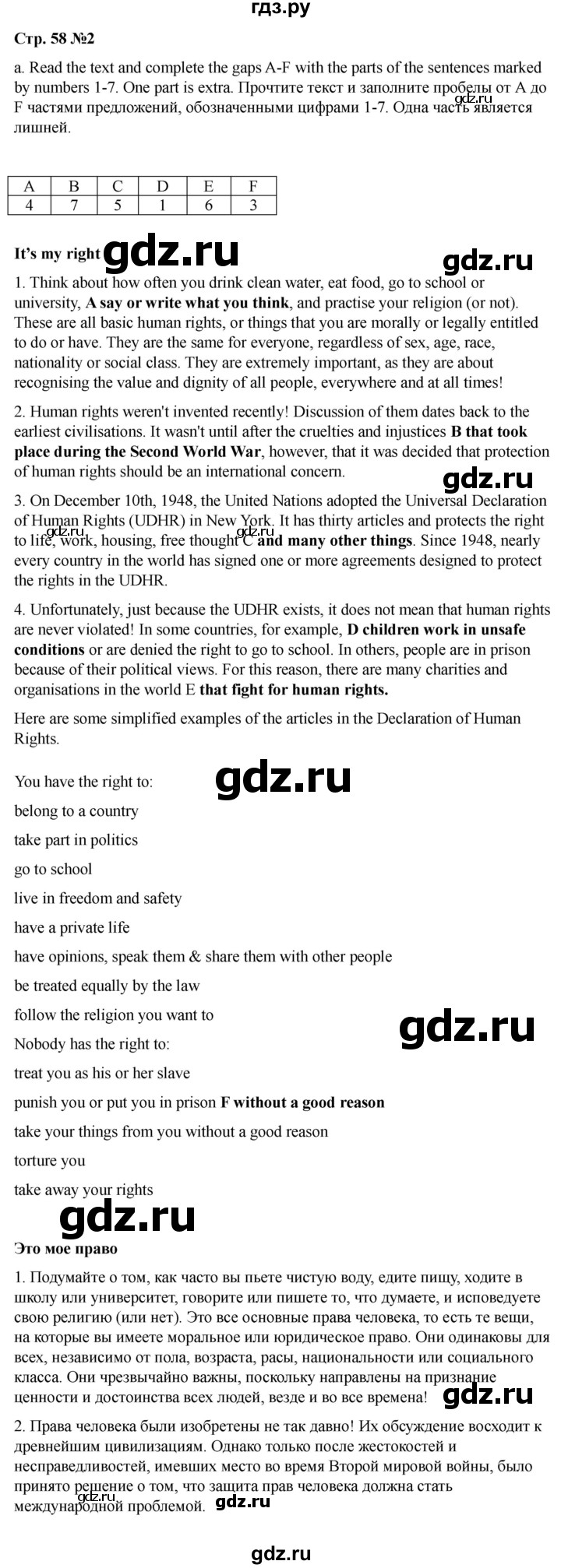
| A | B | C | D | E | F |
|---|---|---|---|---|---|
| **5** | **7** | **4** | **1** | **6** | **3** |
*Лишний фрагмент:* **2** (*it is against the law*)
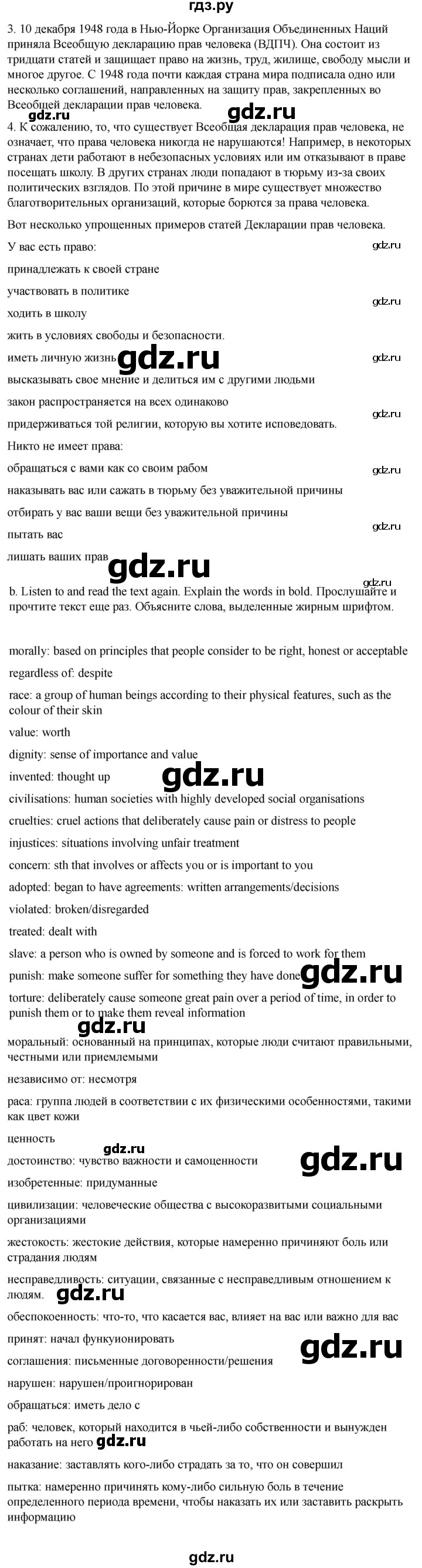
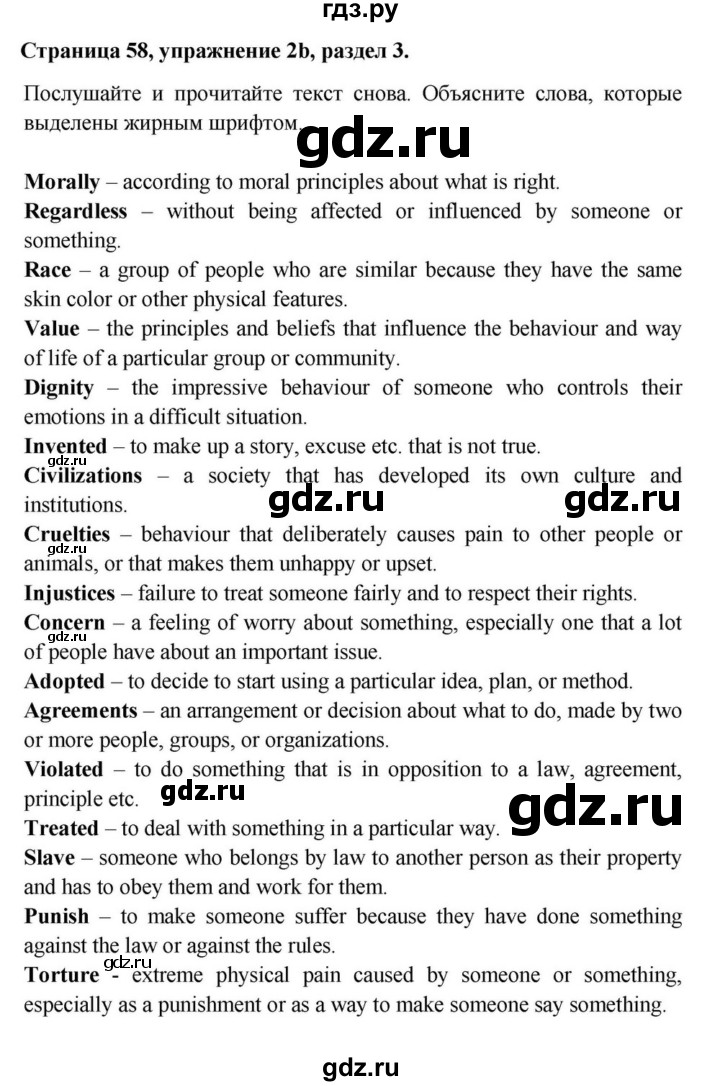
**b) Words in bold explanation:**
* **Dignity** — the state or quality of being worthy of honour or respect (*достоинство*).
* **Civilisations** — human societies with well-developed social organisations, cultures, and ways of life (*цивилизации*).
* **Cruelties** — cruel, harsh, or unkind acts that cause pain or suffering (*жестокости*).
* **Injustices** — unfair actions, situations, or treatments (*несправедливости*).
* **Violated** — broken, ignored, or treated with disrespect (e.g., laws, rights, or rules) (*нарушены*).
* **Slave** — a person who is owned by someone else and forced to work without freedom or pay (*раб*).
---
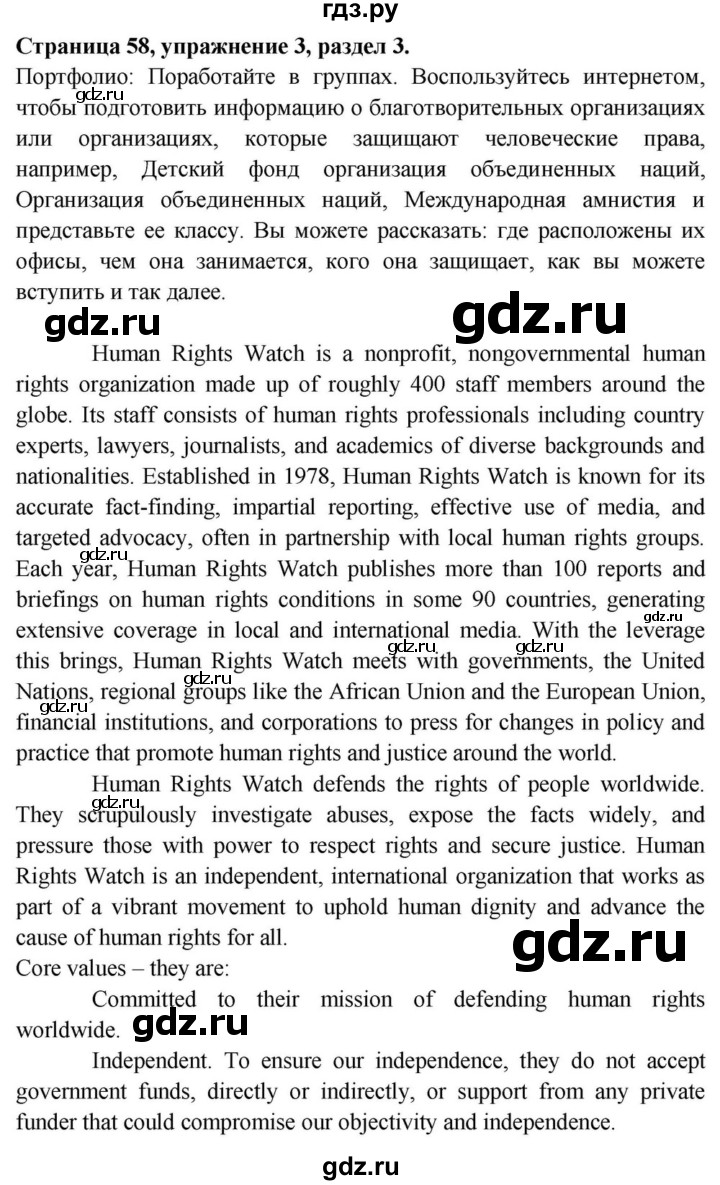
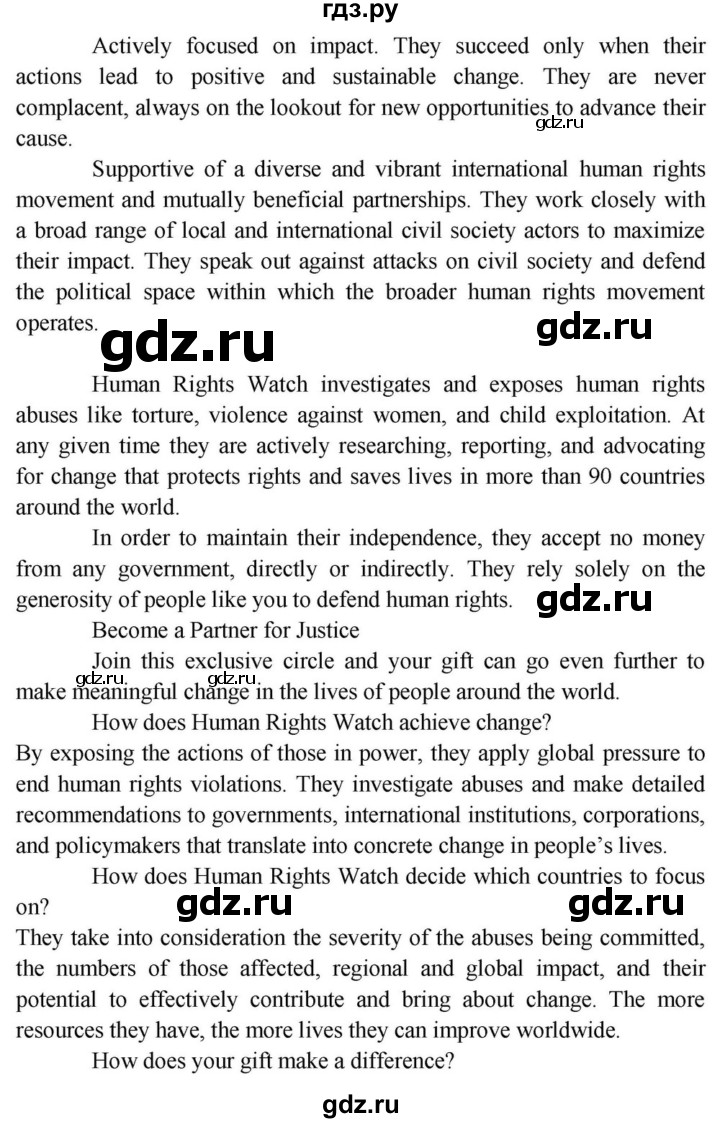
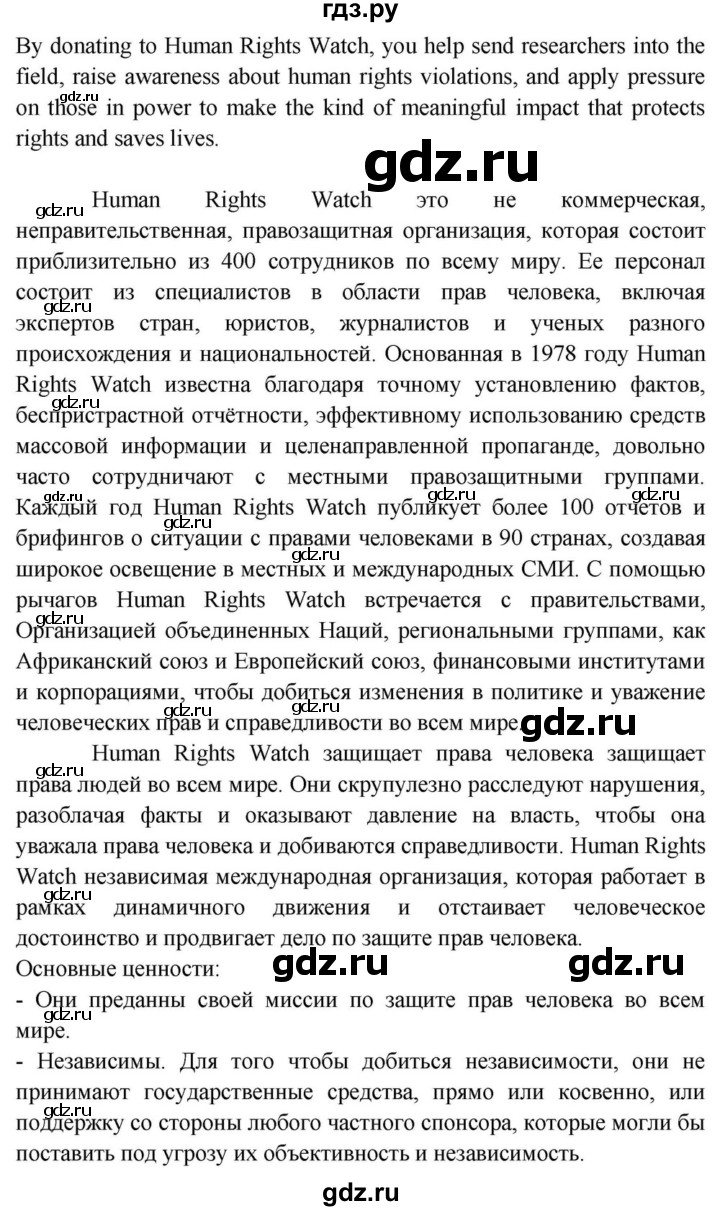
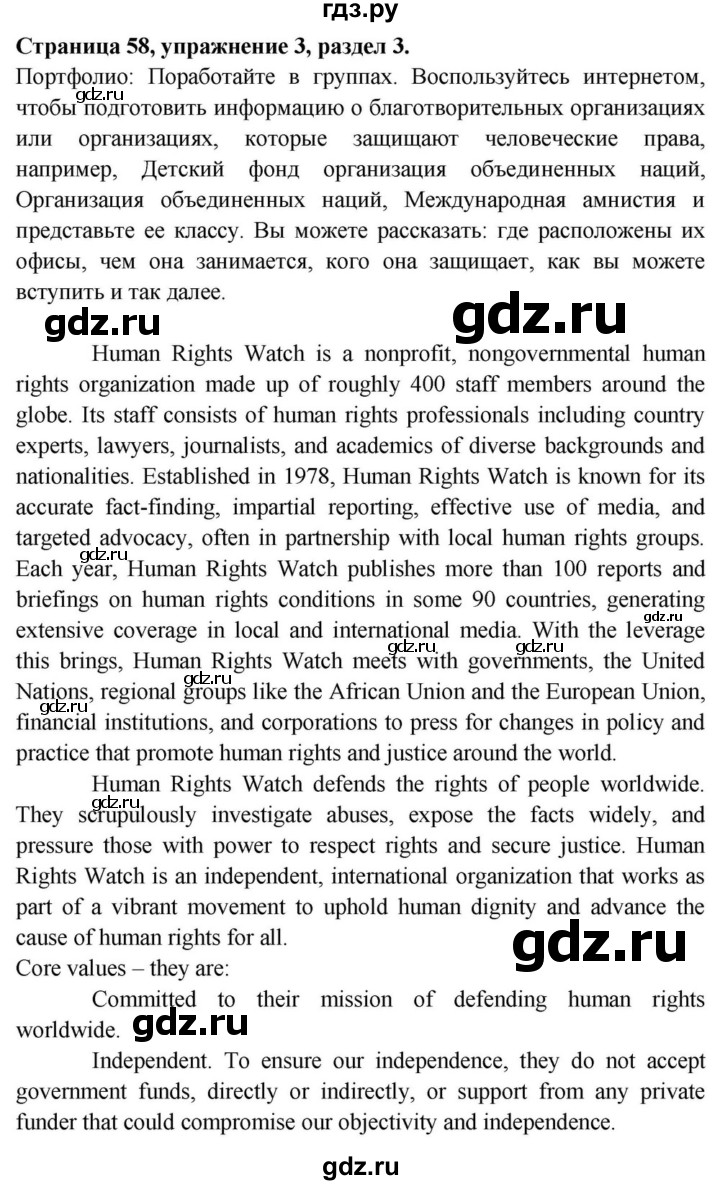
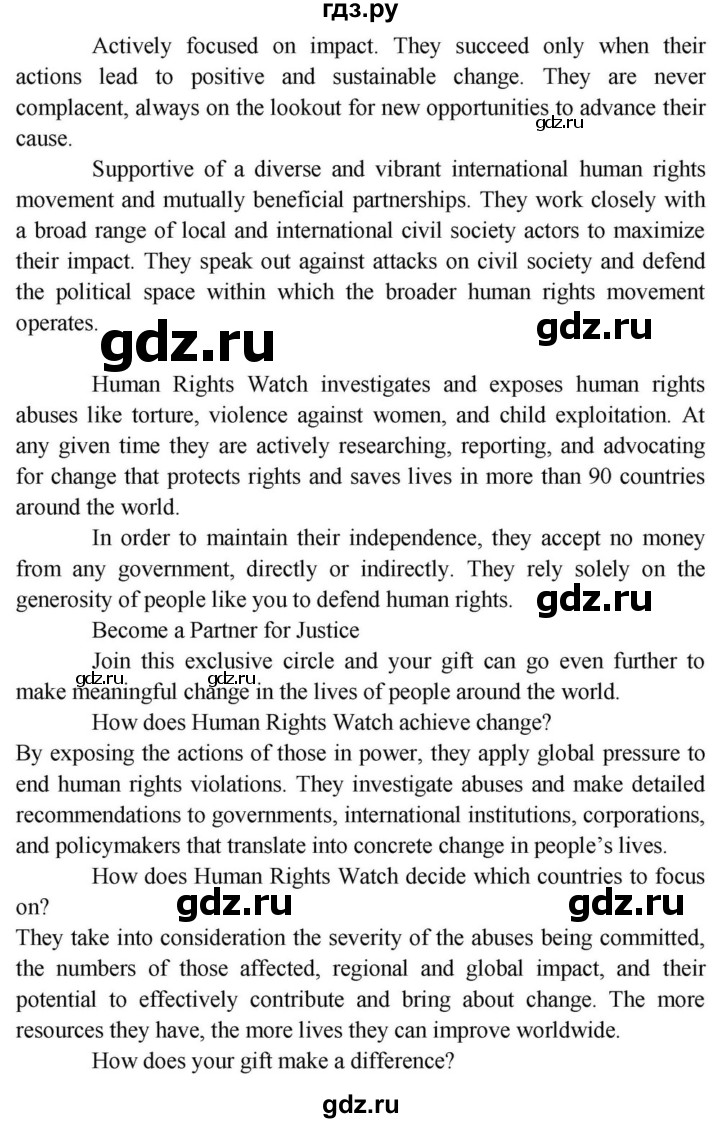
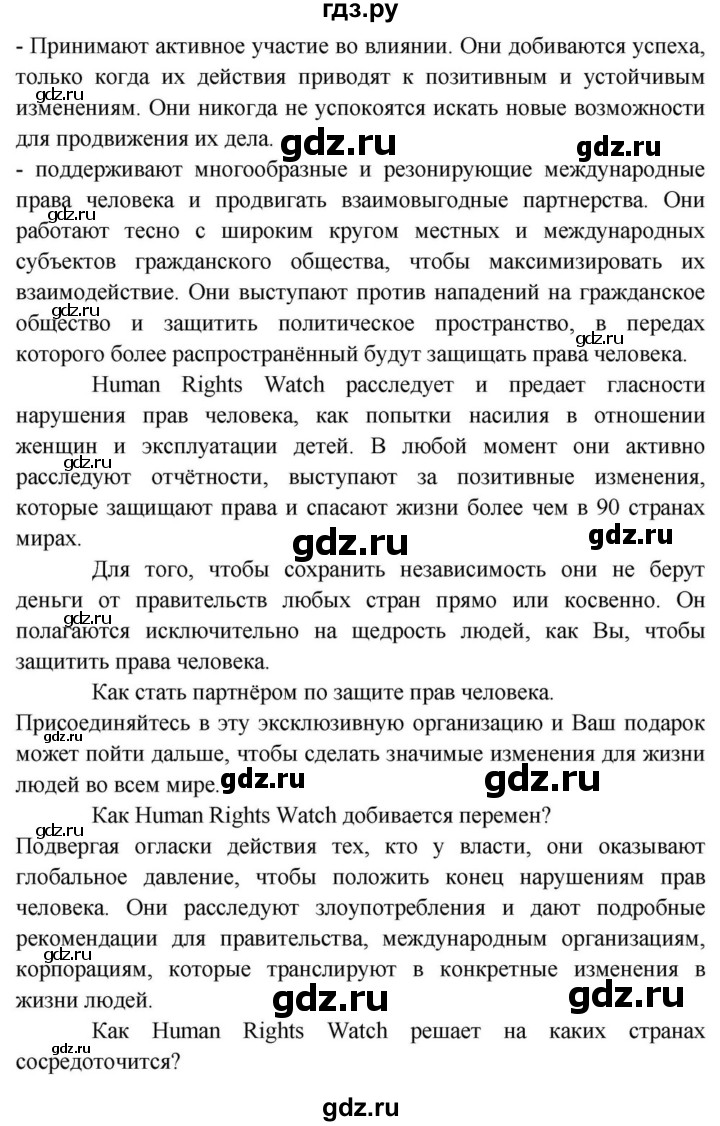
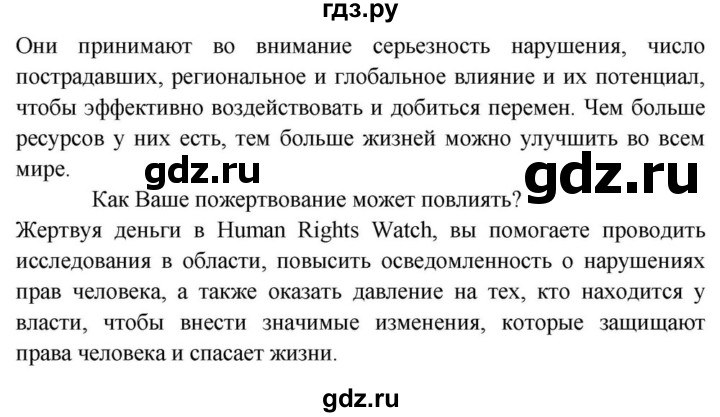
#### 3. ICT Portfolio (Amnesty International)
* **Name of organisation:** Amnesty International
* **Offices:** The International Secretariat is based in London, UK, with regional offices in over 70 countries worldwide.
* **What it does:** It campaigns against human rights abuses, investigates violations, publishes reports, and lobbies governments to respect international law.
* **Who it protects:** Prisoners of conscience, political dissidents, minority groups, and victims of injustice or torture.
* **How to get involved:** Anyone can sign online petitions, write letters to free unjustly detained people, donate funds, or join local volunteer groups.
---
### Пояснение к выполнению
#### Задание 1
Вопросы направлены на понимание концепции прав человека и их роли в обществе. Ответ строится на базе вводной цитаты статьи 1 Всеобщей декларации прав человека: *«Все люди рождаются свободными и равными в своем достоинстве и правах»*.
#### Задание 2 (a) — Анализ соответствия фрагментов:
* **Пропуск A (5):** Перечисляются обыденные действия (*clean water, eat food, go to school...*), поэтому логично продолжить рядом однородных понятий: **5** (*and many other things* — «и многие другие вещи»).
* **Пропуск B (7):** Контекст связан с историческими предпосылками принятия Декларации после глобальной катастрофы. Определительное придаточное **7** (*that took place during the Second World War* — «происходивших во время Второй мировой войны») согласуется со словами *cruelties and injustices*.
* **Пропуск C (4):** В предложении идет перечисление прав: *the right to life, work, housing, free thought and the right to...* После предлога *to* требуется инфинитив глагола: **4** (*say or write what you think* — «говорить или писать то, что вы думаете»).
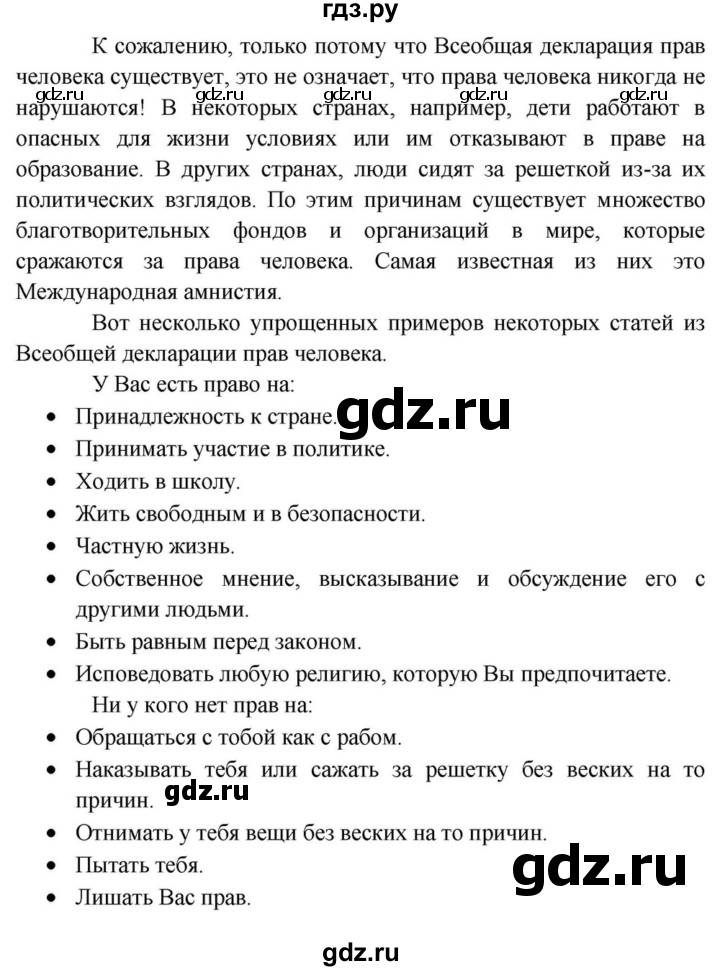
* **Пропуск D (1):** После вводных слов *In some countries, for example,* необходимо полное предложение с подлежащим и сказуемым для иллюстрации нарушения прав: **1** (*children work in unsafe conditions* — «дети работают в опасных условиях»).
* **Пропуск E (6):** Фрагмент относится к существительным *charities and organisations* и определяет их роль: **6** (*that fight for human rights* — «которые борются за права человека»).
* **Пропуск F (3):** Контекст предложения запрещает тюремное заключение и наказание без правомерного повода: **3** (*without a good reason* — «без веской причины»).
#### Задание 3
Для портфолио выбрана организация **Amnesty International** (Международная амнистия) — одна из наиболее известных правозащитных неправительственных организаций в мире, основанная в 1961 году. В решении приведены все обязательные пункты: штаб-квартира, деятельность, подзащитные и способы участия для молодежи.
Спасибо за оценку!


Открой больше возможностей
Войди через VK — задавай вопросы ИИ и сохраняй ГДЗ в избранное
